
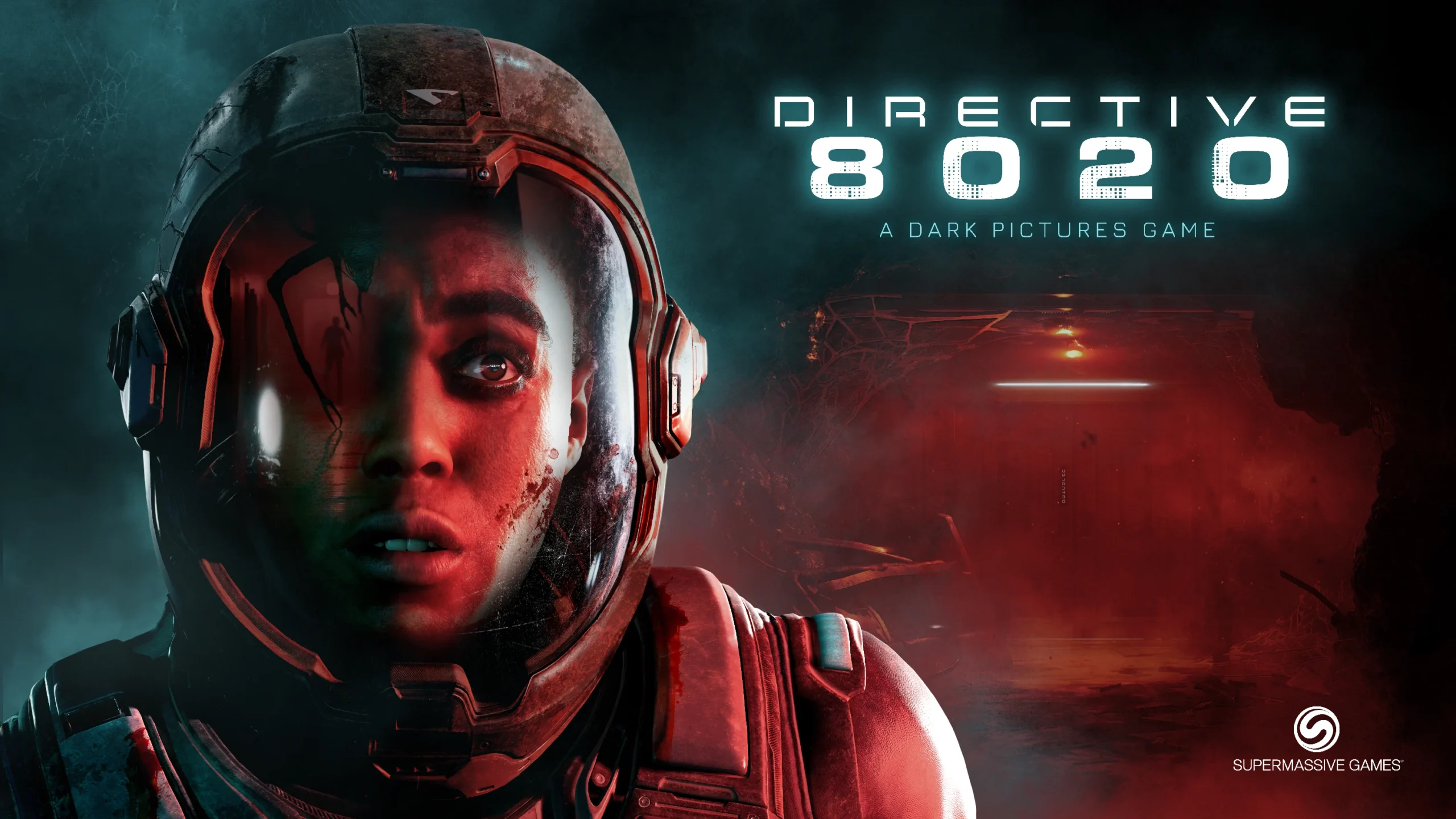
As I raised in my review of Pragmata last month, while some major development studios have attempted to embrace the openness of space by offering diverse open worlds which are ambitious but highlight the great vastness and emptiness of space, other development teams are finding success with smaller scope linear environments which shine by depicting a small fraction of the universe and making them come to life through lore. Following successes with narrative-oriented games like Until Dawn and The Quarry, Supermassive Games has spent the past few years working on its The Dark Pictures Anthology line, each a distinct, standalone horror experience. After annual releases between 2019 and 2022, the fifth mainline instalment, Directive 8020, seeks to blend sci-fi and space-faring elements, all fused with the overarching elements of survival horror and interactive drama, which have been refined over the years. But many years on… have they been successful with their latest horror offering? Read on to find out!
As you would already expect, Directive 8020 takes place in a space-faring future, where Earth now lives on borrowed time. Humanity has placed its final hopes on the Cassiopeia, a survey vessel sent to assess the habitability of Tau Ceti f ahead of the colony ship Andromeda. The story opens with the vessel’s technical team passing the time while the rest of the crew remains in cryosleep, moments before a hull breach throws the mission into chaos and forces the team into the horrors awaiting them. The threat that takes hold is a shapeshifting biomass capable of mimicking the crew with disturbing accuracy, fuelling an atmosphere of paranoia that quickly intensifies. Its broad inspirations should be immediately familiar to those with even a passing love of sci-fi horror cinema, with fingerprints of iconic works such as Alien and The Thing spread throughout the narrative. However, while Supermassive’s reverence for those touchstones is clear, the line between heartfelt homage and outright derivation does occasionally blur.
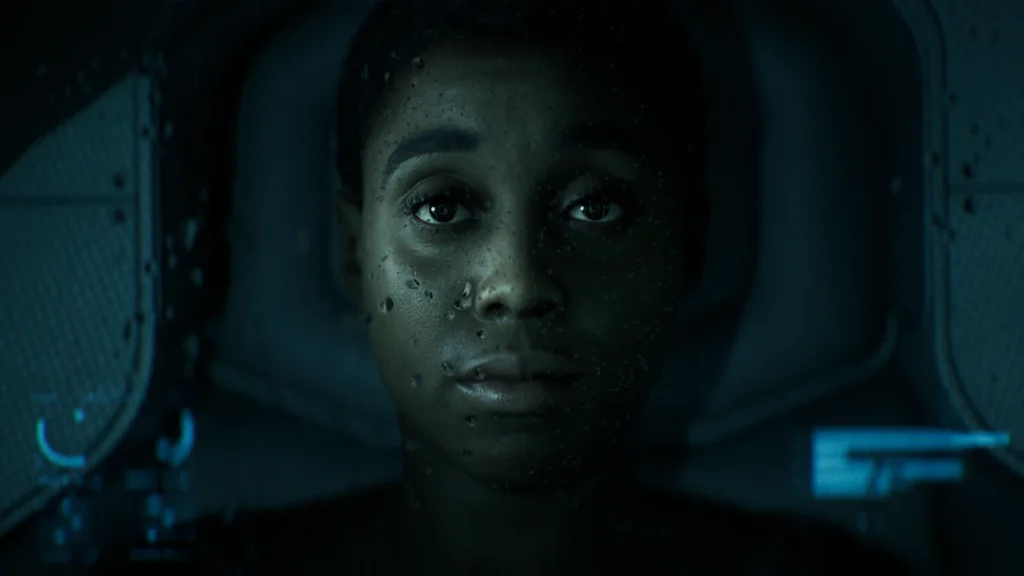
Across eight episodes and a runtime that sits somewhere around eight to ten hours, depending on how thoroughly you poke around the ship, the writing keeps a fairly firm grip on tension and character. The cast of characters, who, through the decisions you make, will determine fate, slot into some of the more expected archetypes: including but not limited to the commander, pilot, the engineer, and the medic, Being an interactive drama first and foremost, I think they nailed the narrative for the most part: a little slow at times, but with twists and turns that generally warrant the playthrough (and perhaps a second playthrough). Less successful are the recurring flash-forwards, which undercut the suspense by quietly confirming who survives in the moments where they should feel most at risk. Longtime fans will also notice the Curator’s absence from his usual framing duties, a shame, and it leaves a question about whether Directive 8020 is an attempt at moving beyond the anthology series into completely separate, standalone titles.
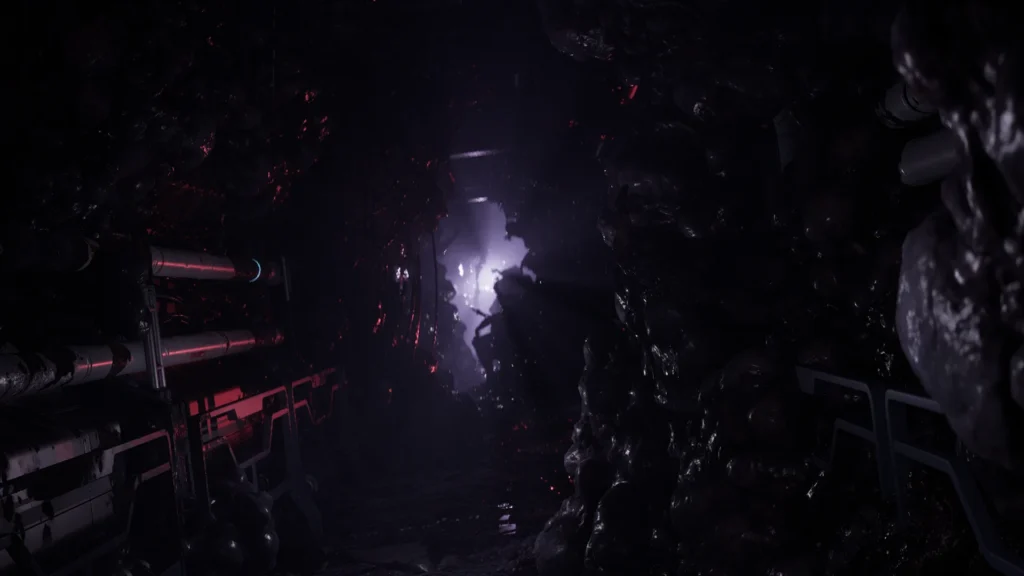
It should come as no surprise that Directive 8020 is the best-looking game in The Dark Pictures Anthology to date. and strikes a good balance between modern and future elements in the design of its environments, and the unexplored potential of space to truly depict a world rich to explore but claustrophobic enough to offer good horror. Environments are noticeably more open than past Dark Pictures titles, encouraging measured exploration of logs, recordings and quiet character moments tucked into the margins. Atmospheric lighting and detailed textures sell the isolation beautifully, and once the alien threat amps up, the creature design proves to be one of the game’s loudest triumphs. And for those who are not just out to keep the cast alive, there are some very visceral, gory deaths that your decisions can lead to.
However, there are some caveats to that. While close-up character models are generally exceptional, the facial animation can fall a little short against the voice acting, leading to some scenes where there is a mismatch between vocal delivery and expression, which can pull you out of a scene. On the technical side, it ran well on the PlayStation 5, with no noticeable crashes or other issues.
The performances are, on the whole, one of Directive 8020‘s stronger assets, with Lashana Lynch anchoring the cast as co-pilot Brianna Young and turning in the kind of grounded, emotionally textured lead performance that has become a particular strength of the Supermassive Games writing team. The other casting was also en pointe, with Danny Sapani as the weary Commander Stafford, Lotte Verbeek as the coolly logical Laura Eisele and Anna Leong Brophy as medical specialist Samantha Cooper, among others – each fitting into their role and archetype well.
Meanwhile, on the music side, Jason Graves returns in Directive 8020 to provide the score, and his work here is appropriately restrained, leaning on atmosphere and texture rather than the kind of blaring orchestral cues that can rob a horror game of its menace – yet still shining with the futuristic setting you are in. The sound design does much of the heavy lifting, with creaking bulkheads, distant mechanical groans, and the wet, organic noises of the threat itself combining to make the Cassiopeia feel like an environment quietly turning against you.
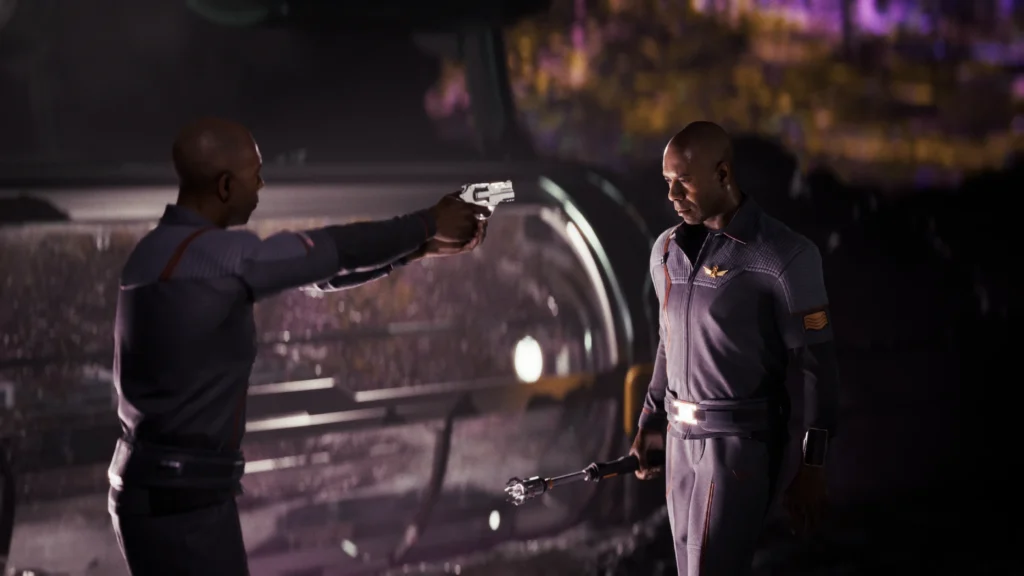
With Directive 8020 being an interactive drama, I didn’t expect a top-tier experience that sacrifices narrative immersion for heavy gameplay mechanics, and that is more or less what I got. Instead, the game Directive 8020 retains the interactive drama framework Supermassive has been refining for over a decade, blending exploration, dialogue choices, quick-time events, and branching consequences into a structure where your decisions feel weighty. Trait development returns through dialogue, with each character gradually settling into one of two opposing destinies that shape how they carry themselves through the later stages of the story. The headline addition this time around is the Turning Points system, a visual flowchart that lets you revisit any major decision and chart an alternative path through the story, with unlock conditions for unseen branches clearly laid out as you progress. It is a genuinely smart piece of design, particularly for players who only have time for a single playthrough, though purists can opt into Survivor mode to keep the rewind feature locked away until the credits roll. The trade-off is philosophical as much as practical, because the moment you know a mistake can be undone, the weight of every decision shifts ever so slightly, and it does dampen the previous games’ focus on having players stand behind their decisions – whether they are positive or not. Alas for those looking to go straight to the ‘Good End’, it also means you don’t need a bulky guide up on a separate monitor.
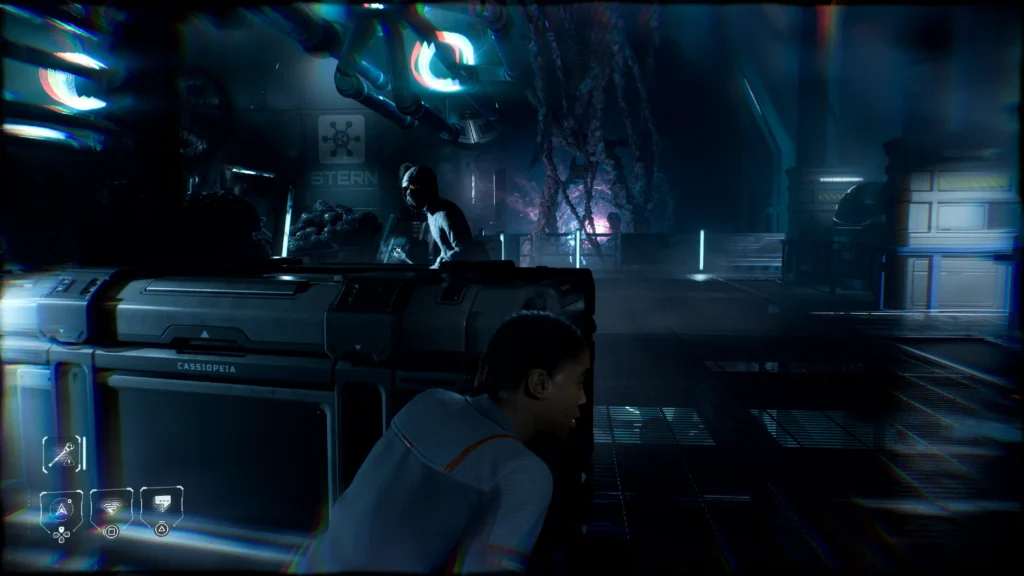
Another major addition is the greater focus on active stealth sequences, where direct control of a character is handed to you while a creature patrols nearby, forcing you to weave between cover, manage line of sight and occasionally fall back on an electrified baton to buy a few precious seconds when things go sideways. Granted, it is not a new element in the horror genre, but these sections do feel genuinely nerve-wracking, with the loss of the usual cinematic safety net making each laboured footstep feel consequential. However, there is a lot of repetition that the stealth does overstay its welcome even during the game’s short runtime, with predictable enemy patrol patterns, conveniently placed crates and a fairly limited roster of threats undermining the tension that the early instances build so effectively. This is definitely something they should build and learn from in future instalments, however.
Rounding out the experience is a clutch of supporting systems that quietly do a lot of work to flesh out the Cassiopeia and her crew. A handheld scanner is used to trace power lines, identify points of interest, and reveal collectibles, while the in-world flashlight feels weaker than it ought to in a setting this dark. Puzzles are scattered throughout with a solid variety of different challenges – nothing incredibly challenging, but enough that it sparks one’s brain cells to have to come up with a solution. The standout supporting feature, though, is the wrist-mounted messaging system that lets characters text one another between scenes, which adds a surprising amount of warmth and quiet characterisation to the crew.
While the great empty expanse of space continues to lure development studios in different creative directions, Directive 8020 is another game in 2026 that makes a case for focusing on the smaller, more intimate corner of the universe. Supermassive’s eye for atmosphere, performance and consequence remains as sharp as ever, and the Turning Points system in particular feels like a meaningful evolution for a studio still finding new ways to ask whether your decisions truly matter. The over-reliance on stealth and the occasional pacing wobble do hold it back from greatness, but there is enough confidence here to suggest the team has found a setting worth returning to. For fans of the anthology, and for anyone drawn to a horror story told in the quiet, claustrophobic corners of the cosmos, Directive 8020 could be a journey worth taking.
Final Score for Directive 8020
This review was conducted on a PlayStation 5 version of Directive 8020, with all playtesting on a PlayStation 5 Pro retail unit. A digital code was provided by Bandai Namco Entertainment Australia to facilitate the review of this game.
Directive 8020 is now available to purchase on PC, PlayStation 5 and Xbox Series X|S.

