
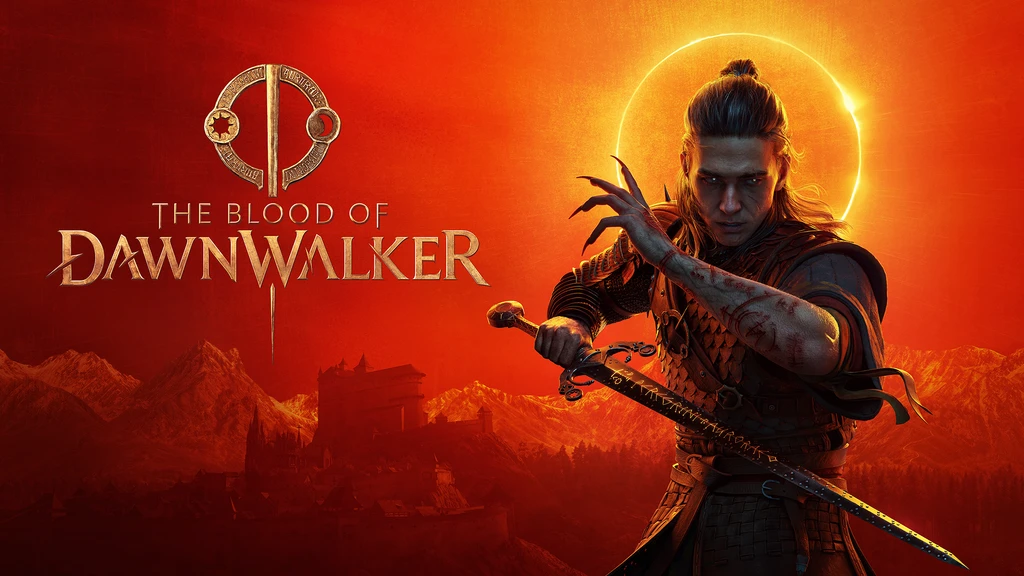
In a market where it can feel like many developers are chasing the next open-world action RPG dark fantasy experience à la The Witcher 3 or Skyrim, it is hard not to equate new titles in the genre with low expectations. This is not to say that the genre has been done to death, far from it… but also makes it more impressive when a developer manages to exceed your expectations. Enter Rebel Wolves, a new development studio that proudly claims to be “born out of love for RPGs”, and who have partnered with publisher Bandai Namco Entertainment to offer their debut title The Blood of Dawnwalker on PlayStation 5, Xbox Series X|S and Windows PC. Pitching itself as an open-world dark fantasy action RPG putting players in the shoes of a 14th-century human/vampire hybrid – is there enough here to make it a flagship experience to remember, or a game that will fade into the mix of “AAA” releases hitting store shelves this year? Read on to find out!
The story of The Blood of Dawnwalker is set in Vale Sangora, a fictional valley set among the real Carpathian Mountains in southeastern Europe during the 14th century, when the plague has caused so much harm that the region is desperate for a saviour. This saviour comes in the shape of Brencis, an ancient vrakhir (the term used in the game for its vampires), who overthrows the human nobility of the valley and puts forward a deal which is hard to refuse: the blood of the vrakhiri can cure any physical illness, on the condition that the people of the valley pay a steady tribute. This differs from what one might normally expect of a ‘vampire’, since the role is not merely oppressive but involves a kind of transaction that many people in the valley regard as reasonable. The player takes on the role of Coen of Laslea, a young man from a village north of the capital, whose family becomes involved in a rebellion that quickly collapses as soon as it starts. It is decided that Coen’s family will be offered as a sacrifice in a ritual thirty days from now, and Coen himself is turned and left out in the open to be burned. He does not burn, but instead proves that Coen has become a Dawnwalker – a being who is human when exposed to the sun but turns into a vrakhir at sunset – giving him thirty days and thirty nights to become dangerous enough to enter Brencis’s castle and retrieve his family.
It is a solid premise for Rebel Wolves to build their The Blood of Dawnwalker on, and from there they run with it. While there is an overarching narrative, there is no main questline here in the traditional sense, only a single standing objective and a valley absolutely thick with threads you can choose to pull or leave alone. You could, if you were feeling suicidal, walk out of the prologue and knock on Brencis’s door that same evening. What makes the freedom work rather than feel like abandonment is how frequently one thread turns out to feed another; information you pick up from Point A can have the butterfly effect on a moment later in the game, The cast is the real triumph, though, with a range of interesting characters, each built to be distinct and contribute to the lore-building and information gathering in their own way. There is no morality meter here, no karma bar quietly judging you, which leaves the writing free to present decisions where every available answer is a compromise. The result is something that feels self-guided, but structured enough that you aren’t just going to spend days in-game wondering what the heck is going on.
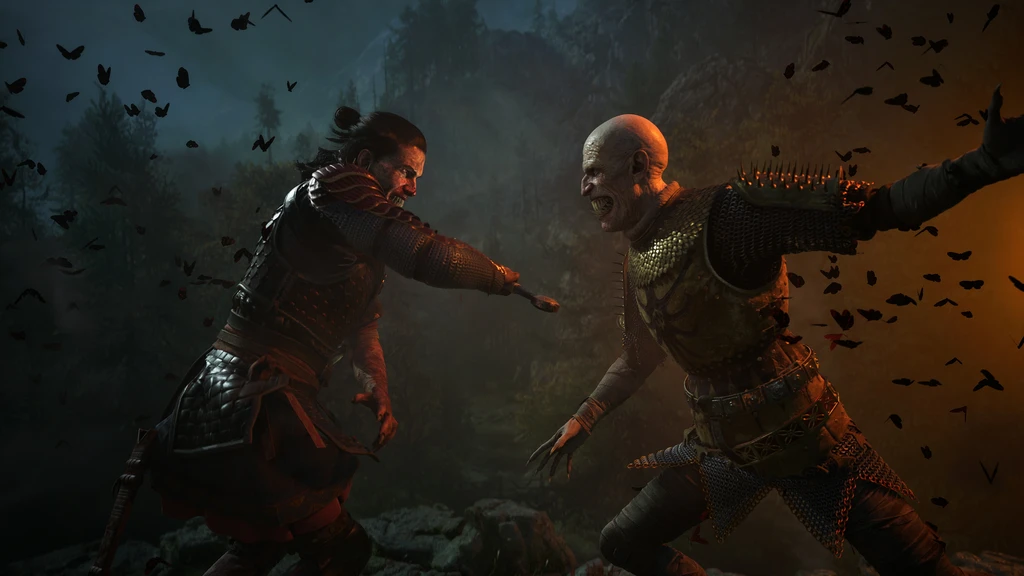
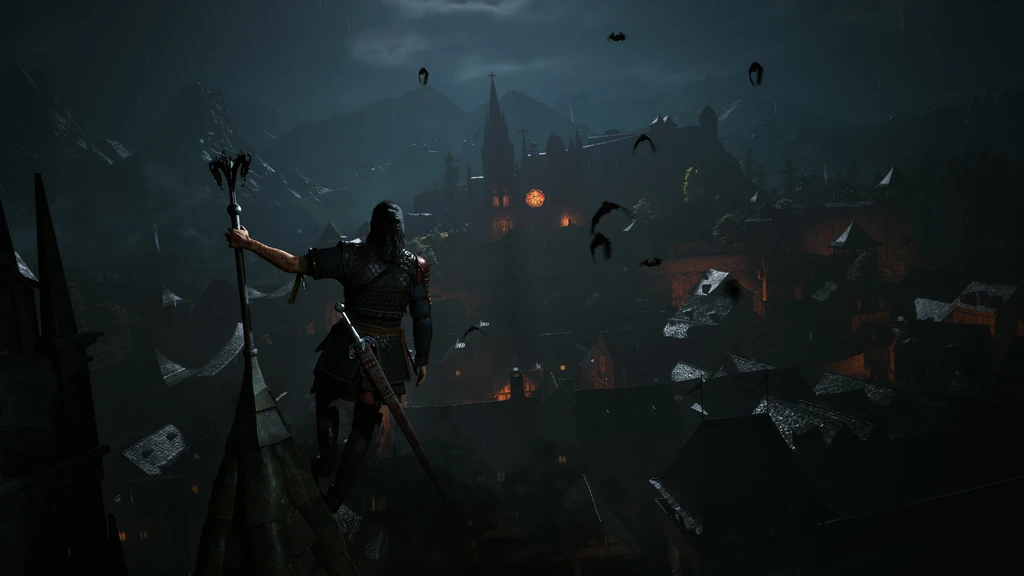
In terms of appearance, Vale Sangora succeeds through restraint rather than showiness. It doesn’t feature enormous castles that stretch across the horizon nor any architecture that would move a medieval historian to tears. Instead, The Blood of Dawnwalker aims to offer something more period-accurate while still delivering a rich, detailed setting. You find dense fir forests, alpine ridgelines, muddy hamlets and stone churches all on a fairly believable scale. The Rebel Wolves have a true sense of what a landscape should look like, and there were many instances when I would stop moving to take in the view. The day-and-night cycle lets them present two versions of the same world for artistic direction, and they use it fully: a settlement that looks tired during the day becomes something much more threatening at night. The creature and vampire design also deserves note: as we move away from vampires in literature being seen as sexy or clichéd, more disturbing, macabre choices support the dark fantasy atmosphere the game adopts.
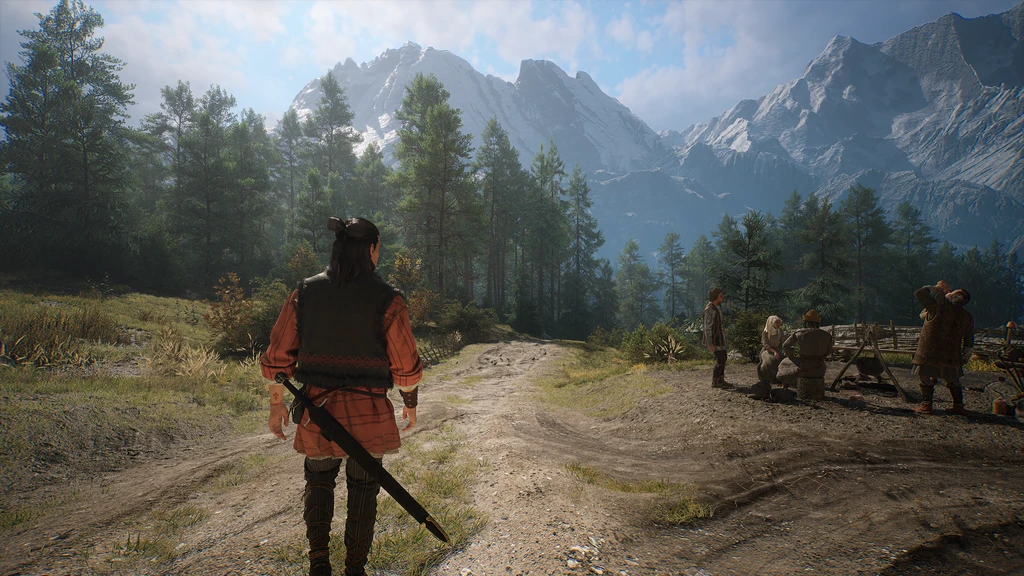
The presentation stumbles on the technical side. Texture and asset pop-in is the most persistent offender, turning up on armour detailing, on foliage, and most distractingly during cutscenes – something that will hopefully be patched on Day 1 if not shortly after. Lighting glitches crop up here and there, Coen has an unfortunate habit of catching on world geometry during busier fights, and I had the occasional enemy drop through the floor after being felled. Facial animation is also noticeably weaker on the secondary cast than it is on Coen himself, which is a genuine shame given the quality of the performances those faces are attached to. None of this was ever severe enough to derail my enjoyment. It is what we have come to expect from any game with ‘open world’ appended to its genre description nowadays, but if you are an early adopter, then go in expecting a few rough edges.
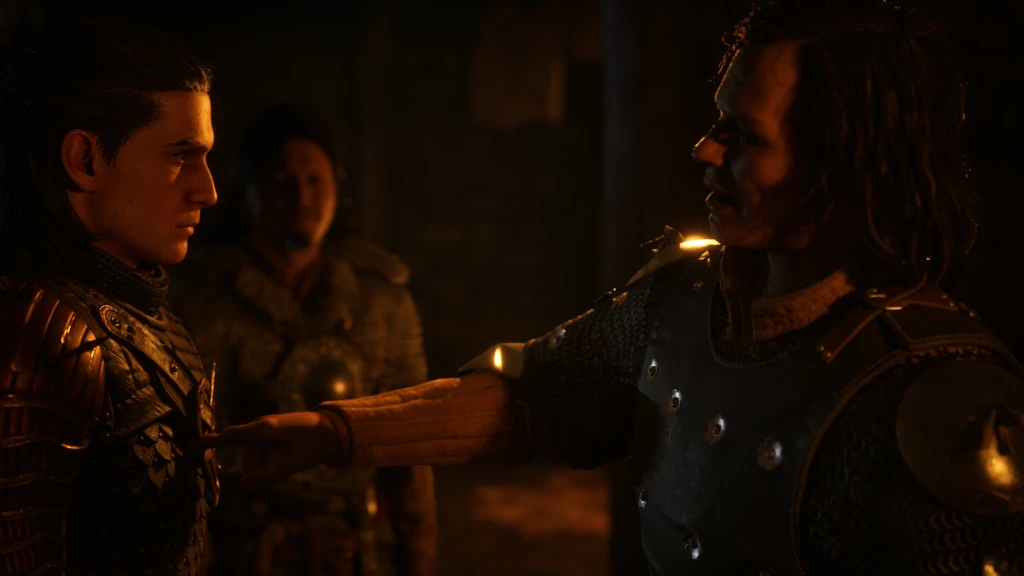
In terms of audio, the score is one of the quieter achievements of The Blood of Dawnwalker. It has a clear Eastern European character, featuring sorrowful strings and low choral passages during exploration, which fit the atmosphere much better than a standard orchestral fantasy score could. It also shifts its style appropriately with the story, using more discordant compositions during the more intense and horrifying scenes, and the percussion increases when the swords are drawn. It shares similarities with other titles in the genre, for example, The Witcher 3. Yet the overall soundtrack has enough originality that these similarities pass as a fleeting observation rather than a criticism. The general sound design is also excellent, especially at night, where the ambient sounds make the valley feel truly dangerous, and the unpleasant, wet sounds associated with feeding serve their intended purpose. As for the voice acting, it is consistently good, and Will De Renzy-Martin should be specially recognised for his performance as Coen. The supporting cast keep up with him too, and the performances given to Anca, Lacra and Volk in particular support entire questlines that would have failed with less competent acting. What struck me more, however, is how the minor roles are handled, since this makes the world feel even more realistic, rather than making it seem as if each character’s tone were determined by their role in the plot.
Onto gameplay, and the headline system is the thirty-day limit, which given other RPGs such as the Persona series can feel restrictive with the better part of a year, may seem like you will be left replaying many times to unlock everything. Each day and each night is broken into eight segments, giving you sixteen per full cycle across the whole campaign, and the crucial detail is that there is no ticking clock. You can wander the valley, scale a cliff, pick herbs or fight wildlife for as long as you like without a single segment being spent. Time only advances when you commit to something specific, and the cost is always displayed before you do. Having a time limit does weigh on you, don’t get me wrong, especially since spending skill points also costs time, meaning that making Coen stronger and helping the people of the valley are in direct competition with one another. At the same time, it adds that level of tension some players may enjoy. At least this is true at the start, as the pressure doesn’t hold. By the back half of my playthrough, it had become fairly apparent that thirty days is more generous than the framing suggests, and once I realised I had time in hand, the careful planning I had been doing quietly stopped mattering. It is still a smart system, and a far better one than a literal countdown, but I finished the game wishing the deadline had actually cost me something. The prologue proves Rebel Wolves know how to make an hour hurt; the other days, less so.
Coen’s dual nature is also key, since it’s where the game’s identity lies. During the day, he acts as a swordsman with access to witchcraft, can heal people with food and medicines he makes, and can enter occupied areas and talk to the inhabitants. At night, however, he gives up all of these abilities in exchange for claws, a set of vampiric powers, and a form of healing that comes only from blood. The difference in movement is the most noticeable, because at night you get Shadowstep, which allows you to teleport up walls and onto rooftops, the ability to climb surfaces directly, and a wolf form that lets you cover ground quickly – all of these options enable routes that are simply unavailable to you during the day. Certain content is tied to one form or the other. Still, the more interesting element is the quests available at any time, since at night they usually offer a violent, stealthy solution. At the same time, during the day they offer a diplomatic one, often arriving at the same destination through completely different means. The only thing I’m not satisfied with is the fact that the vampire is so much stronger, faster and safer than the human that the balance leans heavily in one direction as the game goes on, and by the final third I was in the habit of scheduling any difficult task for after dark, which in a way defeats the dichotomy that the story is so keen to establish.
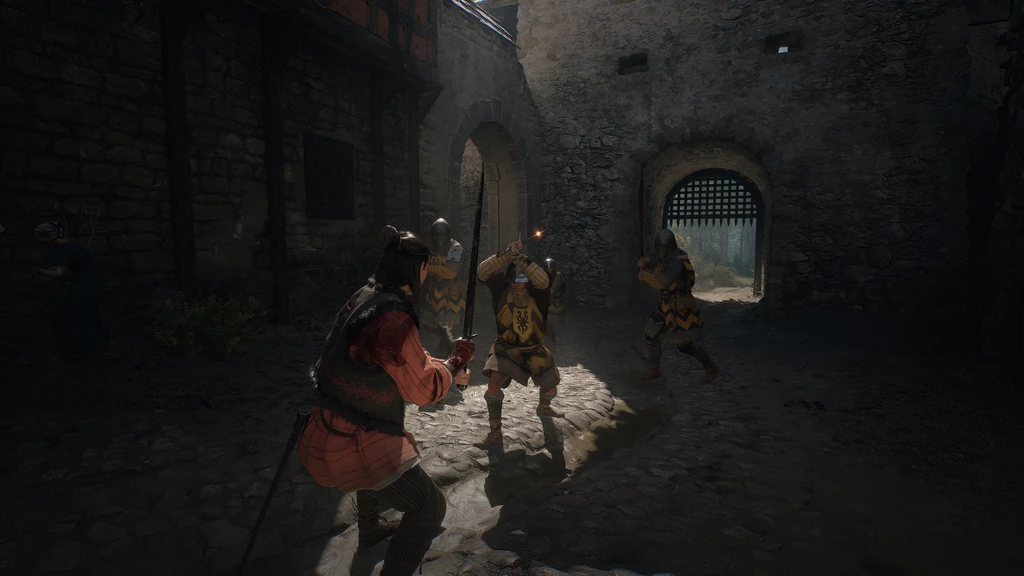
Combat is based on a directional system, and it’s this feature that will determine whether or not The Blood of Dawnwalker works for you. Each attack – both yours and your enemies’ – comes from one of four directions, and your defensive choices are either an omniblock which catches everything at the expense of stamina or a directional block that has no cost and, if timed correctly, leaves your opponent open to a counter-attack. A perk later in the tree introduces a riposte that designates a direction for a guaranteed critical, and both successful blocks and hits accumulate activation charges that power your special abilities. It can definitely seem more than a little complicated at first, and until you get used to it the early part of the game can feel meaningfully harder than the middle for this reason alone. However, this isn’t a drawback of The Blood of Dawnwalker, since combat has a clear rhythm that gives fights strategy and value rather than the usual hack’n’slash feel.
Whether good or bad, it’s worth looking at the issue of combat fatigue, since the large number of battles can lead to you wanting to stop playing the game for a day or two before picking it up again later on. The main cause of this is the lack of variety among the enemies, and this area certainly needs far more variety. In larger group battles, the game also reveals some of its weaker points, such as a lock-on mechanism that never successfully targets the enemy I was aiming for, a camera that struggles in confined areas, and Coen sometimes getting stuck on the environment at the most inappropriate moment was irksome. This problem is made worse by the fact that there is no real alternative to fighting; opponentsCoen has nothing worth throwing and nothing that functions as stealth, and the spaces you fight in are backdrops – there is never a ledge, a fire or a chokepoint you can turn against anyone. Once my character build had been settled, most of the encounters ended in the same way each time, and the late-game questlines in particular tend to stack fight after fight in front of the story beat you actually came for. It didn’t become bad in an absolute sense, but the excess content is there, and despite the game’s ambitions, more time could have been spent developing the enemies in the world.
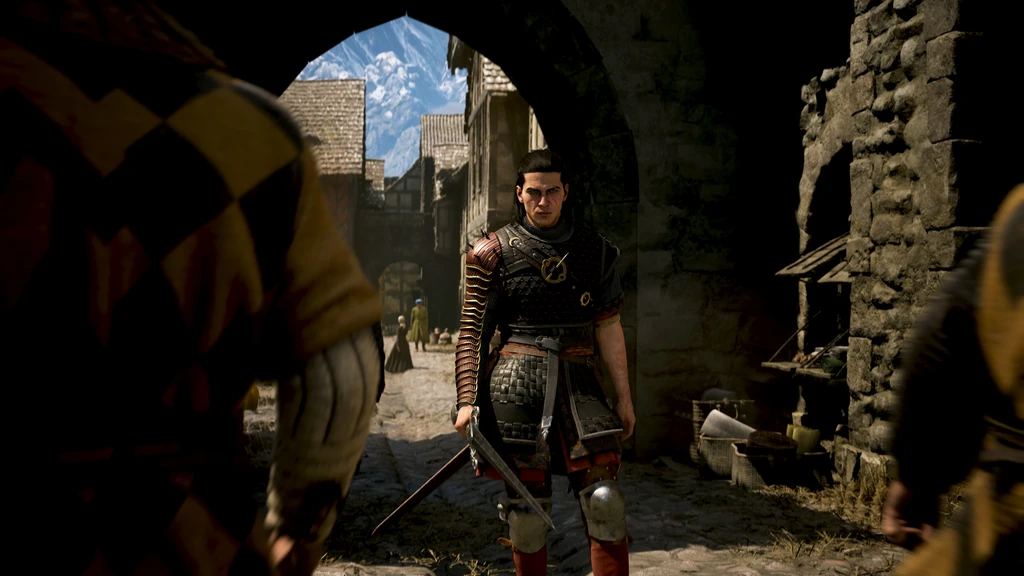
Progression fares better. Coen has three skill trees – Swordmastery, usable at all times, Witchcraft by day and Vampirism by night – and none of them simply open up as you level. Human abilities require you to obtain books and manuals, which you have to search out or purchase. By contrast, the vampiric abilities are available only after your corruption rank has reached a certain level, this rank increasing as you feed, which in turn raises the risk of Coen losing control of himself, introducing an interesting aspect in that you might unintentionally cut off access to quests, characters, or other features. In practice, however, I must admit the game offers so many ways to keep yourself at full capacity that it rarely triggered unless I deliberately chose it. Hence, the risk often seemed more imaginary than real.
The court system is part of all this, requiring you to anger Brencis’s three Boyars by carrying out various open-world tasks until they eventually appear so you can deal with them. However, many of these tasks are obviously just busywork; the writing is good enough that I seldom minded. Crafting and equipment are the weak points, and ultimately, I stopped opening either menu somewhere around the halfway mark; most of what I picked up was a fractional bump to a stat I was not tracking, but the overall structure makes up for this shortfall. This game is designed to be played again. Given the time-locked content, the permanent losses, the various endings and the huge number of threads that I never managed to touch, when I finished my playthrough I really wanted to start another one – and once some of the post-launch updates are released, I’m very likely to do so.
So, to return to where we came in: is The Blood of Dawnwalker a flagship experience, or another dark fantasy RPG destined to be swallowed by the release calendar? I would comfortably say the former. Rebel Wolves have not made another Witcher, and to their credit they have not tried to. Instead, they have made something that stands on its own terms, built around a Dawnwalker conceit that reshapes questing, combat and morality all at once. The writing is the best thing about it by a wide margin, with a cast I became genuinely attached to, a valley whose politics are far more interesting than a straightforward tale of good against evil, and the time system, even if it eventually loosens its grip, gives every decision a weight that most open worlds never manage. It is not a flawless experience and has room for improvement, such as thinner enemy variety, combat that may outstay its welcome over longer play sessions, and a technical presentation that still needs work. But a first game rarely arrives this certain of what it wants to be, and the things Rebel Wolves got right here are the things that are hardest to get right at all. I put the controller down already planning a second run, which as a revviewer, is high praise in itself.
Final Score for The Blood of Dawnwalker
This review was conducted on a PlayStation 5 version of The Blood of Dawnwalker, with playtesting conducted on a retail PlayStation 5 Pro. A review code was provided by Bandai Namco Entertainment Australia to facilitate this review.
The Blood of Dawnwalker will launch on PC, PlayStation 5 and Xbox Series X|S starting 3 September 2026

