
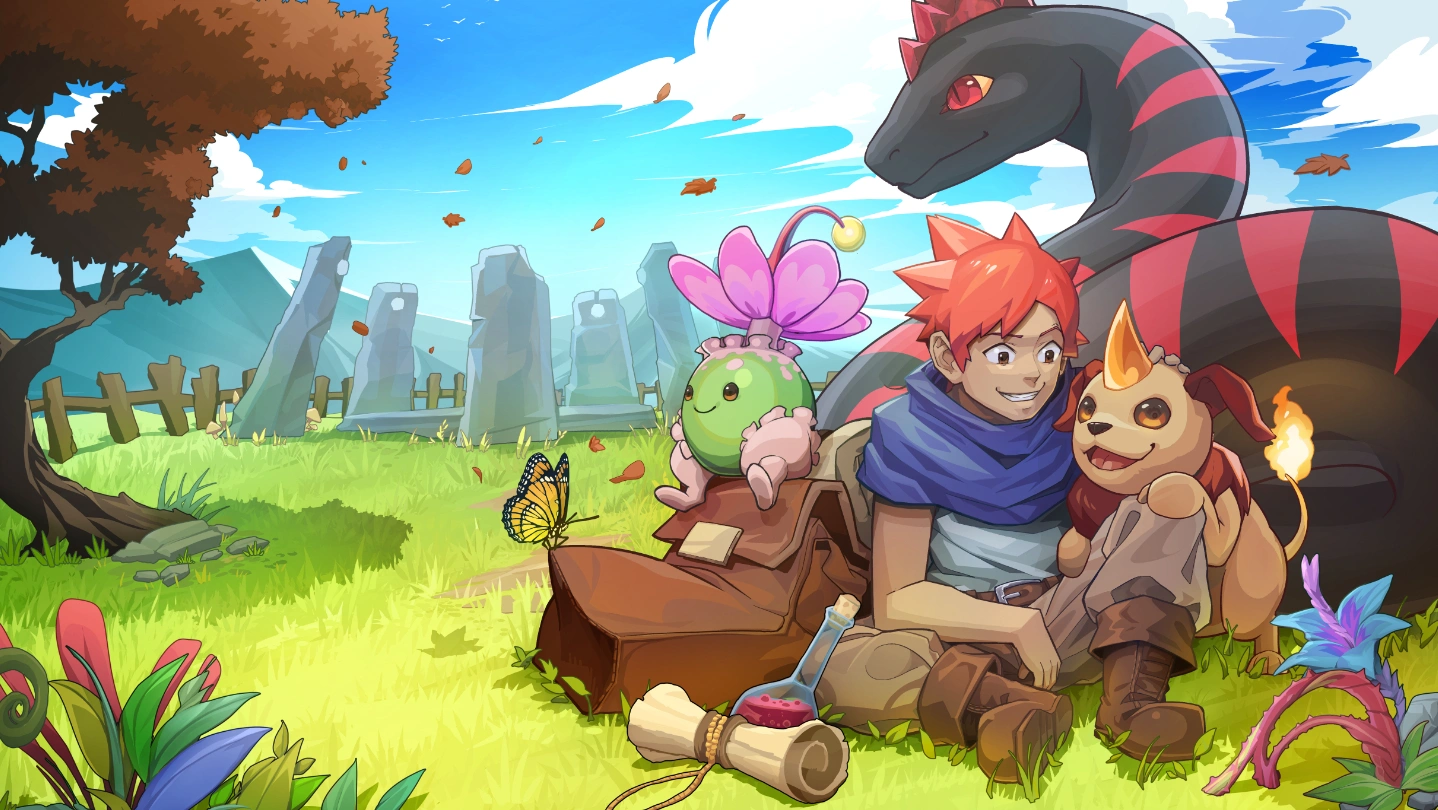
Ah, the humble monster collection game. While best popularised by classic IPs such as Game Freak’s Pokemon and ATLUS’ Megami Tensei franchises, in recent years, we have seen a greater offering of games trying their hand at something in the genre – a few, such as TemTem and Palworld, gaining some name recognition, while others, specifically in the web3/blockchain/NFT space, drift off into obscurity, falling to controversy, or being outright scams. But while some of the bigger names go on a broader scale, others relegate the monster hunting, raising, and battling experience to a minigame in a much broader RPG; there is much that the indie game scene can offer in that middle ground. Today, I am reviewing one game that has recently launched on Steam: Portal Fantasy.
While the game initially has its roots in the Web3 space, a repositioning has seen it split into the Steam version dubbed Portal Fantasy and the “web3” browser-based game Portal Fantasy: Worlds Beyond. For the sake of this review, we will only be talking about the Steam version, which aims to be a more traditional experience. In writing this review, I have not touched the other version, and none of my comments should be aligned with this version.
A Quick Note Before we Begin
The first red flag for any game you purchase and download is that you receive a nice warning from your chosen internet security service that the game’s main executables are considered Spyware (in my case, Win64:MalwareX-gen [Spy]). This is purportedly a known issue that they are looking into – and a VirusTotal check yields a response of 5/62 positive detections as of writing.
Still, suppose you are concerned about potentially subjecting your PC to Spyware and don’t trust the developer’s words on their Steam channel. In that case, you are best off waiting until a solution is implemented. When in doubt, there is nothing wrong with being cautious, and a game will still be there after everything is sorted out on the security front.
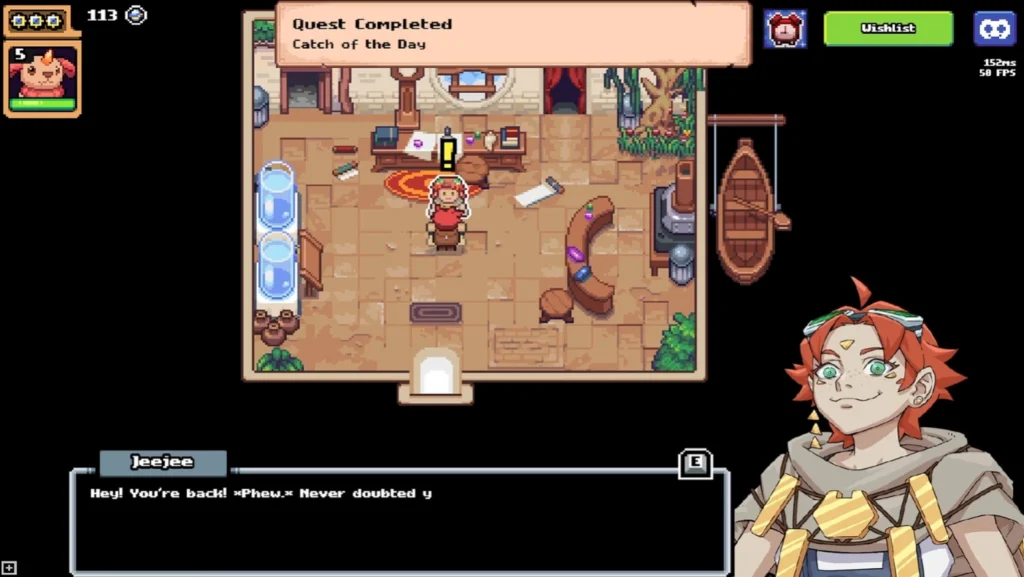
Portal Fantasy’s narrative begins in territory that will feel very familiar to genre veterans: a wide-eyed student stepping into a world of monster taming via the not-so-humble Porble Academy. At first glance, it’s your standard coming-of-age arc sprinkled with magical creatures and educational hijinks. But as the hours pass, the story takes a darker and more compelling turn, delving into ancient conflicts, shady organisations, and the more sinister nature of magic itself. The mid-game can occasionally feel like it’s dragging its feet between events; enough intrigue and world is building around Pyli to keep one’s curiosity afloat. It doesn’t completely flip the script on the genre, nor is it a game-changing narrative for the genre, but it offers just enough different to avoid feeling like a mere retread or wasted opportunity.
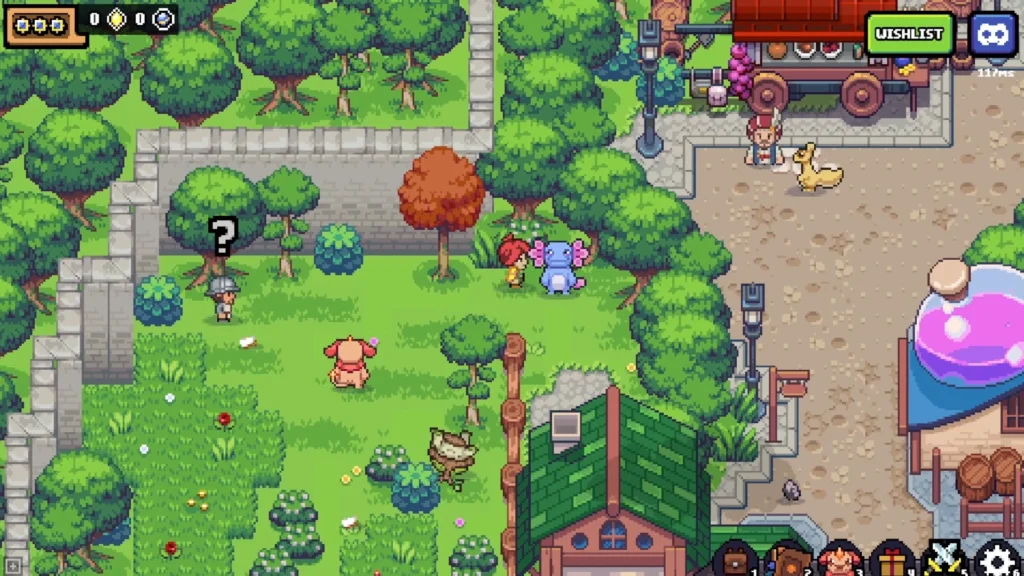
Portal Fantasy’s visual presentation is one of its most immediately striking features, embracing a retro-inspired 32-bit pixel art style that feels right at home alongside the golden age of RPGs. Each biome offers its own identity, boasting a surprisingly detailed and lively aesthetic that brings the game world to life far better than one might expect from an indie first attempt. The Porbles themselves are impressively designed – expressive yet straightforward, with a clear sense of personality that helps differentiate them beyond just type or role. There’s a sense that love and care went into these creatures, especially in how some flip expectations with more distinctive and stylised appearances. Unfortunately, this visual polish doesn’t fully extend to the UI, which feels more like a placeholder than a finished product. Menus are inconsistent, the crafting interface can be tedious to navigate, and things get too convoluted. It doesn’t break the experience, but it’s one of the few areas where the polish frays at the edges.
Audio design is one of the true unsung heroes of Portal Fantasy. Each region boasts a defined soundscape, with tracks that are more than just background filler: they actively shape the mood and sense of place in a way that feels surprisingly refined for an indie debut. The blend of chip-tune nostalgia with more orchestral elements is handled with a level of nuance that is welcoming and just felt… right. While the game completely sidesteps voice acting, the soundtrack picks up that slack and then some, creating a sense of immersion that many larger-budget titles can sometimes struggle with.
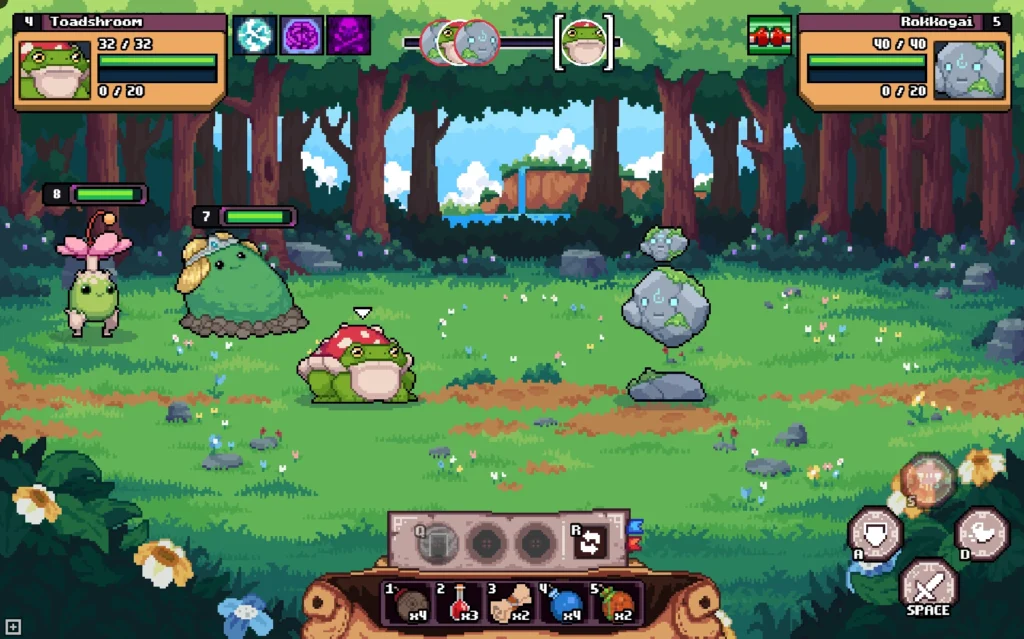
Gameplay in Portal Fantasy presents a familiar, yet slightly tweaked, take on the classic turn-based monster battler. Battles take place in a traditional side-view perspective, where players control a team of Porbles with varying elemental affinities. While the mechanics are easy to grasp – thanks in part to a relatively small type chart of six elements (a wise choice considering the current number of Porbles) – a few features help it stand out. One of the more welcome twists on the genre’s formula is the addition of an armour system, which gives combat a bit more tactical bite by letting you temporarily stun enemies once their defences are broken. Coupled with a passive trait system that subtly encourages building teams with synergy in mind, there’s a bit more to chew on beneath the surface than the typical rinse-and-repeat affair. Conversely, the momentum mechanic rewards players who think ahead, gradually unlocking stronger signature abilities the longer a battle stretches on. It’s not a complete reinvention, but the mechanics are snappy, well-tuned, and, most importantly, generally fun to engage with.
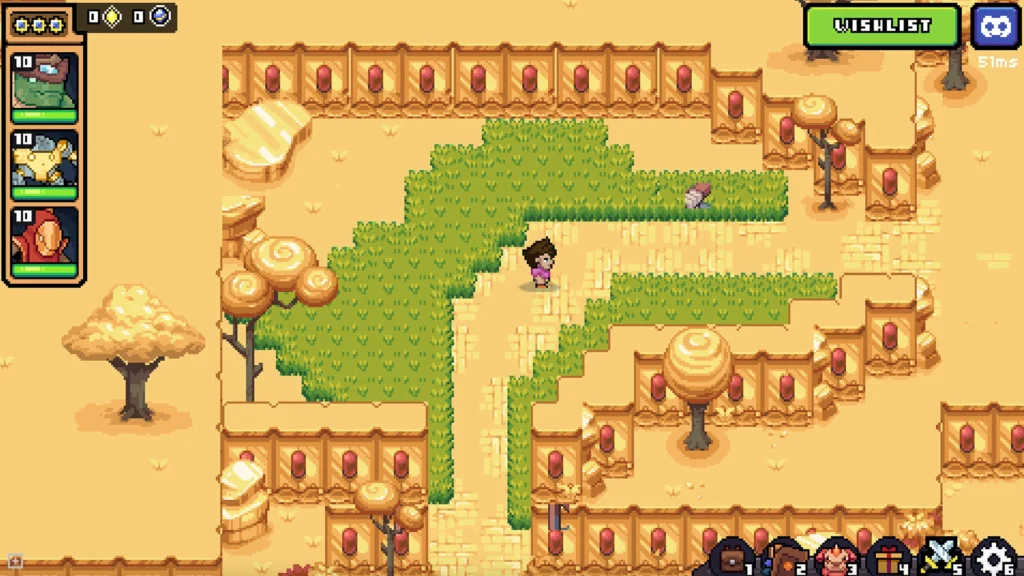
Beyond the battlefield, Portal Fantasy leans heavily into systems that cater to those who love tinkering with stats and squeezing the most out of their teams. The fusion and augmentation mechanics form the backbone of long-term progression, allowing players to collect and reinvest parts into beefing up their favourite Porbles. It’s an engaging enough system for min-maxers. Still, the material grind required to get anything significant out of it can feel like a bit much, especially if you’re not already invested or consider it your least favourite part of a game. I found myself gradually drawn into the rhythm of the experience, particularly once I paired it with the game’s environmental puzzles and platforming sections.
There are a few hiccups here and there aside from the aforementioned security software making it trifling to actually play the game – such as misbehaving puzzles and some lacklustre drudgery and side-content. But alas, these will hopefully be resolved as time goes on. Rough edges aside, the gameplay loop here is solid, and there’s hopefully, a lot more will be made available in the future – with a range of hotfixes post-launch and a roadmap charting plans for Version 1.x and 2.0 already shared.
Ultimately, Portal Fantasy lands somewhere between potential and polish, a game with earnest ambitions that doesn’t quite escape the shadow of its influences but offers a light forward. While it provides a nostalgic aesthetic, solid creature designs, and gameplay systems with just enough wrinkles to be interesting, the overall experience is weighed down by growing pains and a genuine concern that the development team is splitting itself across two instalments in the same IP, when they have a rough gem genuinely deserving of some polishing here. UI roughness, a reliance on grinding, and occasional technical issues hold it back from being the indie gem it aspires to be. That said, for those willing to overlook the bumps in the road, there’s a solid foundation here, one that, with time and refinement, might carve out a space of its own in a very crowded genre. As it stands right now, though, it’s a competent entry that just needs refinement.
Final Score for Portal Fantasy
This review was conducted on a PC (Steam) digital copy of Portal Fantasy, provided by the Portal Fantasy team to facilitate this review.
The Steam version of Portal Fantasy is currently available to purchase, on well… Steam.

