
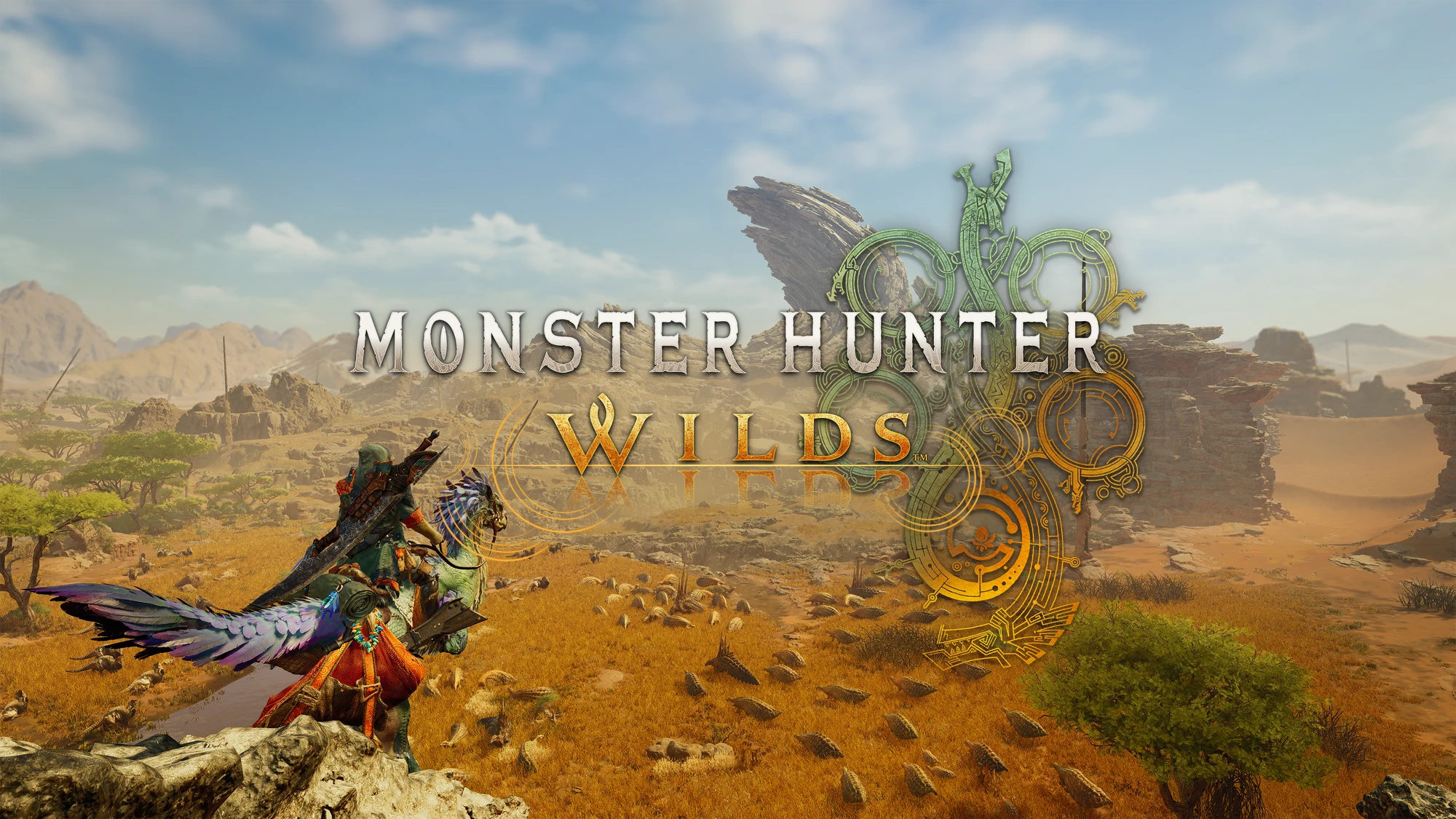
As time passes and our attention spans are bombarded by the next flashy visual technology or quick means of getting a gamer’s serotonin pumping, it can feel as though many action RPGs favour quick battles and experiences over drawn-out moments that leave you on the edge of your seat. After all, what would happen if a gamer spends 10 minutes grinding a boss, gets a game over, and then rage quits? Monster Hunter has always been a reliable series where players can tackle big beasties with the intensity they deserve—and following 2018’s Monster Hunter: World, gamers finally have a completely new, current-gen experience to dive into with Monster Hunter Wilds. With high expectations to meet, does this instalment thrive or falter in its new hunts? Read on to find out!
The Monster Hunter franchise has never been one for its groundbreaking story, at most doing just enough to justify a player working their way through the enemies and making it to the post-game. Monster Hunter Wilds offers a more focused premise than its predecessors, arguably one of the better implemented, but still very much a linear progression through regions and mobs. This time, the fate of the Forbidden Lands – a mostly uninhabited region of shifting climates and secretive, scattered tribes – hinges on the sudden appearance of a young boy named Nata. His mere presence challenges what the Hunter’s Guild knew about the area’s supposedly inhospitable nature. Our role as the Hunter sees us joining guild members in trying to uncover the past and escorting Nata back to his people – an unknown folk referred to as ‘The Keepers’ – while also investigating the white-furred menace that forced him to flee in the first place.
If you’ve been keeping up with the series, you’ll recognise a few familiar beats – like a local civilisation under threat from some ecological imbalance – but Monster Hunter Wilds puts an extra spotlight on its characters and world. The game devotes more scenes to Nata’s emotional journey, and it nurtures a small cast of companions who feel distinctly human, each endowed with quirks and motivations that mesh well with the overarching themes of coexistence. Characters such as Alma (your handler) and Gemma (the resident smithy) stand out because they’re not only quest-givers but also confidants, excitedly talking through the nature of these new lands or the moral weight of felling so many creatures. While it doesn’t elevate the story beyond basic necessity, it does create a more personal connection with its characters and makes for some enjoyable watching.
That said, the plot doesn’t entirely escape some familiar pitfalls. At times, Wilds leans on well-worn “save the village from the big bad monster” tropes, and the early portions of the campaign can feel like they’re trudging through exposition you might already guess from a mile away. Other times, the pacing stalls with extended walk-and-talk moments where you follow NPCs from one point of interest to another – your hand hovering over the button to skip the current scene. Still, these slower beats aim to draw you into the Forbidden Lands’ culture and ecosystems – showing how different locales react to changing climates and monstrous intrusions – so they serve a functional (if not always thrilling) purpose.
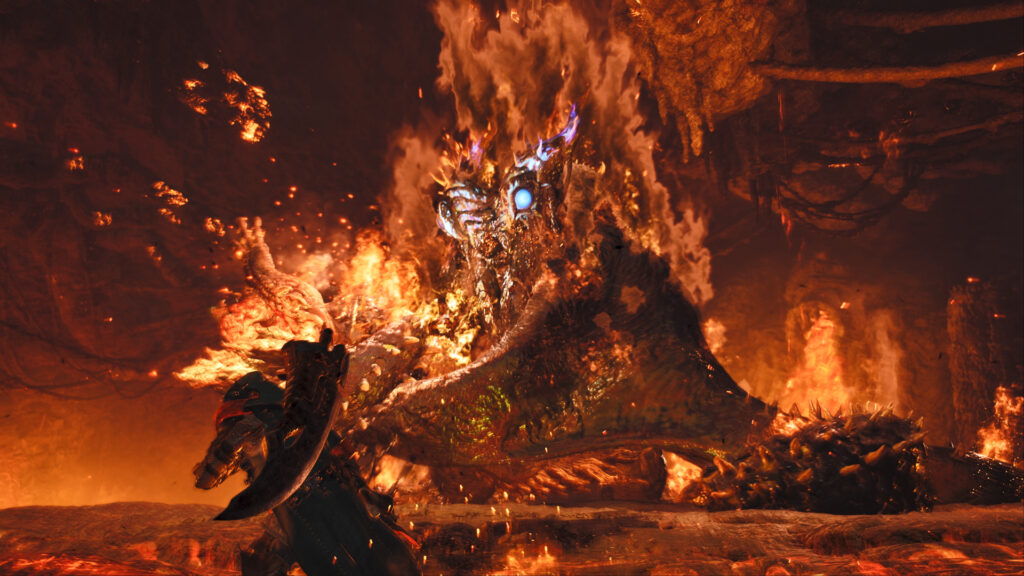
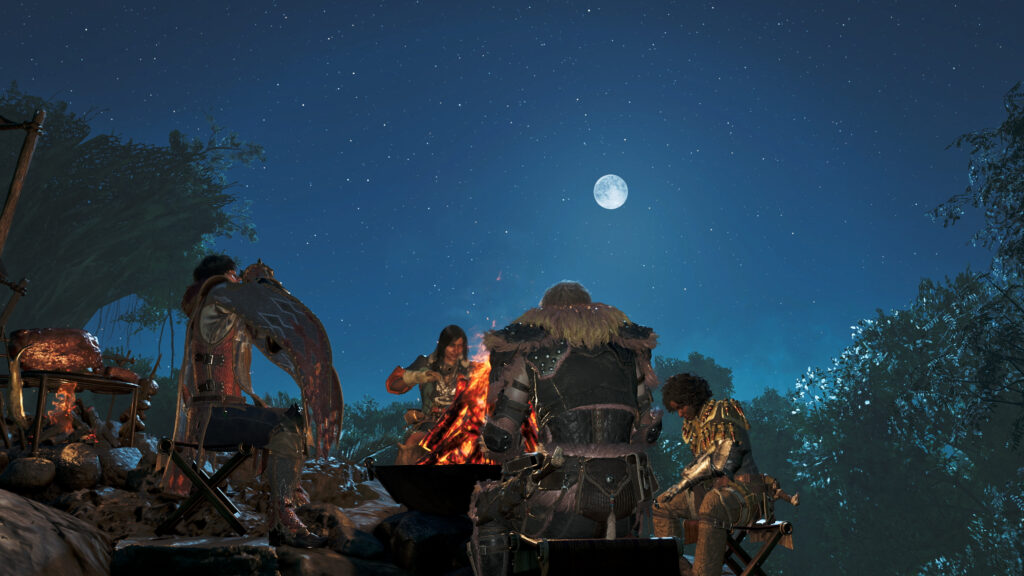
Thankfully, complementing Monster Hunter Wilds‘ narrative is a world design that keeps you engaged far beyond mere monster slaying. The Forbidden Lands present a patchwork of diverse biomes – flooded wetlands teeming with life, windswept desert plains split by sudden storms, and arid lava-filled caverns that are a mining haven filled with peril. Each region shifts through seasons of scarcity (Fallow) and abundance (Plenty), making the same locale feel radically different on return visits. One moment, you’re trudging along dry riverbeds and warding off heat-frenzied scavengers; the next, a roiling sandstorm plunges everything into chaos, bringing out an entirely different subset of wildlife. While you’re free to fast-travel or hop atop your Seikret mount to hurry off for the next big fight, lingering often pays off. This ebb and flow of resources and predators encourages you to truly engage with the ecosystem – whether that means poking around hidden alcoves for rare materials or steering clear of specific rampaging apex beasts. Each area and season has its own charm, and although the world can feel a bit too open for easy navigation by landmarks alone, there are breathtaking vistas to discover at every turn. Minor hiccups like texture pop-in during extreme weather slightly mar the spectacle, but the overall dedication to environmental storytelling still shines through – even more rote ‘save-the-village’ hunts gain new life in a landscape that constantly changes beneath your feet.
Coupled with these evolving landscapes is a character creation and progression system, which is robust and full of options. While you are ultimately locked to a standard body type (thankfully there is minimal gender-locking of gear), you still have plenty of ways of making your character your own – from fine-tuning your character’s facial features to the range of hairstyles as well. Furthermore, you have the opportunity to shape your Palico companion’s fur patterns, body type and other specifics – with the character and companion you craft being reflected nicely in all cutscenes. It’s not purely cosmetic either: better gear stands out against whichever custom design you’ve chosen, which means forging that new chest plate or upgrading a weapon isn’t just another stat boost – it’s a chance to further define your look. All the while, pop-up camps and lively base hubs keep you anchored, re-supplying your kits on the fly or offering quick ways to tweak your loadout without trudging back and forth through zone after zone.
No matter which corner of the Forbidden Lands you find yourself in – be it a desolate canyon during high noon or a flooded forest teeming with aquatic creatures – the music and ambient audio work in tandem to draw you in. The music and sounds aren’t something that is at the forefront of the experience, but another element that builds upon the world with a subtle orchestral track of varying intensities or some wild animal noises perhaps hinting at what is around the corner. Furthermore, even simple actions like your weapon strikes colliding with thick monster hide have a satisfying heft, elevated by crisp, layered sound design.
The dialogue features more heavily in Monster Hunter Wilds than in older entries, so you’ll be hearing characters’ voices more often as you chart new terrain or debate your next hunt. Performances for the English dub land somewhere between earnest enthusiasm and straightforward exposition. They may not be peak video game voice acting, but they do a good job of conveying the gravity of what your protagonist and their allies encounter while remaining understandable and serviceable. It’s a solid mix that generally sells each character’s personality and motives, though some smaller side roles can sound a tad underbaked. The voice acting also provides multiple options for your protagonist, complemented by some solid pitching choices so you don’t sound like a chipmunk if you prefer a slightly higher pitch. My only qualm is that some of the battle lines are limited in number, meaning you will hear—especially your Palico companion—the same lines repeated.
When it comes to the actual hunt, Monster Hunter Wilds stands out by welcoming new players without undermining the complexity that veterans crave. I wouldn’t say that the new player experience is handholding; instead, it ensures you have time to get acquainted with the basics and, through trial and error, find your way to playing the game competently. The core gameplay loop doesn’t stray too far from the norm: gather supplies, undertake a quest, chart a path to your next target and ultimately clash with the beast(s) that tower above you in both scale and hit points. This foundation is a familiar framework, refreshed by the addition of a few new elements – from the seikret mounts that can carry extra gear and auto-route you to where you need to go, to streamlined processes around gathering resources so that you are less bogged down by item micromanagement.
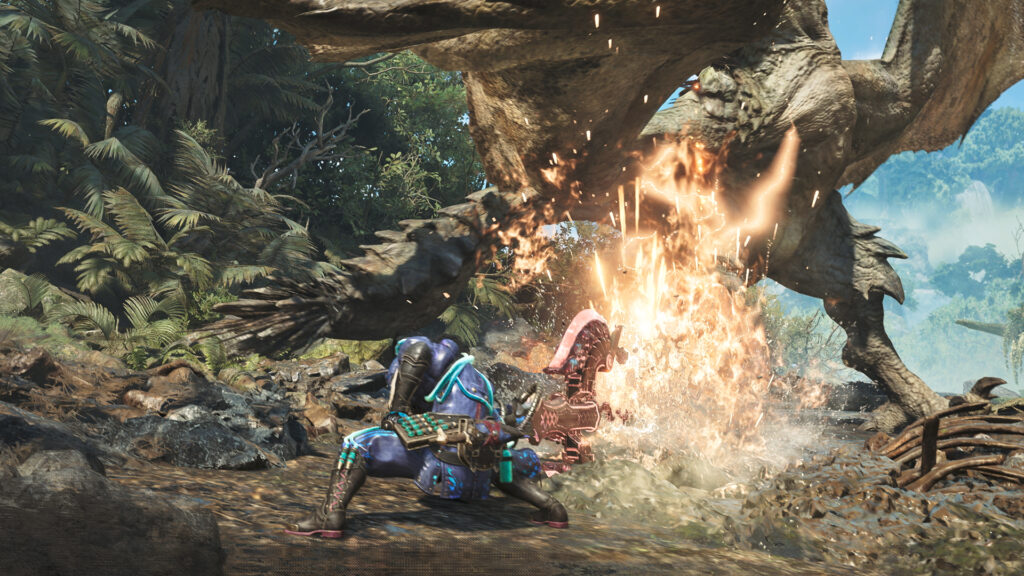
Long-time Monster Hunter fans will recognise the 14 weapon types that have defined the series for years, from some of the more traditional forms of weapons such as the medley of swords, to Insect Glaive and Hunting Horn which are more magee-aligned classes in a world without magic. Monster Hunter Wilds also introduces a new Focus Mode that allows you to zero in on a chosen part of the monster’s body, making it a little easier to target the weaker spots. Furthermore, there are Focus Strikes, which utilise the system but allow you to provide a painful attack on a foe’s wound, dealing incredible damage and some extra loot. You’ll also see a flashier flare-up in combat when performing Perfect Guards or Offset Attacks, tools that demand well-timed button presses to repel or counter a monster’s assault. Pulling one off means you get to follow up with an explosive riposte, and the resulting Power Clash can be a genuine showstopper—landing it at just the right moment can turn a tough fight on its head.
One thing I appreciate about each of the weapon types is that while they each handle a little differently to factor in different playstyles – so some are more/less powerful, some are more/less bulky and some can shield while others cannot – each are well balanced in the grand scheme of things. Therefore while your first compulsion might be to search for a Weapons Tier List online, I’d argue that you are better off finding what you enjoy. Out of curiosity I did try a couple of tier lists as I began playing, but quickly abandoned the top-tier weapons for those generally ranked much lower because they suited my playstyle.
Alongside these improvements, your trusty Seikret mount can revolutionise how you approach each assignment. Able to store additional items and even tote a secondary weapon, it reduces the constant back-and-forth that used to plague longer hunts, letting you change tactics on the fly without needing to scramble around a camp. The Seikret’s autopilot can whisk you to your next destination, too, removing the hassle of trudging across expansive regions when you’d rather save your energy for the boss fight. Granted, not everyone wants to zip past the carefully crafted landscapes, but having a quick-travel and mid-hunt gear option is invaluable for both new and returning hunters. But I think easily the biggest feature of this is being able to quickly shift between a heavy striking weapon and a ranged weapon, especially with the ability to seamlessly attack while riding on them.
Teaming up with fellow hunters in Monster Hunter Wilds has never been easier. Whether you’re firing off an SOS flare to call in allies in the middle of a quest or inviting up to three friends to form a hunting party, the drop-in system keeps the momentum going. When other players aren’t available, clever AI companions step in so your hunts don’t feel empty, although depending on them too much can make battles feel less challenging. The real magic happens when actual players combine different weapon types—like a heavy hitter who staggers a beast just in time for a sharpshooter to snipe its tail from afar—creating cinematic moments that are as rewarding for teamwork as they are for spectacle. The online functionality is optional, at least until the post-game, and is pretty much a well-oiled machine that delivers an experience that in my testing was lag-free and low-stress.
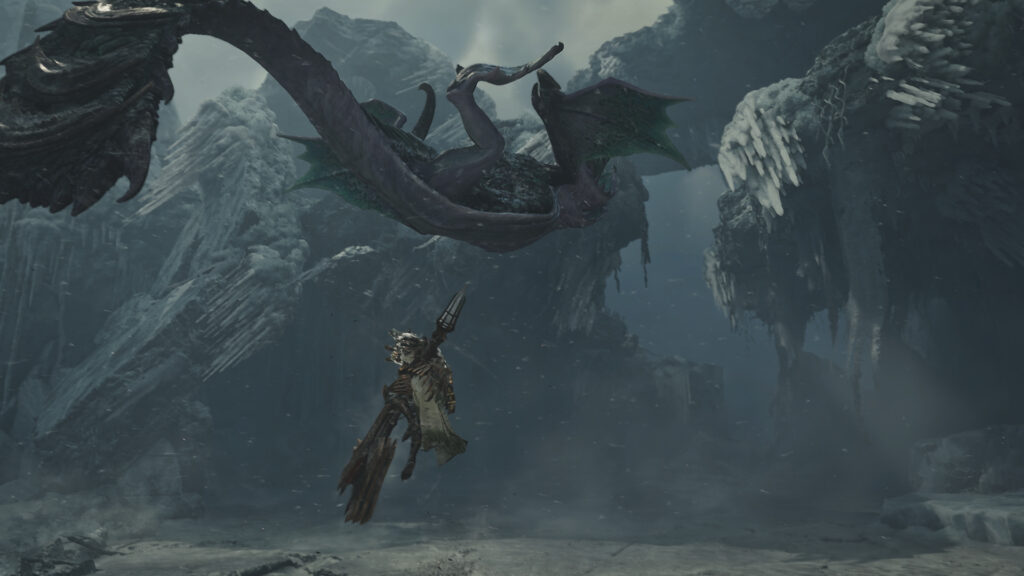
Whether flying solo or teaming up, facing the creatures is only half the fun- it is the creatures themselves that offer a good range and diversity. Iconic series veterans like Rathalos or Gore Magala crash into the fray alongside wildly imaginative newcomers, and while you may start out tackling them by just slashing your weapon at them aimlessly, battles tend to revolve around careful observation: identifying elemental powers, breaking specific body parts, finding wounds to target and sometimes using the landscape or items against them until you deal the final decisive blow. These are not your two-minute battles from other action RPGs; even when you are sufficiently geared, encounters can take five, 10, 15 or even more minutes to complete – complemented by zone changes, additional encounters and the risk of being in the wrong place at the wrong time with half your health depleted in one hit. In general, each battle is satisfying from start to finish, and the post-game content ensures that you have a hearty set of foes to defeat for dozens of hours, if not more.
At the heart of Monster Hunter Wilds lies the familiar cycle of harvesting materials, forging fresh gear, and returning to the field more powerful than before. Taking down (or sometimes capturing) each beast rewards you with monster parts that can be exchanged for gear that complements its unique aesthetic. Weapons are equally customisable, thanks to specialised skill lines that let you layer on elemental boosts or status effects for that perfect synergy. Add in the streamlined resource gathering – where you can restock potions or snag key materials without breaking momentum – and you’ll find your uptime and downtime in battle rewarding. I suppose my only qualm with the crafting system is that you only get to gear your protagonist, and while it would likely be at the detriment of online multiplayer, as someone who favours single-player experiences, I cannot help but feel that getting to customise my group of companions – who I could call into any battle – would have been a welcome optional addition, enabling me to gear them up and customise their appearance/name to my liking.
Once you’ve seen the credits roll for Monster Hunter Wilds, a host of late-game pursuits rears its head, beckoning you to keep that forge glowing. You’ll discover further gear customisation, advanced hunts that pit you against more aggressive versions of old foes, and layered armour sets for those wanting an especially stylish look. Already a few weeks into post-launch content, we have already seen new quests being added, so hopefully, we’ll see a steady drip of new hunts (and maybe even fully-fledged expansions) in the future. As with its predecessor, I feel the experience offered this time around definitely warrants it. Some may say the main story is too easy, with real difficulty only emerging in the endgame and post-launch content. And that is true to a degree. Yet I think they have got the balance right, and even if the first battles are easy, there are likely to be some that offer a seasoned veteran the right amount of challenge down the road.
Ultimately, Monster Hunter Wilds excels at encouraging you to keep hunting, with minimal friction standing between you and your next big boss showdown. Sure, the repetition of “prep, fight, upgrade” isn’t new, but it’s balanced by changing biomes, a deep roster of monsters, and an ever-evolving set of weapons that let you try out new strategies on old foes. Even after dozens of hours, hunts continue to feel like proper boss battles, and there’s something fun about trawling through the SOS logs of fellow players to swoop in and help them achieve their own moment of satisfaction in toppling the enemy for the first time. The result is a loop that can easily carry you through hundreds of quests—a testament to Wilds’ ability to stay fresh even when you think you’ve seen it all, and proof that this series still has plenty of life in its concepts.
All in all, Monster Hunter Wilds proves there’s still plenty of excitement—and creativity—left in the series’ core loop. It builds on what came before with a more vibrant world, smoother mechanics, and enough post-game incentives to keep both newcomers and long-time hunters returning for “just one more quest” after a 6-hour play session, even when you’re 80 hours in. Between the seamless co-op options and a steady supply of monstrous threats to chase down, it’s a game that thrives on the challenge of honing your craft and conquering each new beast alongside friends. Monster Hunter has always been about satisfying battles against towering foes amidst interesting landscapes, and Monster Hunter Wilds continues this tradition perfectly.
Final Score for Monster Hunter Wilds
A PlayStation 5 review code of Monster Hunter Wilds was provided by Australian distributor Five Star Games to facilitate this review. This review was conducted on a PlayStation 5 Pro launch unit. It should be noted that the PC version does appear to suffer from some performance issues as of writing.
Monster Hunter Wilds is now available to purchase on PC, PlayStation 5 and Xbox Series X|S both digitally and physically (for consoles).

