
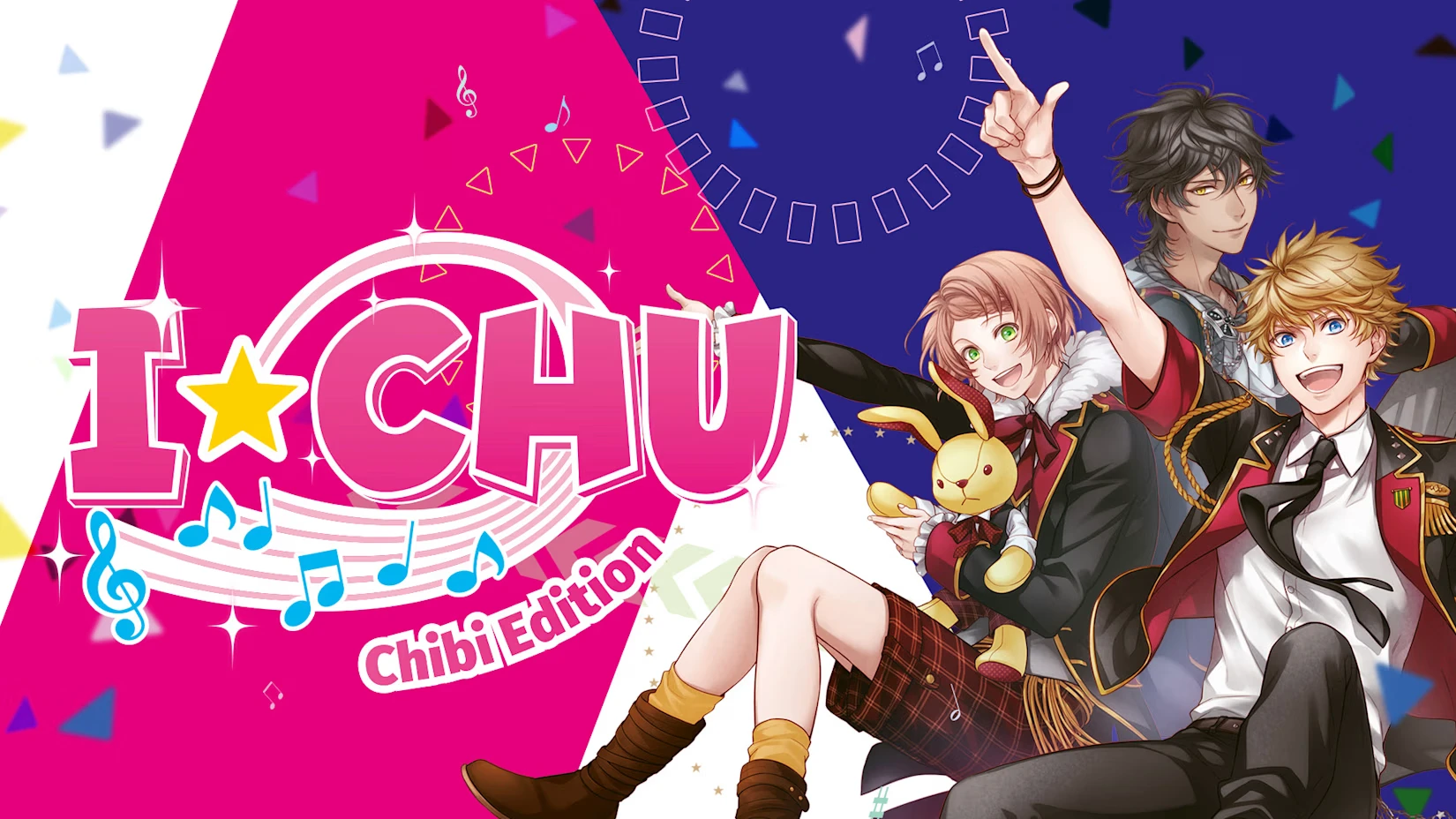
As regular readers of The Otaku’s Study would know, I am quite a fan of mobile rhythm games—to this day, I partake somewhat actively with rhythm games such as The Idolm@ster: Cinderella Girls. The issue with being mobile is that the games are out to bury players in microtransactions, and what could be seen as a casual experience is otherwise complemented by a grind for premium currency (via either in-game time or IRL cash) to get cute costumes and/or a new suite of music to rhythm out to. But over the years, we have seen a few mobile-to-console ports, where a game’s history is refined down into a single-purchase experience. One of my favourite instances of this was Deemo for Nintendo Switch, featuring hundreds of songs and having a free post-launch content schedule that spanned years. Now in 2024, another rhythm game from the past has received the console treatment kudos of developers Liber Entertainment and OperaHouse Corporation, and publisher PQube, I*CHU: Chibi Edition, a hybrid otome visual novel and rhythm game promising lots of music, cute boys and more. But at a rather affordable price, is it worth picking up? Read on to find out.

The storyline of I*CHU: Chibi Edition centres on Etoile Vie School, where aspiring male idols train to achieve stardom under the guidance of the Producer—your character—and the quirky CEO, who inexplicably wears a bear suit. The narrative is divided into three parts, following the trials and triumphs of 32 idols across three generations as they strive to find their place in the idol world. While the premise provides a solid foundation for exploring themes of ambition, camaraderie, and self-discovery, the execution often falters. This primarily comes down to it being based on a mobile game, which typically has an open narrative, broader event structures and an expansive cast.
The expansive cast is both a strength and a weakness; while it offers a diverse array of personalities and dynamics, many characters remain underdeveloped, reduced to surface-level archetypes. Nothing too surprising here, but keep in mind the narrative and character development structures don’t compare to that of a game designed for a single-player release. Unfortunately, the game’s visual novel segments suffer from uneven pacing and an average-at-best English localisation. Early chapters are bogged down by slow introductions, with the story only gaining momentum mid-way, with more misses than hits in execution. While some character dynamics and moments of growth shine through, the narrative struggles to rise above its fragmented presentation, leaving the story feeling like an accessory to the rhythm gameplay rather than a core highlight.

The design of I*CHU: Chibi Edition offers a charming aesthetic with its adorable chibi character art and colourful visual style, perfectly suited to the idol theme. The 32 idols and their various outfits showcase a delightful level of creativity, capturing the unique personalities and tropes of each character. However, the design suffers from technical shortcomings, with low-resolution artwork that becomes glaringly apparent during close-ups and when rare cards are revealed in the gacha system. Furthermore, the interface is marred by awkward navigation layers and intrusive pop-ups, which disrupt the overall experience. While the game’s visual charm is undeniable, these technical flaws and usability issues detract from the otherwise appealing design.
The standout element of I*CHU: Chibi Edition is undeniably its music, as this is a rhythm game after all and such games can thrive or die based on their soundtrack alone. As a rhythm game centred around aspiring male idols, the game features a diverse catalogue of J-Pop tracks that range from infectiously upbeat to emotionally resonant. The library is solid, boasting over 80 songs that cater to a variety of tastes, and the quality of the vocal performances ensures that each track feels uniquely tied to the idol groups they represent. While the earlier stages of the game may limit access to the full breadth of its musical offerings, unlocking more tracks is a rewarding experience as you gradually build your library of favourites. The synchronization of the beatmaps with the music enhances the gameplay, making each note feel satisfying to hit, particularly on higher difficulties.
In terms of voice acting, I*CHU: Chibi Edition delivers an expectedly polished performance. Each idol is brought to life with a voice that perfectly complements their personality archetype, from the charmingly shy to the audaciously confident. This helps imbue each character with a distinct identity, even in moments where the story may not delve deeply into their backgrounds. Of course, the game is limited to the original Japanese voice-overs, so those after an English dub may be left disappointed.
The gameplay of ICHU: Chibi Edition* combines rhythm mechanics with light gacha and progression systems, offering a dual-layered experience that is both engaging and occasionally frustrating. The rhythm game segment, the heart of the experience, employs a straightforward four-lane setup where players must time their inputs to match falling notes. This setup is accessible for newcomers but has a lot of versatility and challenge as you work your way up the difficulty modes. A key strength is the intuitive nature of the gameplay, whether played via touch controls or buttons, though the former is more responsive and reminiscent of its mobile origins. The beatmaps are well-designed, with satisfying note patterns that sync well with the game’s J-Pop tracklist.

Beyond the rhythm game, I*CHU: Chibi Edition integrates the gacha-based team-building system from its mobile release, with higher quality cards having a direct influence on your performances in songs. Players form teams of idols by collecting cards through gacha pulls, which determine their scoring potential and survival in higher difficulty levels. Cards vary in rarity and stats. While the absence of microtransactions removes the financial burden (and that nagging voice in one’s head that you will get that desired character with one microtransaction), the low drop rates for rare cards retain a grindy element, forcing players to replay songs to amass currency for more pulls. While a holdover from its mobile roots, this mechanic feels unnecessary in a single-purchase console game but does give some degree of replayability for better or worse.
Overall, I*CHU: Chibi Edition offers a mixed bag of experiences that will likely appeal most to dedicated rhythm game enthusiasts and fans of the otome idol genre – and having more games like this on the market which aren’t one step away from exacerbating gambling addictions is always a plus in my books. Its rhythm gameplay and soundtrack are clear highlights, delivering satisfying mechanics and an extensive library of catchy J-Pop tracks. However, the game struggles with its mobile game roots, retaining grind-heavy gacha systems and a fragmented narrative that feels underwhelming compared to standalone console games. While the absence of microtransactions and the charming visuals are definite positives, technical shortcomings, translation issues, and outdated design choices hold it back from its full potential. For those willing to navigate these flaws, I*CHU: Chibi Edition still provides a fun, music-driven experience, but it falls short of being an essential title in the rhythm game genre.
Final Score for I*Chu: Chibi Edition
A Nintendo Switch digital review code of I*Chu: Chibi Edition was provided by PQube to facilitate this review.
I*Chu: Chibi Edition is now available exclusively on the Nintendo Switch.

