
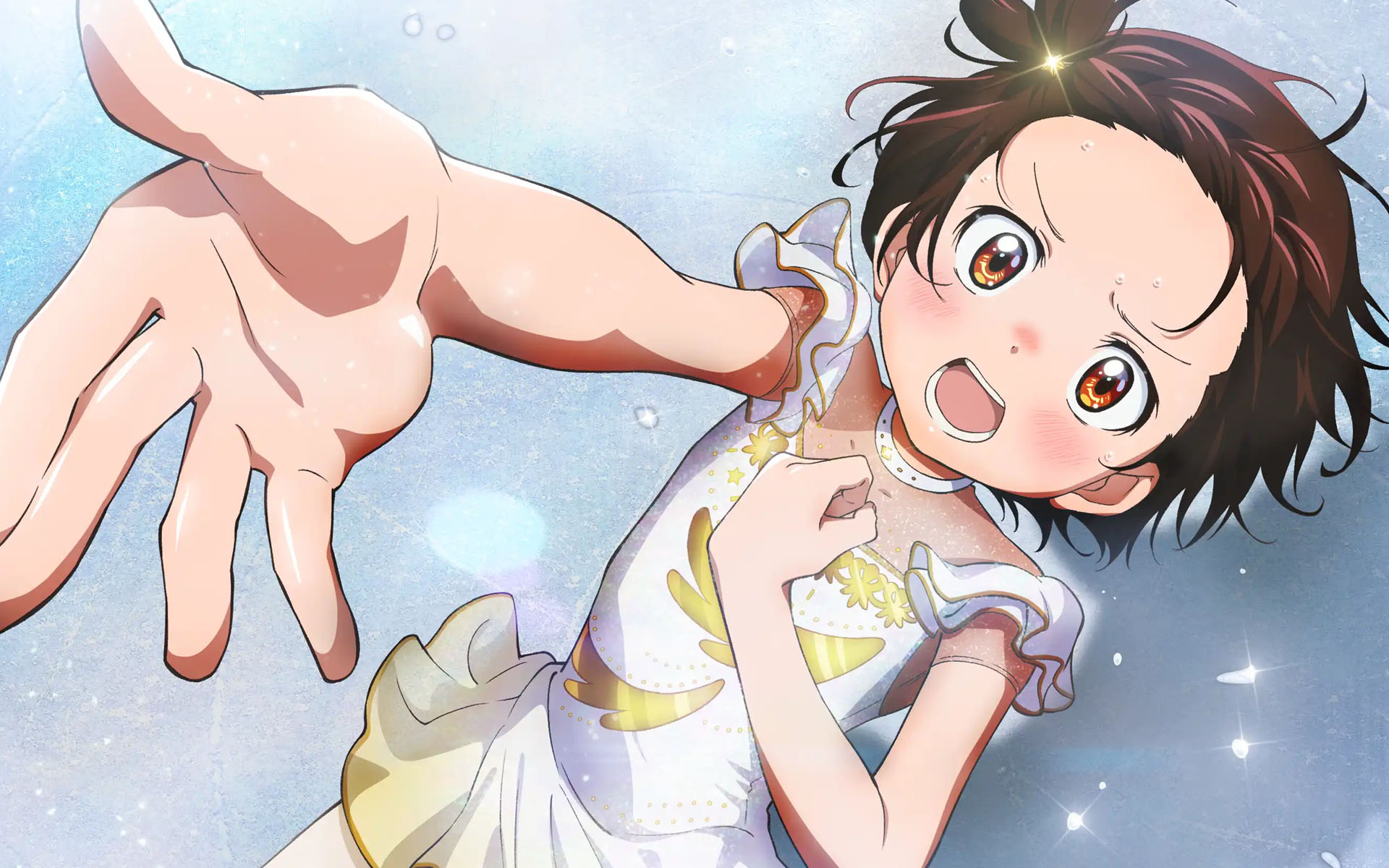
I’ve never been picky about anime genres. I’ll happily devour the latest generic isekai or a fan-service-heavy comedy without complaint. But if I have an Achilles’ heel, it’s the sports genre—a category I rarely enjoy. So, what happens when you take the heartwarming ‘washed-up mentor and tiny prodigy’ dynamic and force it onto the ice, where it spills over into drama with added complexity? You get Medalist (メダリスト). Based on the manga by Tsurumaikada and streaming on Disney+, this series had a steep hill to climb to win me over. Yet, this 13-episode gem didn’t just capture my interest; it landed a perfect score. With Season 2 set to skate onto screens on 24 January 2026, read on to see whether anime is one to quickly add to your own watchlist.

Medalist sets out to deliver an emotionally charged sports drama that centers on two outcasts who, through a set of circumstances involving fee dodging and worms, find themselves drawn together with a similar objective. The focus is primarily on Tsukasa Myoujin, a former ice-skater who is talented but failed to reach his prime, now working at a local ice-skating club. Opposite him is the 11-year-old Inori Yuitsuka, a girl who dreams of figure skating, who is dismissed by everyone around her – from her mother, who sees her as injuring herself the way her big sister did in the past, to her classmates, who deem her as effectively aloof and useless. Recognizing a kindred spirit and raw, untapped genius in Inori, Tsukasa takes her under his wing as her coach, defying the belief that it is “too late” for her to start (oh yes, you will hear this a lot throughout the series). Together, they form a bond as they challenge the cutthroat world of competitive skating, aiming for the ultimate, seemingly impossible goal of reaching the upper echelons of the sport.
As is the case with many sports anime, it can be hard to see a series like Medalist as anything about – in this case, two protagonists – seeking to climb up the rankings to reach their goal. The series feels less about the winning, although there is plenty of that, and more about the destination of achieving such milestones. Inori’s skating becomes the one place where she isn’t constantly being told she’s behind, too weird, or too much, and the show lingers on that relief in a way that feels quietly cathartic. Tsukasa, for his part, isn’t written as the typical sports-anime adult who tries to relive their glory days through a kid. He’s almost aggressively supportive, arguably a bit much so, and is the kind of coach who celebrates tiny improvements with the same intensity as a medal, and that choice makes their relationship feel more approachable and pleasant. There is the drama, sure, but there are many moments that can make the viewer swell with emotion as they celebrate their successes.
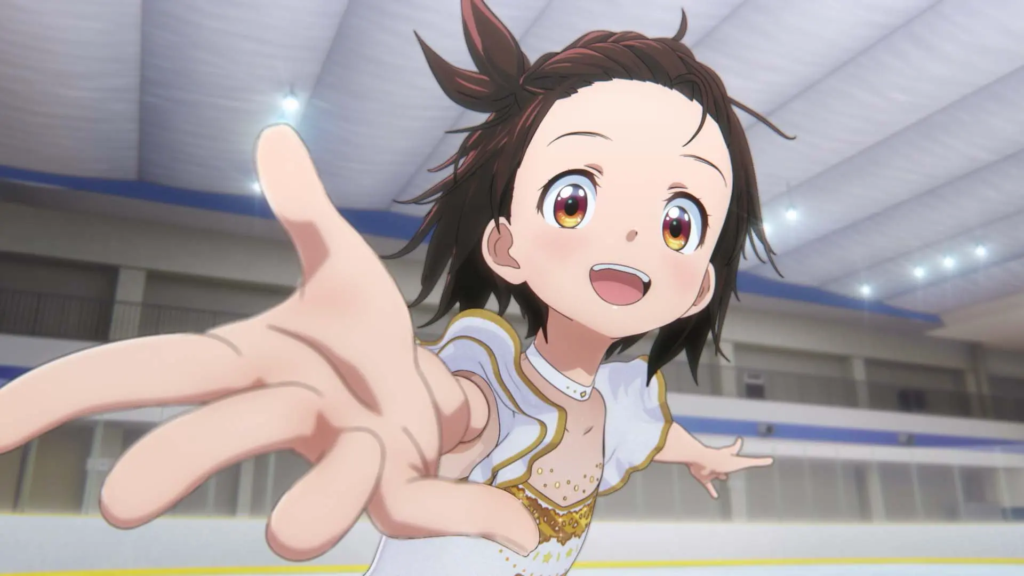
This is supported by the way that Medalist is surprisingly good at making figure skating feel legible without turning into a textbook. As long as you know the gist of what is involved, like you don’t have to be told what ice-skates are, then it gives you enough to still feel invested in the microdetails while following the broader shape of a performance. The show builds tension less through melodramatic rival smack-talk and more through practical obstacles: money, time, age brackets, growth spurts, and the way adults can accidentally turn a child’s dream into a pressure cooker. That said, the season does occasionally skate a little too fast, with certain milestones arriving sooner than they probably should. It also doesn’t help that there feel like far too many subplots, especially around secondary characters coming and going, which were arguably better delivered in the manga. My hope is that they manage to keep things moving at a steady pace, rather than making the second season convoluted, as this feels like laying a foundation for what comes next.
For an anime that is essentially about a heavily choreographed sport such as figure skating, it should come as little surprise that Medalist uses both 2D animation and more 3D CGI in some of the more complicated scenes. The 2D animation is more or less serviceable – the animation studio ENGI does a decent enough job of capturing the life and times of the characters in a modern environment, with the nice sweeping shots of different rinks, some nicely designed characters and outfits, and some general design components that make the world actively lived in. When the skating routines begin, the show shifts into a different gear, with performances that feel weighty and intentional rather than floaty or artificial – and while you can notice the difference in animation style, and it arguably isn’t flagship-tier animation, it is more than servicable. You can read the speed in the edges, the tension in the takeoffs, and that split-second dread before a landing, and it creates the same anxious excitement you get from watching an actual competition. Most of all, you can tell the designers know figure skating to some degree and don’t just phone it in enough to provide something.
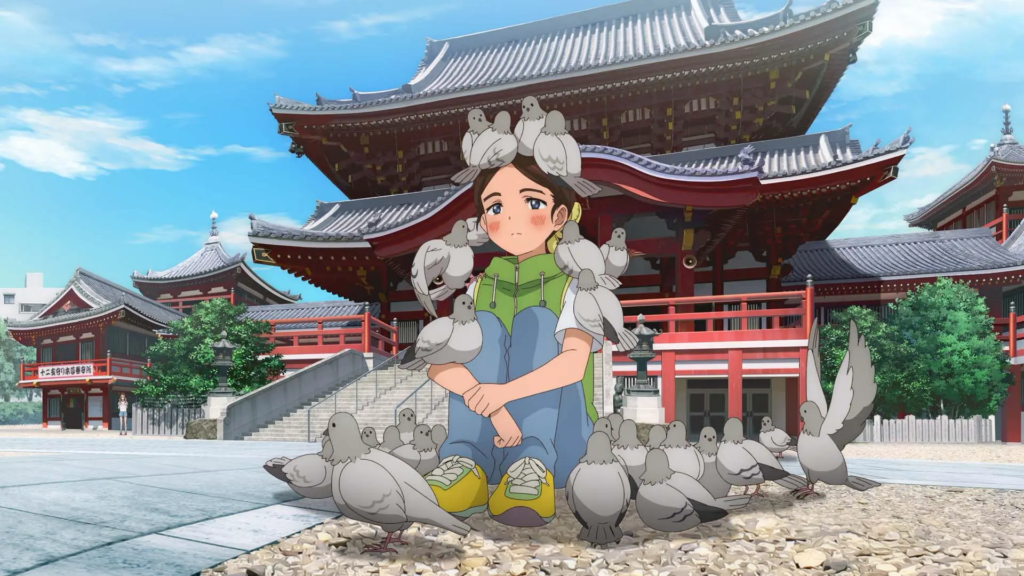
The audio, on the other hand, is also a solid offering. The soundtrack knows when to swell and when to hold back, letting quiet practice scenes feel intimate and competition moments hit like a proper climax rather than background noise. It also has a surprisingly sharp comedic instinct, using stingy strings and sudden shifts to sell Inori’s panic spirals without needing to overplay the joke. Voice acting ties the whole thing together, whether you go with the original Japanese voice acting or opt for the English dubbing provided by ADR studio Iyuno. Having watched it initially with the English dub, Jonathon Ha and Madeline Dorroh both shine at matching the personalities of Tsukasa and Inori, respectively. Meanwhile, the Japanese voice acting is also strong, with the pair voiced by Takeo Ootsuka and Natsumi Haruse, respectively. Add in the sound design of the rink, the scrape of blades, the bite of a landing, the muffled crowd energy, and you get a series that doesn’t just show you skating, but makes many of your senses experience it.
In the end, Medalist proved to defy its sports anime genre, with its focus on character development and drama making the scoreboard feel like the least interesting part. Between its quietly healing mentor-student bond, its grounded look at what it costs to chase a niche dream, and skating sequences that capture that stomach-drop moment before a landing, the series earns its emotion rather than demanding it. Even when it rushes past a milestone or leans a little too hard into the goofy, the sincerity never wobbles, and the craft is strong enough to keep you glued to the ice. Overall, the series stuck the jump, held the pose, and left me cheering for the kind of show I usually bounce off entirely. But with Medalist Season 2 just around the corner… here’s hoping that Tsurumaikada’s magnum opus continues to shine on the screen.
Final Score for Medalist Season 1
The first season of Medalist is now available to stream on Disney+ Globally, and Hulu in North America. Season 2 is already confirmed to be simulcast internationally.

