
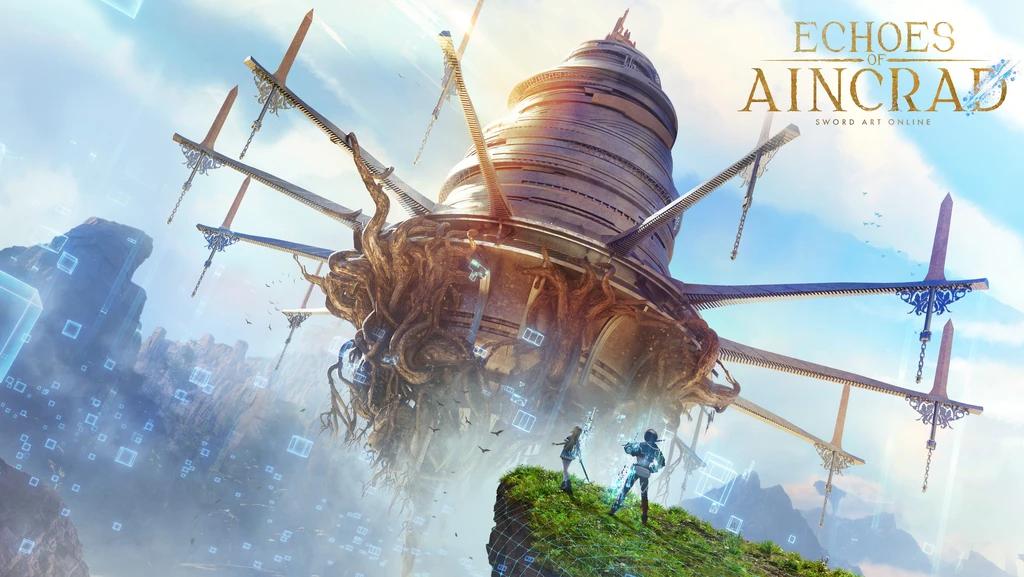
Since Sword Art Online’s anime debut in 2012, Bandai Namco Entertainment has published video game adaptations of the franchise, following what I consider to be a ‘game chronology’. These adaptations often deviate from the original plot entirely, such as traversing up to Floor 100 in Aincrad, or, in almost all cases, find a reason to bring the franchise’s popular main and secondary characters in more prominently. Some of these have been okay, while others have been forgettable and typically fizzled out after the first chapter or two. This month saw the release of Echoes of Aincrad, the first Sword Art Online game from developer Game Studio Inc., over AQURIA, which has served as the series’ longtime game adaptation developer. The initial draws are there immediately: a completely original narrative primarily following a new cast of characters, including a custom protagonist, and a greater focus on the first few floors of Aincrad, which are explored only in spin-off light novels rather than in the main novel/anime offerings. But with so much potential… does it meet expectations? Read on to find out!
While you will not go without seeing familiar faces like Kirito and Asuna pop up, Echoes of Aincrad, for the first time in the franchise’s long history, no longer has you walking in their shadow. Instead, it casts you as one of the other ten thousand ordinary players caught up in Akihiko Kayaba’s death game, with the story cleverly kicking off during Sword Art Online’s closed beta test, which doubles as the game’s tutorial. It is a thematically inspired way to ease you into the mechanics, and it is here that you befriend the swordsman Iori and a handful of other players – the only really familiar face being Argo, who always tends to find a way to pop up in the games. When that launch arrives, and the log-out button vanishes, the narrative settles into running parallel to the events of other media rather than retelling them – you follow your own story across the first floors.
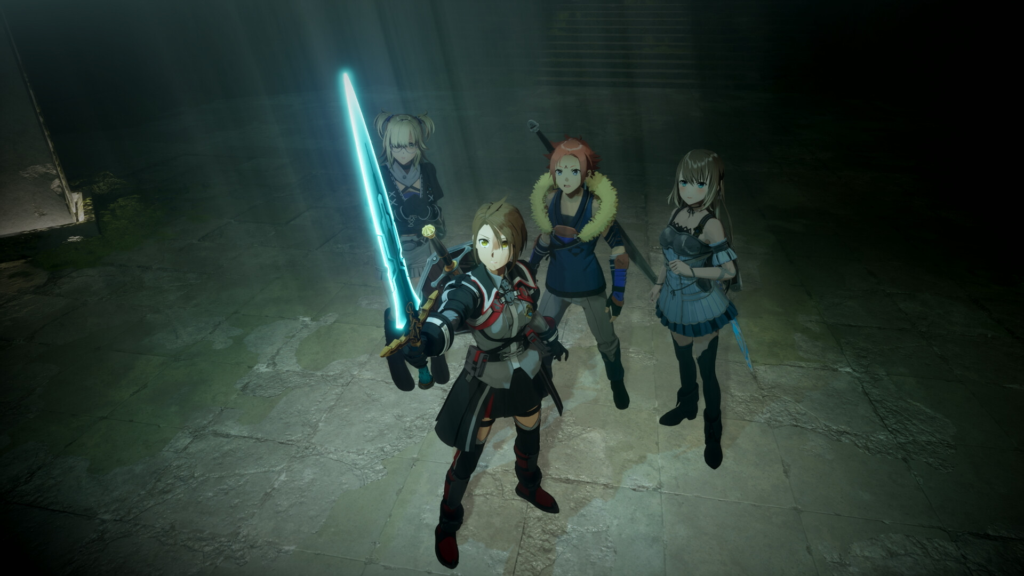
Where the narrative shines brightest is in its willingness to sit with the darker realities of the premise, something the games (and arguably the anime itself) have rarely made time for. Themes of isolation, desperation and players mentally unravelling inside a world they cannot escape are given genuine attention, and each companion carries their own believable reason for why they play games at all, which makes the cast easy to invest in. However, there are some caveats. The beta prologue, clever as it is, overstays its welcome, and the story takes quite a while to properly find its feet afterwards – and even after you get into the main chapters, it takes quite a while to build up. The bigger issue is the protagonist themselves, who is completely mute, leaving cutscenes feeling rather one-sided as characters pour their hearts out and you respond by selecting prompts like nodding firmly or smiling gently. For a story so clearly built around its characters, it is a strange choice (a single male and single female voice a la many gacha games nowadays would have been an ideal solution), and coupled with dialogue that can lean stiff and exposition-heavy, the writing lands at acceptable rather than the emotional weight it could have offered. Established fans will find plenty to appreciate here; newcomers, I suspect, will find it a harder world to care about.
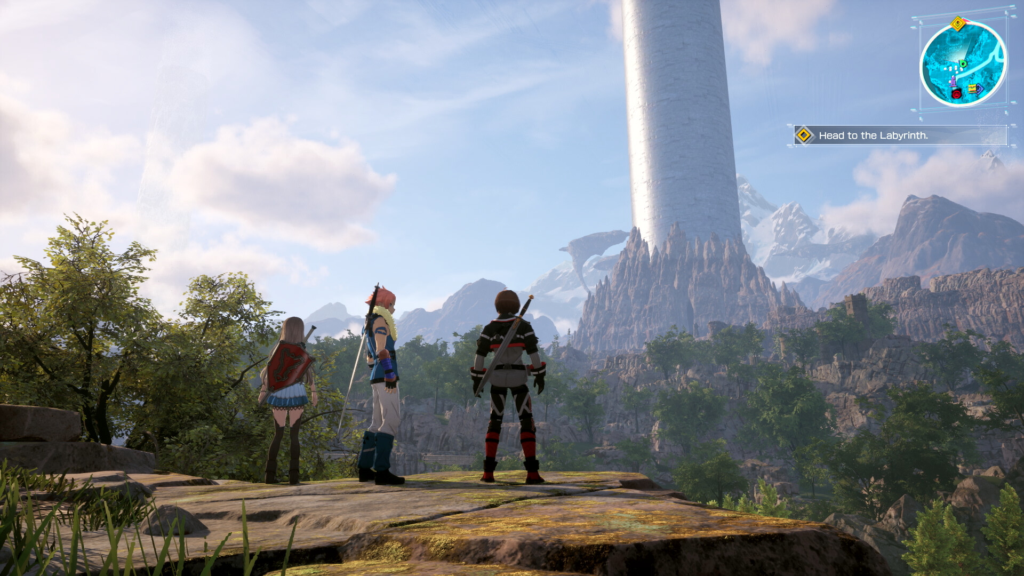
First impressions of Echoes of Aincrad’s visuals are positive, and they appear considerably stronger than past instalments. It may not perfectly recreate the anime’s art style or the original illustrations, but it is certainly a step in the right direction. Once you work your way through the experience, however, you quickly find that despite presenting itself as an open world, it is anything but, with a mission-based structure that requires you to accept a quest before you can even leave town, after which you are handed a fenced-off slice of the map to work within – with a familiar starting point which means you will be backtracking a lot. The zones themselves are pretty, but are also empty – with little beyond roaming monsters, treasure chests and altars that summon minibosses. The moment-to-moment loop of sprinting between Safe Zones to defog the map grows tiresome quickly, and even early on there are spots that will leave you wishing they even threw in a swimming or climbing mechanic to get past the same barriers. The dungeons, at least, are denser, more dangerous and far more visually interesting. On the presentation front, the blend of cel-shaded character models against more realistic environments and lighting is genuinely pleasing.
In terms of voice acting, Bandai Namco Entertainment has gone all-out with an English dub for the game, and I respect them for bringing in some of the original voice cast members for what were ultimately minor roles. The newly voiced characters are overall pretty satisfying – nothing groundbreaking, but they bring good enough life to the characters – yet the mid-mission banter does get repetitive very quickly. The soundtrack fares better, with the theme song, performed by Aimer, being a lovely inclusion, and the broader score shifting comfortably between battle themes and quieter ambient pieces.
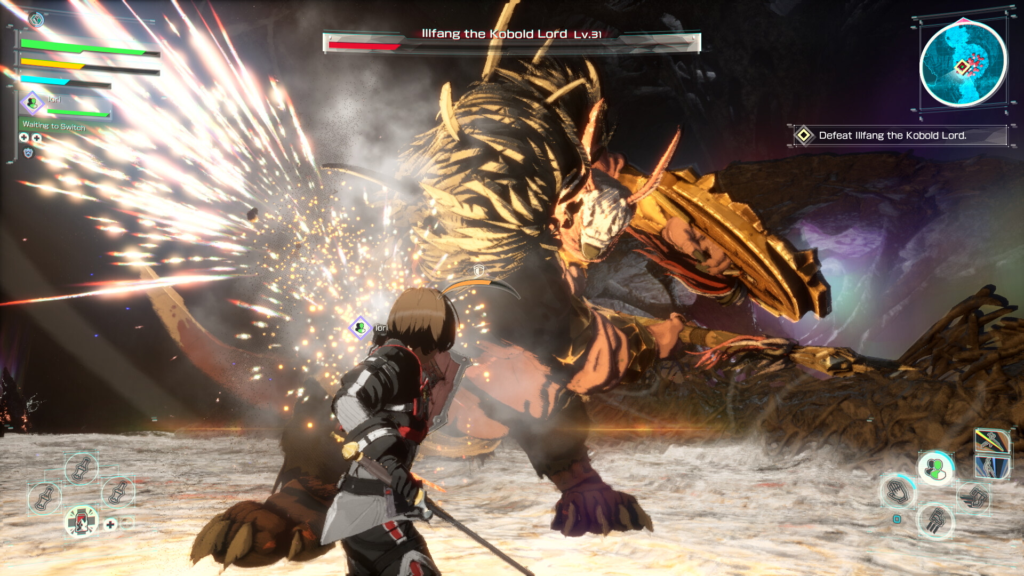
Combat is where Echoes of Aincrad somewhat finds its footing. The foundations immediately feel like a souls-lite experience, and given Bandai Namco’s experience working with FROM Software, even the initial tutorial dungeon made me wonder what a proper souls experience would be like set in SAO. The experience sees light and heavy attacks, dodge rolls and shield blocks all drawing from a stamina bar, with rest points that replenish your healing crystals while respawning nearby enemies. Layered on top are three flavours of counter (dodge, block and punish), each demanding proper timing and each rewarding you handsomely for paying attention rather than mashing away. Heavy attacks can even sever enemy limbs when they flash blue, changing how a monster fights, and given this is all happening inside a virtual world, defeated foes simply shatter into polygons rather than anything gruesome.
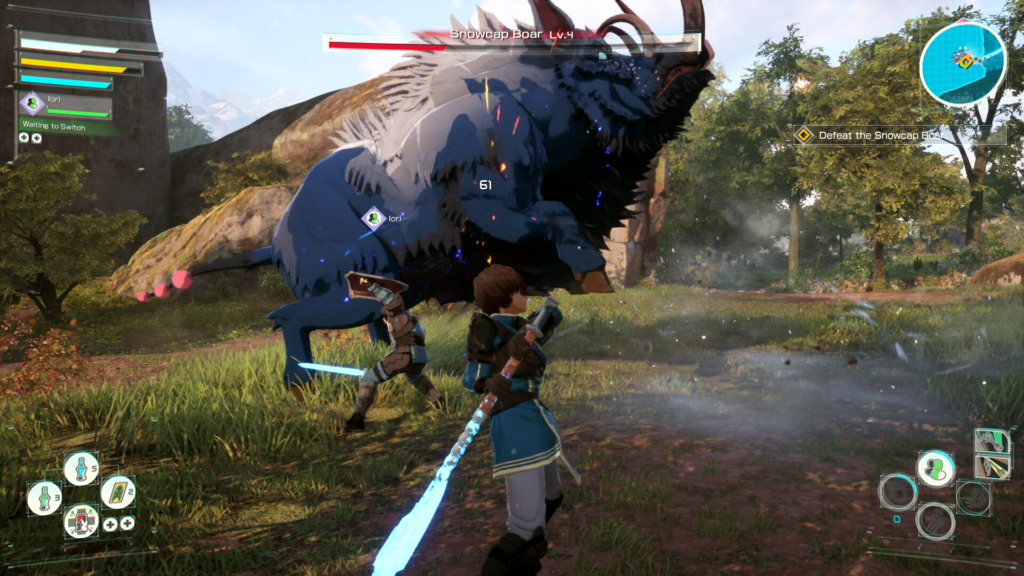
Rather than give you a larger part of four or eight players, typically you explore the field with a single other NPC-controlled character, which means that Switch-ing is in full force here. In Switch Mode, disengaging from an enemy prompts your companion to draw its attention while you fall back and recover stamina, whereas Free Mode sets them loose on anything that is not your locked-on target, ideal for thinning out a crowd. It is an adequately implemented system that lets you fight aggressively while always having an out, and, mercifully, the partner AI is actually competent, holding its own in boss fights and following orders without fuss. My main qualm is with being limited to one party member. With a surprisingly limited number of party members in contrast to past games, I would have actually liked to have seen how they could’ve had you navigating along different numbers of them – from the solo runs all the way up to tagging along with everyone.
Weapon variety gives the combat plenty of legs, too. Six archetypes are on offer (one-handed sword, rapier, mace, dagger, greatsword and greataxe, with the first three able to pair with a shield), and each genuinely plays differently, from the speed and mobility of the smaller blades through to the crushing, stagger-friendly swings of the two-handers. Building proficiency with a weapon type gradually unlocks its Sword Skills, flashy special attacks that consume SP and run on cooldowns, and with only three able to be equipped at once, there is a nice layer of decision-making in assembling your palette. Some carry unique properties as well, such as skills that inflict severing damage to lop off enemy parts, and discovering how they interact makes experimenting across the full arsenal genuinely worthwhile rather than a box-ticking exercise.
But what if you decide to go down one weapon path and decide halfway through that you don’t like it? There is some mercy, as while levelling up grants you growth points to spread across attributes (without the need to balance the needs of physical damage and magic since magic doesn’t exist in Aincrad), you can shift these relatively easily from your base town, with a very, very small cost. The weapon customisation runs even deeper, letting you feed surplus drops into your favourite armament as upgrade material and, better yet, extract the passive EX-Mod perks from unwanted weapons and slot them into your keeper.
Rounding out the experience is the matter of challenge, or rather the lack thereof. If you want even a smidgeon of difficulty in your experience, it would be worth amping up the difficulty a notch or two at the start. For a narrative about being trapped in a death game, the actual gameplay you experience doesn’t really match that narrative threat. Overworld mobs will typically fall in a few swings while the odd story boss is barely a few steps up in threat. Side quests rarely rise above fetch-and-kill busywork, leaving the bulk of your experience points to come from monsters along the critical path, though at least enemy scaling keeps you appropriately levelled. Those chasing a long tail will find it in the post-game Warped Dungeons, randomly generated roguelite gauntlets that dish out stat-boosting Key Stones across increasingly difficult areas. They are more satisfying than the main quest from a difficulty perspective – but I shouldn’t have to finish the game to experience
So, after all that potential… does Echoes of Aincrad meet expectations? It is most certainly the strongest and most interesting Sword Art Online game to date, and it genuinely explores facets of Aincrad that I have been hoping to see explored across various media. But while there are some strengths, the restrictive mission structure, empty overworld and assorted design choices keep it from being the game it could have been. Ultimately, Echoes of Aincrad is a game that is easy to enjoy… and just as easy to put down… or potentially just to be done with the pointless back-and-forth. But I will say that Game Studio Inc. has something here, and if they get another swing at SAO, the foundations are something I would definitely like to see them build upon.
Final Score for Sword Art Online: Echoes of Aincrad
Playtesting was conducted on a PlayStation 5 copy of Echoes of Aincrad. A digital review code was supplied by Bandai Namco Entertainment Australia to facilitate this review.
Echoes of Aincrad is now available on PC, PlayStation 5, and Xbox Series X|S.

