
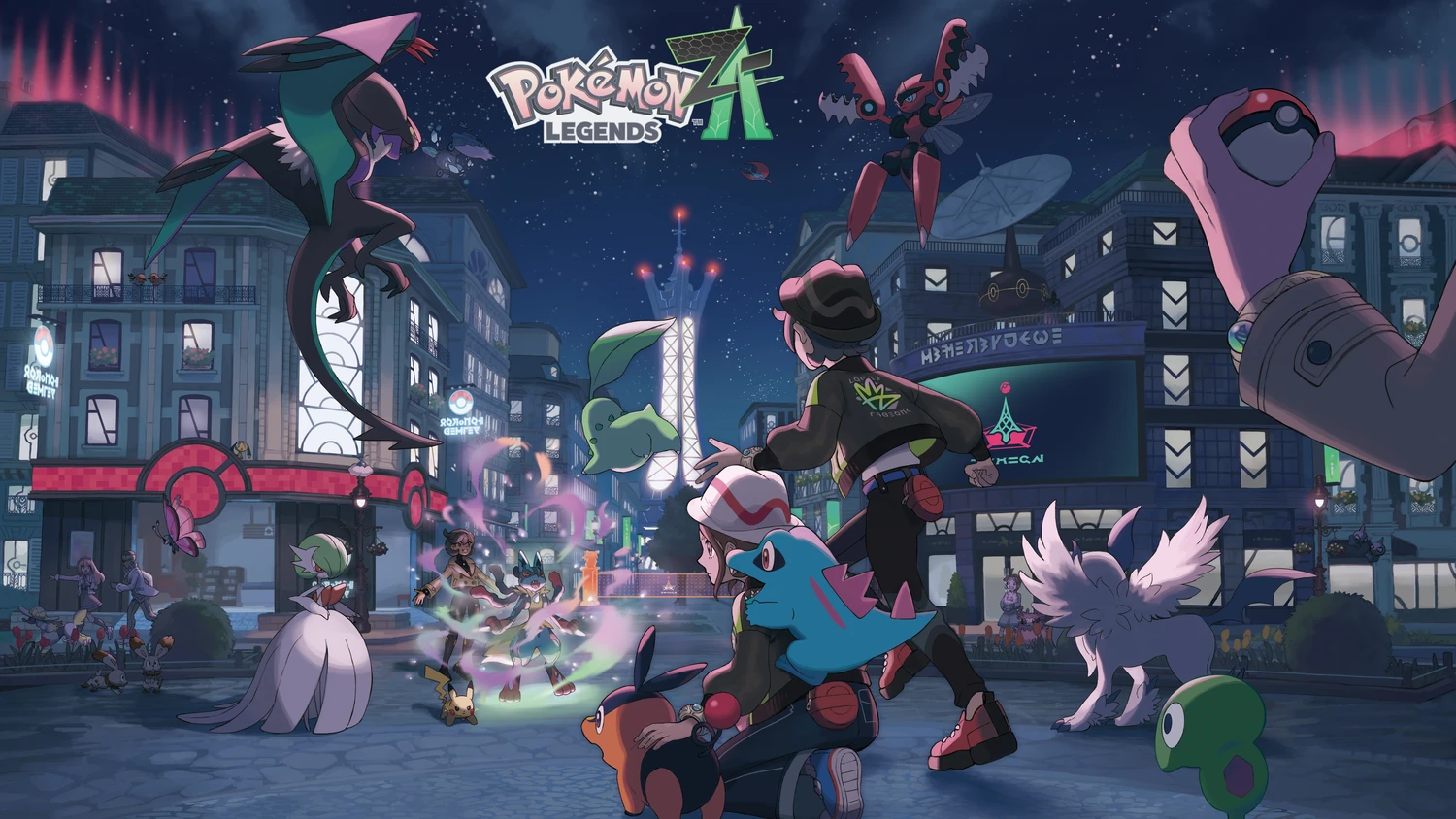
Since the Japanese release of Pokémon Red and Green in 1996, developer Game Freak and publisher Nintendo have been relatively consistent with their mainline releases. While they have been flagship RPG experiences for each generation of Nintendo hardware since the original GameBoy, with each release receiving graphical improvements and functionality tweaks – whether you started with the original games or only recently joined with Scarlet & Violet – the foundational RPG experience has been there. In an age where developers frequently chase after new gameplay mechanics, having a series that has remained consistent over the years has worked in its favour to a degree, but the sentiment of some that Pokémon needs to innovate and deliver a more modern-day premium gaming experience is, in my opinion, also more than justified. In 2025, Game Freak have pivoted across to their side-series ‘ Pokémon Legends’ for its second open-world active-battle RPG – Pokémon Legends: Z-A – which showcases how the team handles their (previously limited) experience with fully open-world 3D games, this time confined to not one region, but one city – Luminose City from PokémonPokémon X&Y. As the first PokémonPokémon experience released for the Nintendo Switch 2, does this chapter offer a promising look at the future of the series, or more of the same? Read on to find out!
If Pokémon Legends: Z-A has a defining narrative idea, it is that Luminose City is no longer just a picturesque stop on one’s badge-collecting tour, nor just a pretty look at how the Nintendo 3DS can use design techniques to portray a city environment quite unlike anything offered in the series before it (or in many cases, after it). Instead, the city is the whole story. Set in the wake of Pokémon X and Y, the game centres on a citywide redevelopment push driven by Quasartico Inc., an attempt to create harmony between humans and Pokémon by carving out Wild Zones within the urban sprawl – an idea which is quite… interesting given the idea that one day the front of your house could become home to not only Pokémon, but nightly brawls between trainers as trainers vy to gain enough points to raise the trainer ranks – in hopes of getting their wish granted. You are pulled into this tension quickly through Team MZ, a crew of local trainers operating out of a hotel, and through the game’s central crisis: Rogue Mega Evolutions, wild Pokémon Mega Evolving without trainers and turning city streets into a hazard zone. On paper, it sounds like a blockbuster hook, but in practice, it gives Pokémon Legends: Z-A a stronger sense of purpose than the usual loop of becoming Champion because that is what you do in a Pokémon game.
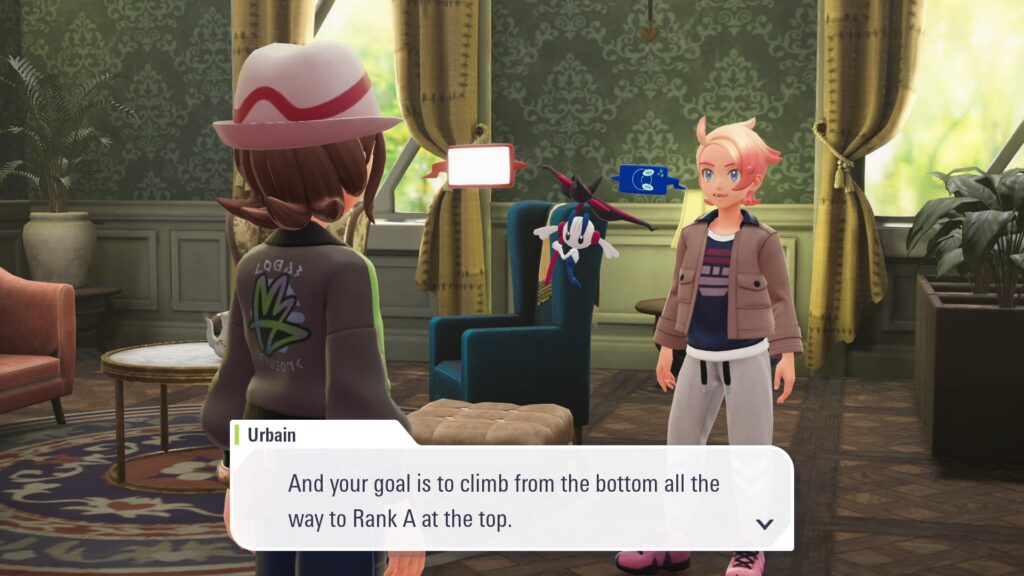
Where the story really finds its footing is in how often it uses Lumiose itself as the point, rather than a backdrop. The side missions are not filler in the way they can be elsewhere; they are the connective tissue that sells the fantasy of living in a city more harmonised with Pokémon. Pokémon Legends: Z-A is not afraid to gesture at heavier themes like legacy, rebuilding after tragedy, and the uncomfortable compromises of corralling wild creatures into designated spaces, even if it does not always push those ideas as far as it could. In fact, they probably could have gone a lot further with it – perhaps tailoring the experience a lot more to the audience who, a decade ago, first explored Kalos and many of whom would now be adults. Furthermore, the pacing feels a bit too hand-holdey for the first half of the game. The tutorial stretches on, and later, the Z-A Royale premise can feel held together by story convenience, especially when the narrative skips steps you were meant to earn. It is a tale that is frequently charming and occasionally sharp, but it also leaves you with the sense that a truly great Pokémon story is sitting just beneath the surface… one that some might hope Game Freak would eventually mine for its gold… just not yet.
On a pure presentation level, Pokémon Legends: Z-A continues the modern Pokémon trend of strong character work (with a few hundred Pokémon total), sitting inside an environment that looks pretty at a distance but has its cracks show the closer you get up to the scenery. Lumiose is busy and dense, and the game does a good job of dressing the streets with cafés, boutiques, parks, and pockets of Wild Zones that keep you moving. However, visually, the city blends with flat, low-detail facades featuring windows, doors, and other features painted on rather than offering much depth. Where Pokémon Legends: Z-A does shine is in the details that sit closer to the player. Pokémon and trainer models look sharp, NPC variety is improved, and the interiors and bespoke battle venues have a level of mood and colour that the outdoor streets often lack. Add in a strong fashion offering and a generally cleaner presentation than recent entries, and you end up with a game that is more convincing in bursts – but will likely leave you wanting more of everything after the first dozen hours or so.

If the visuals are solid yet inconsistent, the audio track is not. Pokémon Legends: Z-A’s soundtrack is one of its clearest strengths, and it does heavy lifting in giving Lumiose identity, especially during its nightly battle routines. The game is packed with energetic, memorable battle music, and the score captures the city’s rhythm as it shifts from day-to-day bustle to tense after-dark competition. The game’s weak point, as with all past instalments, is its lack of voice acting, which in 2025 is less forgivable than in the past. Especially with the focus on more cinematic scenes, and this being the farthest thing from an indie title where a lack of verbage is more understandable, watching characters emote dramatically with nothing but text boxes to carry the moment is jarring. Even limited voice clips in major cutscenes would go a long way toward making Lumiose feel as modern as the game wants it to be.
Pokémon Legends: Z-A’s real-time combat takes what has always been a careful, numbers-driven approach to combat and forces it to live in the moment. For a game that was arguably never that difficult, especially with even the smallest amount of grinding, the transition to active-time adds quite a bit of complexity, as lagging in making decisions can lead to your loss. Moves sit on cooldowns instead of PP, timing matters as much as type matchups, and positioning suddenly becomes a skill you learn rather than a footnote you ignore. You are not just selecting attacks; you are managing distance, using the space around you, and moving with your Pokémon as fights unfold at a pace. Familiar staples like Protect and hazards feel recontextualised and can actually turn the tide of NPC battles.
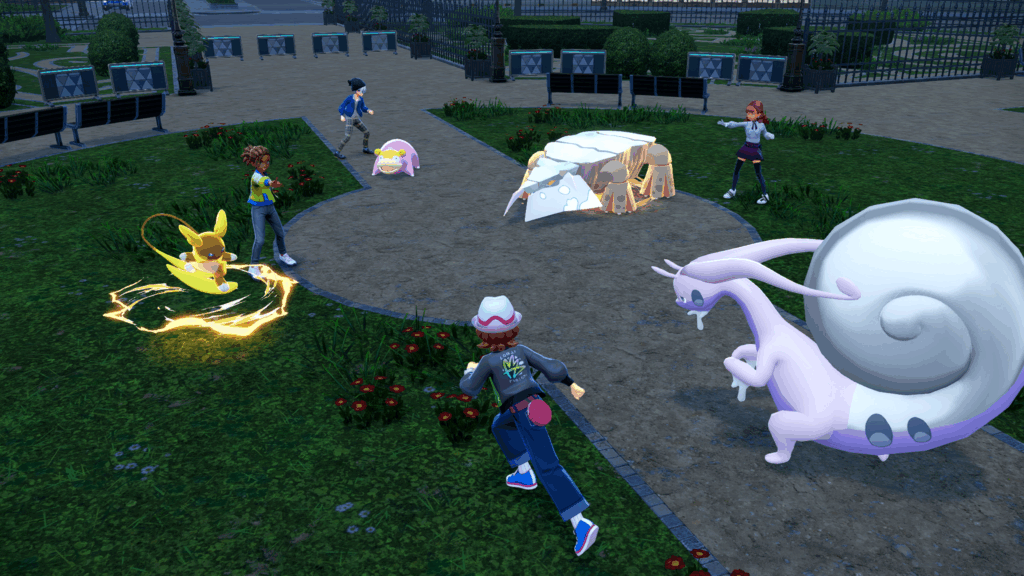
That said, Pokémon Legends: Z-A’s new combat is not always clean. The speed that makes it exciting can also make it messy, with on-screen feedback flashing by quickly and battles turning into controlled chaos when multiple effects overlap. In easier encounters, it can be tempting to cycle through attacks the moment they refresh, which blunts the depth the system is clearly capable of. More frustrating are the rough edges that remind you this is still Game Freak in public – or at least not flawlessly refine the experience before release. Targetting in particular can be unreliable; interactions with the environment can cause attacks to miss their intended target entirely, and more. These are prominent enough that they aren’t one-off issues and will be present across every play session.
A system first introduced in Pokémon XY, one of the narrative and gameplay draws of Pokémon Legends: Z-A is Mega Evolution, with even more Pokémon than before, able to take advantage of the system with unique forms… provided you have the corresponding stone. While the system to some degree allows you to pummel enemies in a fight easily, provided you fill up and maintain the corresponding gauge, it is used to full effect during dedicated Rogue Mega Evolution encounters. These boss fights demand that you play Z-A on its terms, reading patterns, dodging threats aimed at your trainer, and creating openings rather than forcing them. The fights are tense and often cinematic, with a rhythm that pushes you to reposition constantly and think about your team beyond raw damage output. They can be chaotic and, at times, hard to track, but that intensity is the point. Does it elevate Mega Evolution beyond being a gimmick? Not entirely. But with every Pokémon game adding its own variation of the system since XY – whether Z-Moves, Terrastalisation or Dynamax – it is nice to see Game Freak at least attempt to implement a bit more depth to the system.

Rather than being a once-per-battle trump card, Mega Evolution is tied to a meter that you can slowly build and then utilise, letting it function more like a resource you manage across longer encounters. When done right, it does add that extra layer of momentum, but the trade-off is that it can edge a player’s focus towards a party composition focusing on Mega Evolution capable Pokémon, rather than the suite of offerings in the game – approximately 230 Pokémon total.
That battle-first mindset also defines the Z-A Royale, which is essentially Pokémon Legends: Z-A’s replacement for the traditional gym march. By day, you prepare, explore, and train, then each night a Battle Zone lights up, and Lumiose turns into a competitive arena where points, bonus challenges, and smart ambushes matter almost as much as raw levels. Sneaking up on other trainers for an opening advantage is a satisfying fit for the city setting, and the bonus card style objectives do a good job of encouraging varied play. Promotion Matches provide the intended spikes in difficulty and spectacle, and at its best, the Royale makes battling feel like a living part of the city rather than a string of isolated fights. The issue is longevity. The nightly routine can start to feel repetitive, your opponents and locations recur, and a mid-game fast-track up the ranking ladder undercuts the satisfaction of climbing it the hard way. I think the one thing that helped me with the system is coming to terms with the fact that even though the game hammers the ZA Royale to you every time the evening sets – you are not obliged to participate – just when you want to progress the main narrative it is tied to.
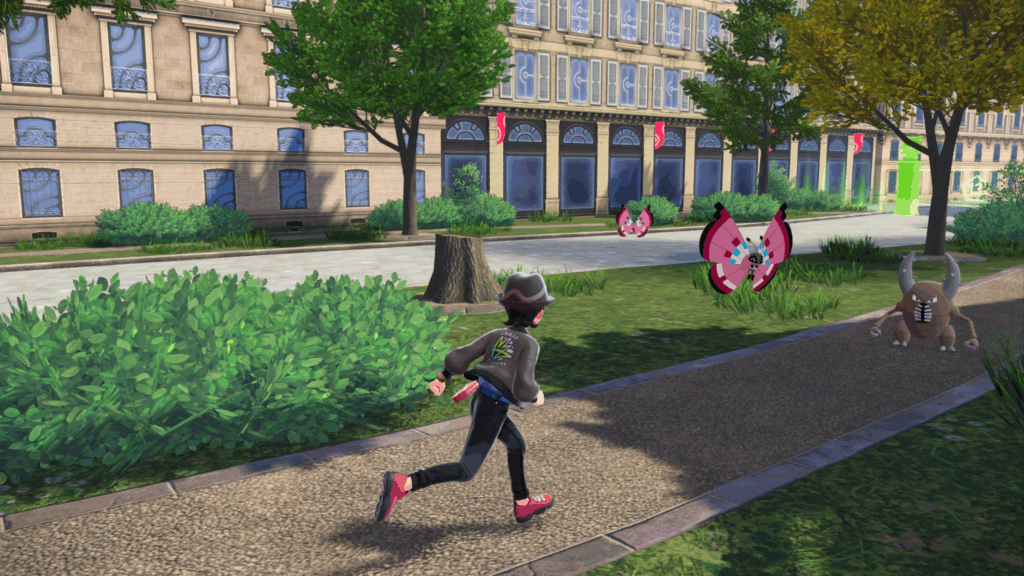
Outside the Royale, Pokémon Legends: Z-A’s city design supports a dense gameplay loop rather than an expansive one. Rooftops, scaffolding, alleyways, and sewers give Lumiose a gratifying sense of verticality, and the act of finding a route to a new perch often feels like a small puzzle with a reward at the end, whether that is an item, a rare spawn, or a side mission trigger. Catching retains the snappy, risk-forward approach introduced in Legends: Arceus, and Alpha Pokémon still act as roaming threats that keep exploration honest – or at least give you a destination to come back to once a Level 40 Pidgeoto won’t wipe out your entire team.
Side quests are plentiful and often charming, and they do a lot to sell Lumiose as a functional place with its own problems and oddities. Still, the city-only setting comes with an explicit limitation. Wild Zones can feel like fenced-in pockets rather than true habitats, discovery becomes less surprising once you have mapped the streets, and it is incredibly easy to accidentally outpace the level curve if you are the sort of player who explores and completes everything. But most of all, for a premium price and for a game that would undoubtedly sell numerous copies off the back of its franchise alone, I cannot help feel that there needed to be even more depth to the experience Pokémon Legends: Z-A offered. This doesn’t feel like a modern experience-defining RPG but just another Pokémon game done a little bit differently – probably the best in recent years, performance and content-wise – but still a few shades shy of what it could be.

For a series that has survived by refining the same foundational loop since 1996, Pokémon Legends: Z-A is the most evident proof in years that Game Freak can still shift the formula in a way that feels meaningful. The real-time battle system is not a novelty; it is a genuine evolution that finally delivers a more immediate, anime-like fantasy, and the Rogue Mega encounters show just how strong that template can be when the game asks you to master it. Lumiose’s density, verticality, and side content also go a long way toward selling the dream of living alongside Pokémon, even within a single city. But Z-A also highlights the franchise’s ongoing gap between ambition and finish. Flat environments, the continued absence of voice acting, and a progression loop that can slip into repetition stop it from feeling like the modern premium RPG Pokémon experience one would hope for. As the first main Pokémon release on Nintendo Switch 2, it is encouraging in the ways that matter most, especially performance and combat, but it still leaves you wanting the extra step.
Final Score for Pokémon Legends: Z-A
This review was conducted on a physical copy of Pokémon Legends: Z-A for the Nintendo Switch 2.
Pokémon Legends: Z-A is now available to purchase on the Nintendo Switch and Nintendo Switch 2. It is also possible to upgrade from the cheaper Nintendo Switch version to the Nintendo Switch 2 version at a later date, via a paid upgrade pack.

