
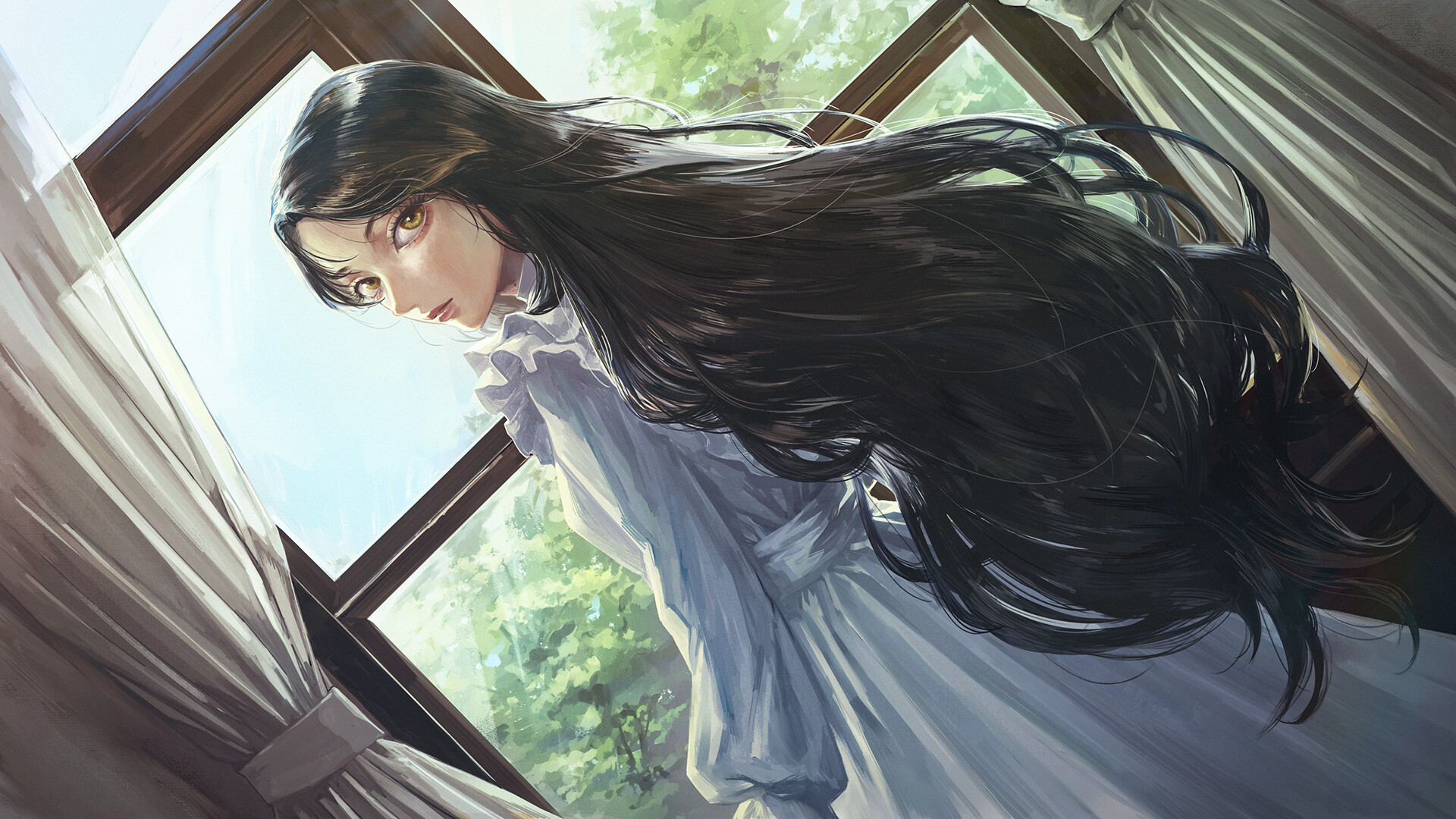
As the developer of hit, genre-defining visual novels such as Steins;Gate, a new project from MAGES is always worth turning your head for. Their latest offering in the western market, kudos to publisher PQube, is Iwakura Aria, now available on both the PC and the Nintendo Switch. While aesthetics alone imply that this will be a bit more of a slow burn than their Science Adventure series, how does this new offering fare? Read on to find out!
Iwakura Aria uniquely unfolds its narrative, framing it as a reminiscence. Ichiko, the protagonist, looks back on a fateful summer in 1966, a time that begins when she is taken in as a live-in maid at the opulent Iwakura residence. The story then focuses on the evolving bond between Ichiko and the household’s heiress, Aria. The slow-burn pacing, filled with longing glances and guarded conversations, gradually leads to intimate confessionals. The mansion’s hush, however, maintains a constant undercurrent of dread. Thematically, it’s a coming‑of‑age story about agency and self‑worth set against class disparity and social expectation. Ichiko’s art, particularly her sketchbook, serves as a lens through which she views Aria, adding a unique perspective to the narrative.
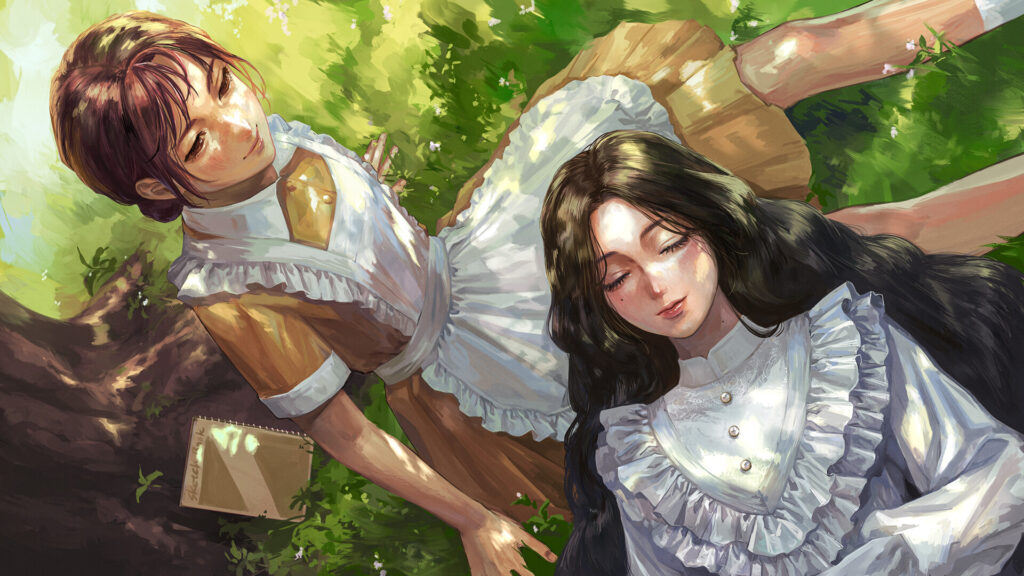
That being said, the pacing won’t be for everyone, and this comes down to whether or not you are someone who is after those immediate moments of epicness or the slower-paced dramas. The script’s deliberate tempo and occasional hard turns between tender romance and gothic unease can feel like tonal whiplash, a sudden and jarring change in tone, even if the atmosphere rarely slips. Ichiko’s voice acting and interiority sell her vulnerabilities and rash courage, while Aria’s arc gradually peels back the enigma to reveal a vulnerable, sometimes frighteningly resolute young woman. Meanwhile, the supporting cast adds texture to the world without impeding too much on the main events, though a few character beats and ideas feel undercooked given the lean runtime. And structurally, frequent choices and a spread of abrupt “bad ends” underline how fragile their agency is.
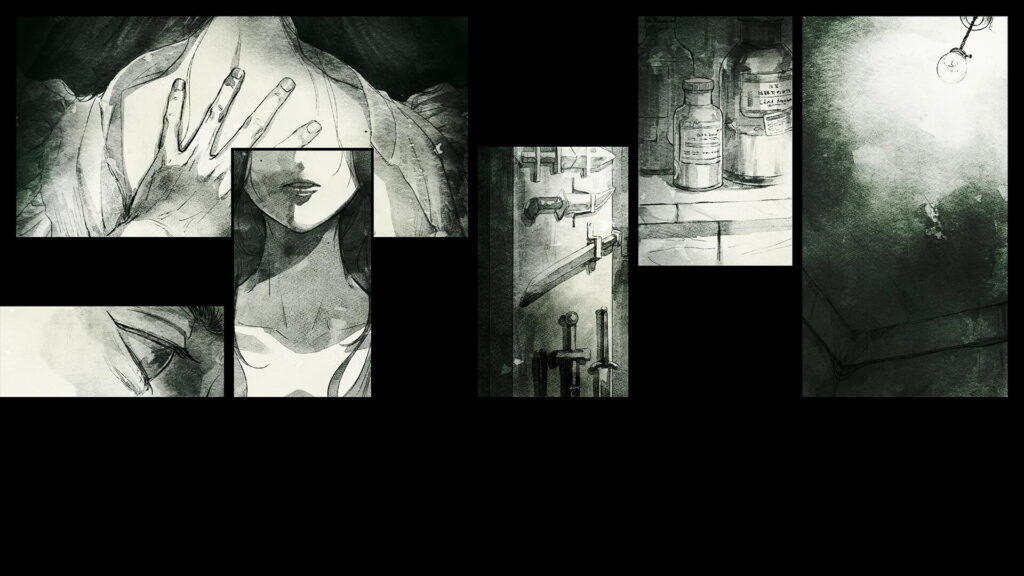
The aesthetic of Iwakura Aria does more than decorate; it frames the mood of the experience. The painterly, oil‑brushed sprites and richly appointed rooms sell the 1960s setting without slipping into being too stereotypical. At the same time, the cut‑panel interludes and Ichiko’s diegetic sketchbook punctuate key moments well. The semi‑realistic character designs give the cast a sort of portrait‑gallery presence that suits the manor’s hush. The trade‑off is scope: only the core cast receive sprites, so recurring side figures fade into the background, and not every striking panel is preserved in the gallery for easy revisiting.
Mechanically, Iwakura Aria offers a user-friendly interface, especially the mansion map, making it easily accessible. The game’s quality-of-life features, such as automatic quick‑saves before choices and a back‑log jump, significantly reduce branch‑hunting friction. However, on PC, the port does show some issues, such as a small resolution on the artwork, small unscalable fonts, and a lack of a graceful in‑menu exit. Despite these minor drawbacks, the game’s overall user experience is comfortable and enjoyable.
On the audiological front, Takeshi Abo’s score in Iwakura Aria plays a crucial role in setting the mood. The music, leaning into strings and woodwinds, creates a low, sombre experience that can pivot to menace on a dime. While the music is more about creating an atmosphere than being an anthem, it effectively supports the on-screen action. A few cues stand out, yet the soundtrack’s chief strength lies in how it unobtrusively weaves romance and dread. The voice work, however, is the real showpiece. Although, like a majority of Japanese visual novels, there is no English voice acting, the Japanese performances are uniformly strong, adding another layer of immersion to the game.
Ultimately, Iwakura Aria delivers on that slow‑burn promise I flagged up top: a MAGES release that trades time machines for candlelit corridors and finds its spark in a character study of its two protagonists. Across a well-paced 15 hours, readers are treated to an audiovisual delight, and a narrative that may be more for some than others, but continues showcasing the diversity that the visual novel genre has to offer audiences. The mystery serves more as a catalyst than a conundrum, and on PC, the 1080p cap, small fonts and fussy controller prompts dull the shine, while exploration rarely graduates beyond mood. Even so, PQube’s Switch/PC release is easy to recommend to anyone willing to settle into its rhythm: a moody, tender page‑turner whose emotional afterglow lingers long after the mansion doors close.
This review was conducted on a digital PC (Steam) version of Iwakura Aria, with a PC review code provided by PQube to facilitate this review.
Iwakura Aria is now available to purchase on PC and the Nintendo Switch.

