
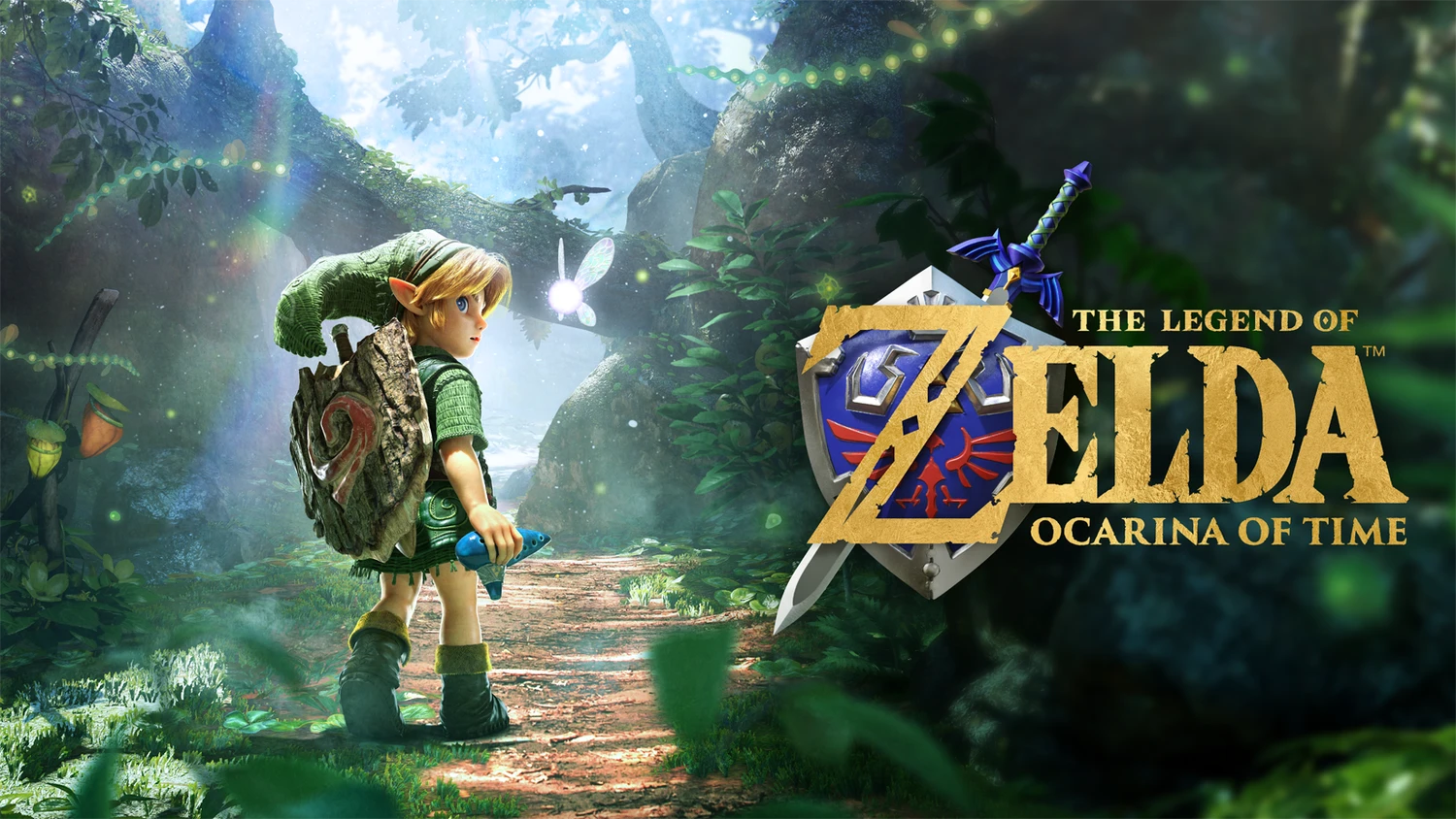
While the series had existed well before its release, The Legend of Zelda: Ocarina of Time was easily the game that both put the series into the mainstream for virtually every type of gamer at the time and demonstrated that the Nintendo 64, arguably the weakest home video game console at the time, was able to deliver a 10/10 experience that could not only match but surpass the experiences of other platforms in every area. Whether through promotional re-releases, virtual consoles, or even re-releases, players have never had to work hard to access the game. However, almost three decades after its November 1998 release, it was still the same game with only minor high-res optimisations… until now. Exclusive to the Nintendo Switch 2, a remake of The Legend of Zelda: Ocarina of Time is now available to purchase, and let’s be frank: from first impressions, it looked like an absolutely beautiful experience. As if they looked at the ‘UE5 Fan Reimaginings’ of the game that have gone around over the years and wanted to craft an experience that shows what the Nintendo Switch 2 is capable of, they spared no expense on the audiovisual front. But what about gameplay? Is it a new coat of paint on an old game, or are there a few more tweaks to keep long-time players interested? Read on to find out!
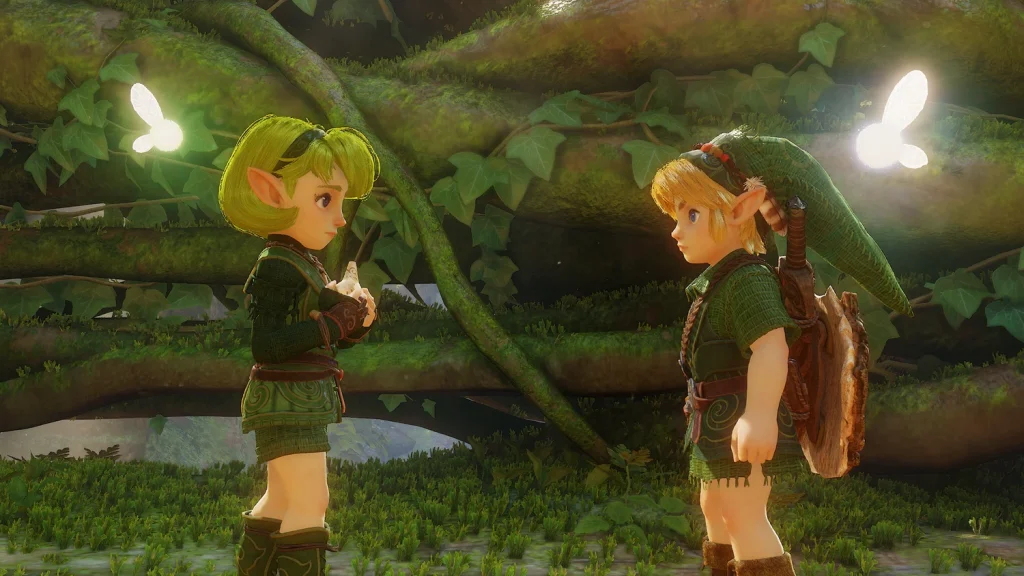
Narratively, The Legend of Zelda: Ocarina of Time is exactly the same as ever. Link still wakes up from his nightmare in Kokiri Forest, still gets sent off by the Great Deku Tree and still has the job of stopping Ganondorf from taking the Triforce from both eras of Hyrule. The changes are minor and mostly on the periphery. Mido is more of a well-meaning busybody than a real bully, Kaepora Gaebora no longer has you trapped in endless lectures, and Navi is far less intrusive than you’d remember (but granted, after all these years, I am not sure she was ever as intrusive as I remember). The people of Hyrule have more to say now, with towns going through a day-and-night cycle and people doing their normal thing rather than balancing liveliness with limited system resources. The biggest change is the presentation, with key story moments now delivered through fully voiced cutscenes (Link, of course, remains silent).
That said, the same faithfulness is what left me a bit disappointed. Nintendo have clearly gone in for a ‘Definitive Edition’ approach, of course, refining the existing story rather than building on it and for returning players that really means very little. There is absolutely nothing wrong with this, but it is hard not to feel the bit of a ‘what if’ scenario. Fans have long known that content was cut during the original’s development (the Light Temple being the most oft-cited example), which helps explain why Link gets the Light Medallion from Rauru without ever having to go into a dungeon to earn it. A remake of this scale was the ideal opportunity to finally deliver on that and/or at least add a few more narrative moments for those of us who’ve walked that path many times over. Some will no doubt argue that leaving the story as it is is the right thing to do, and I can see that point of view; it’s just hard not to think about what could have been.
Visually, this is where the remake truly shines, and the work on display is sublime across the board. When the first trailers dropped, I was among those who wondered whether the redesigned characters might be a little ‘too much’, but in motion, Nintendo has struck the right balance between something fresh and something that welcomes the nostalgia in. The characters have a stylised quality, and I warmed to it within the first hour. The level of detail is staggering, too. Clothing is woven with intricate patterns; each of Link’s tunics now has a design tied to the area it comes from, and you can see him draw breath and shift his fingers as he plays the ocarina. Dungeons benefit from real-time lighting, with Navi doubling as a lantern of sorts in the darker corridors, and the whole experience held a steady 60 frames per second for me.
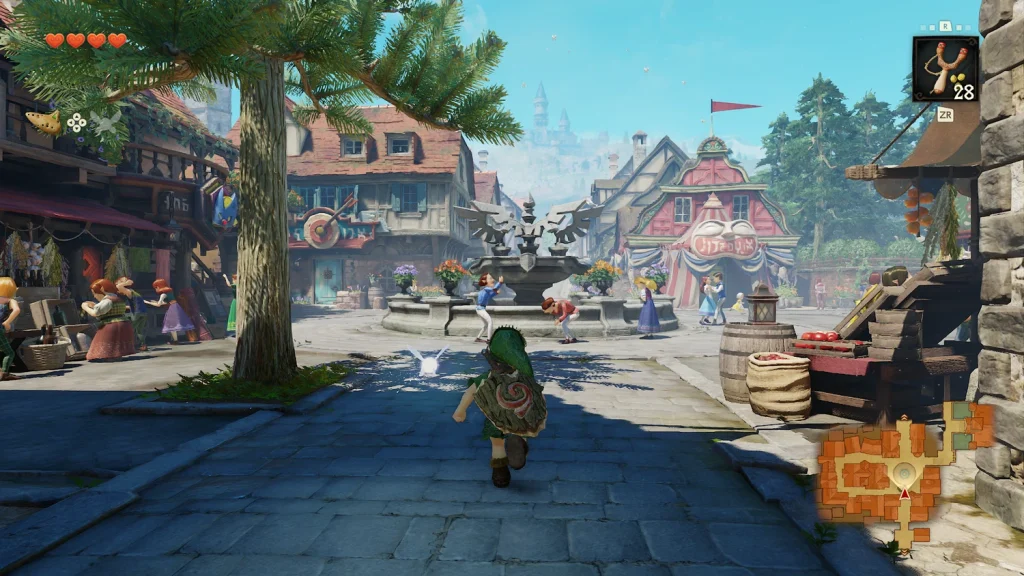
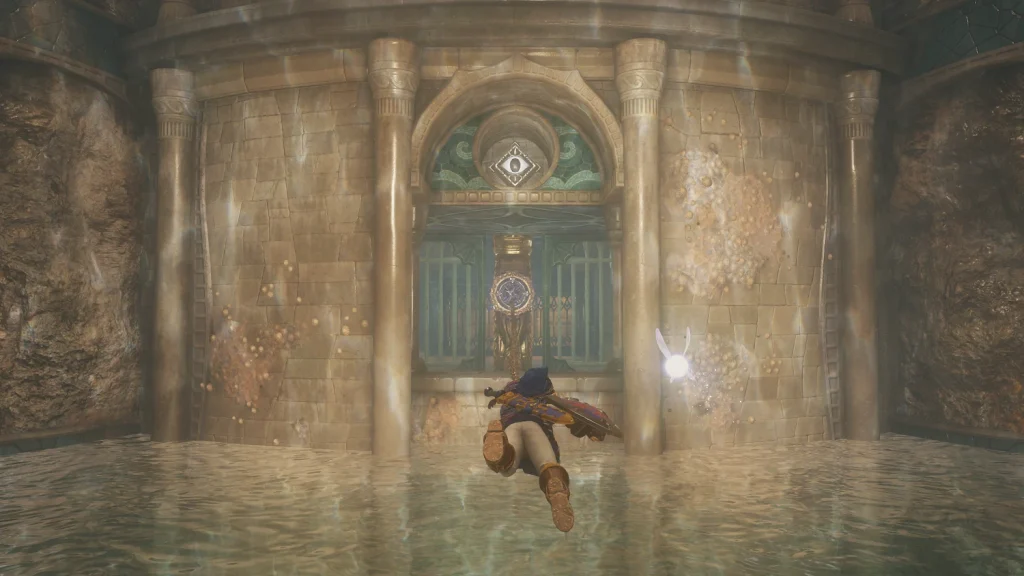
Hyrule has also had a pretty comprehensive overhaul. Castle Town Market, which used to be a series of static images you’d walk through, is now a fully explorable area full of life. The temples get the biggest benefit in my opinion; each one now has a much clearer sense of place. The Forest Temple really captures the feel of an old country house that’s been abandoned for years, and the Water Temple is much easier to decipher, which will be a welcome change for anyone who’s struggled with it before (and I’d argue maybe could have gone harder instead….). Hyrule Field is still very compact by today’s standards and feels a bit sparse after the scale of both Breath of the Wild and Tears of the Kingdom, but its size means you’ll never have any trouble getting from one end of the map to the other. My only real nitpicks are a few character redesigns that don’t quite land, and some of the creepier corners of the original have been slightly softened. Again, very minor issues in what is undoubtedly one of the best-looking games on the Switch 2.
On the audio side, the remake is just as impressive. It is hard not to miss the 90s soundtrack, with its distinctive synthesised charm so deeply tied to my memories of the game, but the new orchestral arrangements are nothing short of divine. Tracks like Gerudo Valley and Saria’s Song retain everything that made them iconic, while the added instrumentation gives them a richness the Nintendo 64 simply couldn’t deliver, and the score now shifts more naturally as you move between areas and into combat. The voice acting is also strong across the board, and I hope Nintendo considers this the “norm” from now on for future remakes, as the voice acting does add a lot more richness to the experience.
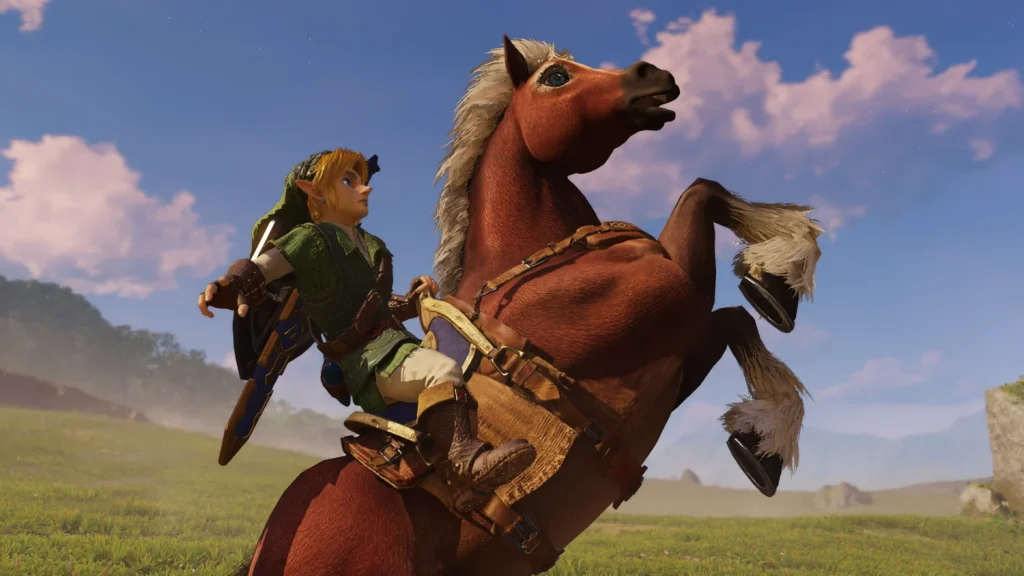
As for gameplay, the most obvious change is how Link moves. He can now jump and sprint at the press of a button, replacing the old automatic jump, and it’s one of those changes that you just don’t notice you’re missing once it’s there. Platforming sections that used to require you to line Link up perfectly with the ledge are now a lot smoother and easier, and hopping onto vines and ladders is a hell of a lot less fiddly. The old fixed camera angles are gone in favour of full camera control, and motion aiming makes the slingshot and bow far more than just a tool you use when you’ve got a puzzle to solve. Combined with the smooth frame rate, Link just feels better to play.
Item management has been completely reworked, with a quick-select bar, so you’re no longer going into the pause menu every few minutes – for the most part, at least. Items like boots and the ocarina are all mapped to the directional buttons. A new quest log, ‘Threads of Time’, will track your main and side quests without quite holding your hand, and the map now keeps a count of the Heart Pieces and Gold Skulltulas you’ve found in each region. You can even hum ocarina songs into the Switch 2’s mic (a rather nice little gimmick, albeit one which can be a bit hit and miss with regard to recognition). The only real thing I have to complain about is being limited to a single assignable item slot, which is limiting and does hinder what is otherwise an improved system.
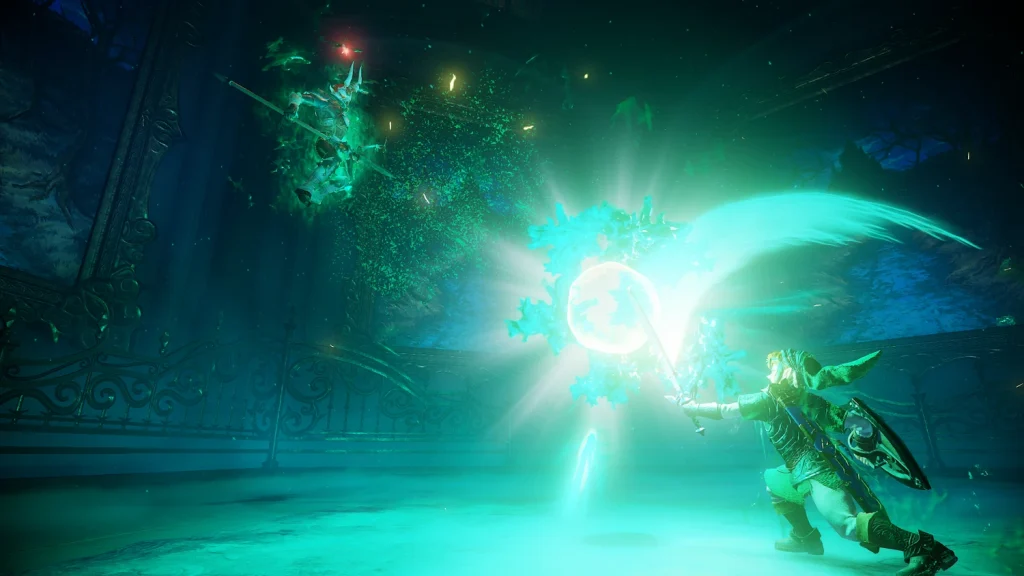
Combat tells a similar story. Link is quicker on his feet, his strikes have satisfying heft, and Z-targeting remains as dependable as ever, with each enemy type still asking you to learn its patterns before going on the offensive. The problem is that the enemies themselves haven’t really evolved to match Link’s newfound agility. The game still attempts to be accessible, and without any difficulty settings, this means that fights rarely put up too much resistance – with a few seemingly being toned down compared to before. Having returned to Hyrule more times than I can count over the years, I rarely felt at risk of seeing a game over screen, and it is a shame Nintendo didn’t include multiple difficulty settings or even an optional ‘Master Quest’ for veterans after a tougher run. For newcomers, the gentler difficulty is perhaps no bad thing, but long-time players may find it a little too comfortable.
The dungeons are still the heart of the experience, and after nearly 30 years, they’re still some of the best in the series. Even if they come with simple titles such as ‘Forest Temple’ or ‘Fire Temple’, each works so well with its theme. It’s still as much fun working out how the various rooms fit together and how a discovery in one wing can lead to possibilities in another. The Water Temple has been tidied up a bit with fewer keys to find, and while I’d suspect most people would be happy with that, I think it’s indicative of a wider trend. A lot of the puzzles are now much more signposted, with clear visual cues telling you exactly which item you need to find. That takes away from the ‘aha’ moments that were such a big part of the original. The original’s weaker sections are still there too, with the Shadow Temple as linear as ever and the Gerudo Fortress stealth section a chore rather than a defining desert-area experience.
The experience is rounded out by a number of new features. Reshuffled Heart Piece and Gold Skulltula locations, at the very least, will keep experienced players on their toes, and the Hall of Fallen Foes lets you view your defeated foes as detailed statues and rematch your bosses at your convenience (though the rewards are pretty minimal). You start with more money in your wallet, but Great Fairy upgrades now cost rupees, giving you a reason to do side quests for cash. The odd one out is the single save slot with a few autosaves, and with no New Game Plus, there’s really no way to keep a completed game and then go back to it again. Some of that limitation is mitigated by the fact that you can re-battle bosses for the first time, but it is a shame you either have to wipe your progression or start things from scratch on a new Switch account. All of that, combined with the story staying exactly where it is, really underlines that this remake was built with the newcomer in mind and is lacking hooks that would set it apart from the other remakes released on the market every year.
So back to where we started: is this a new coat of paint over an old game, or are there enough changes to keep the old guard interested? It’s a bit of both, really. Just as the original proved what the N64 was capable of, this is a genuine showcase of what the Switch 2 can do. The graphics are superb, the orchestral score is absolutely divine, and the voice acting is excellent, all of which combine to create a very well-balanced experience that is both fresh and familiar. The gameplay changes (the jump button, the new item system) make this the best Ocarina of Time that has ever been played, albeit the low difficulty, heavily signposted puzzles and single save slot do a bit of a disservice. My one real wish would have been that Nintendo had been a bit more daring with the story, as actually realising the cut ideas (the Light Temple, etc.) would have given the veterans a real reason to go back. That said, these qualms are minor compared to the real truth: whether you’re going back to relive a childhood memory or picking up the game for the first time, The Legend of Zelda: Ocarina of Time was a classic in 1998 and still holds up very well in 2026, and is absolutely worth experiencing all over again.
Final Score for The Legend of Zelda: Ocarina of Time (Remake)
The remake of The Legend of Zelda: Ocarina of Time is now available to purchase on the Nintendo Switch 2.

