

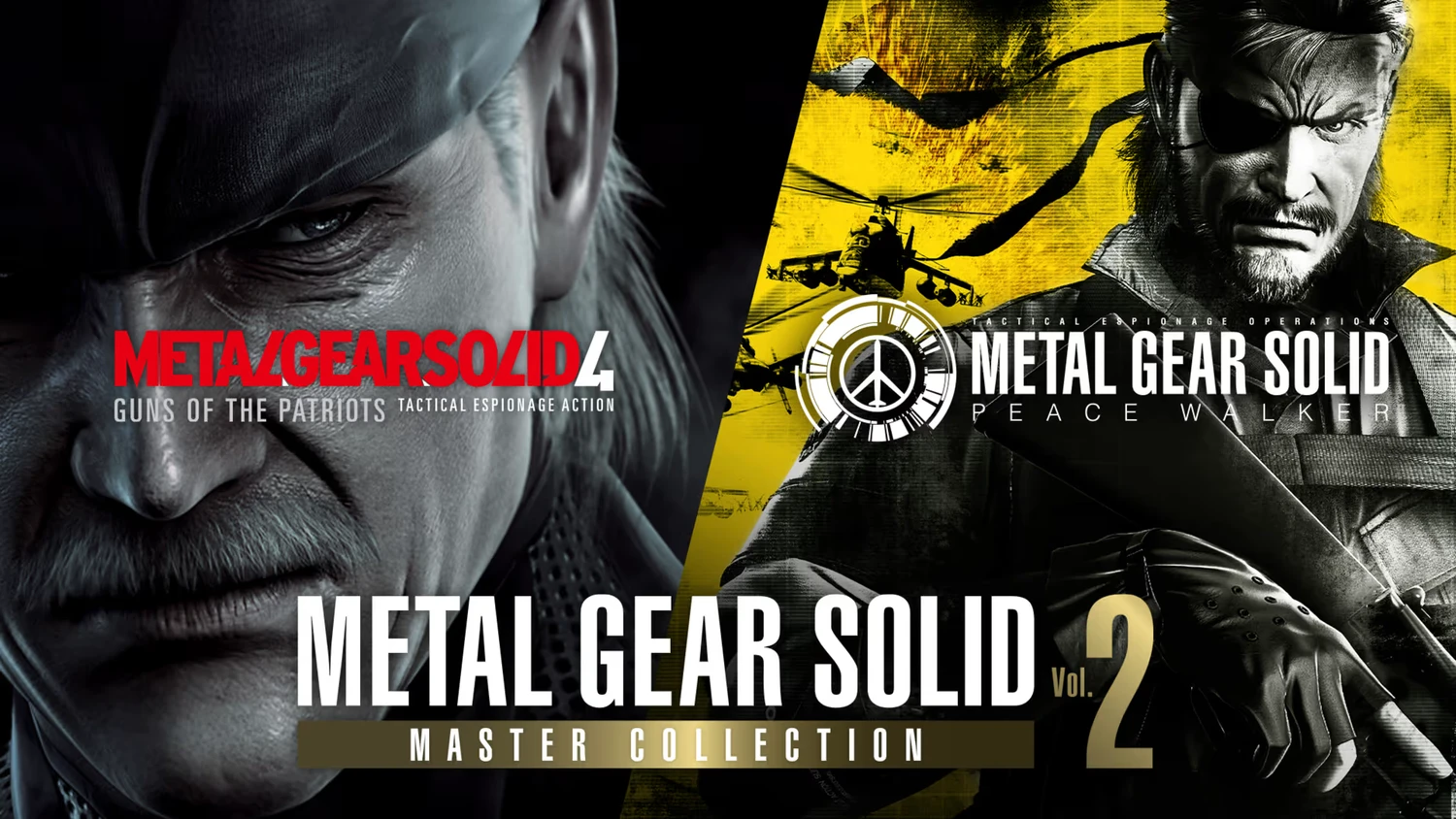
The only way I can describe my experience of the Metal Gear timeline is that it’s… all a bit odd. I first started off with Metal Gear Solid IV: Guns of the Patriots on the PlayStation 3 – chosen for a school English essay, one that I for sure wasn’t qualified to write about – and then, over the years, acquired a better understanding of the earlier parts of the timeline. Since MGS4 has always been console-exclusive since its very first launch in 2008, it wasn’t easy for new players to get their hands on the stories of Old Snake – but fortunately, by 2026, it is now possible to play it, together with Metal Gear Solid: Peace Walker and the previously Game Boy Color-only Metal Gear: Ghost Babel, as part of the Metal Gear Solid: Master Collection Volume 2 for PlayStation 5, Xbox Series X|S, Nintendo Switch, Nintendo Switch 2 and PC, and I’d like to give a well-deserved thanks to publisher Konami. Does it still rate almost twenty years after its release? Find out by scrolling down!
Metal Gear Solid IV: Guns of the Patriots
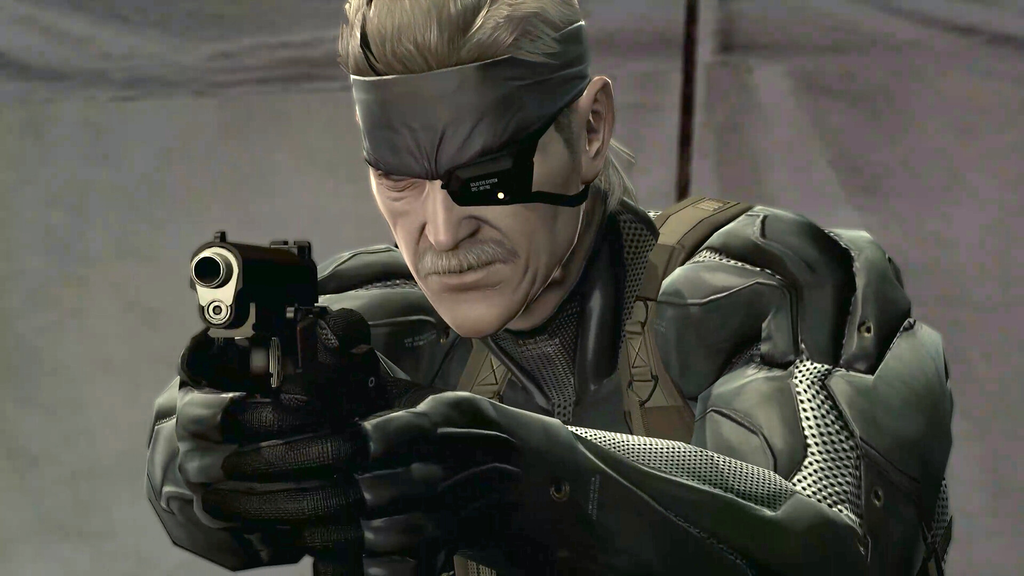
A certain type of video game has developed a mythology surrounding its own lack of availability. For nearly twenty years, Guns of the Patriots has been the top game in that field. Because it was designed from the ground up around the PlayStation 3’s well-known Cell processor, many believed the game would be tied to that single console. Konami has now completely refuted that idea, and the current version is much more than just a simple port. The most noticeable difference is the frame rate, which maintains a steady 60fps without a single stutter during the time I played it – something the original version was one of the hardest tests of the console’s capabilities, even in its later years. This single change alters how the game feels in the player’s hands, giving Snake’s movement and weapon control a responsiveness the original version could never achieve. The resolution has been increased as a result, and there has also been some subtle background work carried out, consisting of the game’s various mentions of PlayStation-specific hardware being re-recorded so that the dialogue suits the platform on which you are playing.
When I looked at it again, what struck me was that almost all of the visual aspect still seems up to date, and this is mainly down to the art direction rather than to raw technical power. MGS4 made a strong commitment to a uniform colour scheme and a consistent design style. Instead of adding more detail to the textures, the heavy filtering which had previously blurred the original image has now been reduced to a more neutral level, allowing the environments to breathe. These environments are still some of the most intentional in the series: small and densely populated, they convey information about the war by means of the rubble and the damage rather than by having a character stop to explain it. Another reason why the game still functions is Snake himself, since his accelerated ageing is not just a narrative device but a real design limitation, and having a protagonist who gets tired, struggles and is unable simply to charge through a room full of soldiers makes the early parts of the game genuinely tense. The OctoCamo system is still the most appealing mechanical feature and the best point in favour of the idea that this is still a stealth game worth playing rather than just a cinematic piece to be admired, because the simple action of pressing yourself against a surface and watching the suit adopt its pattern is still satisfying after all these decades.
None of which is to pretend the game does not arrive carrying its original baggage, because it very much does, and a port cannot – and ultimately should not – fix design. The cutscene runtime is quite long, which will either thrill you or put you off entirely, and there is a legitimate argument that the game is a movie with rather slender gameplay underneath.
The structural issues are real as well, with the notoriously sluggish third act still dragging, and the back half of the campaign never quite recovering the tight focus of its opening chapters. The instalment also tends to drift away from the flagship stealth mechanics that the series had become known for – with the increased combat capability and sheer volume of enemies thrown at you – making for an experience that you can do stealthily, but is much more of a challenge. I argue that is more a feature than a failure, given this was always intended as Kojima’s curtain call. At this deliberately maximalist send-off, restraint was never on the agenda. Still, if the measured, methodical creeping of the earlier games is what you are here for, you will find MGS4 considerably less interested in accommodating you.
Metal Gear Solid: Peace Walker
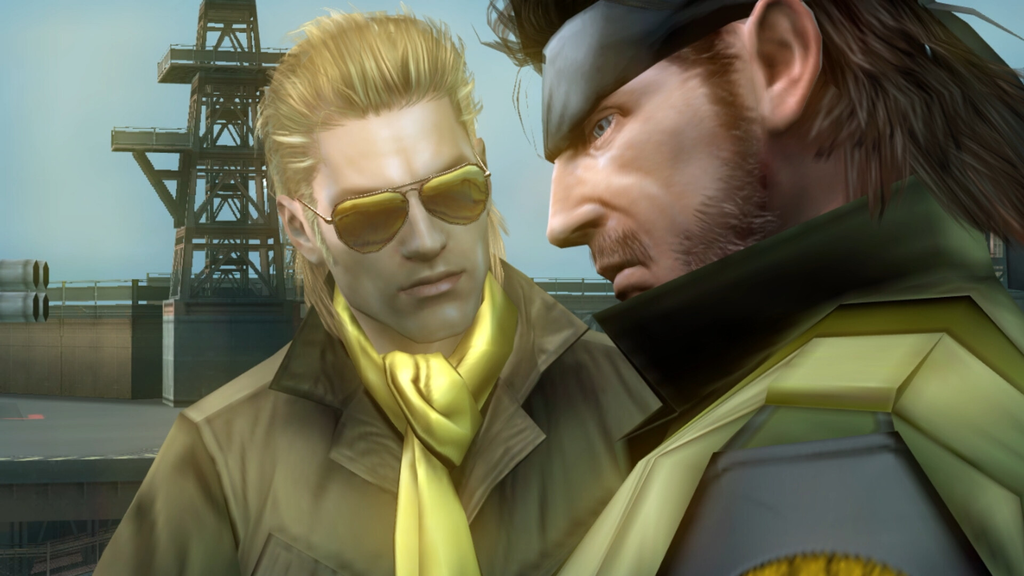
Even though Guns of the Patriots is probably the title that most players will choose when buying this collection, Peace Walker is a useful companion that fans might enjoy more. Since it was first released on the PlayStation Portable, the game continues the story of Big Boss following Snake Eater, founding Militaires Sans Frontières and then travelling to Costa Rica after it is discovered that The Boss may not be dead as had been believed. The reason why it works so well in 2026 is exactly the same thing that originally made it seem like a compromise, since its missions were divided into short, self-contained sections to fit the handheld format. This design has gradually become a strength for people whose gaming sessions now occur in twenty-minute intervals rather than during long weekend blocks (as gaming time has declined over the years).
Behind everything else is Mother Base, in which each soldier you take and every resource you bring back contributes to an operation that constantly grows, unlocking better equipment, opening up new development lines and allowing you to field squads for your own missions. It is a form of base management with almost all the boring aspects removed, and it is truly hard to stop playing once the system gets going. The amount of content is also considerable, and this shows how, despite originating as a portable PSP game, the main operations, the huge variety of Extra Ops and the base systems together make the game far larger than most of what is available around it.
The writing in this piece is more restrained than in any of the other stories in the collection, and this restraint is a strength. Big Boss has a real emotional impact because it keeps returning to the Boss’s betrayal and searches for a reason that might explain it, giving the story a distinct emotional focus rather than burying it under exposition. The game is in fact funnier than many people acknowledge. A good example of this is the Fulton recovery system, which allows you to attach a balloon to an unconscious enemy soldier and then watch him float off to become your newest recruit. Co-operative play is back and supports up to four players, a feature that is more important than it may at first seem. Some of the later bosses have so much health that they become a tedious ordeal when faced alone, and a number of the weapons require a full squad in order to be used at all. That said, there are some drawbacks. This version is still the original conversion, not a new remaster, so the environments lack detail and the maximum resolution is below what the hardware can do. Although the Ashley Wood comic panel cutscenes don’t have the cinematic impact of the rest of the series, they’re gorgeous nevertheless, and the interactive elements throughout make the choice worthwhile.
Metal Gear: Ghost Babel
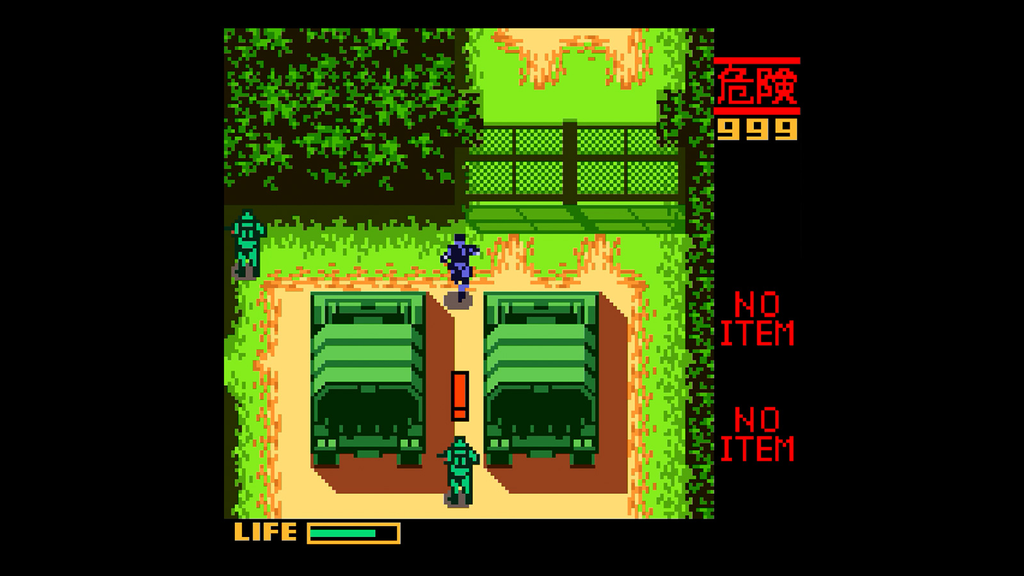
Tucked away in the collection is Ghost Babel, and it is a considerably better inclusion than its bonus-material billing suggests. A Game Boy Color release from 2000 – and sold in the West under the deeply unhelpful title Metal Gear Solid- it branches off the timeline the rest of the series established. Seven years on from Snake burning down Outer Heaven, in a version of events where Zanzibar Land never happened at all, he is pulled out of retirement to chase a stolen Metal Gear across Central Africa alongside a cast you will not have met anywhere else. It sits a long way outside the canon, and, unlike MGS4 and Peace Walker, asks almost nothing of the lore you have spent years assembling. The presentation borrows the strict top-down perspective of the MSX games while lifting a fair amount of its interface and attitude from the original Metal Gear Solid. Snake proves far more capable than the sprite work lets on, with crawling and wall-hugging both present and making the stealth feel closer to its console siblings than it has any right to.
The pixel art is crisp, and the soundtrack is a genuine highlight. There is also a preservation argument here, given its unavailability on the market, and now being available in every copy of the collection. My one real frustration is that Konami sealed it inside a separate bonus application rather than placing it alongside the other two games, a decision that makes it seem less than it is, even though it is a standout release in its own right.
Everything else
The supplementary material follows the template established by the first volume, which means an enormous amount to read and very little to watch. Each headline title comes with a Master Book, essentially an expanded manual stuffed with character breakdowns and background detail. It also includes the interactive database released alongside the original PlayStation 3 release. Like its original release on the PS3, the interactive database is comfortably the star of the show, functioning as a cross-referenced encyclopaedia of characters, factions, organisations and locations, complete with a full chronological timeline and a chart mapping out who was involved in what, and for a series this notoriously tangled it is closer to a genuine utility than a novelty. I would have loved to see it revolutionised, or even updated to encompass all lore up to current-day releases, and maybe even incorporated into MGS4 and Peace Walker as reference tools. The launchers and menu design deserve a nod too, as they are far more thoughtfully put together than this sort of release usually bothers with. This is an exemplar of what more long-term game franchises require.
Where it falls down is video. The bundle does include a digital soundtrack, which is worth having, but there is nothing to sit and watch: no developer interviews, no archival footage, no retrospective on the making of either game. Everything that explains these games explains them on the page. It’s a lot of reading, and for those who buy games like this on console rather than PC, reading a book on a television isn’t very intuitive.
My introduction to the Metal Gear Solid franchise came at the canonical end, and I saw it as an interesting assignment topic rather than a game in its own right. Decades later, having experienced Hideo Kojima’s historical masterclasses in game design through the series, it is a strange pleasure to return to where I started and find the game waiting on whatever hardware I happen to own. Metal Gear Solid: Master Collection Vol. 2 is a smaller package than the first one, and it doesn’t pretend otherwise. A smaller number of games, extras that are still all reading and no watching, and the same messy pile of separate icons on your home screen. But those two games are both worth your time for very different reasons. Guns of the Patriots is finally off the PS3, runs beautifully, and looks far better than an eighteen-year-old game has any right to, even if its pacing wobbles and its itch to start shooting is exactly where you left it. Peace Walker is the one everyone sleeps on, a brilliant handheld classic that you can see all over everything Kojima made afterwards. Throw in a Game Boy Color gem that deserved better and finally gets a chance to shine, and you’ve got a collection that won’t convert anyone the series didn’t appeal to in the other umpteen releases, but will absolutely reward those who finally want the entire series on one platform.
Final Score for Metal Gear Solid: Master Collection Volume 2
This review was conducted on a PlayStation 5 edition of Metal Gear Solid: Master Collection Volume 2. A digital review key was provided by Australian distributor Five Star Games to facilitate this review.
Metal Gear Solid: Master Collection Volume 2 is now available to purchase on PC, PlayStation 5, Xbox Series X|S, Nintendo Switch and Nintendo Switch 2.

