
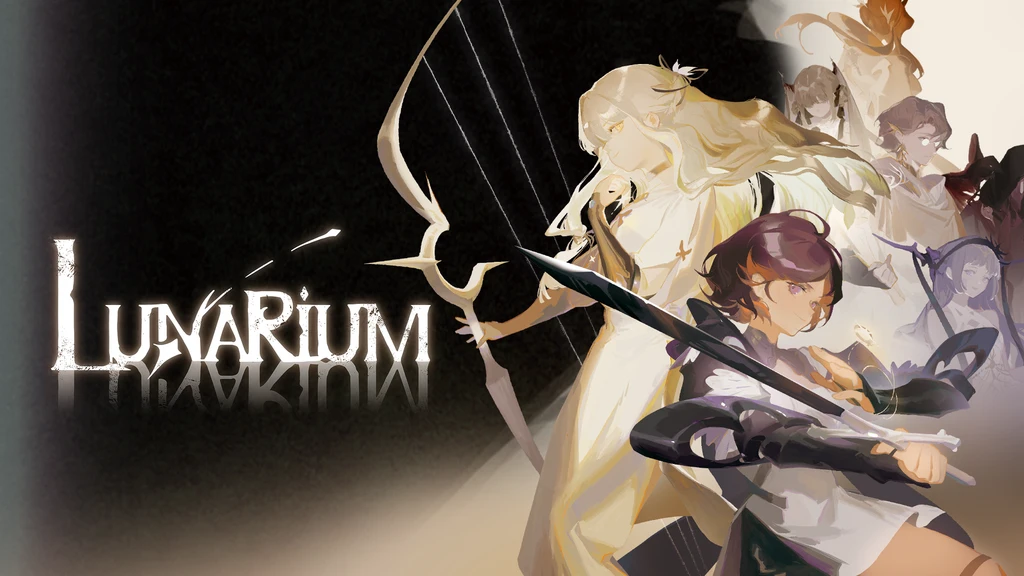
More than ten years ago, I tried my hand at creating an RPG, and even though I had put a good deal of thought into the lore and worldbuilding, it was obvious why RPGs are typically handled by large development teams with financial backing. Yet, as we have seen time and time again, kudos to the modern-day indie development scene: the genre is flourishing, with smaller groups achieving their objectives and offering experiences that are not only playable but also deep and enjoyable. That said, my previous experiences are why I have a particular appreciation for any studio that dares to make an RPG its very first project, let alone one that has to deal with the extra challenges of a popular secondary genre such as soulslike. Lunarium, the Shanghai-based studio with the same name (月相仪), is its debut title and combines parry-based soulslike combat with a hand-drawn isometric action RPG, building the entire game around two young women trying to keep a collapsing world together. It is a bold move for a first game, and one I couldn’t help but admire even before I picked up the controller… but there is a big difference between ambition and carrying it out. Does Lunarium succeed in achieving what so many first attempts, mine included, have never quite managed? Find out in what follows!
Lunarium introduces us to Ave, a knight still in training who hails from a quiet village on the fringes of a kingdom that has clearly seen better days. When monsters descend on her home, she does what any aspiring knight would do and picks up her blade, only for the monster that she defeats to be pulled back to its feet by a black, oozing corruption called the Nihilus. Ave is defeated in that second encounter and would have died as well if it had not been for Lune, an ethereal Starfarer who has looked after these lands for a longer period than anyone can recall, and whose own memories have become faint as a result of having spent a long time in a state of sleep. On this basis, the two of them decide to go to Cyanstone, a fortress city governed by another Starfarer, in order to find out what has happened.
It has to be admitted that this idea will seem familiar to anybody who has played a fantasy role-playing game over the past thirty years, and it’s almost always clear from the outset where the story is going. What sets it apart from other works of this type is the central pairing: Ave is determined, bright and ready to take action, whereas Lune is careful and quietly worn down in a manner that can only come about after centuries of observation, and the two of them complement each other in a way that never comes across as artificial. The conversations between them, together with the journal entries written in Ave’s own voice and the lore notes placed in each area, achieve far more in making the world believable than the main storyline does. The only drawback is that the English localisation is a bit inconsistent in certain instances, and the development team has been putting resources into improving it since the game’s release.
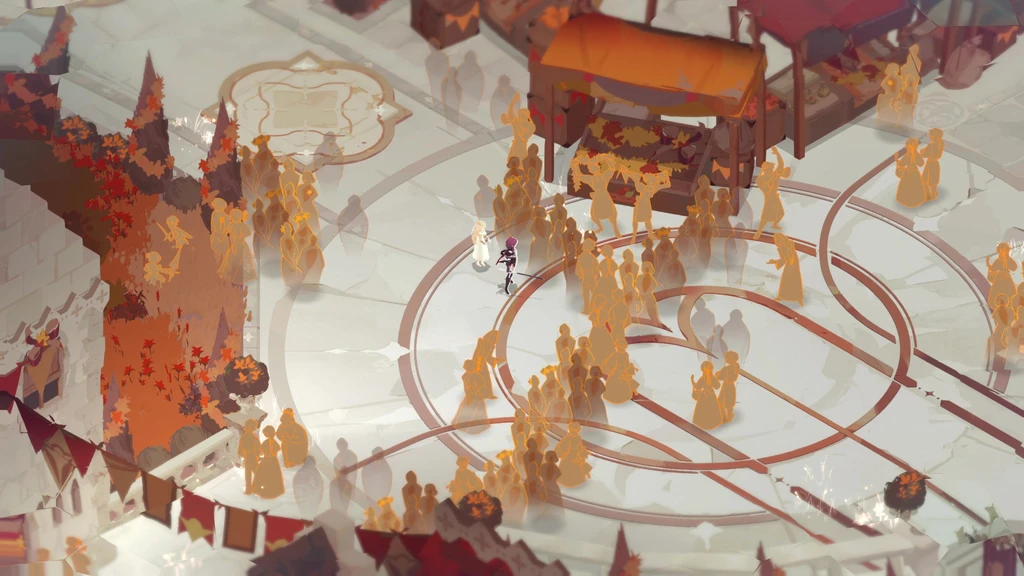
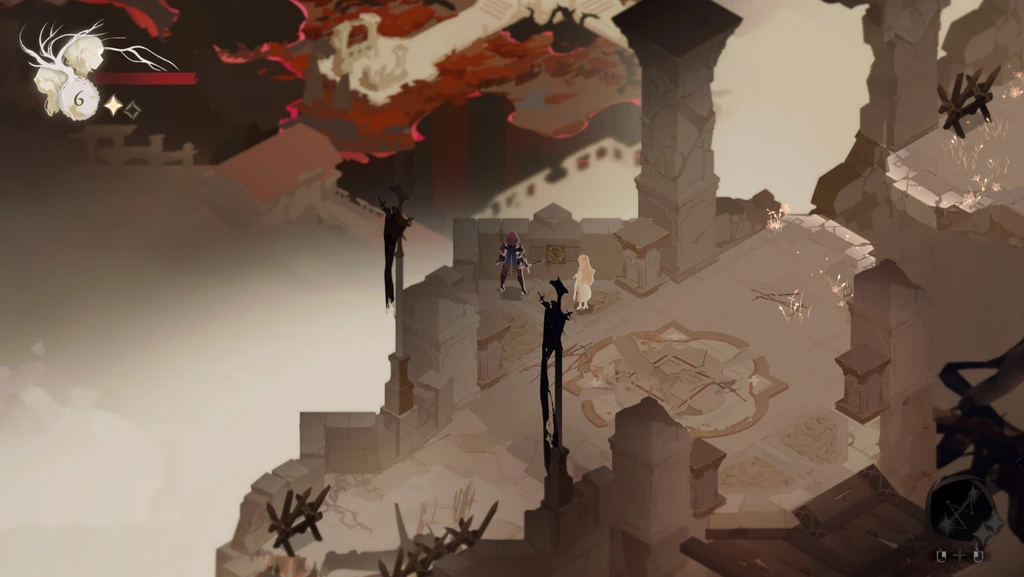
If a piece of writing is able to hold your interest, it is the art that first attracts you. Lunarium features hand-drawn artwork with a soft, painterly finish, forgoing hard lines in favour of colours that gently blend into one another, so the overall effect feels more like flipping through an illustrated fairy tale than anything else in the genre. The colour scheme is intentionally mild and contrasts well with the other aspects of the game, highlighting the intensity and beauty of what lies ahead. Each area also has its own character: the initial forest gives way to the classical stonework and tall mechanical sentinels of Cyanstone, then to a coastal settlement where the tide rises and falls as days and nights pass, revealing and then swallowing the paths as it does so.
Complementing the visuals is a soundtrack that, while not revolutionary, remains an enjoyable listen both while playing and on its own. Piano-led melodies drift through the ruins, swelling into full orchestral arrangements the moment a boss appears, and each area’s theme receives a gentler reprise whenever you settle onto a bench, which does a lovely job of making those rest stops feel like a breath taken. The transitions between the two states are seamless, which matters more than you might think in a game that flips between quiet exploration and frantic parrying every few minutes. Sound effects, meanwhile, are a mixed bag – not hindering but not doing much for the overall experience.
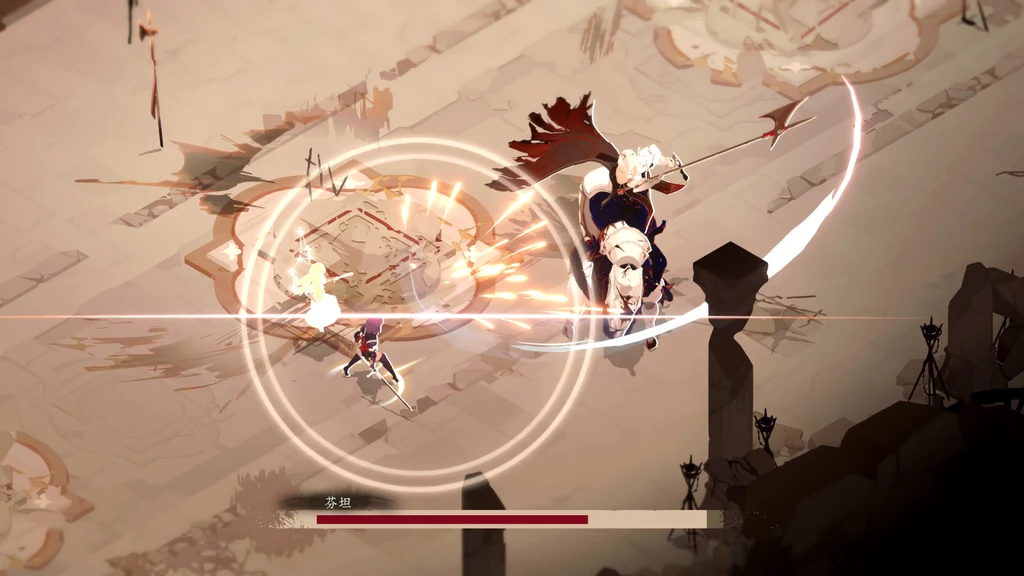
Well, then, how does Lunarium actually work? Basically it’s an isometric action RPG which has been given the feel of a soulslike game, featuring benches serving the role that bonfires serve in other titles, a limited amount of healing that only gets replenished when you rest, and enemies that come back each time you do. In Ave, the actual fighting is carried out using a light attack, a charged heavy attack, a dash and a parry, the last of which is what the whole combat system is centred on. All significant enemies have a stagger meter, and although dodging will keep you safe, it has no effect in filling the meter. If you time your parry correctly, however, the gauge rises until eventually Lune is able to fire an arrow that completely breaks the enemy’s guard and leaves them open to Ave’s more powerful attacks. It must be pointed out that the parry isn’t the only important element, since there is a cooldown period associated with it, which makes the action much more dependent on skill than simply pressing the buttons. You have to anticipate the incoming strike, commit to it and accept the results if you miss. Lune is not a second playable character but rather a support character whose abilities can be incorporated into Ave’s combos, for instance by using a light arrow that you can dash to close the distance on a distant enemy, or by using a charged shot that can penetrate armour. It takes a few hours to get used to the flow, and Ave feels a bit heavy on its feet before the movement improvements kick in, but once they do, it becomes comfortable.
It is in the boss encounters that all these elements come together, and they are by far the best aspect of the game. To punish them, you first have to learn their patterns, and the attacks are easy to read without being overly lenient; I never felt a death was due to anything other than my own actions. Even better, when you fail, you are taken back to near the start of each arena, so a failed attempt only costs you a few seconds rather than minutes spent walking through the respawned enemies. The one thing I do have a slight reservation about is that a number of the Cyanstone bosses rely a bit too much on the same armoured look, so even though they differ in how they are played, they don’t always look different. Beyond combat, progression comes from a few interconnected sources rather than a standard level-up system. A modest skill tree provides passive bonuses and four active abilities (only one of these can be equipped at a time), although it is so small that you’ll have filled in most of it well before the end of the game, which means that the early decisions you make lose some of their significance. The more interesting system is the loom at the Sanctuary, where Ave can create new cloaks that meaningfully alter how she fights, such as giving her a broader, sweeping heavy attack, damage that increases with each successive hit, or a completely new fighting stance. Each cloak has a number of embroidery slots for crafted passive bonuses, with the less powerful cloaks offering more slots as compensation, and it is in balancing that trade-off that your build begins to feel like your own.
Exploration is the final pillar, and here Lunarium repays nosiness. The early hours are fairly channelled, but the map folds back on itself as you go, with areas stacked over one another, optional bosses tucked off the main route, and a habit of putting something that actually matters – a permanent health or resonance boost, a recipe, a new cloak material – at the end of a detour rather than a fistful of vendor trash. The shortcuts are the quiet highlight; they’re hidden with just enough craft that finding one feels like a small victory rather than the game handing you a key. My reservations are two. Cyanstone is so dense and so carefully laid out that the region after it suffers by comparison, sprawling wider while giving you less reason to comb through it. And although the map lets you drop your own markers, which I leaned on heavily, it’s not always clear where a quest actually wants you to go, so a couple of objectives turned into wandering. All up, a run with a healthy amount of side content took me somewhere around a dozen hours, but mileage may vary.
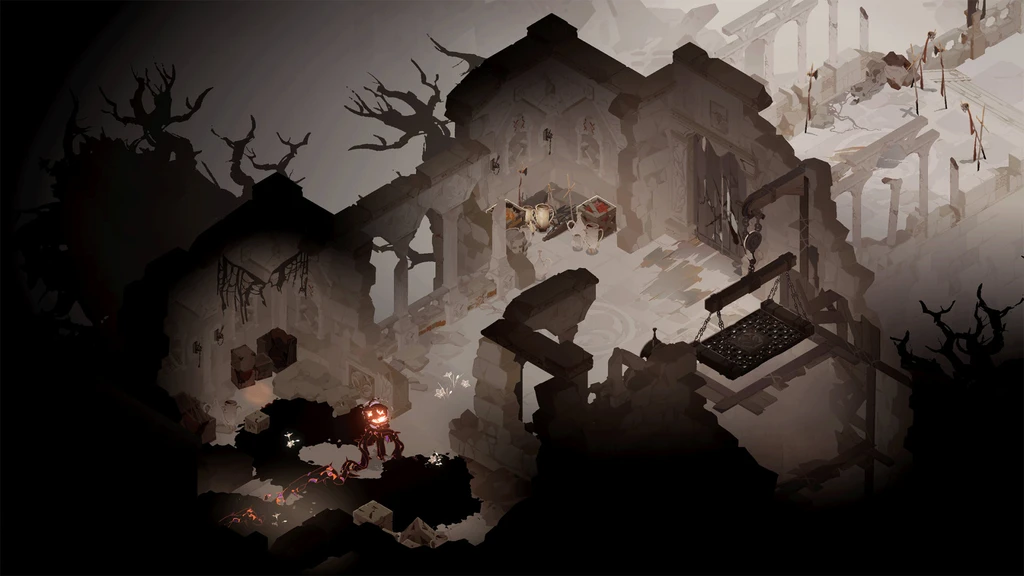
So does Lunarium manage to establish a distinct identity in a genre that is overflowing with titles? I believe it does, even if it doesn’t reinvent anything. The soulslike foundations are well known, the story follows a path that has been trodden many times before, and the skill tree is so simple that experienced RPG players will spot it at once. Nevertheless, what Lunarium Studio has developed on top of those foundations is something with a real personality, and it’s not just the standard experience with a few quirks to give it a fresh feel – there is a beautifully pleasing world to explore, a soundtrack that stays with you long after the credits have rolled, a parry-based combat routine that is challenging without ever appearing cruel, and, most importantly, a satisfying partnership between Ave and Lune. For a new studio making its mark in some of the more saturated areas on Steam, that is a very confident first move, and one I hope signals the start of a much longer journey.
Final Score for Lunarium
This review was conducted on a PC copy of Lunarium. 月相仪Lunarium provided a review code to facilitate this review.
Lunarium is now available on PC through Steam.

