
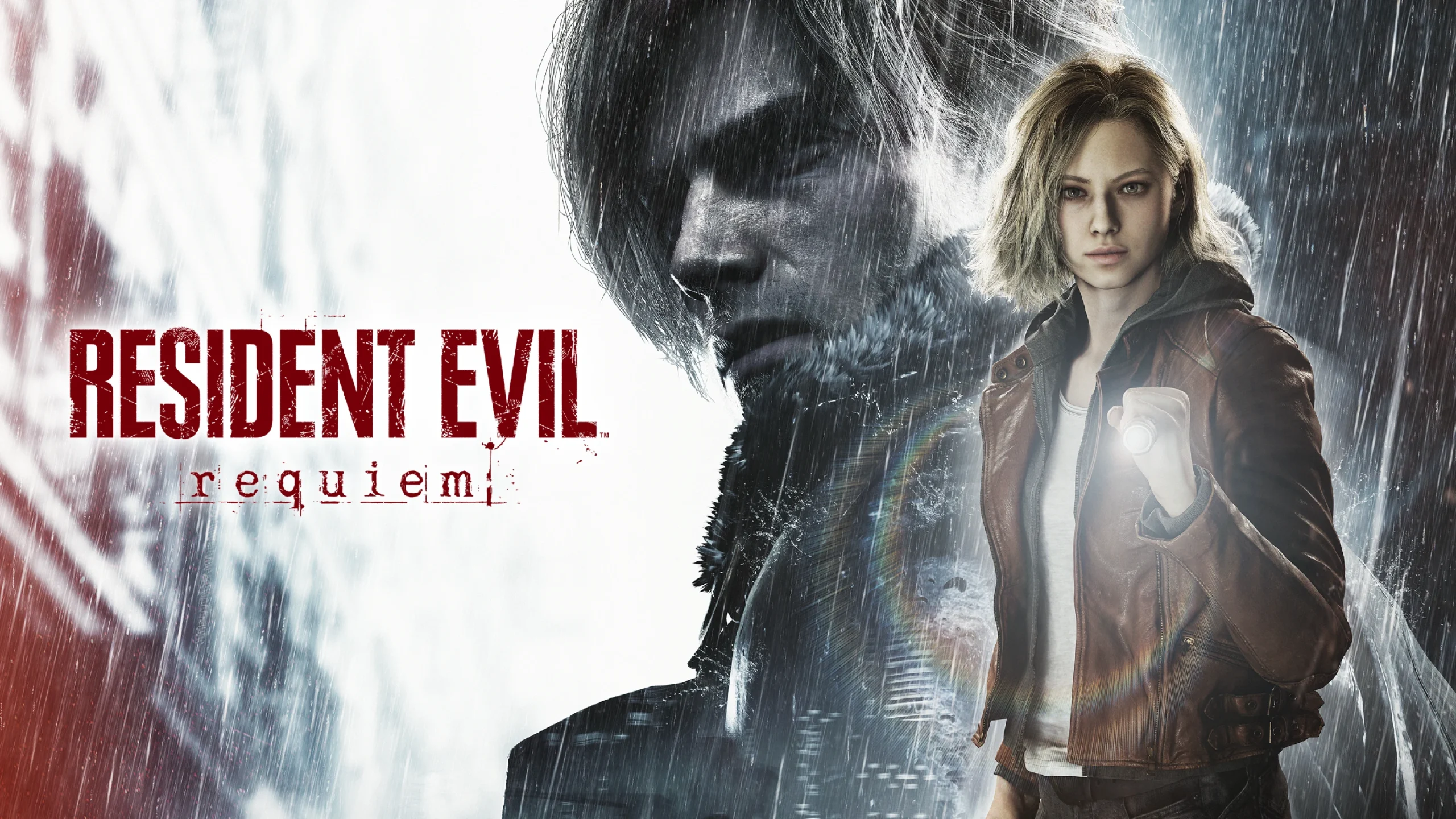
While the series has always felt more eerie and intense than truly scary, there is a reason why the Resident Evil series has continued to thrive over the last three decades since its inaugural release in 1996. The franchise offers richly narrative-driven experiences that don’t sacrifice story for gameplay. It features memorable characters and a survival-horror experience where players are left genuinely powerless. Each console generation sees these games establish a new benchmark for visual quality. Half a decade since the last flagship chapter in the Resident Evil franchise, Resident Evil Village, Capcom has brought a new experience titled Resident Evil Requiem exclusively to last-generation consoles. It boasts a dual-narrative approach with both a returning familiar face (Leon S. Kennedy) and a newcomer with their unique mysteries to explore (Grace Ashcroft). How does this new horror-themed experience fare? Read on to find out in my review of Resident Evil Requiem!
Bringing its chronology into the Year 2026, Resident Evil Requiem builds its plot around two perspectives – one who has experienced much of what the series has had to offer, and another who is being drawn into its horror for the first time. Pertaining to the latter, Grace Ashcroft, a quiet FBI agent with her own tragic background, is investigating a chain of deaths linked to the surviving fallout of Raccoon City, only to find herself pulled into a personal nightmare that forces her to confront the circumstances surrounding her mother’s death. Leon S. Kennedy approaches the same crisis with many years of experience – no longer the rookie who walked into horror all those years ago, but a veteran defined by bioterror, loss, and hard-won survival. Capcom uses that pairing effectively, allowing Requiem to explore legacy, trauma, and the continuing cost of past decisions. The result is a narrative foundation that appears both intimate and far-reaching, with Grace bringing uncertainty and vulnerability while Leon carries the burden of history on his shoulders – and one that builds upon 30 years of lore and cross-multimedia exploration and development well.
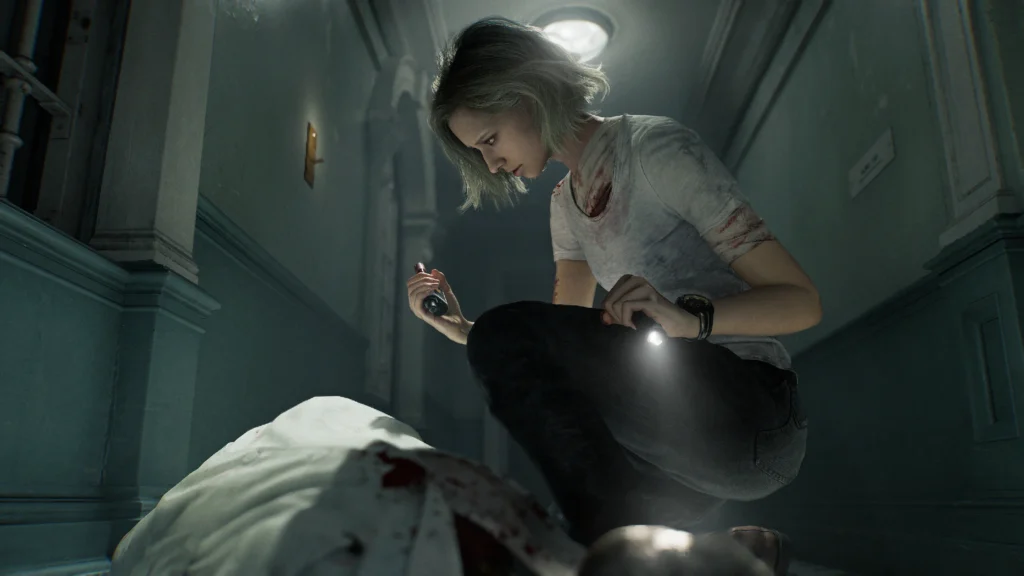
After nearly thirty years of interconnected incidents, returning faces, and corporate conspiracies, Resident Evil Requiem is not the most natural place for a newcomer to begin, even if the game does make an effort to explain itself. Players who have spent time with the remakes and remasters of earlier entries will gain far more from Leon’s role, the repeated references to Raccoon City, as well as the broader emotional value behind the game’s central conflict. Even so, Requiem largely succeeds at grounding Grace as an accessible point of view, giving the story a human centre even when the lore becomes heavier and more tangled. The narrative does not land every idea with equal strength, and some of its later turns lean more on series familiarity than dramatic clarity, but its themes of inheritance, damage, and survival give it enough substance to resonate beyond simple fan service.
While not all Capcom games reflect peak visual aesthetics, what the developer does tend to consistently accomplish is deliver an art style that combines well with the narrative and gameplay elements to properly immerse you in the experience, from the adorable cel-shaded art style of Monster Hunter Stories 3, to the “last-gen” style of Dragon’s Dogma 2, which coupled well with the medieval-style fantasy experience. As one would expect from the Resident Evil series in 2026, Resident Evil Requiem offers locations that feel dense, oppressive, and deliberately built, rewarding players who pay attention to layout, locked routes, and the unsettling details that await in each corridor. The game, on both aesthetic and gameplay levels, rewards players who pay attention to layout, locked routes, and the unsettling details hidden in each corridor. But from a visual perspective, Requiem is impressive. From the way light cuts through darkened rooms to the grotesque detail of enemy damage and decay, Capcom once again proves how effective the RE Engine can be when atmosphere is given equal priority to technical fidelity.
The daunting atmosphere of Resident Evil Requiem is further strengthened by a strong audio presentation, alongside vocal performances that give the narrative genuine emotional credibility. Requiem understands when silence can be more unsettling than a score, and Grace’s sections in particular benefit from restrained sound design that leans on distant movement, strained breathing, creaking floors, and the constant suggestion that something is close by. When the game shifts toward Leon, the music becomes heavier and more forceful, complementing the increased intensity without losing the grim tone that defines the experience. Furthermore, Angela Sant’Albano and Nick Apostolides both nail it as Grace and Leon, respectively.
Perhaps this should be obvious with a series that has, more or less, retained a consistent gameplay style over three decades, especially as one of the originators of the 3D horror experience, but one area where Resident Evil Requiem feels most assured of itself is in its gameplay. More than any recent entry, this is a game built around the series’ dual identity, splitting its mechanics between vulnerability and power, caution and aggression, survival horror and full-bodied action… without forgetting its roots. Requiem does not simply ask players to view the same situations through two different sets of eyes. It asks them to adapt to two distinct rhythms, and that contrast gives the experience much of its personality. For long-time fans, it feels like Capcom is attempting to reconcile the slower dread of the series’ horror-led chapters with the slicker intensity of its more combat-focused years, and for the most part, that balancing act works well.

Grace’s sections are where Resident Evil Requiem truly shines with its origins, once again capturing the helpless tension that past games have done so well. Her chapters are slower, more deliberate, and far more oppressive – coupled with more noticeable limitations such as limited ammunition and a very limited inventory restriction. In turn, her sections shine with stealth, puzzle-solving, and the knowledge that taking down an enemy is more likely than not a last resort, rather than turning tail, running away, or determining one’s next approach. Even when Grace is armed, she never feels fully in control, and that vulnerability adds a layer of stress that lingers well past the immediate scare… even if some of that stress on the part of the player could be missing one clue and spending the next half-hour backtracking to find what you missed. The game makes strong use of stalker-like threats, cramped routes, and enemies that remain dangerous even after you think they have been dealt with, forcing players to think carefully about movement, spacing, and what is worth spending resources on. Are her moments actually scary? I wouldn’t say so. But the eeriness and threats are always there.
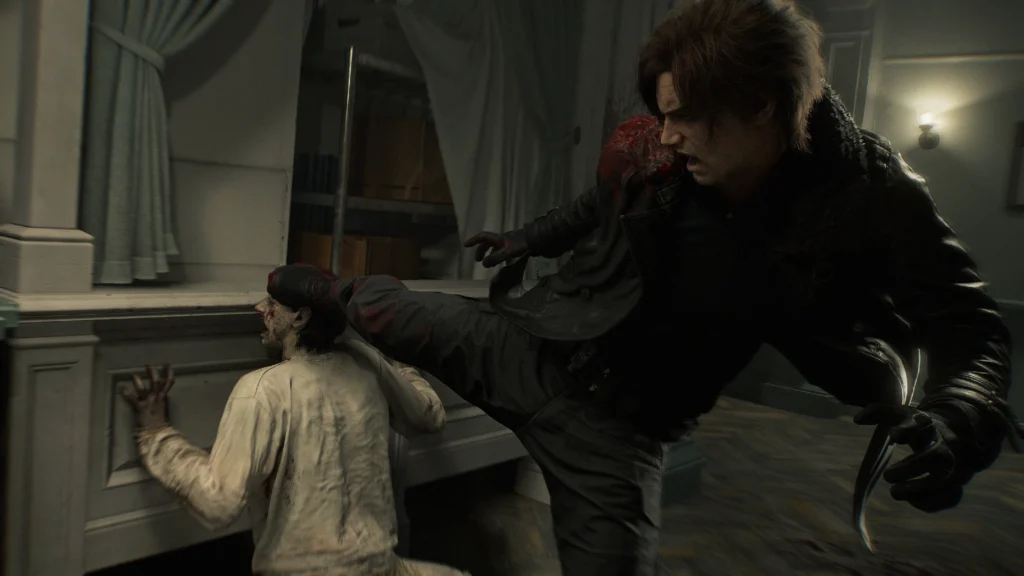
In contrast, Leon’s sections shift the game into a more action-oriented experience, although I would hardly say the game would ever go into the third-person shooter genre. While Grace is wary and reactive, Leon is bold, more heavily armed, and built for encounters that would overwhelm almost anyone else in the cast. His arsenal is broader, his movement more forceful, and his combat options are among the most satisfying the series has offered – up to and including a good ol’ hatchet when guns don’t work. Capcom gives its gunplay a wonderful sense of weight, with every shot, stagger, and finishing move carrying a brutality that makes even routine skirmishes feel dramatic. Boss fights are also a major highlight, leaning into spectacle without completely losing sight of the tension beneath them. At times, Leon’s chapters do edge close to the action excess that once pushed the series away from its horror roots, but the sheer polish of these sequences makes them difficult not to enjoy on their own terms.
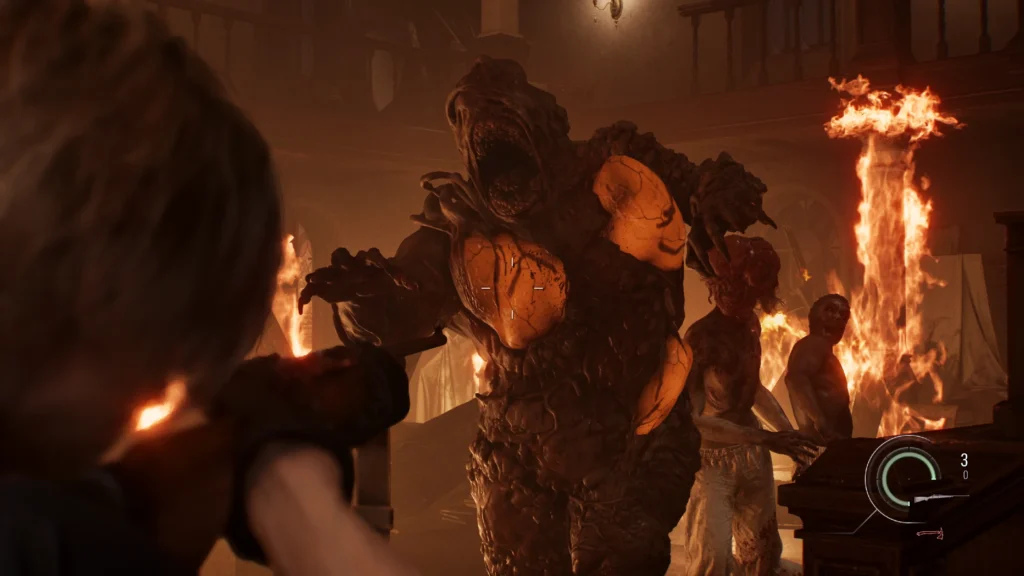
Where Requiem is slightly less convincing is in how evenly it distributes those two styles across the full campaign. Its opening hours leave a particularly strong impression because Grace’s slower and more nerve-rattling sections establish an addictive, intense tone, yet the second half gradually leans more heavily toward Leon’s action-driven approach. That does not make the latter half weak, but it does mean the balance of the dual-protagonist structure is not always sustained. Even so, the overall quality of the combat, encounter design, puzzles, and progression remains strong from start to finish. Additionally, the game’s roughly dozen-hour runtime rarely feels wasted. Replay value is solid as well, with harder difficulties, unlockables, and the usual incentive to refine routes and improve completion times.
Resident Evil Requiem isn’t the scariest or eeriest entry in Capcom’s long-running horror saga, but it is ultimately a good reminder of why this franchise has endured for three decades – even if there has been a wait between it and its previous mainline entry. Through its dual-protagonist structure, richly layered ties to the series’ history, oppressive environmental design, excellent performances from Angela Sant’Albano and Nick Apostolides, and gameplay that successfully balances vulnerability with firepower, Requiem captures much of what has always made Resident Evil so compelling. Not every narrative beat lands with equal strength, and with cost-of-living on the rise, it can be hard to justify a full-price game that may last you a single weekend, but its overall quality rarely falters. At its best, Resident Evil Requiem delivers exactly what fans have long come to expect from the series: a tense, visually impressive, character-driven survival horror adventure that understands its past, respects its identity, and still leaves room for whatever nightmare comes next.
Final Score for Resident Evil Requiem
This review of Resident Evil Requiem is based on the PlayStation 5 copy of the game, with all testing conducted on a PlayStation 5 Pro retail model. A review code was provided by Australian distributor, Five Star Games, to facilitate this article.
Resident Evil Requiem is now available to purchase on the PlayStation 5, Xbox Series X|S, Nintendo Switch 2 and Windows PC via Steam.

