
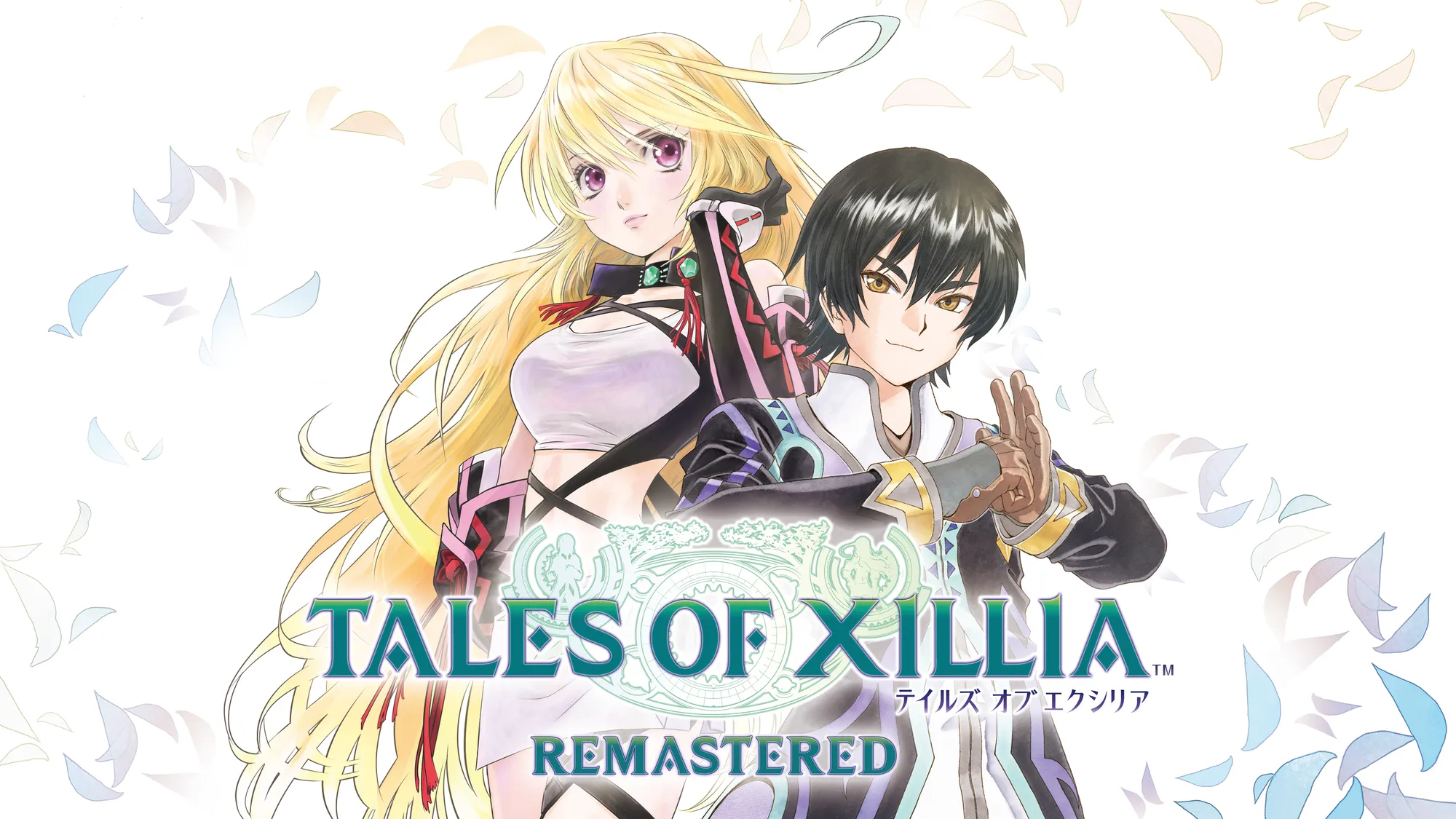
First released in Japan in 2011 and two years later internationally, Tales of Xillia was the gateway game for the latest generation of Tales games from Bandai Namco Entertainment. Following a more cel-shaded anime-esque design language, as seen in titles like Abyss, Vesperia, and Graces f, they pivoted to a more mature, defined 3D art style while retaining some design elements that have become synonymous with the series. The issue with the game is that it has been locked to the PlayStation 3, making it unplayable on either the last or current generation of video game consoles… at least until now. With Tales of Xillia Remastered now available on the PlayStation 5, Xbox Series X|S, Nintendo Switch and Windows PC – how does this game fare in the current RPG landscape, and are there still some gems to uncover by newcomers to the title? Read on to find out!
Tales of Xillia Remastered drops players into the world of Rieze Maxia, a world of humans and spirits, both of which rely on mana to live. However, on the eve of war, a weapon known as The Lance of Kresnik threatens that balance. The two leads drive the response: medical student Jude Mathis, who stumbles upon the military secret and the unethical acts being taken to collect mana, and Milla Maxwell, a spirit turned humanoid who works towards protecting the balance of mana. The game’s protagonists are joined by some arguably (in my opinion) more interesting characters who can feel like they are “along for the journey” but have some interesting backstories – from the young Elise and her snarky doll Teepo, who fill the straight man / chaotic man trope perfectly, to the mysterious mercenary Alvin.
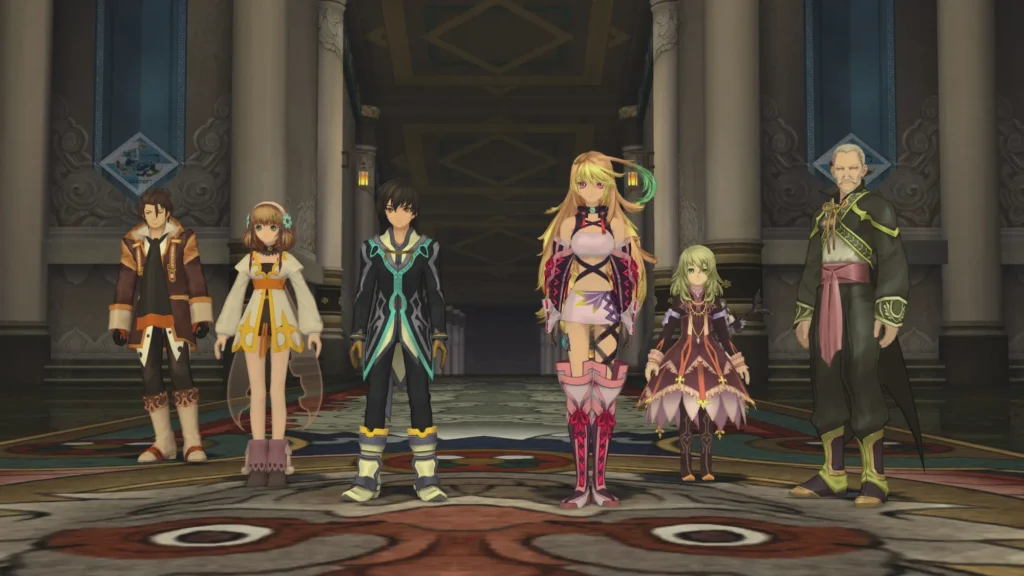
The game’s tone is brisk and character-led, leading to a narrative that will take players about 25-30 hours to complete. It is character-driven, aided by skits that showcase the characters in a variety of different themes. At the same time, the themes themselves are also consistent: faith versus technology, duty versus compassion, and the cost of trying to control a living world. Is it the most comprehensive Tales narrative yet? No, and even with its sequel (not yet remastered), it still lacks some of the depth necessary to appreciate the entirety of the game world fully.
One of the unique draw cards to Tales of Xillia is that, rather than having one main protagonist, you can select one of two upon starting the game – Jude or Milla. You still follow the same narrative beats, and can control either or both in battle or out on the field; however, there are a few moments in the game where the protagonists separate, and you follow different narrative branches. The divergence is limited, and the amount of separation you get is oversold considerably. The cut content makes Jude my preferred first-play protagonist, with some substantial events missed by Milla in favour of added context.
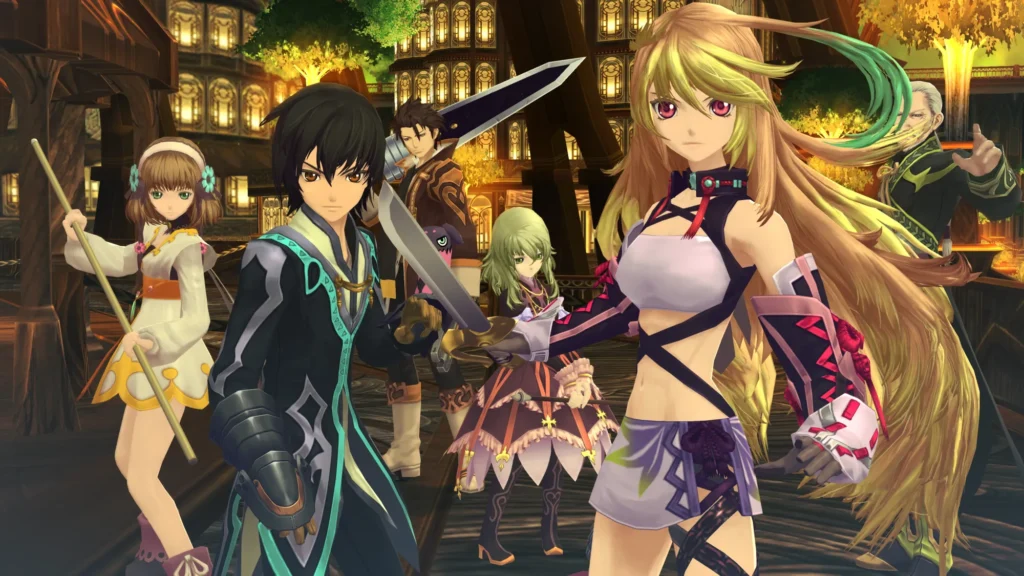
As mentioned above, Tales of Xillia’s most notable feature back in the day was its change in art style and direction, while still leaning into its anime roots. In terms of Tales of Xillia Remastered, you can tell that the textures read cleaner and look considerably better on modern-day cutscenes; however, as this is a simpler remaster, don’t go in expecting 2025 AAA-style graphics, but instead the design of 2011 to look nicer on consoles today. Resolution is sharper, textures read cleaner, and the ufotable cutscenes still steal the show with slick composition and colour. It looks the way you remember it, only more precise and more stable. Facial animation remains stiff, and you will still catch the odd low-detail surface or clipping.
Meanwhile, the world and dungeon layouts are easy to read and cohesive, although this may be due to Bandai Namco Entertainment’s familiarity with the new system and style. However, there is a lack of diversity and uniqueness in the designs of such areas. Also, some assets are clearly reused with minor tweaks, such as ship terminals, and the world maps are not something you will admire for their beauty. However, there are a few areas, especially the hub towns, where the atmosphere carries the mood and succeeds.
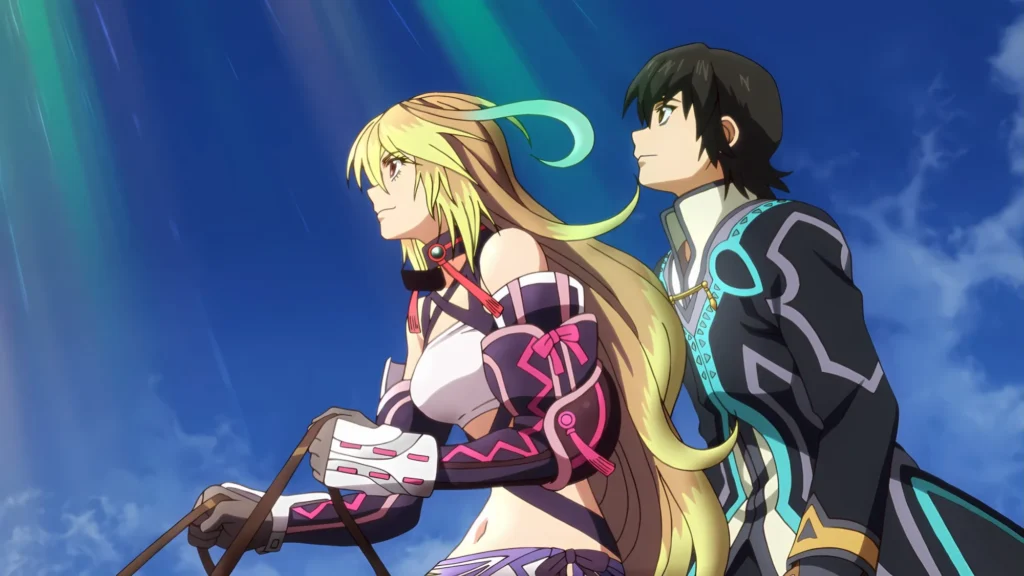
Motoi Sakuraba’s score does the heavy lifting both in and out of battle, with many tunes that suit the pace of the game and is arguably my favourite soundtrack of a Tales game to date. Town and field themes mostly sit in the background for colour rather than hooks, while battle themes add that extra intensity, with some of the DLC outfits (now included in the collection), adding some further battle themes, which is nice. The voice work, on the other hand, is solid, whether you opt for the Japanese voice acting or the English dub – both of which were retained from the original release.
Tales of Xillia Remastered utilises the “Dual Raid Linear Motion Battle” system, which may sound like a complex concept but essentially involves an active battle system that favours movement and timing. While not the most sophisticated combat system offered by an RPG, it is very approachable. It doesn’t take too long to click – complemented by an easy-to-learn tutorial system. Strikes chain cleanly, interrupts feel fair, and inputs land with little fuss. One of the quirks is that you can link up party members to gain access to special linked arts.
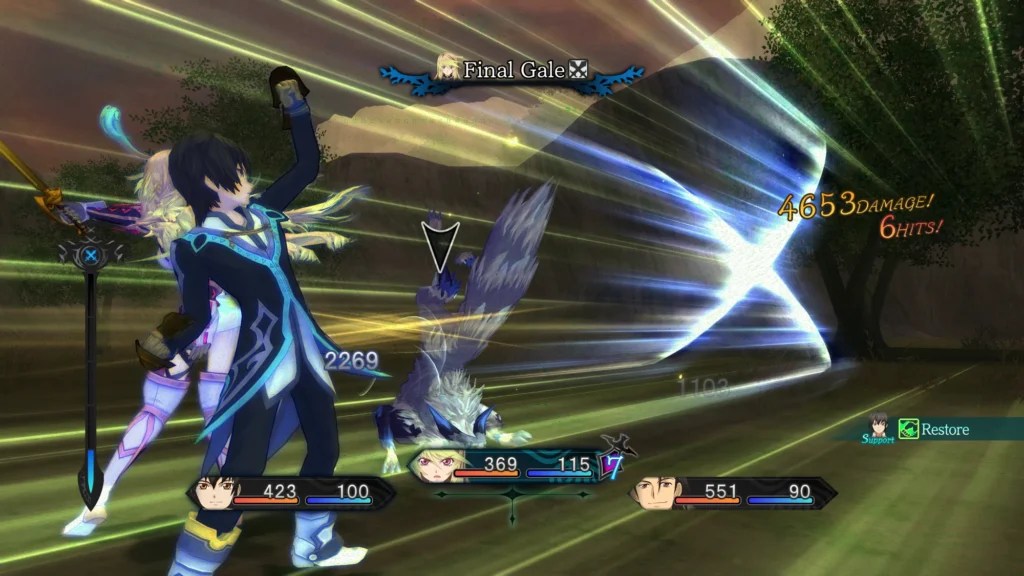
The party brings six distinct styles that push you to rotate leaders. You can tune AI to conserve items, heal at set thresholds, or lean on artes, and those sliders matter when the field gets busy. The AI is functional, but still has some minor issues. Free run and positioning carry real weight, and the partner you tether to changes how you control space. Boss encounters showcase the system at its most intelligent, rewarding flanks and precise link timing. Normal skirmishes do lose bite over time, and a handful of bosses lean on hyper armour and stun that can slow the flow. However, the highs of the system still outweigh the negatives. Arguably, the main problem, and more from a narrative perspective, is that with six total party members and four on the field at any one time, surely they could have found the two unused characters to be functional – granted that is a peeve that is very common in gaming and only responded to narratively a couple of times (Eg, Persona 3).
Progression in Tales of Xillia Remastered is driven by the Lilium Orb, a web-shaped stats system that spends GP to unlock stats, artes and passive skills. It is simple to read at a glance yet flexible enough to build toward clear roles, whether you want Jude as a bruiser, Milla as a caster, or hybrids that plug gaps. Cooking, equipment upgrades and the vendor contribution loop make drops and materials feel purposeful rather than busywork. The result is an approachable buildcraft that lets newcomers find their footing quickly, and allows them to dabble in just the things they enjoy, while still giving tinkerers room to optimise.
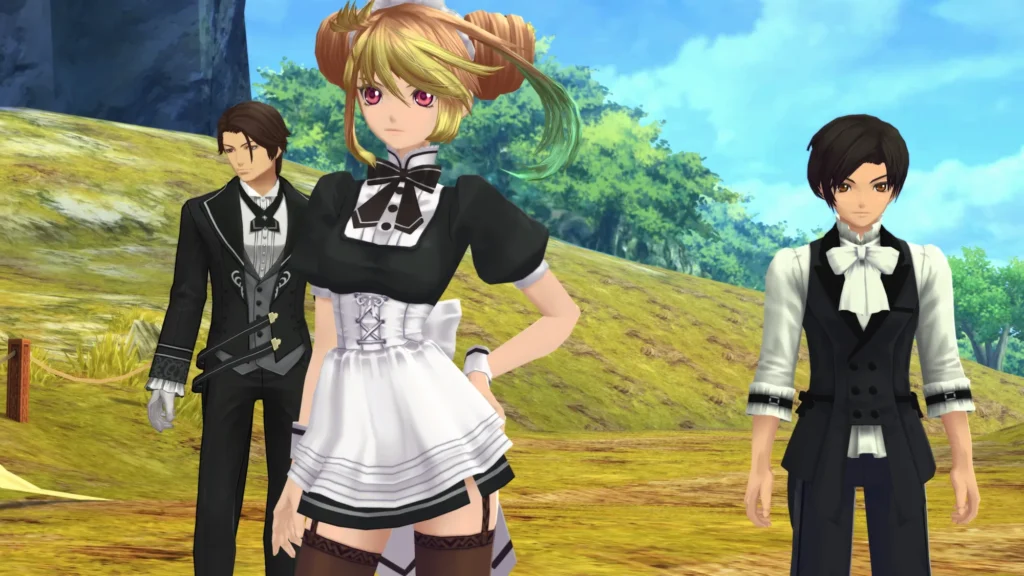
In terms of difficulty, while there are a few spots where the difficulty may spike, the difficulty in Tales of Xillia Remastered remains consistently fair throughout, provided you learn how to utilise each character and the battle system itself effectively. Of course, as with many RPGs, the wave of mobs you will encounter in fields or dungeons quickly becomes waves of trash that outstay their welcome, but it eventually just becomes a game of skipping the foes on-field.
Meanwhile, exploration in Tales of Xillia Remastered runs on a classic town to field to dungeon to boss cadence, with encounters kicking into tight arenas. The rhythm is clean and predictable, and chest routes, search points and side nooks give you short detours to chase. Enemy packs repeat across regions, and many dungeons resolve to corridors and mirrored rooms, while side quests are mostly (very forgettable) errands. Light switch puzzles and a few route tricks add variety just often enough to keep the feet moving – nothing that you will remember for a long time… or five minutes after completing it.
From its PlayStation 3 to current gen releases, Tales of Xillia Remastered add a range of quality of life touches including autosave, subtitles for battles, clearer objective and side-quest markers, the ability to toggle off enemy encounters, and the inclusion of most of the original release’s DLC outside of, sadly, some collaborative DLC – even for Bandai Namco Entertainment properties – among others. While not substantially overhauling the gameplay experience, many of these additions were very nice to have and are typically the mod cons you would expect from most RPGs released in 2025.
What I was less thrilled about was the Grade Shop being unlocked from the start of Tales of Xillia Remastered, and being given a sizable chunk of Grade so you can boost XP or Gald on your first run. I do not like this. The base game is already approachable, and if you spend early and then turn the modifiers off, the inflated XP and Gald can leave the next few hours – or even the rest of the game devoid of challenge. My recommendation is that this is best suited for the second playthrough, should you opt to pursue the other character’s route. Otherwise, there was no need for this system until New Game+.
After being locked to the PlayStation 3 for more than a decade, Tales of Xillia Remastered returns looking like you remember it, only clearer and steadier. Its cast, skits and themes carry a character-first story, and the dual protagonist routes add perspective even if their divergence is thin. Combat remains the star, with a fast and responsive LMBS and linked artes that still shine – even if more complexity might have been welcomed. QoL upgrades, smoother performance and bundled DLC make this the best way to play, but unlocking the Grade Shop early can flatten the curve. In short, the remaster answers the question I posed up top: in 2025, there are still gems here for newcomers to uncover and for returning fans to enjoy again.
Final Score for Tales of Xillia Remastered
Playtesting for this review of Tales of Xillia Remastered was conducted on a digital PlayStation 5 copy of the game, with playtesting conducted on a PlayStation 5 Pro retail unit. A review code was provided by Bandai Namco Entertainment Australia, to facilitate this review.
Tales of Xillia Remastered is now available on PlayStation 5, Xbox Series X|S, Nintendo Switch and Windows PC via Steam.

