
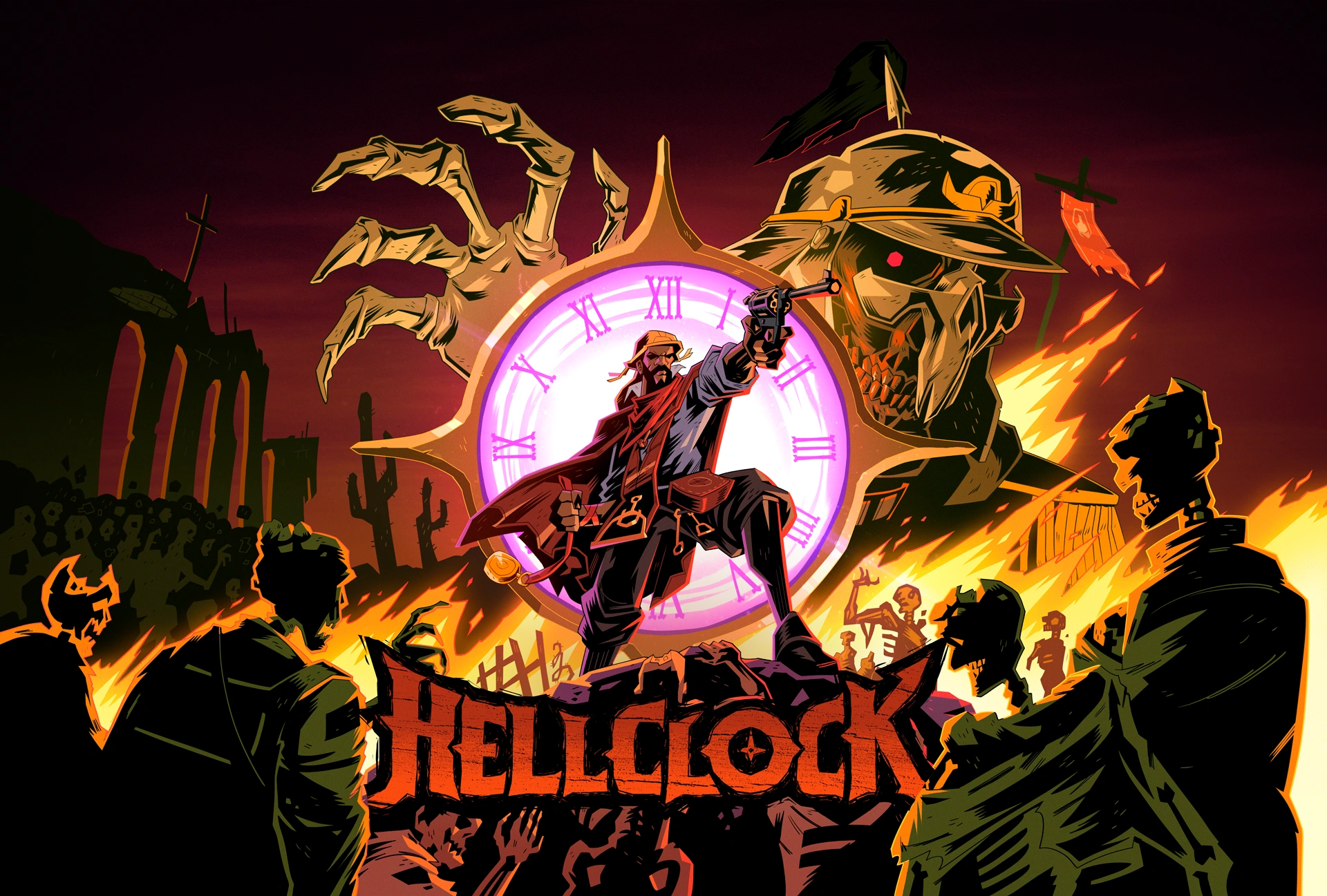
If there is one genre of gaming that we are seeing a lot of in recent months, for better or worse, it is the roguelike. In a market saturated with games offering the core gameplay experience and mechanics but with their unique twist, and only so many hours in a day free to play, it can sometimes be hard to choose one that would work with you. Today, we are looking at one such game, the single-player action RPG roguelike Hell Clock, developed by the Brazilian development team at Rogue Snail and published by the folks at Mad Mushroom. With an intriguing artistic style, it drew me in to explore how the game would play. But did my judgment of a game by its cover pay off?
Hell Clock’s narrative owes much of its punch to the under‑explored War of Canudos backdrop. Stepping into the blood‑stained boots of Pajeú instantly grounds the action in themes of resistance, justice and cultural pride. Furthermore, the brief yet potent cutscenes interlaced with Brazilian-Portuguese voice-overs provide some memorable moments and well-shaped lore, which kept me invested, yet not bogged down in exposition. While the early beats hit hard, urging me to research the real‑world massacre almost immediately, the story’s presence does wane as the mechanical loop takes centre stage in the latter acts, but that is typically a universal issue with most games in the genre.

Visually, Hell Clock wields a bold artistic style that sets it apart from the usual grim‑dark ARPG on the market, while not being too unfamiliar. Thick black inks contrasted against brighter colours leap off the screen in certain scenes, while the 3D models and general action combat replicate that style on the battlefield as well. Despite all this, it is easy to keep track of Pajeú amid the particle confetti. The hub town of Quixeramobim slowly blossoms with artisans and candlelit stalls, offering a serene contrast to the grittier areas you often explore. However, the procedurally stitched corridors do wear thin at times.
Complementing the visuals is a percussion‑heavy soundtrack that pounds like a war drum beneath every frantic dash. The music pool is a little shallow, and marathon sessions expose loops sooner than I’d like, but the musical backing is more than solid enough to complement the experience. The same goes for the voice acting, with both Brazilian and English language options on offer. Both are good options, but I favoured the original Brazilian Portuguese voice‑over; its raw cadence sells both rage and resilience so well. Overall, the audio design anchors the historical flavour and keeps the adrenaline needle firmly in the red.
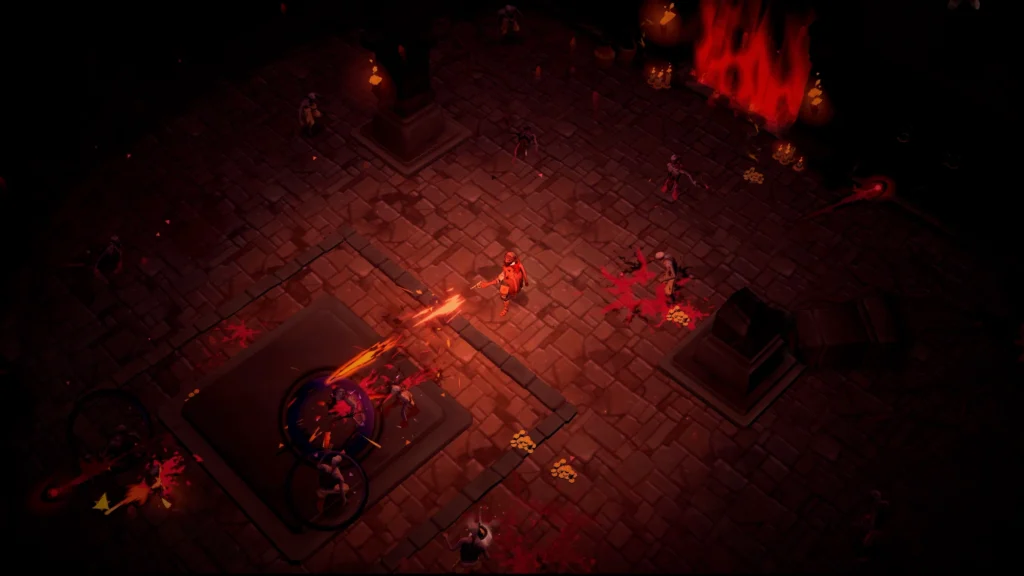
Combat in Hell Clock is all about unrelenting momentum. Pajeú’s revolver, dash‑slice and crowd‑shredding knife whirl combine for a power‑fantasy loop that rewards aggression, and the ever‑ticking Hell Clock pushes you to blitz rooms. When the timer hits zero, the run ends -no last‑second miracles – so every detour to crack a chest or farm XP feels like a calculated gamble. Boss fights freeze the clock long enough for spectacle, but their screen‑filling attacks and hefty health pools demand clever positioning and potion discipline, not just reckless DPS spamming.
Outside the chaos and action, the core experience comes from preparing for your next run – with twenty unlockable skills to slot into five action buttons, and a sprawling skill tree which lets you focus on your individual style, in hopes it will get you to the next battle. You also have the customary Relics, persistent loot that offers extra modifiers, and a solid amount of currency to obtain to make your next run perhaps a little more successful than the last.
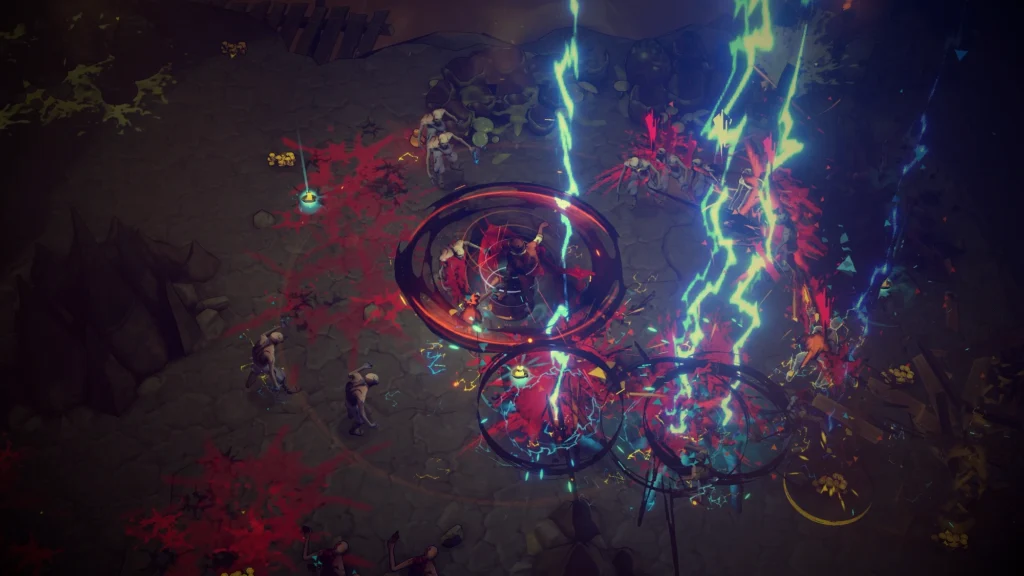
That depth comes with friction – the usual case of needing to complete many a run to complete a game, with the trade-off being that dopamine hit every time you get just a little bit further. Mid‑campaign, scaling stalls and bosses start to feel like damage‑sponge checkpoints until you secure higher‑rarity relics or extend the clock through tree nodes. The timer itself polarises: it adds thrilling urgency for some, artificial pressure for others. However, there is a toggle that deactivates it entirely, plus Hardcore and Ascension modes for masochists. When the systems click, each “one more run” rockets from nerve‑shredding sprint to victory lap; yet when they don’t, you’ll feel the grind. Still, the loop’s capacity for wild, screen‑melting synergies keeps me coming back for another descent.
Ultimately, the first impression that made me decide to give Hell Clock a try among other games in the genre paid off. Beneath a visually pleasing style is a revenge tale that educates as much as it entertains, and wraps around a combat loop whose ticking‑clock urgency keeps the dopamine flowing even when the grind bites back. Yes, the corridors repeat and the bosses can bloat. Still, the marriage of aggressive build‑craft, authentic Brazilian flavour and straight‑to‑the‑veins momentum means this roguelike earned its spot in my (at the moment) limited playtime. It proved that sometimes, judging a game by its cover can lead you exactly where you need to go.
Final Score for Hell Clock
This review was conducted on a PC version of Hell Clock, with a review key kindly provided by the publisher to facilitate it.
Hell Clock is now available to purchase on the PC via Steam.

