

It is uncommon for a game to receive a significant overhaul many months after its initial release, especially in its narrative and localisation work. However, in what appears to be an important limiting factor to the game, developer MeowNature and publisher Gamirror Games have recently released a substantial update for their strategy RPG, Depersonalization, seeking to address the issue. With some impressive pixel-style visuals to draw you in initially, is this game an easy recommendation or one that is too niche for mainstream audiences? Read on to find out in my review!
Depersonalization presents itself as an anthology of self-contained investigations orbiting a single, disquieting cosmology, all inspired by the Cthulhu Mythos (which, while not the only game to explore it by far, when done well, adds richness to a game’s world). As Anan, the Star Key, you slip into new identities from module to module, each establishing its own rules, tone, and conditions for success, while a quiet meta‑plot knots them together. BRP‑style checks, contested rolls, and failure states nudge decisions away from power fantasies and toward role‑play, where setbacks open different avenues rather than hard stops. Replays aren’t just recommended; they’re built in, with alternate routes, hidden flags, and an approach that treats save‑loading as timeline hopping before you lock in the path you prefer. The mood favours unease over shock, and when it clicks, the stories reward patient exploration and character‑driven choices.
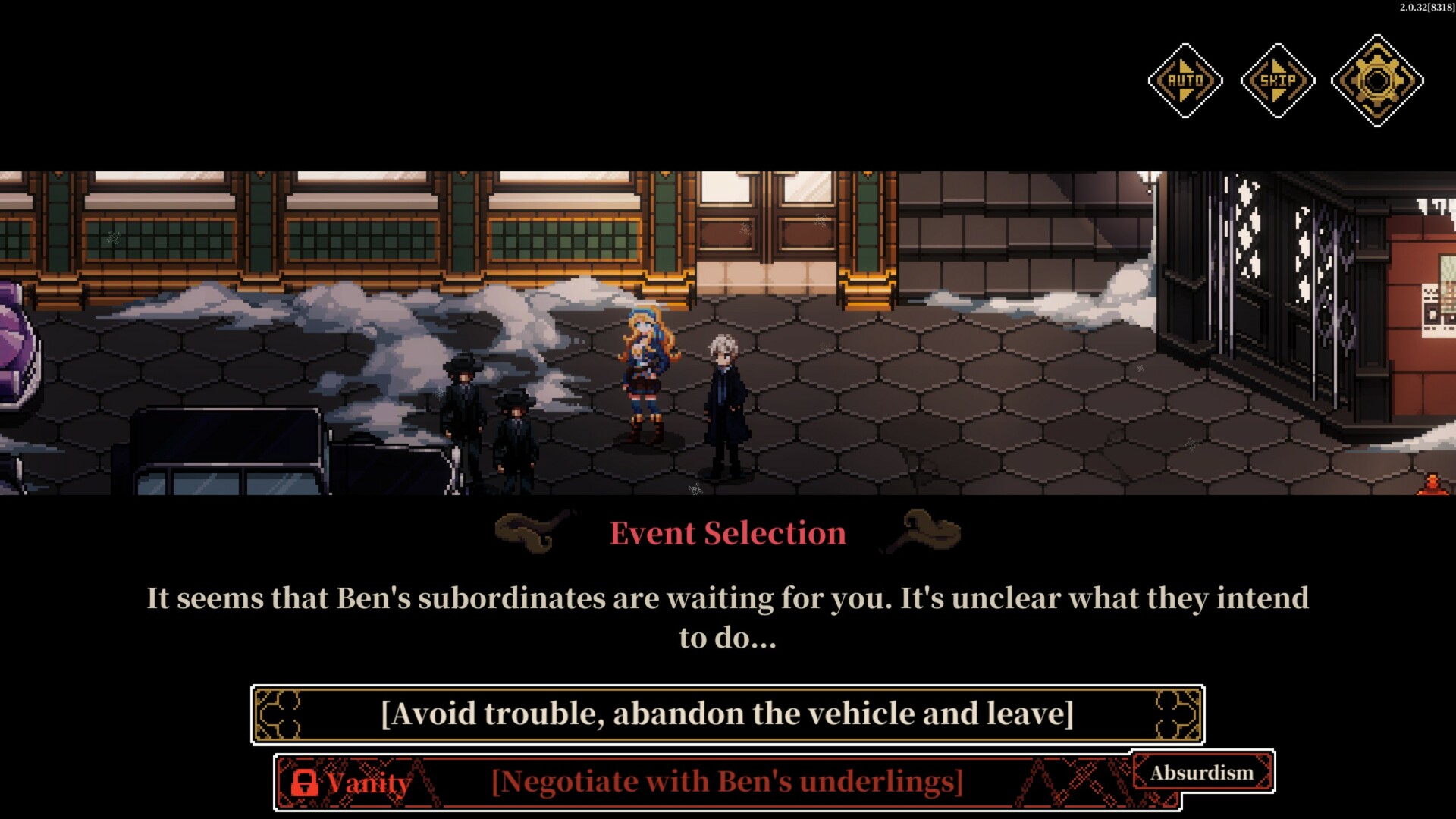
English readability was the game’s biggest asterisk at launch, and the recent localisation pass does go some of the way to addressing the issues. Dialogue flows more naturally across most modules, terminology is more consistent, and the denser lore passages are no longer a slog to parse. That said, it is not flawless. Players will still encounter the odd typo, an awkward turn of phrase, or have some scenes make less sense than they should. Some chapters read cleaner than others, and English updates can lag by a beat. Overall, the experience has shifted from “promising but compromised” to “fully playable and somewhat elegant”.
Visually, Depersonalization relies on expressive pixel art and careful lighting to convey its unease: rooms breathe with shadows, scenes subtly warp when revisited, and bosses land with theatrical framing. The JRPG DNA is evident in character portraits and clean side-on combat staging, yet the Mythos iconography lends it a distinct personality of its own. The Main Hall hub is a striking anchor between excursions, while the interface keeps information dense yet readable without being flashy. The one persistent snag appears in text‑only sequences, where longer passages can overrun their boxes, an annoyance rather than a show‑stopper.
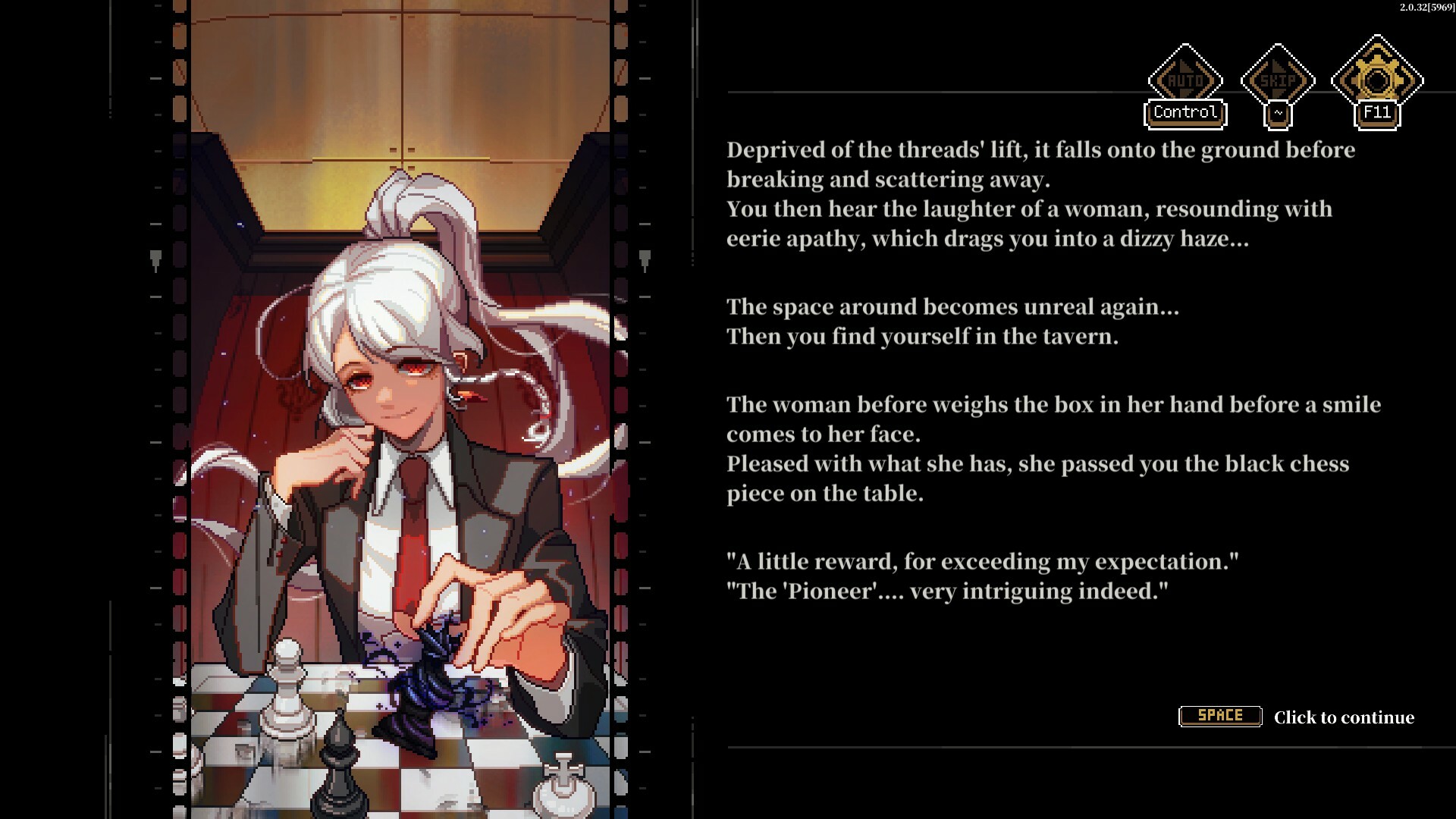
Depersonalization’s audio direction also carries some of the game’s experience. The score leans on atmosphere over showy melody – motifs ebb and return, with silence and texture allowed to take centre stage. Therefore, it complements the narrative nicely. Across long sessions, you will hear tracks recycle, but the placement is thoughtful and sometimes playfully deceptive, using familiar stingers to wrong-foot expectations. Optional, AI-generated voice lines are available, but are not worth activating. The music and sound effects convey tone more cleanly, and I preferred them without the synthetic voices.
Depersonalization plays like a TTRPG in videogame armour. Many decisions pass through a skill check – investigation, social gambits, stealth, even puzzle side paths, and contested rolls are common. Outcomes rarely result in a hard fail; instead, they reroute the story, escalate risk, or open up different payoffs. When fists or firearms are unavoidable, combat is deliberately lean: an initiative order tied to Speed, one main action per turn, a free item or formation tweak, and a strong bias for planning over brute force.
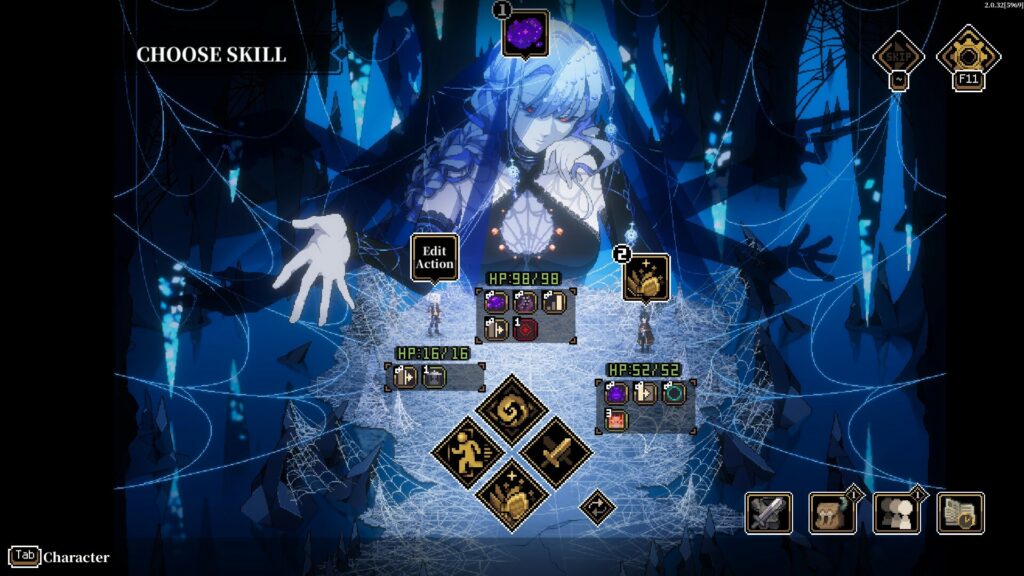
Character building is granular without demanding spreadsheets. Professions and backgrounds set major skills; personality and nature traits colour what you can (or should) say, with penalties if you act against type. Between modules, the Interlude layer allows you to train, study, take commissions, and generally refine your build. At the same time, progress carries forward: cash, traits (good and bad), spells, and a small loadout of Mythos curios that meaningfully change how you approach scenarios. Luck fuels rerolls and accuracy nudges; Sanity influences checks and doubles as volatile spellcraft currency. Crafting and per‑character inventories add tactical prep, even if they can become busywork.
The price of all that flexibility is a steep early curve. Onboarding is light, discovery is often a trial-and-error process, and a single bad roll can undermine careful planning – thrilling for some, frustrating for others. Difficulty also swings with party composition; psychology‑leaning or non‑combat routes can sing, while melee‑forward/status builds can feel out of their depth against Old Ones that shrug off debuffs. The trade‑off is great replay value: new flags, routes, and companions keep runs fresh, even as occasional inventory clutter and mechanical sprawl threaten to slow the pace.
In short, MeowNature’s post‑launch overhaul, especially the English localisation, appears to have removed much of the original friction and lets Depersonalization’s strengths take the lead: a Mythos‑laced anthology that prizes skill checks, consequence‑rich choices, and a thoughtful progression loop. The pixel art, measured soundtrack, and timeline‑hopping conceit create a distinctive mood, while granular character building, Interludes, and portable curios make reruns feel authored rather than repetitive. It’s still not frill‑free: early hours can overwhelm, occasional text‑box hiccups persist, and the translation still isn’t flawless. However, if investigative role-play, experimentation, and replay-driven discovery sound enticing, Depersonalization is a solid option at a very reasonable price ($29.50 AUD as of writing).
Final Score for Depersonalization
This review was conducted on a PC Steam version of Depersonalization, with a review code provided by Gamirror Games to facilitate this review.
Depersonalization is now available to purchase via Steam for PC.

