
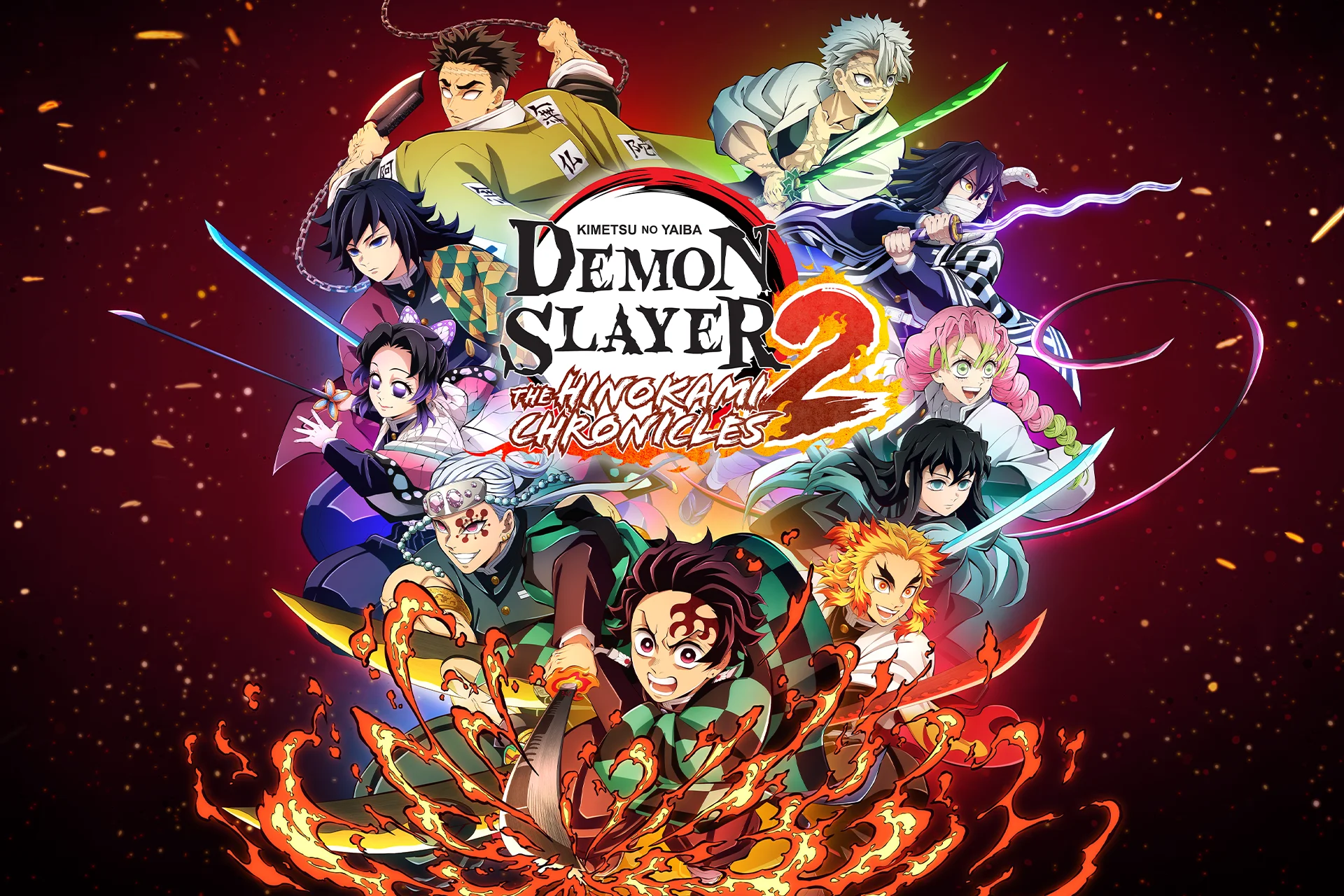
Although many anime-to-video game adaptations are based on IPs from the 80s and 2000s, significant hits like Demon Slayer occasionally emerge, offering a diverse range of experiences, from board games to action games. Their quality can sometimes be questionable, but others can shine. My experience with CyberConnect2 is typically positive, as even if they are never revolutionary experiences, games such as the .hack series have stayed in my mind for many a console generation now. After their first action fighter experience with the series back in 2022, the development team has once again joined publisher SEGA in offering Demon Slayer -Kimetsu no Yaiba- The Hinokami Chronicles 2, revisiting more pivotal moments from the franchise – including the Entertainment District Arc, Swordsmith Village Arc, and Hashira Training Arc. But how does the game fare? Read on to find out!
Demon Slayer -Kimetsu no Yaiba- The Hinokami Chronicles 2 retells three of Demon Slayer’s biggest arcs: the Entertainment District, Swordsmith Village and Hashira Training with the kind of glossy, cinematic presentation that has become synonymous with the developers’ past works, but it also plays things very straight. The adaptation is almost faithful to a fault, keeping the jokes loud, the tragedy heavy, and the inner monologues frequent, which works when the setpieces hit, but can make quieter moments feel hurried as the story hustles to its next boss fight. Missed the last game? Need to get caught up to somewhere in the middle of the series’ chronology? Newcomers do get an Abridged Story recap of the first game. However, it’s so brisk at just six vignettes in length that I’d still recommend some familiarity with the anime to appreciate the context.
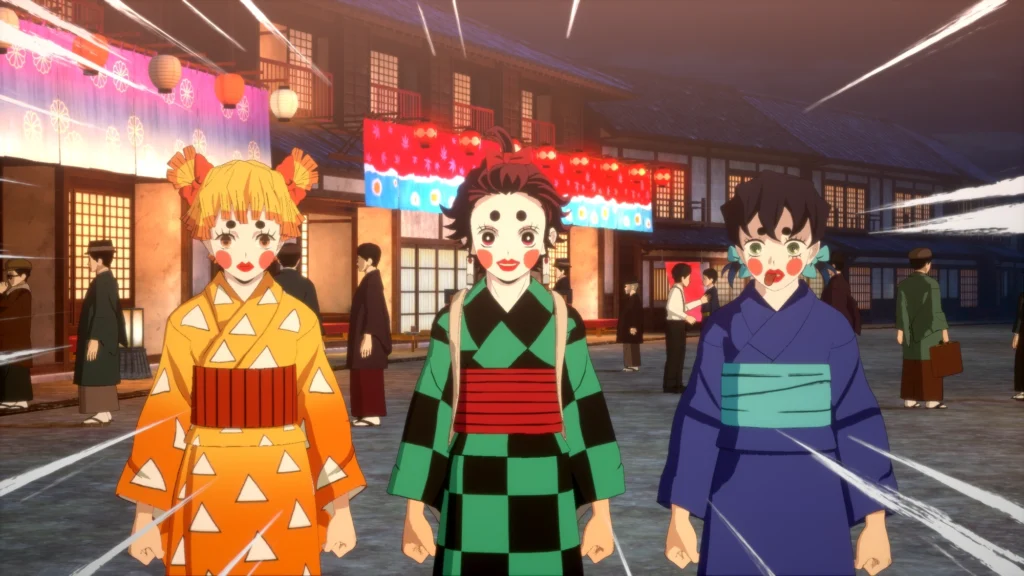
Between cutscenes, the game sprinkles in brief free-roam sequences, memory fragments and light side quests to flesh out the journey; they’re pleasant flavour experiences rather than essential, but I appreciated the opportunity to linger in some of the areas to either wind down or appreciate areas that fans have never gotten to enjoy directly in any format. The real narrative highs, however, come from the multi-phase showdowns, which lean into dramatic camera work and QTE-laced finales without feeling like pure passive viewing.
Visually, the game captures the anime aesthetic of the franchise and adapts it well into a 3D environment – offering players razer-sharp cel-shaded models, lavish environments, effects that accentuate every attack, and a cinematic camera which also lends to the intensity of the fight without sacrificing clarity in the arena. At least on the system I tested (PlayStation 5), the action looked consistently good and never had any noticeable dips in frame rates. Exploration sequences don’t hit the same high, with animation a little stiff, and other environments more functional than striking. Yet the setpiece staging, UI polish, and generous character-specific flourishes (poses, win screens, namecard cosmetics) keep the overall presentation on-brand and consistently eye-catching.
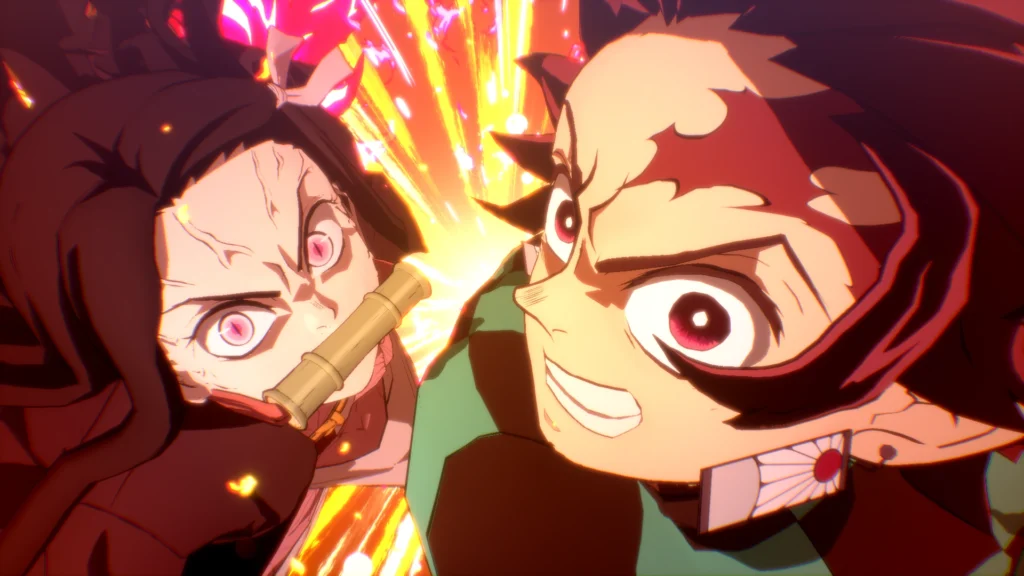
Regarding audio quality, the game meets expectations, offering a dynamic score that swells for boss battles, quieter motifs when the scene necessitates, and a nice barrage of sound effects that make the world feel inhabited and actively changing during battle. Both Japanese and English voice tracks are here and uniformly strong; performances carry the humour and heartbreak without slipping into parody, and battle callouts add energy rather than noise.
At its best, Hinokami Chronicles 2 nails the pick‑up‑and‑play feel of a good arena fighter. Strikes sit on a single button with directional variations, specials flow naturally into air routes, and you’ve got a clean toolset: guard, dash, parry, and throws to complement them. Meter management matters: Boost opens extra combo routes and damage, while Surge turns you loose for a brief burst of unlimited skills if you plan your confirms. The revised combo gauge feels less prone to dropping opponents out of multihits. Overall, the combat is nothing revolutionary or groundbreaking. Still, it is a solid experience from start to finish. There are some better games, and many are less stellar. This fighter is designed for fans who want to bring anime-style combat to a more interactive experience.
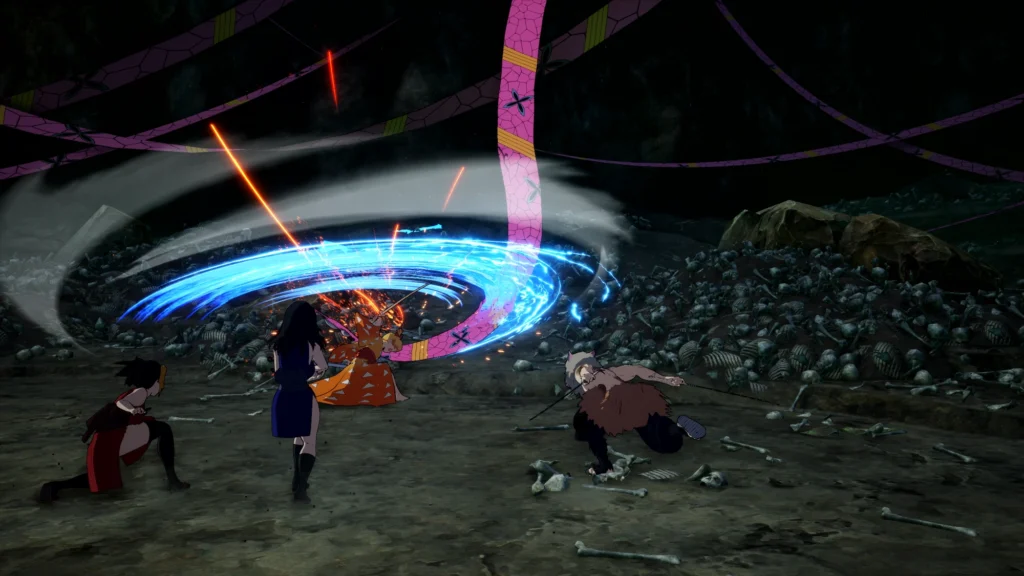
Outside of pure duels, single‑player has more texture than last time. Story chapters interleave compact free‑roam slices with fights, peppered by character senses that lightly guide you. They’re simple, but they keep momentum between setpieces, alongside Memory Fragments, mementos and Kimetsu Points that feed a generous unlock loop (costumes, voices, music, cosmetics). The campaign mixes in rhythm and timing minigames, plus occasional horde encounters, before teeing up multi‑phase bosses that crescendo into QTE‑laced Final Clashes – flashy without tipping into pure autopilot. When you want a different cadence, Hashira Training (a roguelike‑lite board of conditional battles, limited healing, and consumable buffs) provides snappy, replayable runs that reward measured risk.
The versus ecosystem is broader, too. A 40+ fighter roster means more styles to lab, from heavyweight bruisers to darting glass cannons, and specific pairings unlock Dual Ultimate Arts that are pure fan service. Team rules keep things thematic, with shared‑health 2v2 tagging with assists for combo extension or combo‑breaks, some demons restricted to solo, and a few prebuilt squads – so synergy matters as much as execution. Online offers Ranked, Casual, and Rooms; it’s functional for casual lobbies, but the absence of rollback and cross-play limits its potential. My biggest gripe is with onboarding: although text tips are available, advanced concepts are not entirely taught, leaving the community to do the heavy lifting and potentially leading to an almost immediate power imbalance.
Ultimately, Demon Slayer -Kimetsu no Yaiba- The Hinokami Chronicles 2 is CyberConnect2 doing what they do best: an enjoyable, faithful adaptation that focuses on spectacle and accessibility over reinvention. As an extension of the anime monolith, it functions less as a self‑contained landmark and more as a polished companion piece, one that lets you inhabit and engage with Demon Slayer’s most significant moments rather than merely rewatch them. The combat is clean and satisfying, the roster generous, and the presentation routinely dazzling; the trade‑offs are familiar, from shallow exploration and a thin tutorial to online play that stops short of top-tier standards. The result isn’t a revolution, but it doesn’t need to be: it’s a confident, content‑rich sequel that corrects key pain points from the first game while setting the table for the next arc. For devotees, it’s an easy recommendation and a joyous way to bridge seasons; for newcomers, it’s still enjoyable, but best approached with at least a knowledge of the story.
Final Score for Demon Slayer -Kimetsu no Yaiba- The Hinokami Chronicles 2
This review was conducted on a digital PlayStation 5 copy of Demon Slayer -Kimetsu no Yaiba- The Hinokami Chronicles 2 on a retail PlayStation 5 Pro unit. A review code was provided by Australian distributor Five Star Games to facilitate this review.
Demon Slayer -Kimetsu no Yaiba- The Hinokami Chronicles 2 is now available to purchase on the PC, Nintendo Switch, PlayStation 4, PlayStation 5, Xbox One and Xbox Series X|S.

