
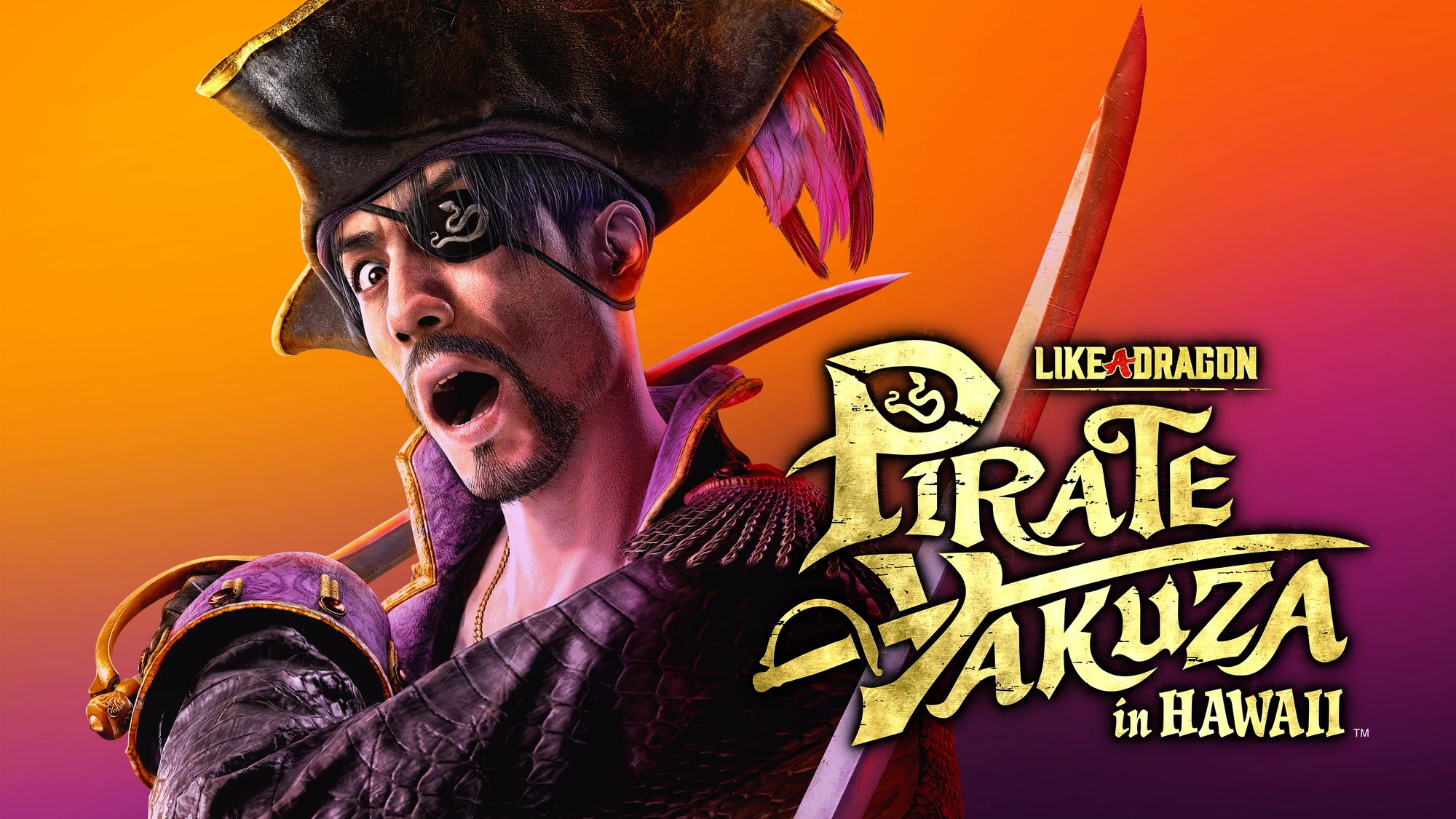
Formerly known as the Yakuza series in the West and now going by the localisation of its Japanese title, Like a Dragon, the long-running action game series has enjoyed a loyal fanbase for its interesting narratives, distinct characters and quirky side events. While there are many examples of all three, some of the most prominent in the series’ history have revolved around Goro Majima, known as the “Mad Dog of Shimano”, who after remaining a secondary character for so many instalments has had its popularity monopolised with playable chapters in Yakuza Kiwami and Yakuza Kiwami 2, and serving as one of four playable protagonists in the non-canonical zombie-shooter Yakuza: Dead Souls. After kicking off 2024 with their memorable mainline release of Like a Dragon: Infinite Wealth, SEGA has started the new year with a new spin-off game, Like a Dragon: Pirate Yakuza in Hawaii. After all these years, this game sees Majima become its game’s sole protagonist, coupled with a nautical piracy theme that screams spin-off, but surprisingly works well and sits well within the Like a Dragon chronology.
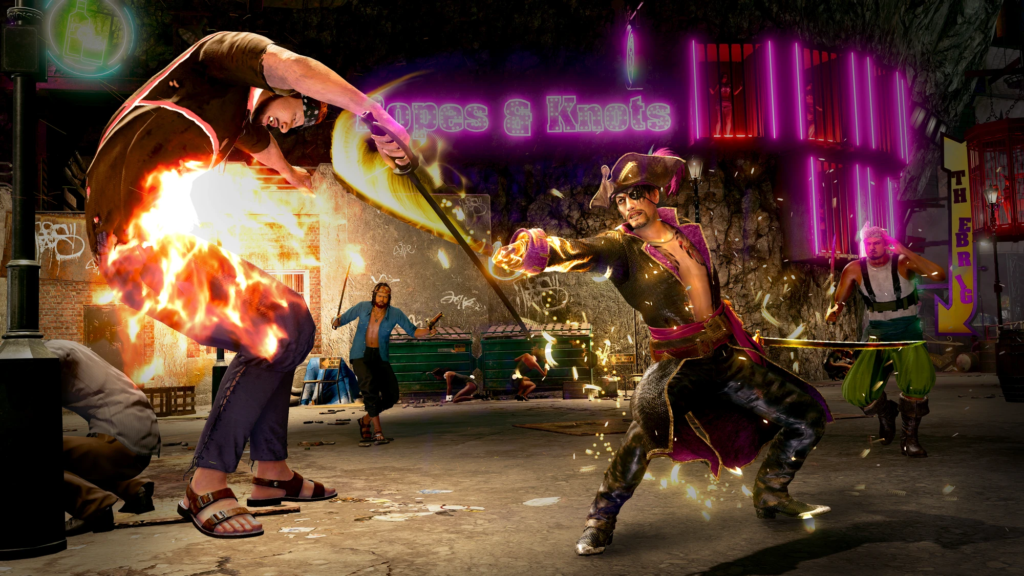
Like a Dragon: Pirate Yakuza in Hawaii takes place around half a year after the conclusion of Infinite Wealth, and its conclusion which still leaves me more than a little teary-eyed. But far from the streets of Kamurochō or Japan itself, and returning to the setting of Infinite Wealth, players open with Goro Majima washing ashore on a secluded Hawaiian Island, mysteriously afflicted with amnesia. An overused trope? Sure. But it serves as a solid springboard for Majima’s ascent from Yakuza family leader to a Pirate Captain. The ex-Yakuza quickly finds himself forming an unexpected friendship with young Noah Rich, a spirited 10-year-old lad whose fragile health has kept him confined to his small island home. Together, along with a steadily expanding crew of quirky misfits, the duo embarks on a swashbuckling journey across Hawaii’s tropical waters, pursuing the legendary Esperanza treasure, rumoured to offer riches and possibly eternal life, while simultaneously hoping to restore Majima’s lost memories.
Despite what first feels like an absurd premise to justify a different genre of gameplay, the game is unapologetic in its approach and surprisingly links well to past instalments, carries across the Like a Dragon charm, and genuinely incorporates a narrative-rich experience, albeit replacing some of the typical crime-drama elements with pirate-drama elements. The narrative itself is lighter and undeniably more whimsical, strikes a solid balance, and intersperses goofy humour, all with enough genuine character development to maintain player investment. The overarching quest to find the legendary treasure “Esperanza”, combined with the game’s humorous commitment to modern-day pirates in Hawaii, helps maintain consistent entertainment value, even if certain narrative beats don’t quite achieve the emotional depth fans may have hoped for. However, in terms of content delivery across mainline and side story content, it is, I’d argue, a step up from 2023’s Like a Dragon Gaiden: The Man Who Erased His Name.
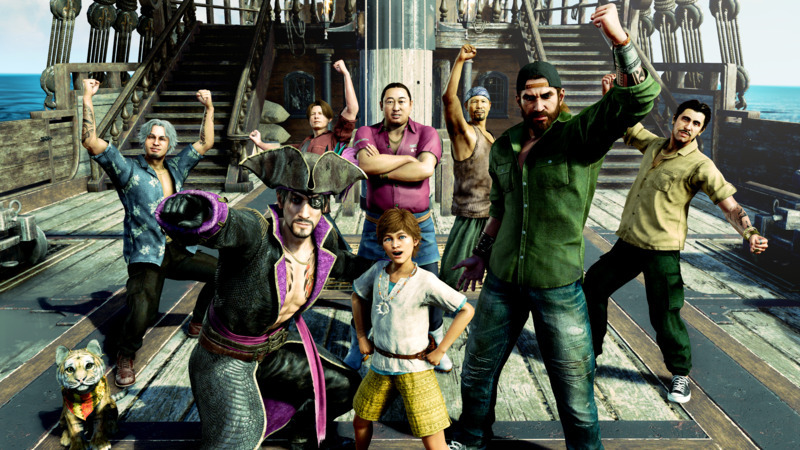
Where Like a Dragon: Pirate Yakuza in Hawaii’s storytelling shines brightest, is in its portrayal of Majima himself. While he has always been a fan-favourite character, I feel the reason he has never received a game of his own is that his abrasive, more eccentric personality would have been far too much for a whole game – better balanced out against more nuanced and thoughtful characters. The amnesia, while again a bit of an overdone trope in media, provides a fresh take on the character, allowing players to rediscover Majima’s eccentricities and layers alongside him. Moments where the Mad Dog shows vulnerability, such as hesitating to fight in early battles, contrast effectively with his typically manic, flamboyant persona, creating a narrative journey that feels familiar and refreshingly new. His fatherly dynamic with Noah echoes the franchise’s past successes in pairing tough, seasoned characters with youthful innocence, reminiscent of Dojima and Haruka – although being a little bit older than Haruka was in Yakuza 1, it is not a direct comparison between the two, with Noah being more directly involved with the events – albeit once again outside of any direct fighting. It’s through this relationship, echoing a more sincere and humorous brand of paternal mentorship, that Pirate Yakuza becomes not merely a pirate-themed diversion, but a satisfying exploration of Majima’s character.
With approximately a year since the release of the last game, Like a Dragon: Pirate Yakuza in Hawaii is not too graphically dissimilar to Infinite Wealth and reuses many assets where they already existed. However, on its own, the game carries the visual fidelity of its predecessor, continuing to deliver vibrant tropical vistas with detailed, lived-in settings. The environments range from the sunny beaches of Hawaii to the whimsically seedy pirate haven of Madlantis, each rendered with meticulous attention. While the bright, saturated palette occasionally makes outdoor sequences feel slightly overpowering, the sheer level of subtle detail remains impressive. Technically, the game is commendably smooth, maintaining steady frame rates even during large-scale naval clashes filled with particle effects and frantic combat. Furthermore, there is an emphasis on dressing Majima up, with plenty of different apparel to have him collect and ultimately wear in either of his combat forms. However, it isn’t 100% flawless on the design side. The open world maps for island exploration are diverse but less well-detailed and come across very samey with minimal landmarks to keep your eyes off the mini-map, or wanting to explore an area more than once.
The Like a Dragon franchise has consistently showcased a robust and eclectic soundtrack, and Like a Dragon: Pirate Yakuza in Hawaii continues this proud tradition with a confident flair uniquely its own. Composer Saori Yoshida once again demonstrates remarkable versatility, blending energetic EDM beats, laid-back Hawaiian melodies, a few standard jingles, and a rousing, seafaring sea shanty sung by Majima and Noah which serves as not only the most memorable opening to a Like a Dragon game to date but one of the most exciting openings of any game in recent memory. Karaoke, always a beloved staple of the series, remains robustly featured, providing a satisfying range of tracks including classics. Unless my critique of Infinite Wealth where they auto-tuned the heck out of the voices of the English dub cast during these karaoke sequences, regardless of which language you go with, you are in for a good time. The music in Pirate Yakuza thus successfully heightens the already exuberant and eccentric mood of the narrative and gameplay, further underscoring its joyful commitment to fun over gritty melodrama.
Voice acting has long been a strong suit in Like a Dragon games, and Like a Dragon: Pirate Yakuza in Hawaii is no exception to the mix. But while I would usually suggest going with the Japanese dub with this series to be authentic with a majority of the games being released in Japanese only, this is the first time where I would happily recommend just going with your preference. Hidenari Ugaki’s original portrayal of Majima remains as energetically captivating as ever, setting a high standard for the character’s animated delivery and rapid tonal shifts. Impressively, the English voice cast meets this challenge admirably, led brilliantly by Matthew Mercer, whose performance as Majima authentically captures and expands upon Ugaki’s established persona. Mercer not only mirrors the Mad Dog’s trademark manic energy and peculiar mannerisms, but also thoughtfully incorporates layers of vulnerability, humour, and sincerity. The supporting voice talent in both languages further elevates the narrative – whether you enjoy the verbiage of Maya Aoki Tuttle (Noah Rich), Jeremy Brandt (Jason Rich) and Brent Mukai (Masaru Fujita) in the English dub, or First Summer Uika, Kenji Matsuda and Ryuji Akiyama in the Japanese voice-overs, you can’t go wrong, and I hope this is a standard of quality SEGA retains internationally with their English voice casts.
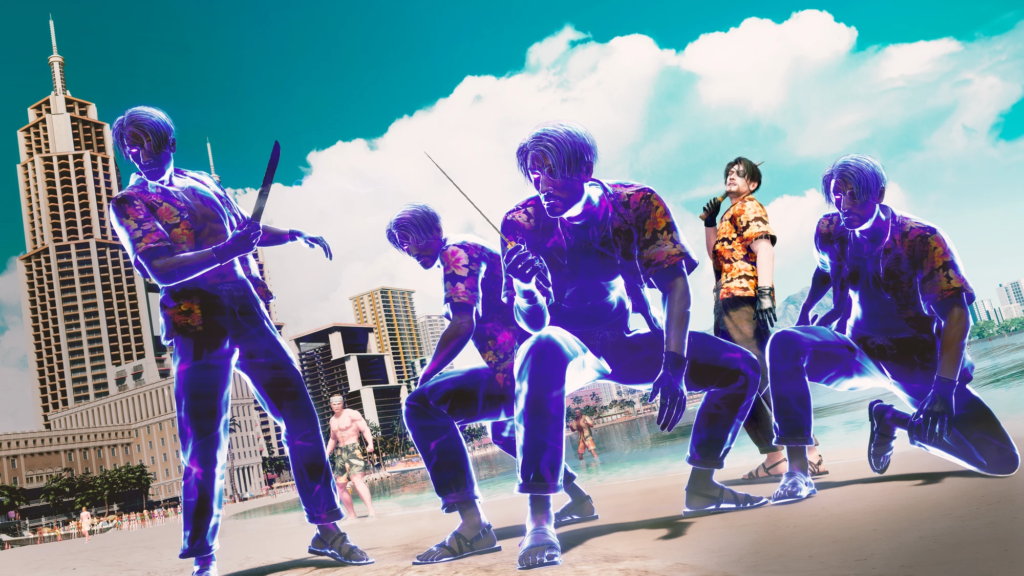
Like a Dragon: Pirate Yakuza in Hawaii sees the return of Ryu Ga Gotoku Studio’s action-heavy combat, moving away from the turn-based systems found in recent mainline entries. Goro Majima’s two distinct fighting styles – Mad Dog and Sea Dog – each represent a different form of combat reminiscent of his past and present. Mad Dog brings back Majima’s classic unpredictable moveset, complete with aggressive knife attacks and relentless combos, appealing to those who favour speed and flashiness over power. On the other hand, Sea Dog mode injects pirate flair, emphasising swordplay, pistol use, and creative grappling hook mobility. Both are genuinely fun to use, with each having its respective special actions once a specialty gauge fills up, allowing players to either summon doppelgangers of Majima or use specialty summoning instruments, both of which can turn the tide of battle in the right scenario. Heat actions also make a return, providing a range of new visually spectacular (albeit slightly limited) cinematic finishers.
Despite these strengths, the combat encounters in Like A Dragon: Pirate Yakuza In Hawaii sometimes feel overly simplistic, especially at the default difficulty level. Even boss battles rarely test the player’s abilities to their full extent, often resulting in flashy, satisfying yet swiftly resolved fights. The enemy variety seems a bit thinner than in previous instalments, leading to repetitive encounters where enemies fail to challenge Majima’s capabilities fully. Adjusting to higher difficulties mitigates this somewhat, but combat balance remains an occasional sticking point throughout the experience.
Like a Dragon: Pirate Yakuza in Hawaii‘s new naval combat system adds an enjoyable, albeit highly arcade-like, twist to gameplay. It simplifies many naval mechanics, favouring fun and accessibility over realism. Rather than meticulously managing sails or complex tactics, you swiftly manoeuvre through boost rings, perform improbable drifts, and bombard enemy vessels with weaponry ranging from traditional ship cannons to laser cannons and coconut machine guns. Upgrading Majima’s ship, the Goromaru, offers substantial progression rewards, though the power scaling quickly trivialises most naval encounters, diminishing the sense of challenge over time. Larger-scale ship battles, particularly the coliseum fights culminate in chaotic boarding sequences, which albeit most of which are simple, capture the absurd yet thrilling pirate fantasy nevertheless. Continuing on the nautical theme, exploration across the game’s Hawaiian islands and pirate haven Madlantis retains the density of activities typical of the Like a Dragon series. Although it’s not truly open-world, opting instead for segmented ocean zones connected by fast travel, the sense of discovery remains engaging, if slightly hampered by loading screens breaking immersion.
Side activities and mini-games remain abundant and captivating in Like a Dragon: Pirate Yakuza in Hawaii, upholding the series’ proud tradition of varied distractions. Returning classics like karaoke and Crazy Delivery join fresh additions such as the cooking minigame and coliseum events. There are also treasure-hunting missions to coincide with the city/town and navel themes, however, these only offer brief entertainment, quickly becoming repetitive due to recycled environments and predictable enemy encounters. But in small bursts, they are surprisingly enjoyable still.
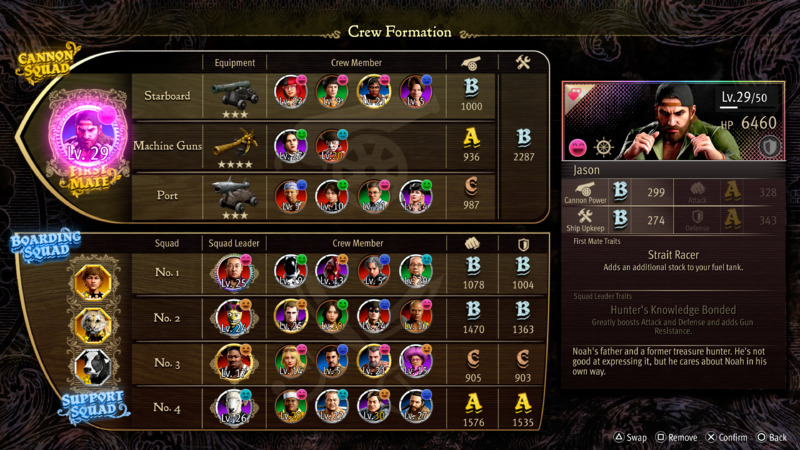
Perhaps most commendable, the entire experience of Like a Dragon: Pirate Yakuza in Hawaii coalesces around Majima himself, with gameplay mechanics and narrative seamlessly reflecting his chaotic personality and boundless enthusiasm – combined with his fresh new amnesiac personality. Many elements of the game from the narrative itself to the side activities and substories tie into a crew recruitment system. Your ship, the Goromaru, becomes a trophy hall of collected characters, serving as a satisfying reflection of player progression and character bonds built throughout the journey. These characters can then be used to crew your ship or fill the ranks of a boarding party, allowing you to fight in battles with them against up to 100 enemies at a time. Throw in some of the DLC and there is something quite enjoyable about having pirate Majima and a younger Dojima fighting together that adds a layer of epicness to the experience.
When you factor in that Like a Dragon: Pirate Yakuza in Hawaii is a shorter, side-experience in the series between mainline games, or even if you don’t, it is a voyage worth embarking on, carried confidently by Majima’s irresistible charisma, joyful absurdity, and a crew you can’t help but adore. Its nautical ambitions are simple yet satisfyingly chaotic, and though it occasionally veers too close to shallow waters, the sheer charm of its pirate-infused antics and energetic presentation easily keeps it afloat. Ryu Ga Gotoku Studio once again proves its mastery in crafting wonderfully quirky characters, meaningful relationships, and hilarious scenarios. For longtime fans, or those just craving a wildly entertaining ride through pirate waters (although I would highly recommend reading a summary of the many games already released), hoist the colours, ready your cutlasses, and set course for adventure as the Mad Dog, as yarrr me hearties, for there’s plenty o’ treasure and laughs awaiting you on this journey!
Final Score for Like a Dragon: Pirate Yakuza in Hawaii
A digital PlayStation 5 review code of Like a Dragon: Pirate Yakuza in Hawaii was provided by Australian distributor Five Star Games to facilitate this review.
Like a Dragon: Pirate Yakuza in Hawaii is now available to purchase on the PlayStation 4, PlayStation 5, Xbox One, Xbox Series X|S and Windows PC.

