
Header Image: Stephen Anderson (Willy Wonka) and cast of Charlie and the Chocolate Factory’s QPAC season. Image by Darren Thomas.
Before beginning this review, I would like to highlight that there are spoilers ahead. If you have not read the original novel at least, please be sure to pick yourself up a copy before reading ahead!
The works of Roald Dahl were what initially welcomed me to the world of imaginative literature back when I was eight years old. I remember every morning early in Grade 3; my class would sit cross-legged on the floor around the chair of our teacher Mrs Pratt. She would hold the book Charlie and the Chocolate Factory in her hand and read a chapter to us – followed by discussions and tasks around what happened in the chapter. The love grew as my collection of Roald Dahl works was extended with the likes of Matilda, James and the Giant Elevator, The Witches, George’s Marvellous Medicine, The BFG and even the often forgotten about sequel to the ‘Charlie’ series – Charlie and the Great Glass Elevator. Dahl’s work has adapted to other mediums well, such as the recent movie adaptation of The BFG and fantastic to-stage productions of Matilda the Musical feat. the work of Dennis Kelly and Tim Minchin and George’s Marvellous Medicine by the Brisbane-based shake & stir theatre co.
But the one book of his I have found always struggled being adapted in any form is Charlie and the Chocolate Factory. From the original (and arguably better film) featuring Gene Wilder which Dahl disavowed, to the 2005 film version, which tried a bit to hard to adapt this classic novel into a darker, Burton-style… these never captured the magic of the original work. Unfortunately, the stage musical version also failed to hit the mark. Despite some fantastic writing of the Willy Wonka character, arguably the best take on the character, the show was let down by a lack of staging imagination, a few too many drawn-out scenes which felt like they were desparately appealing to the youngest of guests, and poor pacing.

The biggest positive of the show was both the writing behind the character of Willy Wonka and the actor portraying him (Stephen Anderson). I would argue that character building was spot on, channelling a harmony of the best bits of Dahl, Wilder and Depp versions of Wonka while also providing elements that distinguished him from other iterations. Viewers are treated to a sassy, eccentric and slightly psychotic version of the character, who is versatile in virtually any scene the show can throw at him, being a humourous character rather than creepy – despite some of the harrowing events which unfold. Wonka is portrayed as someone who has clearly been locked up in his factory a bit too long and becomes jaded towards humanity. Still, underneath it all, he has a passion for imagineering and finding his successor. The most significant change for his character is that he is present in the show from the first number. With this Broadway production bringing across the song ‘Candyman’ from the 1970s feature film, Wonka takes on the role of the “Candy Man”, who toys with Charlie throughout the first act as if testing his resolve and tenacity, and is the one who pushes him towards getting the Golden Ticket. This approach worked well I think, providing viewers with greater exposure to the shining character of the show, but also highlighted the greater forces in Charlie getting the ticket.
However, the greater presence of Wonka seems to be at the expense of Charlie. During the performance I attended, we were treated to a performance by Cooper Matthews as Charlie Bucket, and I have gotta say, the kid has talent which will hopefully serve him for many years and decades on the stage to come. Unfortunately however, the writing of the character was lacklustre, providing virtually no growth for the character from start to finish. He is a starry-eyed chocolate enthusiast at the beginning and a starry-eyed chocolate enthusiast at the end… only this time with an actual Chocolate Factory. The Buckets being “poor” was pretty much there only to keep the story going.

The remainder of the casting was above-par, with solid performances by Lucy Maunder (Mrs Bucket), Robert Grubb (Grandpa Joe). The four parents were also cast well, representing four very distinct personalities which worked their way well into the songs – Octavia Barron Marin (Mrs Gloop), Simon Russel (Mr Salt), Madison McKoy (Mr Bauregard) and Johanna Allen (Mrs Teavee). I would also like to give a special mention to James Haxby as Grandpa George, as despite being only in a couple of scenes in Act 1, I recall thinking I would happily have him take the place of Grandpa Joe and have a grumpy, snarky grandpa during Act 2. The ensemble cast, who took on the roles of the Oompa-Loompas, Reporters and other incidental characters, also shone. The casting of the other four “Golden Ticket Holder” children was reasonable enough. However, except for Taylor Scanlan as Mike Teavee, I found it impossible to view these as anything but adults attempting to portray children. While they manage to get away with arguably a bit more using adult actors, including with what happens to the kids… I just don’t feel it the casting works despite the actors doing good performances. Outside of this, given the limitations that would be in place due to COVID-19 in the casting department… they brought together a decent cast.
As someone who has enjoyed the West End cast recording for many years, I was excited to finally see what the Broadway version the Australian production was based on had to offer in the soundtrack department. Due to lacklustre reception during the West End production, many songs were rewritten, removed, or retooled when headed to the US. The end result was something that had its high points and some not-so-great points. On the positive side was the inclusion of a few more songs from the Wilder movie, including CandyMan (Which ties together Wonka’s inclusion in Act 1) and the iconic Oompa-Loompa theme used verbatim initially and then reprised a couple more times. This was a massive hit in the nostalgia, and the songs they chose were welcome but didn’t overstay their welcome. Both the added and removed songs were hit-and-miss, in some cases helping to pace events, others removing some genuinely good moments, and in one case disjointing as Violet Beauregarde didn’t have a song to herself in Act 2. The highlight for myself was easily Must Be Believed to Be Seen, an amazing Act 1 Finale.

Outside the problems of character development and the casting of adults in childrens roles, the other issue with Charlie and the Chocolate Factory stems from its world building – both the narrative kind and its actual set designs. In terms of the former, the pacing is poorly constructed where Act 1 drags on a wee bit too long and attempts to be unnecessarily over-the-top despite offering little of substance, whereas Act 2 speeds by a bit too quickly despite being the meat of the narrative. The notable example of this is in Act 2, where a good 5+ minutes is dedicated to the group bypassing security to get into a secret vault of Wonka’s, which not only leads to nothing but requires the audience to imagine a completely blank stage is full of deadly and dangerous traps. It is perfectly understandable to expect audiences to use their imagination in any theatrical productions, but an empty stage and a lot of attempts at humour favouring the youngest in the audience had my mind checking out.
When I first saw this trailer for Charlie and the Chocolate Factory on West End many years ago, I set my expectations very high for when I would finally get to see how the creative team brought Wonka’s chocolate factory to life on stage. Sadly between West End and Broadway, many of the elaborate sets were removed in favour of digital screens and minimalist sets. In some cases, less is more, such as during Veruca Salt’s ballet number in the factory (with some both incredible and daunting-looking squirrel dancers) or the view of the factory from Charlie’s hometown where forced perspective made the stage seem much larger than it was. But there were more instances where set designs were a bit too bare bones where they should have been grander, or didn’t resemble what has been established over the past 50+ years. One of the big examples was the Candy Forest & Chocolate River, a big “wow” moment in both the book and films. In addition to some technical difficulties rendering a part of the screen blank, if I didn’t know the original work, I would have thought they were in a standard, albeit somewhat cartoonish, forest. While passable, the set designs didn’t really reach the standards one would expect from a ‘national touring production’. Charlie and the Chocolate Factory was about bringing imagination to reality – and I felt they could have done much more.
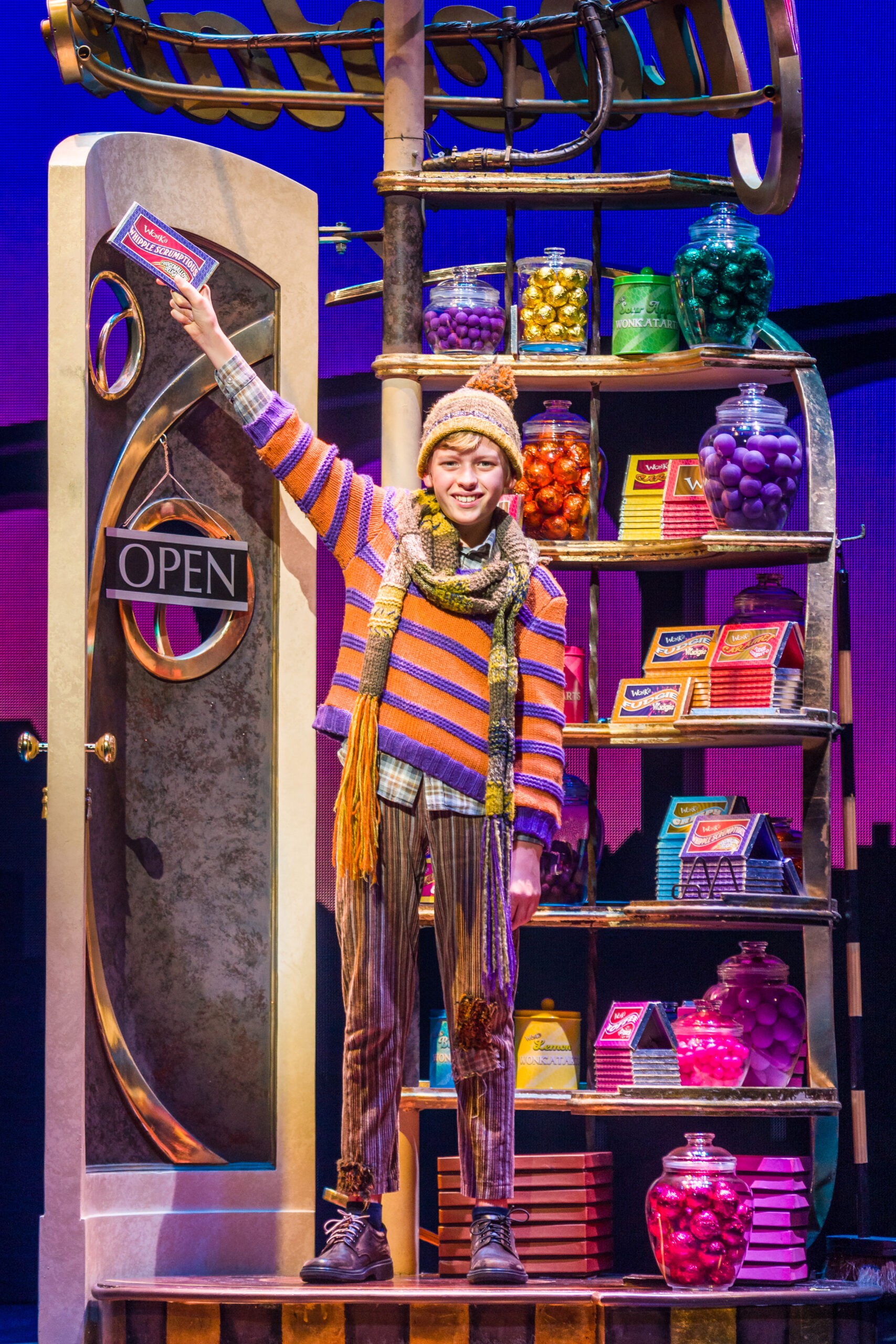
Charlie and the Chocolate Factory was due to be performed at the Queensland Performing Arts Centre (QPAC) back in early-2020, mere days after the first COVID-19 lockdowns essentially shut down the industry overnight. Following this, one might have reasonably expected not to see this show grace the Lyric Theatre stage at all. However, with QPAC serving as the lead producer of this production, the venue is likely to have taken a lot more risk in bringing the show back to Brisbane audiences, especially should we go into another sudden lockdown. Although I would question whether Charlie and the Chocolate Factory was a show worth bringing back to Brisbane, when more than a year of musicals was wiped off the calendar, QPAC deserves kudos for providing this opportunity to enjoy musical theatre once more, and an excellent option for school holidays entertainment!
Ultimately nothing can beat the original novel by Roald Dahl when it comes to Charlie and the Chocolate Factory. While other theatrical productions such as Matilda the Musical have managed to surpass their source material, this production delivers some creative ideas but is very haphazard in implementation. While I cannot say I overly enjoyed watching the show, it appears to be an excellent option for families from audience reception, and I can picture an 8-year-old Sam being left in awe at everything that unfolded.


