
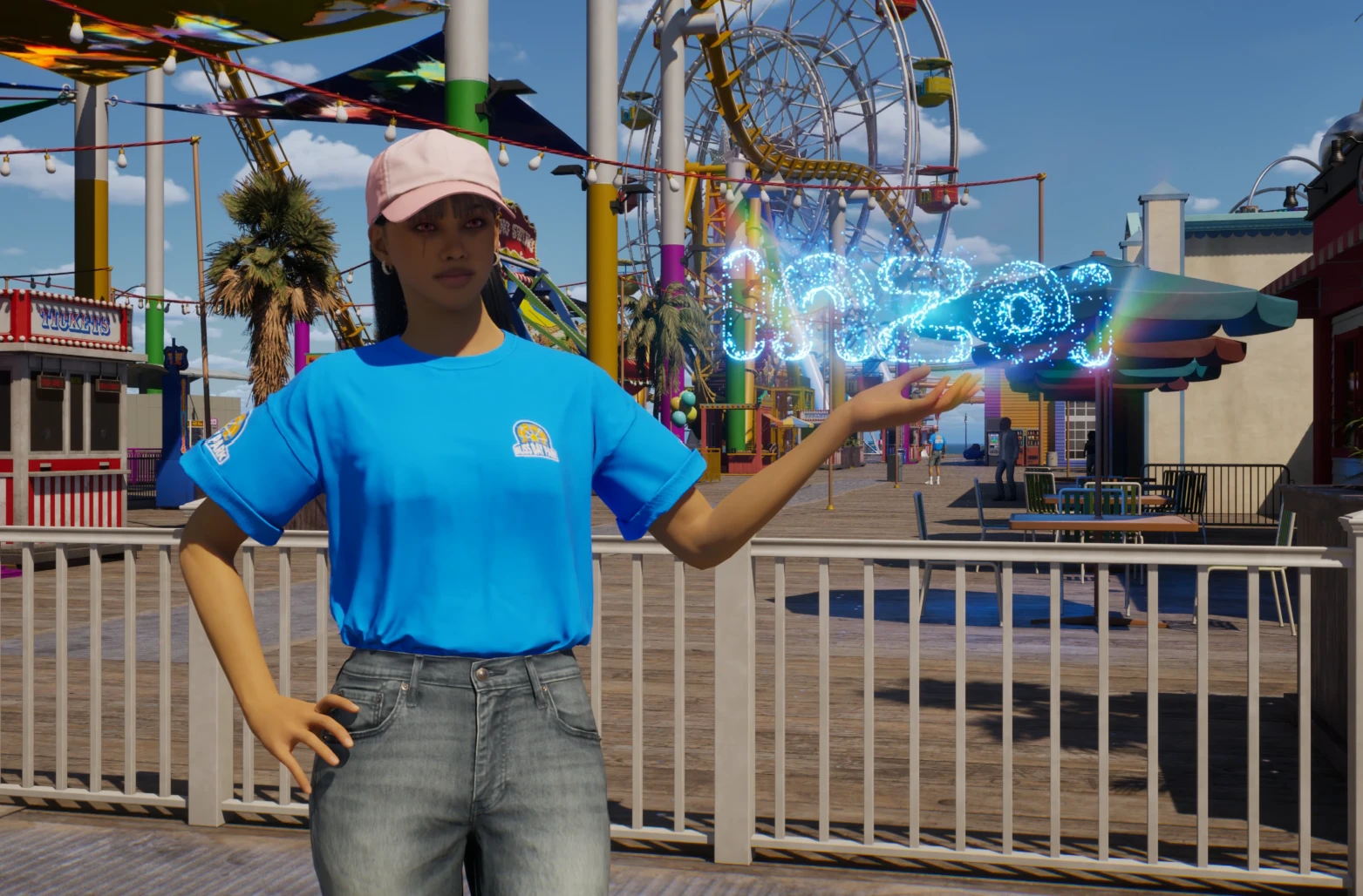
While some small-scale life simulation games have come and gone over the past decades, anyone looking for a meaty experience that allows them to dedicate months, if not years, to fleshing out their neighbourhoods or cities has had only one franchise to turn to: The Sims. While it has undoubtedly been a success for Electronic Arts, the last mainline release came out more than a decade ago. Coupled with its choice to remain accessible regarding system requirements (which is fair enough), there is now a growing audience eager for new competition, particularly regarding gameplay depth and visual fidelity. Now, in 2025, gaming audiences are finally getting their first peek at next-generation life simulation with KRAFTON’s Early Access release of inZOI.
Because inZOI is in Early Access, and with the development team rolling out a comprehensive roadmap for the next year and beyond, to review the game as normal would be to make assumptions about the finished product that may or may not be evident in the final build. Therefore, I would like to share some first impressions of the originally released build – with the mindset of publishing new first impressions every so often during its development cycle – giving you some idea of how the game is progressing from the perspective of someone who played the game, and when might be a good time to jump aboard if you are not someone who has already paid your $40 for Early Access. Without further ado, let’s go!
Create a Zoi
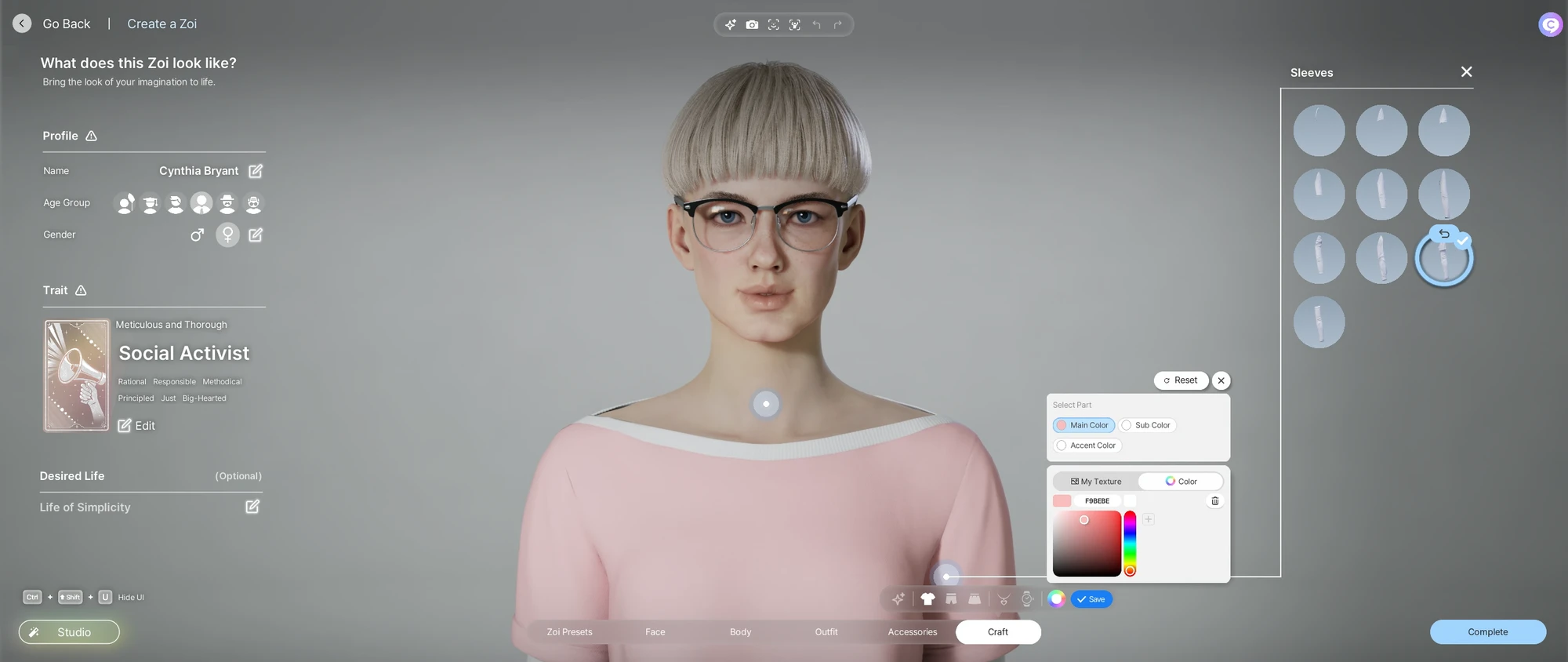
As one of the first systems that many players would use when diving straight into inZOI (or any life simulation game for that matter), the systems used to carefully craft your dream virtual recreations of yourself, friends, family, or other figments of your imagination are critical. The Create a Zoi feature at its foundation is strong, although, outside of a few improvements, it doesn’t handle all that differently from the Character Studio demo released last year – albeit with the ability to create households of eight rather than a single character.
Noting that these are still the early days for official content in the base game, with more content due to be rolled out with every major update in the roadmap: as of this writing, there is a respectable number of hairstyles, accessories, clothing options, and other customization offerings that – aided by the support of colour swatches (yay!) and custom clothing styles – means you can craft countless unique Zois with different layers of clothing to suit every mood.
I also appreciate the inclusion of cat ears as an accessory (even just as a headband), which helped bring my mascot character Rune into the game. However, there are a few limitations that will hopefully be fleshed out in later releases – including a limit on the body types you can give your Zois – and the fact that it is difficult not to create a character that looks like a social media influencer with what’s currently on offer. Everyone tends to look hip and trendy, rather than reflecting different social classes or groups.

Additionally, it feels like Child Zois are left out of a lot of the systems and content, and are in need (and deserving) of attention in future builds. Almost all the clothing on offer is unisex, with minimal clothing such as skirts or dresses available – and, again, the hairstyles feel unnatural – as if the kids are social media influencers themselves rather than rambunctious brats causing mischief around town.
On a more positive note, as someone who isn’t used to meticulously crafting their Zois, I appreciate the ability to switch symmetry on or off, the variety of skins on offer (which can be tailored to any skin tone), the age groups that subtly reflect the progression of life, and the ability to select a desired trait and life for them. I do feel they need to expand upon the traits and lives available – perhaps with sub-branches so they aren’t so broad. But for a first pass, I enjoyed my time crafting my Zois, and having much more freedom to create outfits, hairstyles, and more to my liking. Again, yay for colour wheels!
It’s a Small-ish, But Detailed-ish World

As of its initial Early Access launch, inZOI offers players access to two different cities, each providing very different aesthetics and experiences – the South Korean-themed urban city of Dowon and the Southern California-themed coastal city of Bliss Bay. A third city is also actively in development, the Southeast-Asia-inspired Kucingku, with more likely to follow. Both of these cities are very well-detailed, and it is easy to find yourself losing track of what you are doing simply by taking a Zoi and walking in any direction. Both cities are designed to be accessible and vibrant – with enough common amenities that you won’t find your Zoi needing to walk a mile to find a bin or grab a coffee.
The limitation with each city being so big is that there are so few lots available to build on – with all other buildings uneditable and inaccessible, and even on the highest graphical settings they have mock interiors that are quite ugly in contrast to everything built using proper Build Mode assets. In total, each of the cities gives players access to about a dozen residential lots (Dowon favouring apartments and Bliss Bay featuring more traditional homes) and a couple of dozen community lots – without a 1:1 balance of what those lots entail. Living in Bliss Bay, for example, means you have access to a beach and a theme park on a pier, while Dowon has a karaoke bar and an e-sports venue. I appreciate both locales having different amenities so they feel distinct; however, especially given the game’s context, it was a little disappointing to see only one city per save file, with no interoperability between the two. Cross-city relationships and visitation are something I hope they implement in the future.

With the game’s time-based system, I appreciate that not everything is open 24/7, making the city feel more realistic and lived in when I cannot ride the rollercoaster at 4 am because there are no staff manning the booths. The world is also generous in populating these roles with NPC Zois, although I do wish they would go the extra mile and let your Zoi apply for a position at any community lot in the city – as while there are a few interactive jobs, many are (currently) locked behind rabbit holes.
While you cannot, for example, delete a non-lot building and replace it with a residential or community lot, there are still ways to edit the city to your liking through a range of sliders and settings – from changing the plant life and presence of wildlife, to altering weather and billboard displays, to adjusting the town’s cleanliness from normal to dystopian. I like the idea and implementation, but I feel the versatility of this customisation could be broader, or at least more accessible than simply using sliders.
How would I sum up my first impressions of the cities? They are both picturesque and well-designed, fun to walk around and have a semblance of life to them – with a few caveats that we will discuss later. However, as someone who likes building out their neighbourhoods with a medley of custom characters based on family, friends, and several dozen favourites I’ve carried over since the days of The Sims 1/2, I feel they need to branch out and ensure each city has double (if not more) of the available residential lots. Even if the below-ground exteriors are retained, I would love to see more apartments in Dowon, for example, on top of existing buildings – and maybe the unused parts of the cities opened up for free residential building.
Life as a Zoi

inZOI, in its first Early Access build, offers a solid foundation and glimpse into what life as a Zoi entails, from having them hold jobs or go to school, to maintaining their needs, to forming relationships with each other. There are more than a few interesting ideas – some of which are implemented reasonably well and others that require further fleshing out before full release. I think the main point for me is that while the city has Zois actively wandering around its streets (and in cars), everything feels a bit cold and lonely. You can walk into a community lot and find few if any, other NPCs interacting there. While I feel The Sims 3 was overkill with the idea of any venue your Sim visited being the hot spot of town, slightly re-routing Zois towards my location would make the world feel more lived-in.
While you can control Zoi’s by clicking on locations and having them move to a chosen spot, the main way to control them is via direct control with the WASD keys or equivalent. This is one thing I loved out of some of the later The Sims console games, and being able to control individual Zoi’s directly and on-the-fly is very immersive. The animations go well with this, being more realistic than taking the approach of many other open-world games where you can jump over railings or parkour your way from point A to B. However, especially with things like stairs, it can take just that little bit of extra time to line up with the stairs, rather than naturally pivoting onto them.

In terms of relationships, I appreciate the approach whereby you have a lot more versatility in what a Zoi might talk about, based on relationship, mood, and personality. However, with a limited scope of animations and the need for more of the traditional interactions of any life sim game, the implementation feels a little shallow and more geared towards role-playing than offering any tangible gameplay benefit at this stage. Furthermore, relationships (and skills) at this point are far too easy to build – it’s possible to achieve Best Friend or better status with another Zoi in a couple of hours. With an in-game day lasting longer than in similar titles, I understand not wanting to turn friendship into a grind, but having a few barriers or even missions/requirements to reach that coveted status would, in my opinion, be ideal. Coupled with skills not being fully implemented and limited career prospects, this A$40 experience – if you were unaware it was in Early Access – feels more like a systems demo at present. That said, life sims appeal to people in different ways, so certain aspects may shine more than others.
As for normal life interactions such as cooking, cleaning, and seeking out entertainment – all are here and are pretty much staple experiences. There are a few quirks that still need to be ironed out: the limited number of foods that can be cooked and shared as a group (leading many Zois to just consume snacks from the fridge autonomously), Zois liking to carry objects around and then needing to run a long distance to return them, and pathfinding issues – all of which culminate in an experience that feels okay but has some clear issues in need of attention. Also, and this may just be me taking the Zoi’s on extended walk-a-thons throughout the city… but their hunger meter depletes significantly faster than any other.
Build Mode
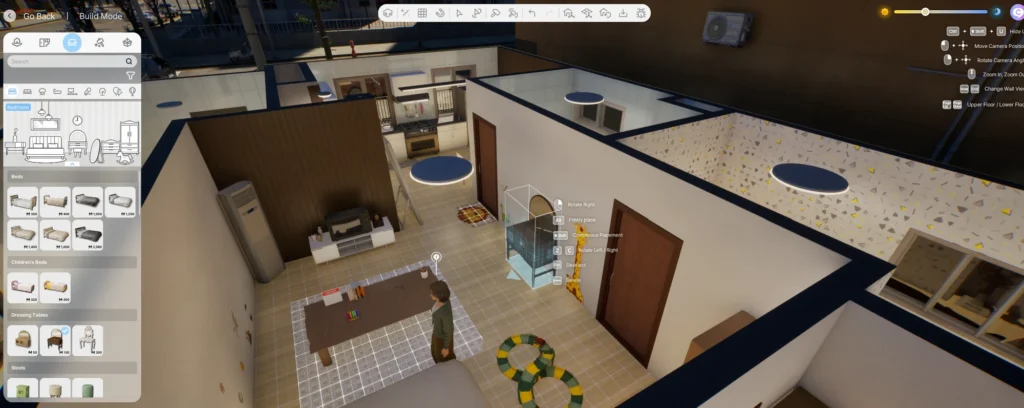
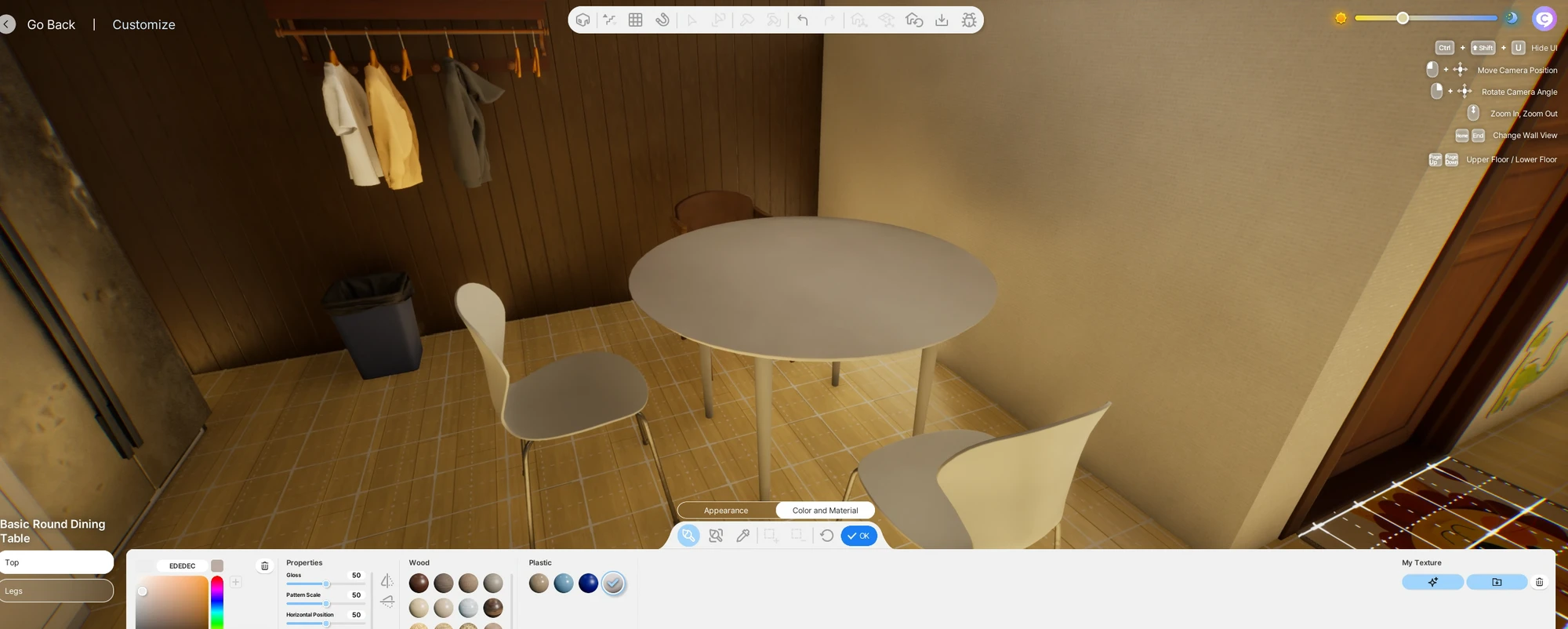
When you contrast a game with another that is not only fully released but also has many years’ worth of expansions, content packs, and downloadable content available, you may enter inZOI expecting only the bare minimum of content for fleshing out your house. While there are some limitations, and I would argue the need for a bit more diversity over the coming years, there is still a respectable collection of furniture, decorative items, and other pieces for players to use when decorating their homes. This is supported by a good number of customisation options for materials, the good ol’ colour wheel, and the first of many AI tools implemented into the game – allowing you to custom-generate textures through image-generation prompts. Outcomes can be hit-and-miss at this stage, but I have seen some creators work wonders with it. It is also possible to import your own artwork into picture frames, although these are currently confined to the dimensions and scale of pre-existing paintings, meaning your artwork may not be importable at this time.
Another experimental AI tool is the ability to import a single image of an object and turn it into a physical 3D in-game asset. Mileage will vary, as one would expect, with objects often being lower-res than the rest of the game and looking slightly uncanny. Nonetheless, I am keen to see how this system evolves – perhaps allowing multiple photos so I can eventually import my anime figure collection in-game, for example.
Regarding the actual home-building systems, most are already in place, outside of a few exceptions such as pools (which are on the roadmap). From walls of different heights to greenery options, there is already a decent selection of tools at one’s disposal to build a home. The development team has ensured that, for those who opt to live in an apartment, you can expand your floorplan at any time by adding floors instead of having set areas for each apartment. Essentially, they are just differently structured homes. However, this is primarily because each lot can only hold a maximum of one apartment. While you can work around this by applying clever door permissions, multi-family lots are something I hope to see implemented – being easily my favourite system in The Sims 2.
Are you like me and not the best builder or home decorator? There are a few nifty features currently embedded in the game, from now-commonplace options such as the Canvas online workshop (where the community can share lots, rooms, and Zois) and the ability to plop down pre-made rooms, to a blueprint system that helps newcomers design their own house by laying out on-the-ground blueprints to build from. After all, the best way to learn is by doing.
Watch Your System Specs
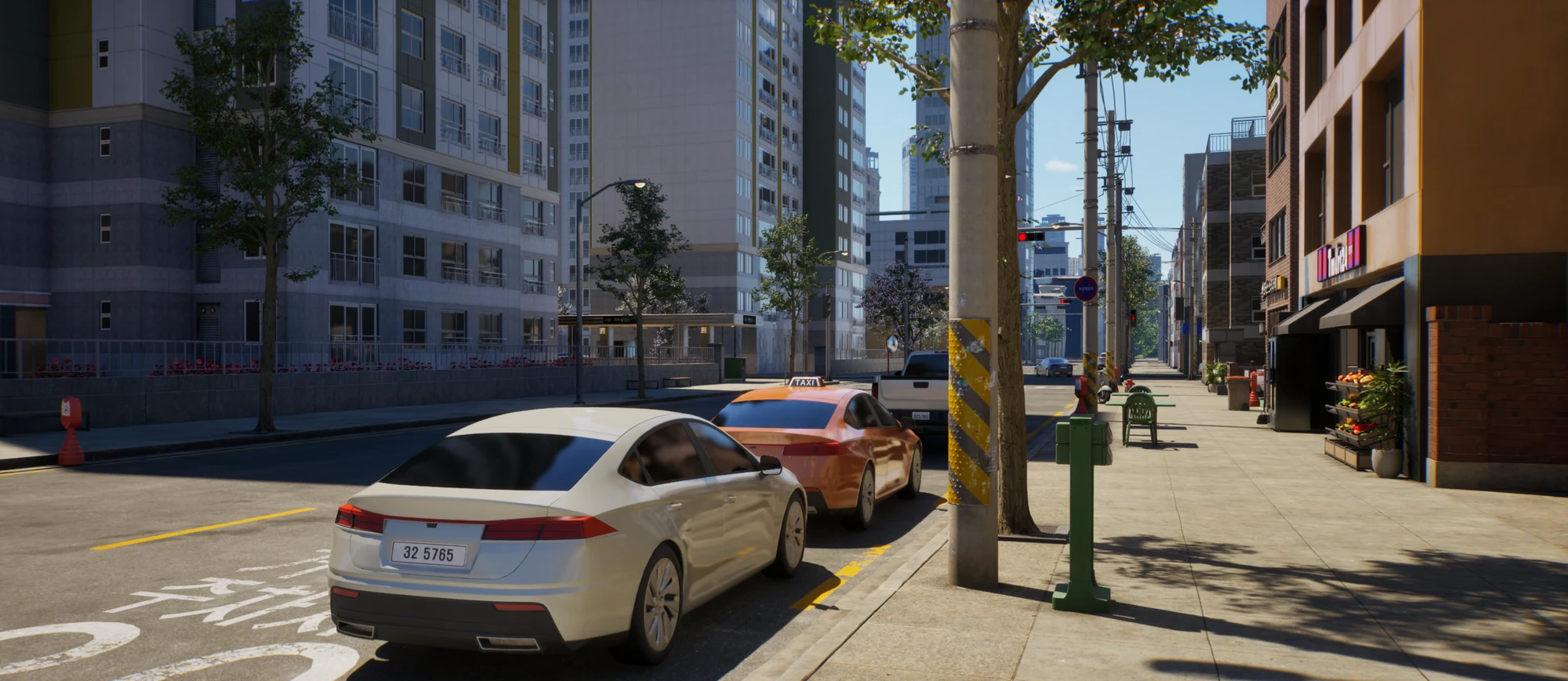
Your mileage will vary depending on your system specs, with the game offering recommended specs that are higher than many games typically on the market – and even gating certain advanced features, like “Smart Zoi,” behind them. In other words, if your hardware doesn’t meet or exceed the recommended requirements, you may find yourself locked out of inZOI’s more sophisticated AI features, or forced to dial back graphical settings enough that the lush open world looks noticeably less impressive.
Some mid-range setups still run the game smoothly with a bit of tweaking, but anyone on lower-tier machines should be aware that performance drops and missing functionality could hinder the full experience. As someone who typically reviews games on console for consistency and therefore doesn’t have an overly high-spec’d machine (a 1080 Ti), I found my playtesting a lot more enjoyable using NVIDIA GeForce Now. While using a cloud gaming service – if you don’t have the proper PC specs – is certainly viable on the higher-spec plans, some functionality such as loading textures or images for ‘3D scanning’ will crash your game.
One noticeable thing, even on the highest “ultra” graphical settings, is that despite the world looking nice (except for some wonky non-interactive interior designs and a few glitches), there is a visible difference between how Zois look in Create a Zoi and how they appear in-world. You can usually tell who they are from appearance, but many aspects, including facial features and hair, have a lower quality to them, sometimes not even getting colour shades right. Additionally, as many have noted since the Creative Studio demo launch, lighting can occasionally be problematic.
AI and Experimental Features
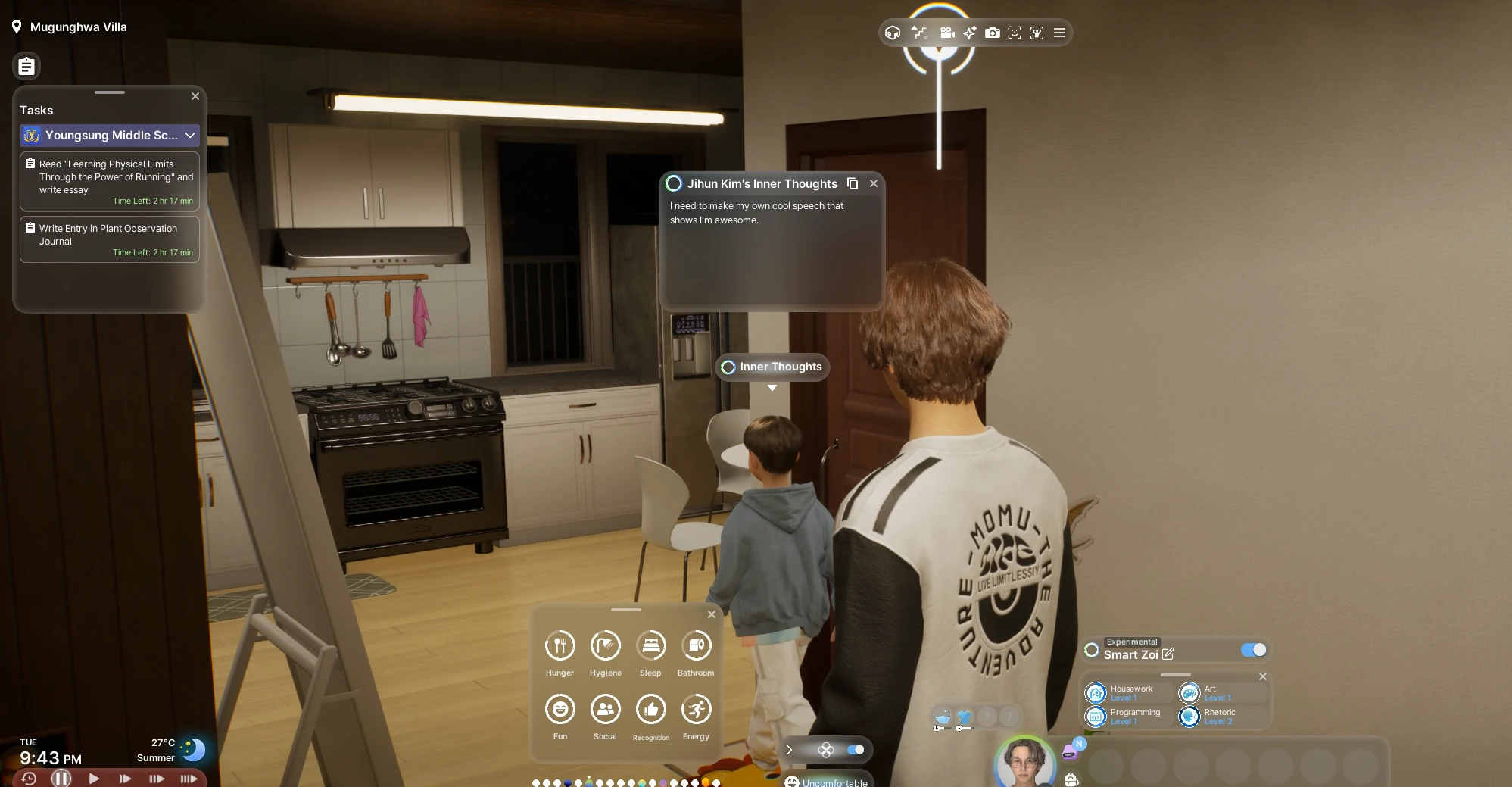
One of the major experimental features of the initial build of inZOI is its ‘Smart Zoi’ functionality, currently locked behind NVIDIA RTX graphics cards. It allows you to provide a short prompt describing your character or personality, and have their autonomous actions guided by that prompt. It is interesting in theory – again, only released as an optional experimental feature – but it feels like other elements, such as multitasking, memory, and other in-development gameplay aspects, need to be incorporated to make it truly fulfilling. You can see the groundwork there, especially with the character’s inner thoughts indicating that they are influenced by the prompt, but it doesn’t add much more than slight tweaks to the role-playing experience and how the AI drives your character’s actions. This is one element that could be a game-changer for life simulation as a genre, so I hope more attention is paid to it in the coming updates.
Another unique aspect of inZOI is the ability to drive cars, with a range of both unique and licensed models available for in-game purchases. It’s a fun and satisfying way to tour the city you live in, although there is a human element to it – you need to learn and follow the in-game road rules (hoping it doesn’t glitch) or risk killing your favourite Zoi in a car accident.
First Impressions of my First Weekend with inZOI

I write this knowing that I haven’t done everything that inZOI has to offer yet – being fully aware there is a crime system (outside of the game’s overly zealous Karma system), a photo studio and more destinations to uncover – among undoubtedly many other things. But as someone who loves building large thriving communities and fleshing out stories using my inner monologue (and perhaps taking a nifty in-game snap or two) and the randomness of autonomous systems, I can see the groundwork of a promising life simulation game that could potentially trump or even challenge the dominant force of the life simulation genre once it leaves Early Access.
As some could possibly see this as a final release if they purchased and installed inZOI without reading too much into it, I feel like KRAFTON could have done with a further 3-6 months of development to have a few more systems fleshed out and in a more final state. But at the same time, with the game being listed as in Early Access, I think they have provided some solid – if not fully implemented – systems of key life simulation mechanics and a more substantial tech demo of what’s to come. Provided they continue their engagement with the community, add a bit more flexibility and depth to their system and keep to a roadmap without compromises – I could see inZOI being a game worth playing for years to come… and hopefully, even standard PC specs catching up to its system requirements. If you go into inZOI expecting something polished, or putting the game on a pedestal and expecting everything the moment you start the game – you will likely find it soulless, underwhelming and in need of a lot of work still. However, go in knowing it is a work in progress, then there is still plenty to tide you over… just don’t expect an extended playthrough quite yet.
My playtesting of inZOI was conducted on a Day One Early Access copy of the game, with no prior access outside the public demos. Rather than use my PC hardware, this first impressions review playtesting was conducted on an Ultimate Cloud Instance of Nvidia GeForce.
inZOI is currently available to purchase via Steam Early Access for $40 USD or local equivalent, with the price expected to rise in the future as the game reaches launch.

