
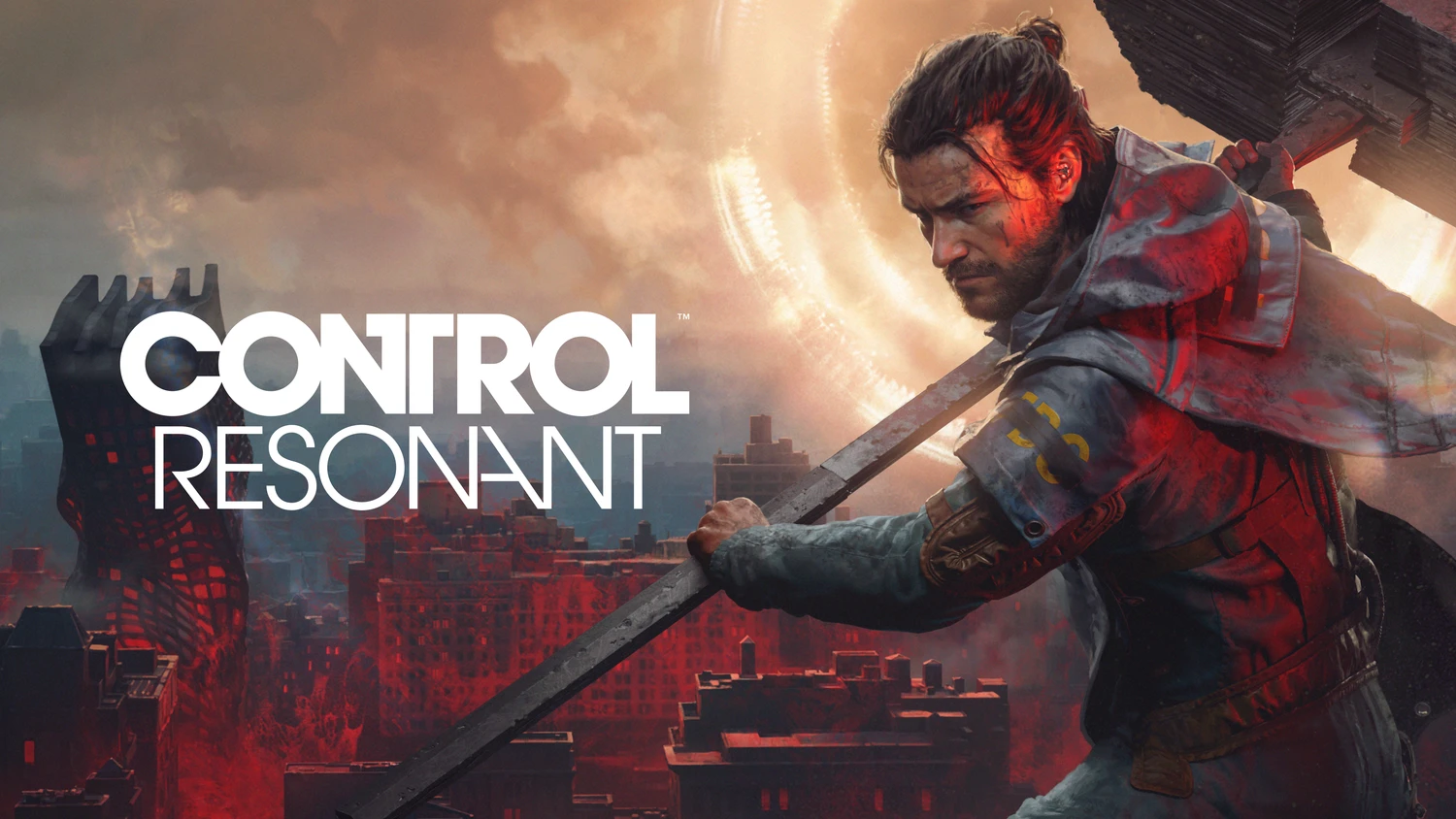
Not every developer can build their own “cinematic universe” and have gamers take it seriously. Then again, not every developer is Remedy Entertainment, the Finnish studio known for narrative-driven games like Alan Wake, Quantum Break and Control which form part of the Remedy Connected Universe. Released in 2019 as the studio’s most action-oriented game to date, Control drew inspiration from the collaborative writing project SCP Foundation. It centred on Jesse Faden, who entered the headquarters of the Federal Bureau of Control during a lockdown in search of her brother, only to find herself appointed its new director and the only person who could keep the world safe from an anomalous threat known as the Hiss. With the FBC playing a larger-than-cameo role in Alan Wake 2, many wondered what awaited them in Control’s sequel, recently released as Control Resonant. Did this new entry live up to the (very high) expectations? Read on to find out!
Continuing Remedy Entertainment’s trend of setting their games around the time of release, Control: Resonant picks up seven years after the original, and Jesse has just up and disappeared. Before disappearing, she embeds a shapeshifting length of metal known as the Aberrant in the chest of her comatose brother, Dylan, jolting him awake inside an eerily deserted Oldest House – with ‘The Board’ now speaking in his head instead. Things are even worse outside. The Hiss have escaped containment and spread across Manhattan, while a new paranatural force called the Patterning is twisting the city into something barely recognisable. With its director missing and its ranks scattered, the Bureau is left to rely on the very person whose possession helped unleash the Hiss in the first place. I’ll admit that I went into Control Resonant more than a little apprehensive. I was very fond of Jesse as a protagonist, and was keen to follow her story further (and perhaps we will in a future instalment or DLC). However, Dylan proves to be a solid protagonist in his own right. Burdened by guilt and quietly desperate to make amends, he offers plenty of hooks to carry you through to the credits.

Thankfully, you are not thrown into an entirely new cast of characters. Several familiar faces from the original return in Control Resonant in secondary roles, with Emily Pope, Frederick Langston and more offering a welcome sense of continuity. But the real highlight is what is new: the budding relationship between peon and handler – Dylan and FBC agent Zoe De Vera. Most of the Bureau treats Dylan with open hostility (he even has an implant they can trigger should he ever step out of line), so watching Zoe gradually move from cool professionalism to genuine trust is very rewarding. Remedy’s love of world-building is also as strong as ever. Redacted memos and peculiar side stories reward those willing to dig a little deeper, while the main story holds a few turns that longtime fans will want to go into knowing as little as possible. Furthermore, although you are no longer confined to the halls of the FBC, there are plenty of anomalies to enjoy, albeit with less collecting of altered items and more dealing with the threats now looming over Manhattan.
Visually, Remedy’s in-house Northlight engine continues to impress with Control Resonant. The lighting technology here surpasses even what Alan Wake 2 had to offer, with the glow of paranatural phenomena spilling across wet asphalt, concrete and glass in a way that regularly had me pausing to take it all in. If you can, I recommend playing with the lights off, as if you were settling in to watch a film. The darker sequences benefit enormously, and it is clear Remedy’s cinematic ambitions extend as much to how its games are lit as to how their stories are told.
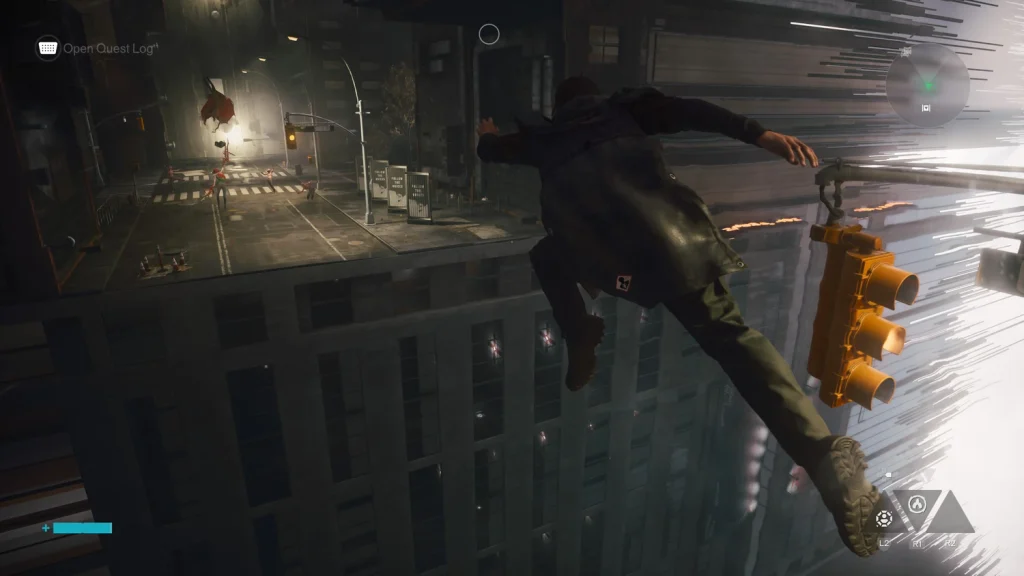
Beyond the lighting, the move from the confined halls of the FBC to an open city is significant, and for the most part it works well. That said, the wider spaces do mean there are fewer of the beautiful liminal and non-Euclidean vistas that Remedy has always been so good at crafting, the kind that made wandering the Oldest House so wonderfully disorienting. What you get instead is a Manhattan that truly meets the bill as a city impacted by an Altered World Event (AWE). Roads run straight up the sides of buildings, entire blocks hang upside down above others, and everyday objects are rearranged into unsettling, almost ritualistic patterns. Importantly, not all of this is purely cosmetic, as the city’s design pairs well with the gameplay in ways I will touch on shortly.
Turning to the audio, one absence is worth flagging for longtime fans of the Remedy Connected Universe: unfortunately, there is no new song from Poets of the Fall (also known in-game as Old Gods of Asgard). It is a small disappointment, but it does little to diminish what is otherwise a superb soundtrack. The music choices in Control Resonant, both the lyrical tracks and Petri Alanko’s score, are immaculate, with songs dropped in at precisely the right moments and an atmospheric score that sits comfortably beneath the strangeness of the city. The voice cast also delivers. Sean Durrie gives Dylan a hesitant, uneasy quality that suits a man still finding his feet, Frankie Kevich brings plenty of personality to Zoe, and Courtney Hope’s return as Jesse makes each appearance feel like an event.

So, how does Control Resonant actually play? The biggest change is that this is the first game in the Remedy Connected Universe where the protagonist thrives in close-quarters combat rather than relying on ranged weapons. Previous Remedy heroes, from Alan Wake with his torch and revolver to Jesse with her Service Weapon, were at their best when tactically and methodically picking enemies apart from a distance. Dylan, by contrast, is built to get in there and fight. His weapon, the Aberrant, can take on a range of forms: one for standard attacks, another for heavier charged strikes, and a third that caps off each combo with a finishing blow – with multiple options for each. Each form handles quite differently, from quick and nimble to slow and sweeping. You can swap them around in The Gap, a space within Dylan’s mind where he manages his loadout and upgrades between fights – although with resets requiring an item, you may find yourself like me and sticking with your preferred weapon combination for a while.
Underpinning it all is a combat loop that rewards aggression at every turn. Landing hits builds up an enemy’s Falter meter, and once it is full, you can perform an execution that immediately defeats the enemy, carrying that momentum straight into the next target. Melee strikes also refill Dylan’s Power, which fuels his supernatural abilities, so there is little reason to hang back. There is no block or parry, either; well-timed dodges are your main means of defence and are rewarded in their own right. You earn new abilities by defeating the Resonants, ranging from setting your weapon alight to summoning allies to fight by your side. Some even work together, such as igniting enemies already suffering from mould poisoning to set off an explosion, which makes experimenting with different builds feel genuinely worthwhile.
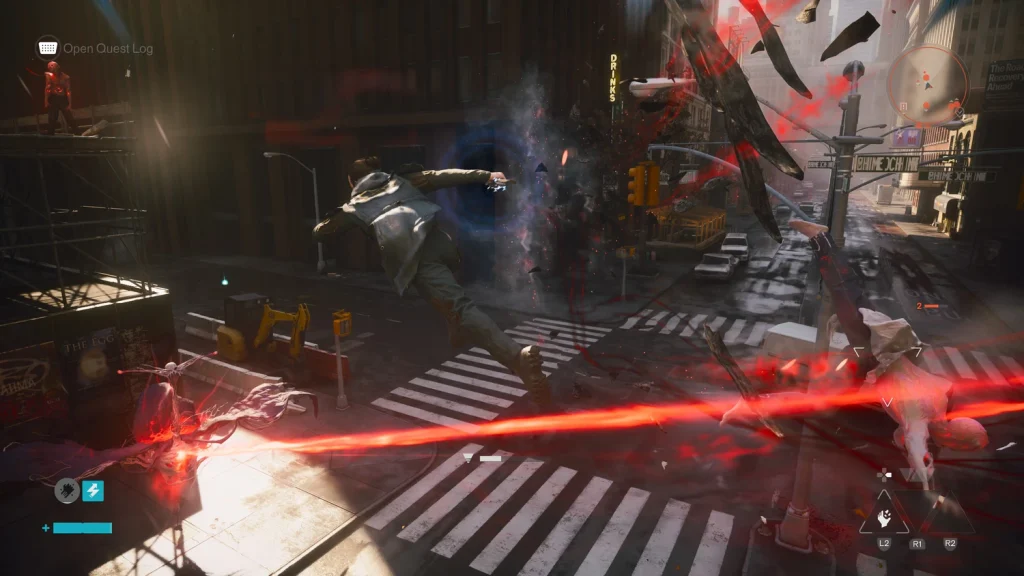
All of this matters, because Control Resonant is a clear step up in difficulty compared to any other Remedy game. After throwing a few mobs your way in the prologue, the game quickly puts you face to face with your first Resonant, and the spike in challenge is immediate. It also sets the tone for the journey ahead. The Resonants, people warped by the Patterning into malformed new forms, serve as the game’s major boss encounters, and each asks you to learn its rhythms and make full use of your kit. There were certainly times I felt overwhelmed, but nothing ever felt particularly unfair, and overcoming each encounter remained satisfying throughout. For those who would rather focus on the story, an Assist Mode offers a range of options to tailor the challenge to your liking.
When you are not in the thick of a fight, simply getting around the city is a joy. Dylan has a strong set of movement options from early on, including a double jump, a brief hover, and a pair of air dashes you can string together, letting you bound from rooftop to rooftop with ease. Essentially, you don’t have to reacquire Jesse’s original abilities incrementally throughout the game. Further abilities are unlocked by venturing into the Faults, strange fractures in reality tied to Jesse’s trail, with the highlight being Shift. This lets Dylan plant his feet on walls and ceilings as if they were solid ground, and it is here that the city’s warped design truly comes into its own, as areas that at first seemed out of reach suddenly open up. Reach, a grapple-like ability that launches Dylan across large gaps, rounds out the toolkit nicely. Not too shabby for someone who spent the better part of a decade in a coma.

Perhaps the boldest step outside Remedy’s familiar territory, however, is the structure itself. Control Resonant offers what is essentially a fully open-world environment, yet it never loses sight of the strong narrative beats that made the original so memorable. Manhattan is divided into several zones, and almost everything you do within one, from clearing out enemies to locating hidden caches and completing activities, contributes towards that zone’s level. Raising it unlocks local perks and, more importantly, talent points to invest in Dylan’s abilities, giving every detour real purpose. Activities range from repeatable World Feats to genuinely peculiar side quests, while defeating a Resonant repopulates the city with tougher foes, keeping the cycle of growing stronger ticking along. Each area also handles differently from the others, so it isn’t just repeated streets with a simple paint job. For better or worse, the map isn’t always the most helpful guide through the city’s more layered areas, but it is a minor gripe in an otherwise rewarding structure.
So, did Control Resonant live up to the (very high) expectations? Yes. Incredibly. Not every developer could take a tightly contained, much-loved game, move it into an open city, hand the lead role to a new protagonist and rebuild its combat from the ground up, all while keeping it unmistakably itself. Then again, not every developer is Remedy Entertainment. Dylan proves a worthy successor to Jesse; his partnership with Zoe and other members of Control Resonant’s cast gives the story real heart, and the shift to close-quarters combat delivers a demanding yet consistently satisfying challenge. Add some nice design tech, an immaculate soundtrack and traversal so smooth that crossing the city becomes a highlight in itself, and it is easy to forgive the fewer liminal vistas, the occasionally unhelpful map and the very occasional unfair battle. Decades on, Remedy Entertainment still takes its time crafting games its fans genuinely love rather than chasing an extra buck with yearly releases, and Control Resonant shows a studio that built its fanbase the hard way and never takes it for granted.
Final Score for CONTROL Resonant
This review was conducted on a PlayStation 5 Pro version of Control Resonant. The game is now available to purchase on PC, PlayStation 5 and Xbox Series X|S.

