
Ever since the earliest days of the gaming industry in the 80s, the James Bond film series has had a strong presence in interactive entertainment. While none have perhaps had the same level of impact as the 1997 Nintendo 64 exclusive GoldenEye 007, which still enjoys an active fanbase today as part of the speedrunning community (even if its level lengths can now be counted in seconds rather than minutes), the adaptations have generally ebbed and flowed from ambitious projects to mundane licensed works. After a lapse in new title releases, much like the film series over the last decade, we finally have something new – a completely original game-exclusive action-adventure title – 007 First Light. Helmed by the development studio IO Interactive, a team most known for their work on the Hitman and Kane & Lynch franchises, we can see their past works greatly influence and support not only this new chapter but a complete reboot of the chronology – serving as an action-fuelled look at James Bond’s origin story from the time before his recruitment into MI6 and into his first cases. He is younger, less rugged, and much less experienced than his film portrayals… but does Bond shine in these adventures? Read on to find out!
We first meet James Bond not in the midst of being the secret agent he is renowned as, but not even someone who aspires to the role. Instead, we see him as an aircrewman in the Royal Navy as part of an operation that goes catastrophically wrong – and as the only survivor. After all hope appears lost, he makes radio contact with MI6 and performs a first mission above and beyond the call of duty, which draws the intelligence service’s attention. From there, he is fast-tracked into a freshly revived 00 program, and what follows is essentially the making of the man. We follow his early days, from training to making initial allies, and see him demonstrate that common trait of not always obeying his superiors. Irish actor Patrick Gibson thrives in the role and reflects some of the rougher edges you’d expect from a Bond this young, but like other Bonds before him, gives his own flair through the narrative and acting. This Bond is arrogant, impulsive, far too sure of himself and prone to charging in where a wiser agent would hang back or just follow orders, yet he is also undeniably charming, quick on his feet and has strong morals.
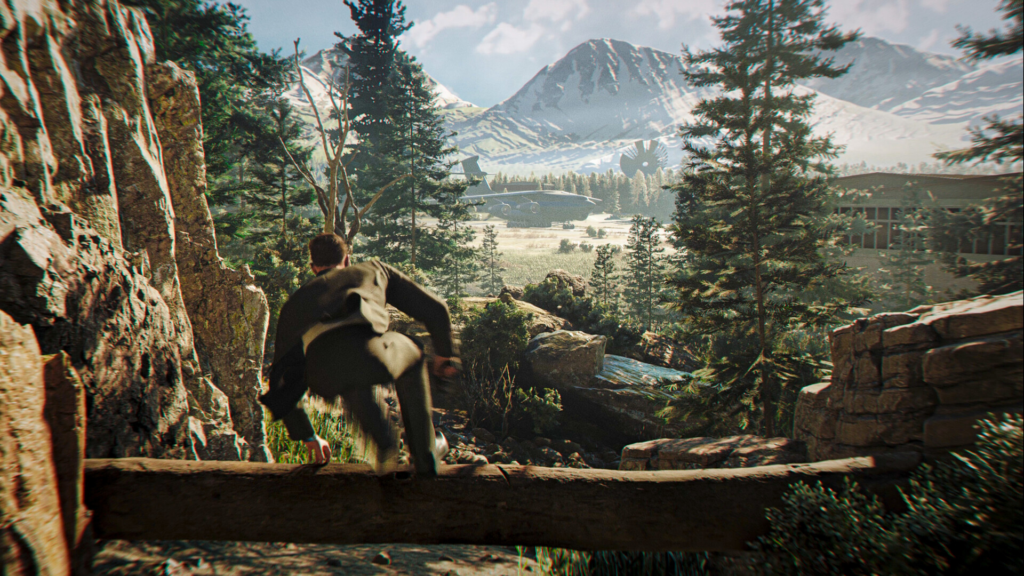
The plot of 007 First Light itself hits every beat the franchise is famous for. There is a shadowy organisation pulling strings from the background, a roster of double-crosses and shifting loyalties, and a central threat rooted in dangerous experimental technology and the looming question of artificial intelligence, all of it building towards stakes that escalate to a suitably global scale. The antagonist is kept largely in shadow for much of the runtime, and the eventual reveal lands all the better for it – with an interesting cast of secondary antagonists leading up to it. But more impressive is the secondary cast, who are not just shoehorned folks from the movie series – with M, Q, Moneypenny and others all being featured with brand new casting and complexities to their characters – but a range of original characters you encounter throughout the tale, some faring better than others in the grand scheme of things, but all building upon the complexities of the secret agent life. If there is a weakness here, it is one of pacing. The overall campaign is around 15-20 hours long, and due to the runtime, the story occasionally feels a little thin, but thankfully all of those hours are dedicated to the narrative, without an open-world environment full of padding to eke out those extra few hours.
The 007 film franchise has always been about picturesque locations and, despite being an action thriller, showcases some unique locales. Over the course of 007 First Light’s main campaign, players will not only get to explore parts of the MI6 building, but also everything from icy tundras, secretive training grounds in Malta, a posh hotel (and its surrounds) in the Slovakian countryside, a packed London nightclub, the hidden-away black markets of Mauritania and more. While at the end of the day, the locales are not “open world” in the truest sense, their boundaries are more narrative than just the world’s borders, each showing a high level of richness both up close and at a distance. The locations are densely populated and convincingly lived in, with crowds of background characters going about their business and quiet environmental detail rewarding anyone willing to slow down and take it all in.
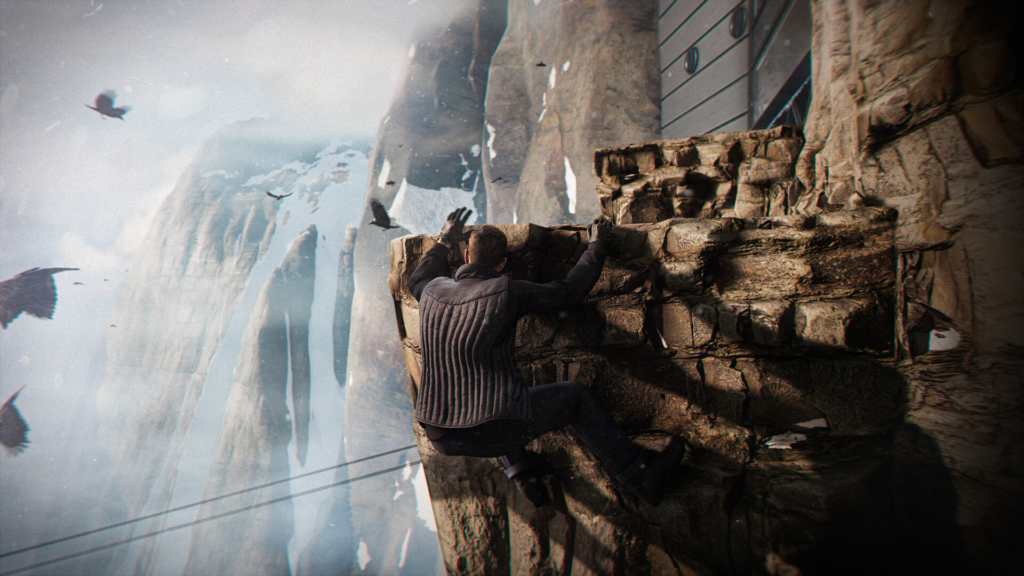
On the presentation front, 007 First Light, for the most part, is a genuine showcase of what narrative-driven action games are capable of in 2026, thanks to being one of the first games I got to play after my brand-new PC arrived the other week. The visuals are slick and high-quality, with so much lighting and detail packed into even the most potentially mundane areas. The whole production carries a sense of polish that the studio has clearly poured a great deal of effort into. Bond’s world is also liberally dressed in real-world brands, from the fleet of luxury cars to the watch on his wrist and the vending machines tucked into the background, and while it is hard not to notice just how much product placement is on show, it rarely feels out of step with a series that has always traded on a certain kind of luxury. In turn, there are higher PC spec requirements than your usual game, so if you fall short on the recommended specs, it might be worth getting a console version of the game instead – as this is, in my opinion, one game you don’t want to skimp on the graphical settings for.
Sound design is one of the areas where the game most effortlessly slips into character. The classic Bond theme is present and correct, but rather than leaning on it constantly, the score reserves it for the big moments. The original title track, performed by Lana Del Rey, is an inspired fit for the tone the game is reaching for, and the wider score suits almost every setting and situation the game throws at it. Furthermore, the voice work is just as stunning, with Gibson anchoring the whole thing with a performance that captures the arrogance, the charm and the occasional flash of vulnerability you’d expect of a young Bond, without ever tipping over into an impression of the actors who came before him. He is backed by a tremendously strong cast, with Lennie James as the sceptical Greenway, Kiera Lester as an impressive Moneypenny, Alastair Mackenzie bridging together tones of his Brosnan and Craig-era Q’s, among others in the accomplished cast bringing 007 First Light to life.
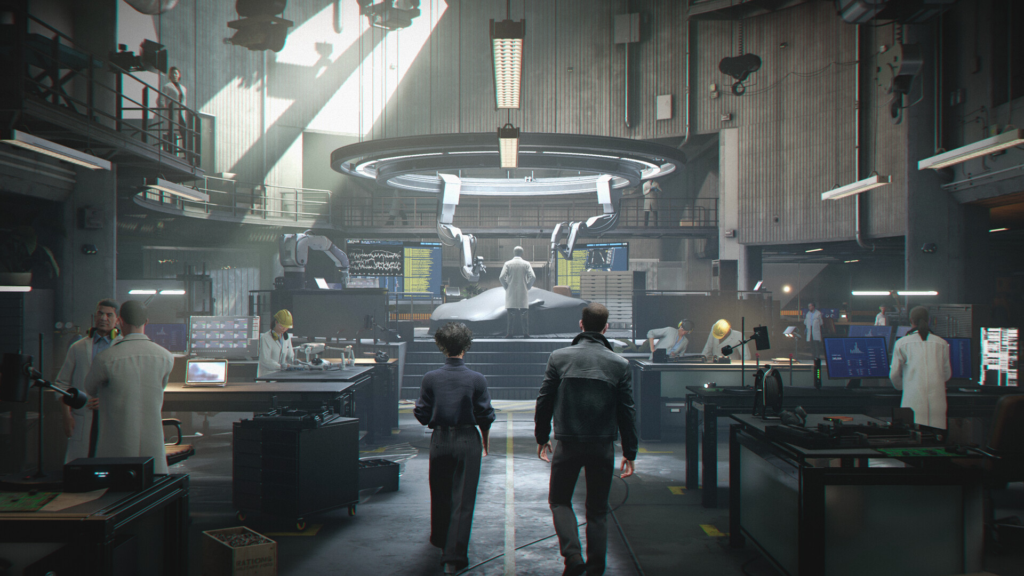
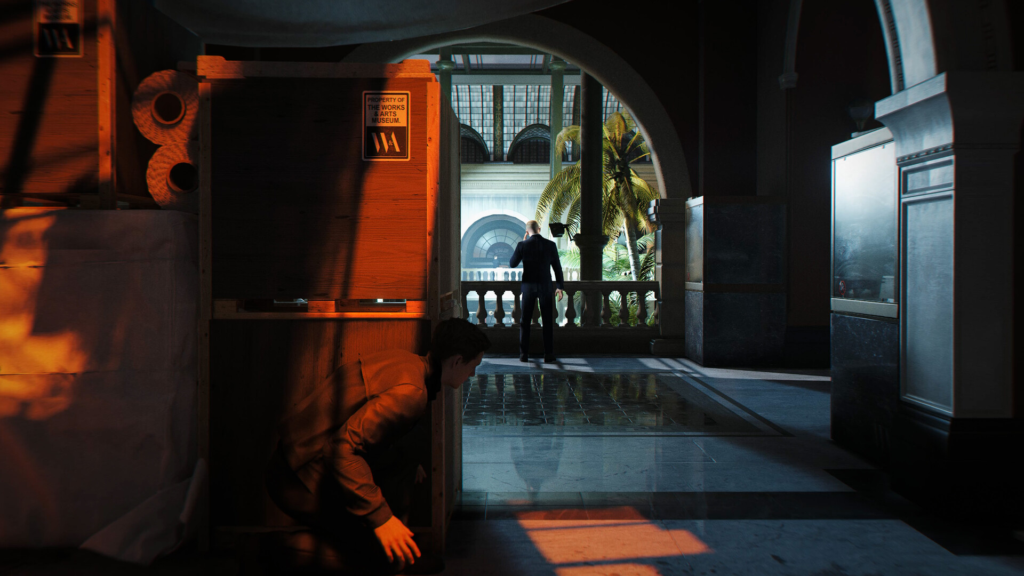
As their past titles may already indicate, IO Interactive have a particular strength in crafting games which combine action combat with elements of stealth and social infiltration. 007 First Light draws heavily from these foundations, and while it is its own experience rather than ‘Hitman but James Bond’, the influences are felt throughout. A typical mission drops you into a bustling hub area with your objective somewhere out of reach, and it falls to you to gather the intel, find the angle and work a path into the restricted zones beyond. You can eavesdrop on conversations to tease out useful leads, pickpocket keycards and door codes from distracted targets, and generally talk your way through trouble using the Bluff system, which lets a sufficiently confident Bond stroll straight past suspicious guards simply by behaving as though he belongs there. There is a level of forgiveness to this, allowing you to potentially get around mistakes, which can be a mercy given how quickly you can be overpowered if you accidentally get the enemies’ attention – not impossible, but the difficulty certain amps up.
When the sneaking inevitably falls apart, the hand-to-hand combat is more than happy to pick up the slack, and it is more than just button-mashing, but rather a combination of well-timed counters, dodges, parries… and yes, some button-mashing. But there is also that level of versatility that can make scenes even more epic, even if you are not immediately looking for them – with Bond making use of the environment wherever possible. It is not the deepest combat system going, and it can grow a little unwieldy when you find yourself hemmed in on all sides by a crowd of attackers, but it is more than serviceable even if you won’t suddenly go Kazuma Kiryu on your enemies.
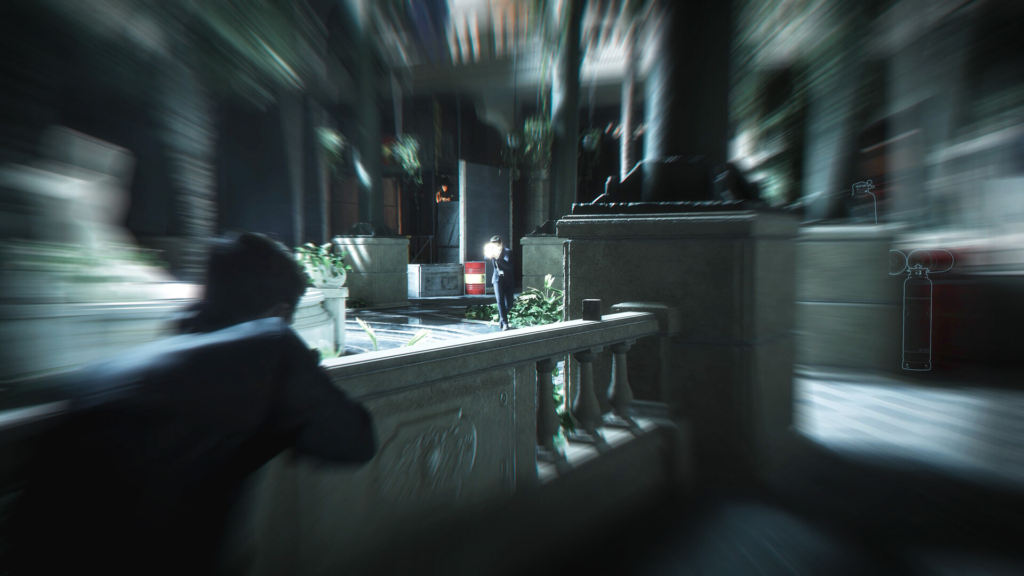
While it comes as no surprise that a game like 007 First Light wouldn’t just let you whip out a gun and start shooting gung-ho just anywhere, they have framed it under the guise of the ‘Licence to Kill’ system, where Bond will not so much as draw a firearm until an enemy first shows genuine lethal intent, which means you cannot simply shoot your way through every encounter and instead have to earn your passage into open warfare. Once the bullets start flying, the shooting is quick and gratifying, supported by the narrative-driven game approach that limits ammo, so even amid gunfire, you have to strategically plan your shots or use your fists or the environment to better advantage. The shooting can feel a step behind the melee in terms of raw enjoyment, and the boss encounters are easily the weakest part of the action, leaning on a repetitive formula of evading a stronger opponent, laying traps or otherwise facing them in a range of QTE events.
James Bond is never without some fancy gadgets, and even as a youngin’ by comparison, 007 First Light doesn’t leave him without the usual arsenal of toys. Bond’s gadgets are a genuine highlight, and rather than a whole suite of buttons you have to remember which one is which, they are all packaged together in the Q-Watch. The Q-Watch lets Bond scan an area for threats, hack electronics remotely, and trigger handy distractions. Before each mission, you assemble a loadout from a wider collection of devices, among them a laser that slices through padlocks, a dart that leaves a target queasy and disoriented, and more, which unlock quite frequently throughout the story. Rather than running on a straightforward cooldown, they burn through electronic and chemical resources that you top up by collecting random bits-and-bobs across the level, serving as their own resource system, which is for the most part approachable, but can sometimes leave you powerless in a pinch. The driving sections, meanwhile, are comfortably the weakest link, feeling loose and imprecise to control, largely confined to a set path, and turning up just often enough to tick the box that a Bond outing ought to feature its iconic cars. Outside the main scenarios, a Tactical Simulator is available to players, accessible in-game or through the main menu, as a separate mode that lets you complete a suite of bite-sized challenge missions, unlock new weapons/costumes, and more.
After decades of Bond games swinging between the inspired and the forgettable, and the long drought that has followed in the years since, the question we opened with earns a resounding yes: 007 First Light absolutely shines. It comes with all the strengths of action games, which have favoured narrative (like Uncharted) and stealth (like Hitman), but is also inspired by its pre-existing franchise while not simply replicating it. IO Interactive has crafted a genuinely original origin story, carried by a magnetic turn from Patrick Gibson and a supporting cast that brings the game to life beyond what one might typically expect, all wrapped in some of the most lavish globetrotting set dressing and action-combat the series has ever enjoyed. It has taken the best part of three decades, but James Bond finally has a game worthy of standing alongside GoldenEye, and that is no small achievement.
Final Score for 007 First Light
This review was conducted on a digital PC version of 007 First Light. A review code was provided by Australian distributor Five Star Games to facilitate this review.
007 First Light is now available to purchase on PC, PlayStation 5 and Xbox Series X|S.

