

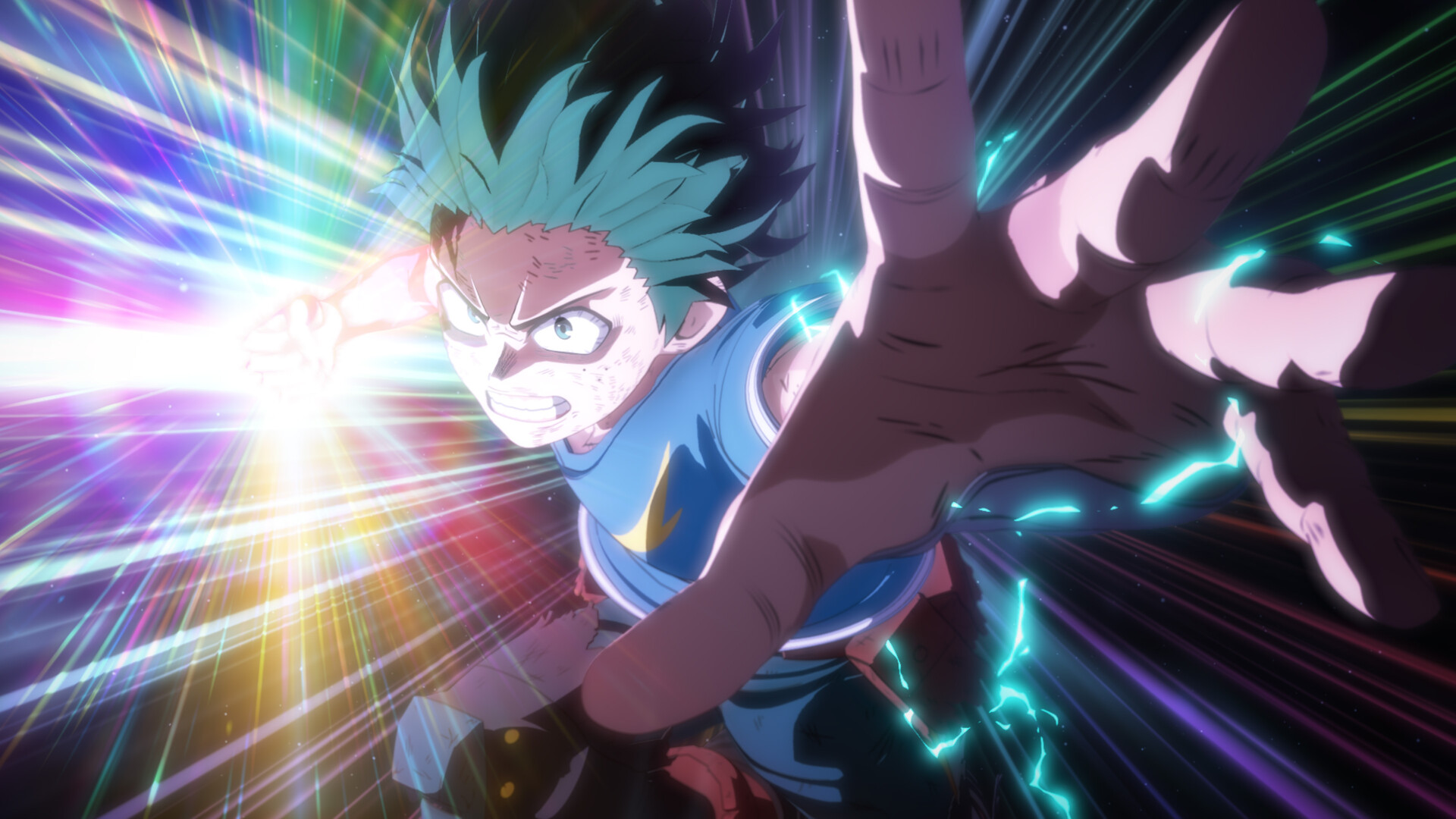
It’s often said that two things are certain in life: death and taxes. Today, I propose a third: popular anime franchises that have received game adaptations published by Bandai Namco Entertainment. In recent years, Bandai Namco Entertainment has collaborated with a range of development teams to publish games based on popular franchises, including Naruto, Bleach, Dragon Ball, Mobile Suit Gundam, Digimon, Sword Art Online, Spy x Family, Jujutsu Kaisen, and many, many more. In 2026, for the first time since 2020, the publisher has returned to My Hero Academia, alongside returning developer Byking to offer fans of the series a new chapter in the video game lore: My Hero Academia: All’s Justice. How does their return to this franchise fare, and does it stand above others in the anime-to-video game adaptation space? Read on to find out!
For fans who have followed My Hero Academia through its highs, heartbreaks, and heroic stands, My Hero Academia: All’s Justice arrives with the confidence of knowing which part of the story it wants to celebrate. The creative team doesn’t do that thing where they try to cram as much of the narrative into a more limited runtime, which would have significantly dampened the experience. Instead, it sticks true to the byline ‘One Last Smash’ and puts emphasis on the final stages of the narrative. Players are therefore rewarded with a sense of urgency and scale that suits the source material well, especially when major confrontations are allowed to breathe, and the game leans into elements that made the series a mainstay of the animesphere for so many years.
The drawback is that the storytelling does not always carry the same force as the material it draws from. Some scenes land with genuine impact, but others feel compressed, lightly stitched together, or presented in a way that lacks the dramatic punch they deserve – and would best be enjoyed for the first time in their original form. Therefore, My Hero Academia: All’s Justice really is a game for the committed, knowledgeable fans, rather than those looking to break into the series… which… fair, given it focuses on the end of the chronological narrative. But when it hits the right note, it does a convincing job of reminding you why this series shone in the first place.
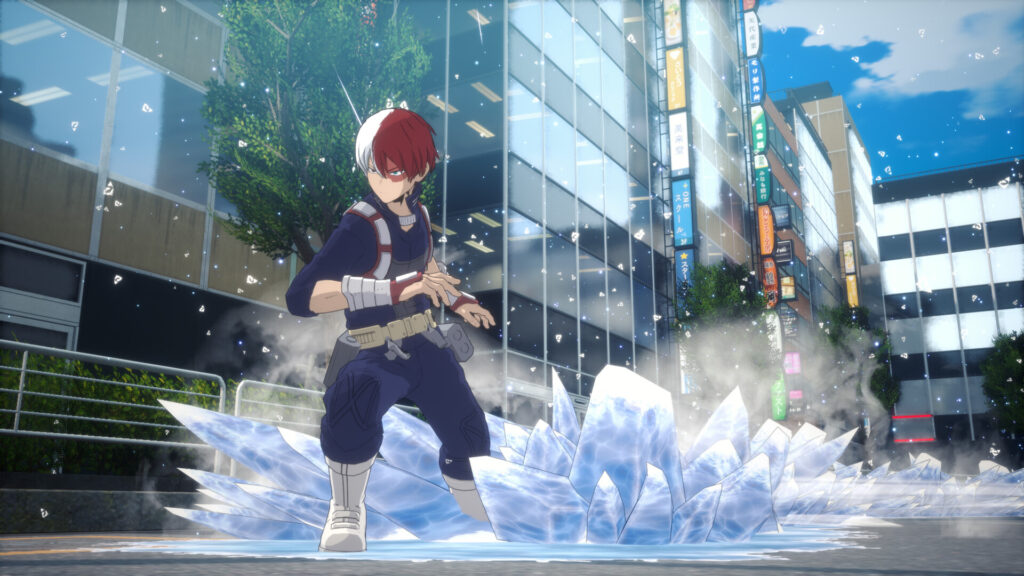
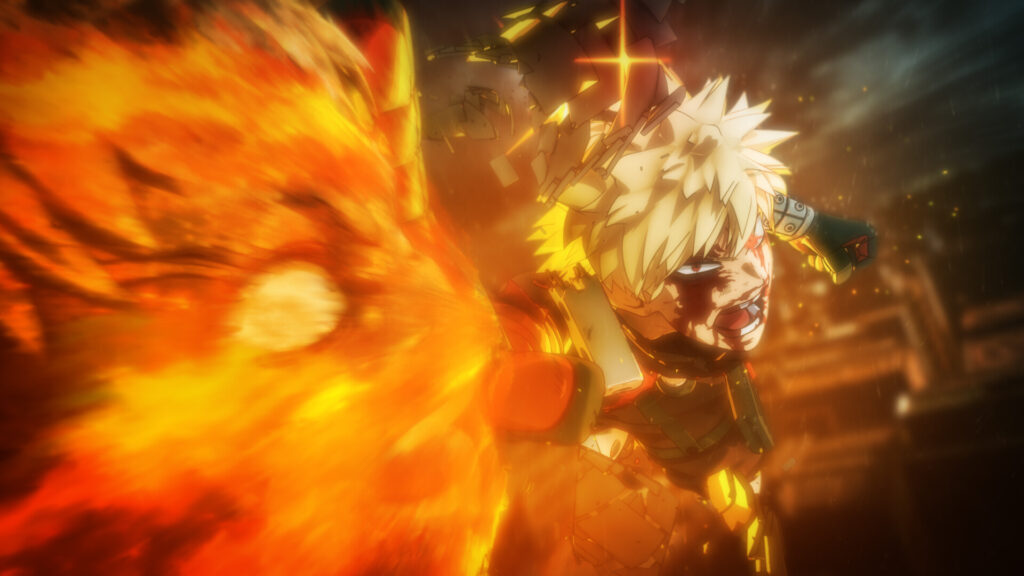
Aesthetically, My Hero Academia: All’s Justice works within the style of its source material world – from its recognisable heroes and villains, flashy movesets, and ultimately leaving players like they are stepping into a 3D rendition of the anime. Byking has a solid grasp of these characters at a surface level, and that shows in the quality of the models, the exaggerated attack effects, and the way special moves are framed to make each fighter feel appropriate. Battles are frequently exciting to look at, and there is an undeniable thrill in seeing fan-favourite characters rendered with this much energy. The game also benefits from a broader cast, which helps the package feel celebratory rather than selective.
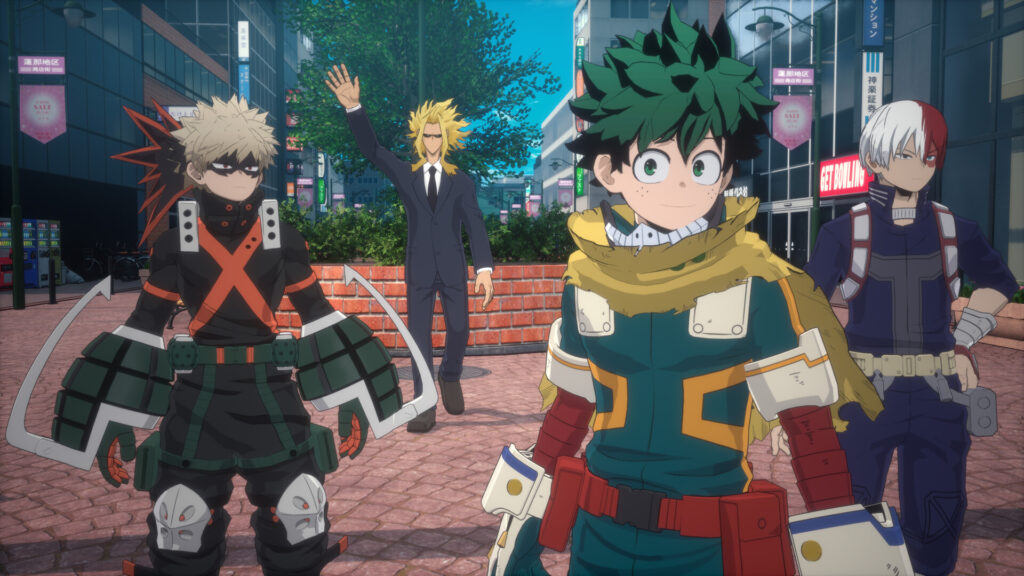
But as tends to be the case with games like this, the wider world design isn’t particularly memorable outside the character work. Arenas do their job without leaving a lasting impression, environmental variety can feel limited, and some of the surrounding structure lacks the same sense of spectacle as the fights themselves. There are moments where the game looks polished and purposeful, and others where it feels as though most of the creative effort has been poured into the roster, with everything else left as an afterthought. That balance does not fully ruin the experience, but it is still something I want developers to focus on more.
Audio is one of the areas where My Hero Academia: All’s Justice most consistently sells the fantasy. A series as personality-driven as My Hero Academia depends heavily on performance, and the voice work here goes a long way towards making the cast feel authentic. This is complemented by English and Japanese voice casts, providing voices for their respective characters, giving each character auditory familiarity from the get-go. Signature lines, battle cries, and dramatic exchanges help elevate moments that might otherwise feel lighter in written or visual presentation alone. Alas, like environmental designs, the trade-off in the audio department is the soundtrack: less dominant than the action on screen and really needing more memorable tracks.
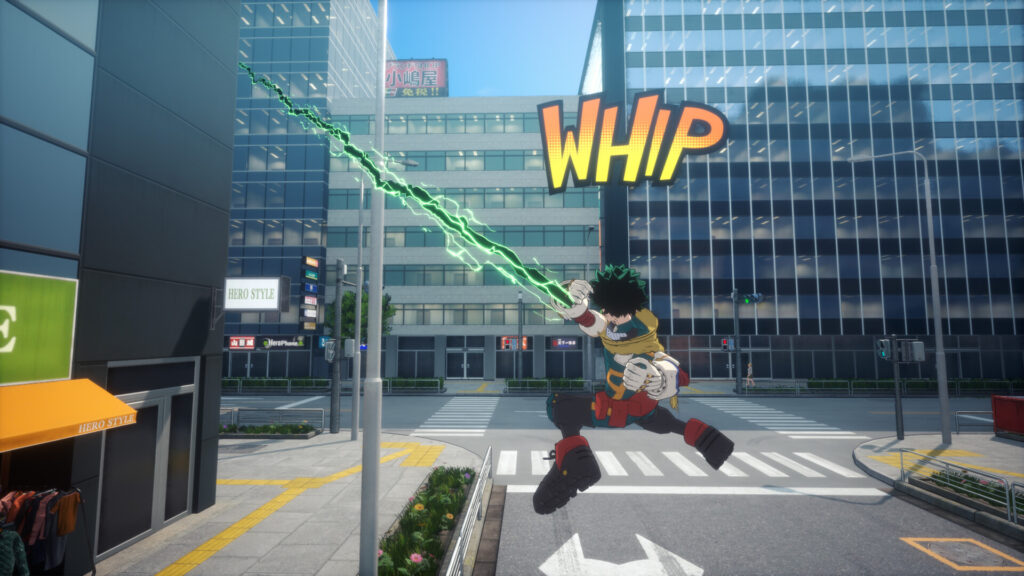
My Hero Academia is heavily action-oriented, so a game like My Hero Academia: All’s Justice needs to have combat worthy of its source material to be of any value. Byking clearly understood that a game like this has to be satisfying, and on that level it succeeds. Fights are fast, readable, and flashy in the way fans will want, with Quirks and special attacks carrying plenty of visual punch. Better still, there is more structure underneath the spectacle than first impressions might suggest. Team composition matters, timing your switches matters, and knowing when to spend meter or press an advantage gives battles a welcome sense of rhythm. At its best, the system strikes a respectable balance between accessibility and involvement, allowing newcomers to enjoy the chaos while still giving more engaged players something to learn.
That said, while the foundations were solid, they did not necessarily translate into strong encounter design. There are times when matches feel genuinely tactical, with the momentum swinging according to how well you manage pressure, spacing, and your team’s abilities. Yet, there were other times when it felt as though the game struggled to offer much of a challenge, or leaned too heavily on aggression or inflated difficulty so as to feel either unsatisfying or leave you wanting to “take a break” after playing them. The roster helps offset that somewhat, because many characters feel distinct enough to keep experimentation interesting, but not every fight makes the most of those differences.
Replayability follows a similar pattern. There is enough here to keep fans busy between side content, extra battles, unlockables, and the sheer appeal of trying out different characters and teams. Local and online play also give the package additional life beyond the main story, especially for players who simply want more reasons to engage with the combat. But again, it felt like new paint over existing systems, and feels like a short-term experience more than something that will keep players coming back to for weeks or months. Therefore, My Hero Academia: All’s Justice feels less like a deeply varied fighting experience and more like a generously stocked fan package built around a strong central mechanic that you can enjoy for a little while, before moving on to the next thing… something I feel more games (especially with the rise in live service gaming) need to understand… sometimes a single-player focused experience done right fares the strongest.
My Hero Academia: All’s Justice feels very much like the kind of licensed anime adaptation Bandai Namco Entertainment has published over the years: visually faithful, recognisable and at its best when the source material does a lot of the heavy lifting. Its combat provides enough flash and substance to carry the experience for most of its runtime, even if repetition and uneven design keep it from true greatness. But despite that, it is certainly one of the better anime-to-video game adaptations released in recent years: not a new benchmark for the genre, but a solid and enjoyable reminder of why this formula continues to endure.
Final Score for My Hero Academia: All’s Justice
Playtesting of My Hero Academia: All’s Justice was conducted on a digital PlayStation 5 copy of the game – with a review code provided by Bandai Namco Entertainment Australia.
My Hero Academia: All’s Justice is now available to purchase on PlayStation 5, Xbox Series X|S and Windows PC.

