
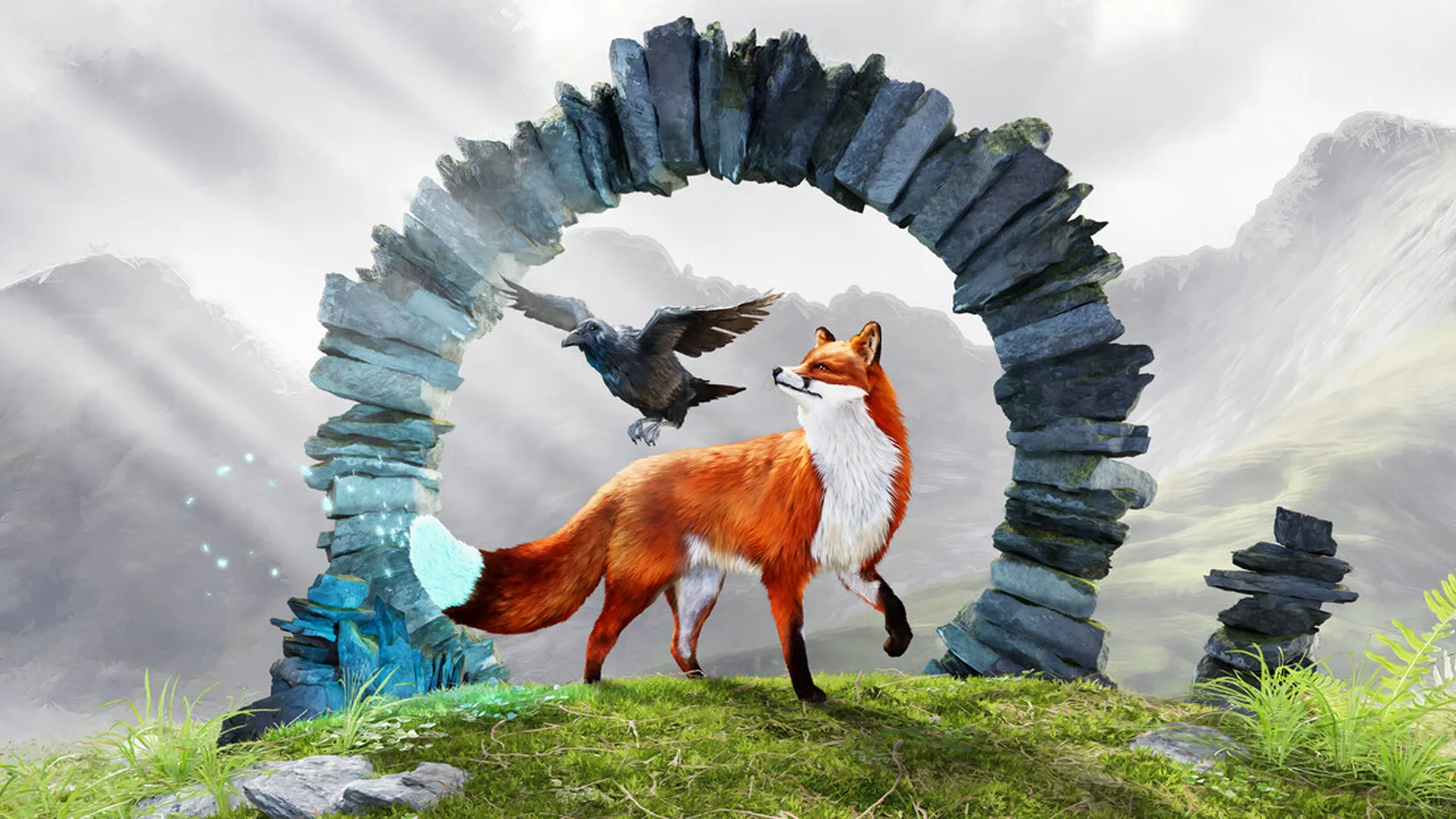
If you have been viewing The Otaku’s Study for any length of time, you will notice that our icon features an origami fox. Why? One of those reasons is that I absolutely adore foxes! So when a game like Spirit of the North by Infuse Studio comes along, you bet it caught my attention. And while the game had some flaws, I couldn’t fault the game’s audiovisual design. While it could have been a standalone experience in its own right, something you enjoy, be content with, and move on. But in 2025, Infuse Studio are back with Spirit of the North 2. Does this experience build upon the strengths and weaknesses of its predecessor well, or is it just more of the same old? Read on to find out!
Spirit of the North 2 tells its story the way you expect it to: quietly, and with trust in the player to work their way through it. Not the ideal solution for those who may be time-poor and want a direct line to the narrative, but welcoming to those with a desire to explore and have some influence in shaping the story. The delivery is delivered minimally through exposition, instead favouring ruins, murals, and scattered notes which allow players to assemble the who, what, and why. The experience? You are a lone fox with a raven in tow, tracking down guardian spirits and scrubbing blight from a world gone sideways, with the looming presence of Grimnir giving you a clear target. It’s a mood-first tale, where little beats land hardest. Direction can be hazy by design, and I occasionally wished for a firmer nudge, but the throughline remains readable and satisfying.
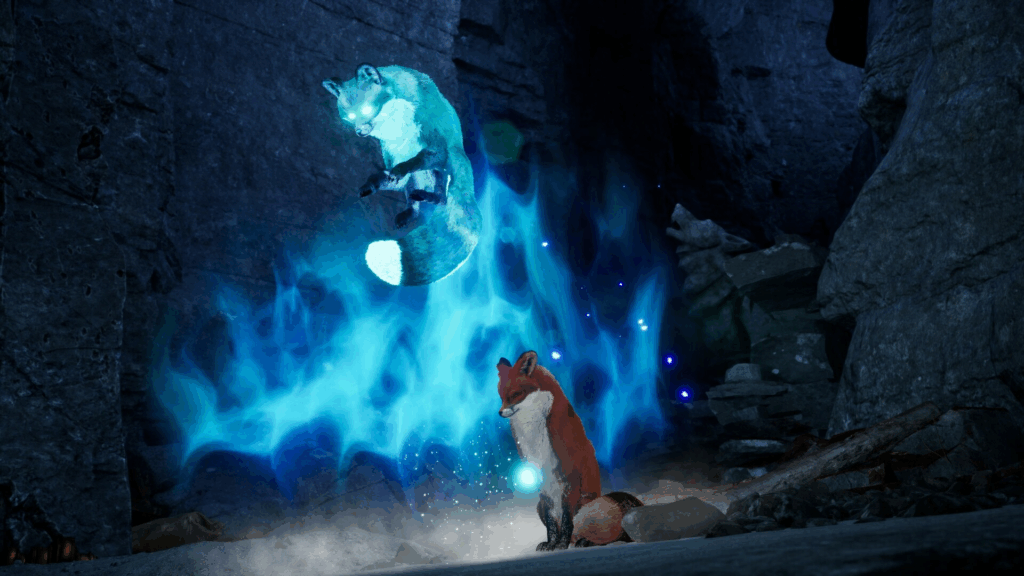
Visually, Spirit of the North 2 is the picturesque postcard that the first game delivered, only with the boon of new tech in the half-decade since it launched. The shift to Unreal Engine 5 pays off, with aurora-lit skies, honest-to-goodness volumetric weather, and biomes that feel distinct rather than reskinned. These include misty highlands, glassy beaches, frost-bitten caverns, and temple interiors that read clearly without a HUD shouting over them. Playing on console also offered a fairly consistent experience, although there were still a few glitches here and there, LOD drops and frame dips. The UI maintains a light touch, featuring a fog-of-war map, unobtrusive prompts, and ultimately suits the vibe. However, sparse signposting can make the wider world feel directionless if you’re time-poor. Accessibility and comfort options are similarly lean, and the long sprint-hold isn’t kind on marathon sessions.
On the audio side, the orchestral-leaning score is the game’s secret weapon. It provides exploration space to breathe, then swells for guardian encounters without tipping into melodrama; nature SFX, such as wind through grass, distant surf, and snow crunch, do the rest.
Spirit of the North 2’s semi‑open structure suits the inner wanderer and adventurer inside players. Obelisks tease points of interest, little raccoon merchants give me a reason to hoard crystals, and the island hides a bevvy of side nooks to encounter and explore. The flip side is pacing: key temples and doors are gated by wisps, and long, lightly furnished stretches between objectives can turn treasure hunts into errands. When the loop clicks – spot a landmark, poke around, surface with a new trinket or bit of lore – it’s easy to lose an hour. When it doesn’t, it feels like the game is stretching a good thing a little too thin.
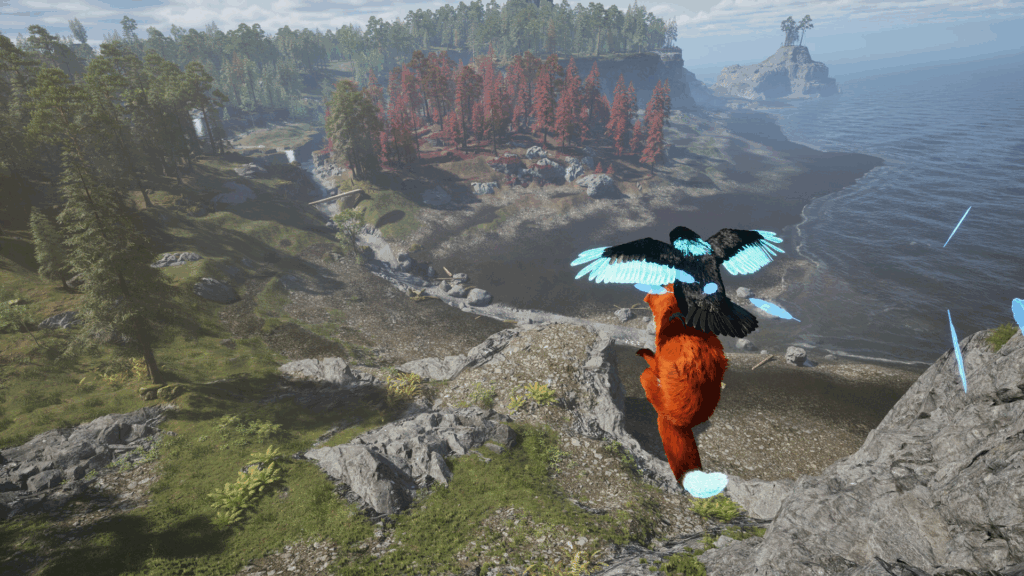
Movement is a mixed bag, and while it is an improvement over the first game, is still not perfect.. Free jumping, the ability to jump to areas marked in blue, and the raven‑assisted glide combine for some lovely traversal moments, and removing the stamina bar is a smart quality‑of‑life call. Yet the fundamentals are still wobbly: jump arcs feel floaty, the camera and geometry sometimes argue, and the precision marker can be fussy about when it appears. Puzzles lean towards an approachable style, rather than being head-scratching; most solutions are readable from the environment, which keeps the vibe relaxed but rarely asks you to think beyond the obvious.
I like the idea behind the Guardian Encounters: boss fights as big environmental puzzles rather than combat arenas. Spirit of the North 2 is, after all, an exploration game at heart. At their best, they’re cinematic and clever, folding new abilities back into the set‑piece. At their worst, they’re frustrating, with sparse checkpoints, tight timing windows, and occasional logic hiccups that stall a phase. Optional runes can smooth the rougher edges, but the light skill tree doesn’t always change your kit in meaningful ways, so these spikes feel more like friction than growth.
Spirit of the North 2 emphasises the charm that makes those, like myself, fall in love with the beloved floofs. At its core, it is a game that looks and sounds terrific, and it believes in quiet moments and player autonomy. But as much as the art, lighting, and score charmed me, the janky footing, light puzzle design, and pacing kept pulling me out of the spell, with a few long-standing QoL issues that a sequel of this scope really should have ironed. For me, it builds on the audiovisual strengths of the original without thoroughly shaking its weaknesses. It ultimately is an enjoyable Take 2, rather than the full potential the game could have offered.
Final Score for Spirit of the North 2
This review was conducted on a PlayStation 5 digital copy of Spirit of the North 2, with a review code provided by the publisher.
Spirit of the North 2 is now available to purchase on PC, PlayStation 5 and Xbox Series X|S.

