

The primary RPG flagship franchise of development studio ATLUS revolves around its extensive line-up of games utilizing various demon-summoning mechanics, known as the Shin Megami Tensei franchise. While much attention recently has gone towards the Persona series, particularly its three latest numbered instalments involving high school students taking down shadows and saving the world, the mainline series has not been forgotten. Retaining its original Nintendo exclusivity for a time, Shin Megami Tensei V was released exclusively on the Nintendo Switch in November 2021 – delivering arguably the most ambitious instalment in the series to date – featuring iconic design and gameplay elements but with open-world environments instead of dungeons, and more innovations since the last non-portable console chapter was released (SMT: III). While an impressive foray into the franchise’s fifth major chapter, there were some letdowns, namely the game’s performance – with FPS drops and loading times abound.
Now, a few years on, and following the trend of the Persona series, ATLUS has offered a re-release of SMT: V, titled Shin Megami Tensei V: Vengeance. In addition to being offered on a variety of systems – including current and last-generation PlayStation and Xbox hardware, players gain access to an alternate story arc – “The Canon of Vengeance”, new demons to uncover, and a variety of quality-of-life updates from small ones such new Miracle Skills and amendments to the TALK system, to the introduction of Demon Haunts, the Virtual Trainer and Magatsu Rails. While the foundations are all there from the original release, what players gain access to does make the experience feel a lot more rounded.
Unlike the enhanced re-releases of Persona 4 Golden and Persona 5 Royal, the new story arc, The Canon of Vengeance, is not just tacked on to the end of the main story a la ‘Third Term’ style. Instead, it is a full-story arc based on a decision you make very early – with the game spelling out which route you are undertaking. The arc initially commences identically to the original story – with the player character – the Nahobino – still trapped in a demon-filled version of Tokyo. The initial differences come from introducing a new character, Yoko Hiromine, who joins your party early in the game as a Guest Character.
Your choice of arc significantly alters the mid and late-game, offering a new area to explore, an entirely separate narrative, and new endings distinct from the original arc. There are fewer endings in this new arc compared to the original’s four, but this does not diminish its quality. The new arc places a welcomed focus on the dynamic between the protagonist, Yoko, and the returning deuteragonist Tao Isonokami. This story arc is not a mere addition but is thoughtfully integrated with the existing Shin Megami Tensei V lore, making it a viable route even for those planning only one playthrough. Whether you are a returning player or new to the game, the full original narrative, ‘The Canon of Creation’, is also available, complete with many of the new gameplay and quality-of-life features.

Especially when contrasted against the developed-from-the-ground-up Persona 3 Reload, released earlier this year, Shin Megami Tensei V: Vengeance doesn’t hide that it was developed with the limitations of the Nintendo Switch in mind. Yet, I would argue that in many ways, the darker, more minimalistic aesthetics effectively depict two sides of the coin – the human world, and that very same world albeit one inhabited by demons and angels at war. Furthermore, it captures the design language that Shin Megami Tensei has been known for, for the longest time, but also adapts it for the larger scale of the game world. Could the aesthetics be improved? Certainly—while the character and demon designs are commendable, navigation can be challenging due to the lack of distinctive landmarks. Similarly, the audio features strong voice acting and solid music, though the soundtrack can become repetitive. These elements carry over from the original release but are enhanced by new content that is fully voiced and higher-resolution visuals that enrich the game world. Performance issues, which plagued the original release, are now mostly a thing of the past.
Outside the new story addition, the gameplay is where many of the major introductions to Shin Megami Tensei V: Vengeance shine. Identical to the original release, the gameplay is built upon a turn-based RPG system where you and up to three other demons or guest characters go up against a wave of enemy demons – each being strong or weak against one of the game’s damage types – Physical, Agi (Fire), Bufu (Ice), Zan (Wind), Zio (Electric), Hama (Light), Mudo (Darkness). You have as many turns as you do members in your party, with taking advantage of weaknesses gaining you up to one additional bonus attack per move while hitting a resistance (Null or Drain) causes you to use up more turns. Much of the game is aligned with ensuring you have the right demons for the job, especially with bosses where one or two bad weaknesses can turn an easy victory into a nigh impossible task. Obtaining demons is achieved through the game’s long-running TALK system – improved with things like quizzes – which allow you to interact with a demon, bribe them and hopefully recruit them. Having an arsenal of demons is one thing, but customising them is another, granting you the ability to fuse two of them into another demon altogether – granting access to not only their base skills but select skills from those fused. If you have ever played any Shin Megami Tensei or Persona game – you will feel right at home with what’s on offer.
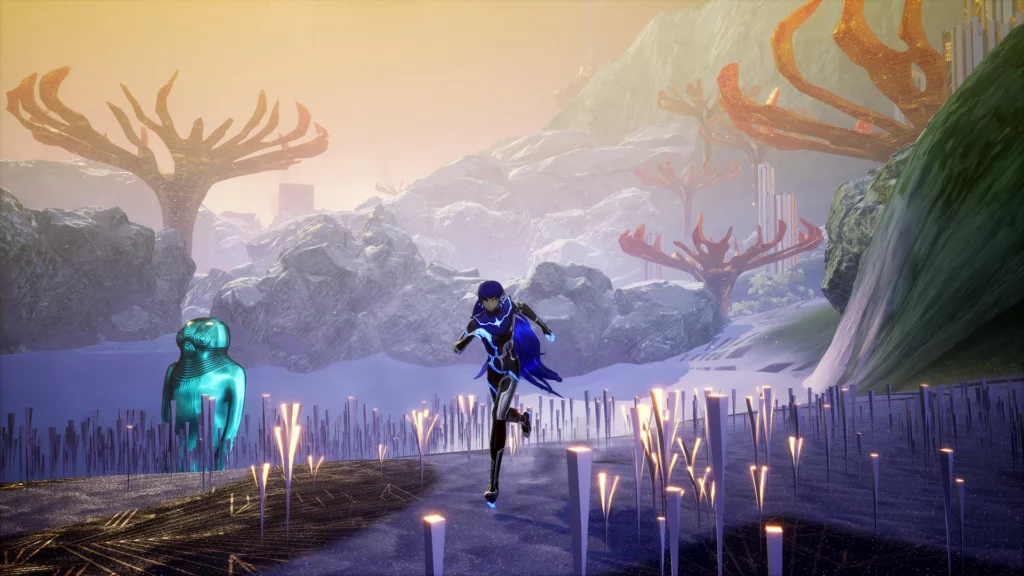
Many of the changes in Shin Megami Tensei V: Vengeance do not replace core functionality from the original game, but instead enhance and complement them. These include new innate skills and Magatsushi Skills for demons, the new arc having a greater focus on having human companions alongside you for the journey, amendments to the auto-battle system, implementation of a ‘Dyad Compendium Fusion’ option allowing you to fuse demons contained within your compendium, Magatsu Rails permitting you to access secret areas within each world, and many, many quality of life improvements. Arguably one of the best considerations, which should have been included in the base game, is the ability to save anywhere. Even on the easiest difficulty settings, the Nahobino losing all their HP in battle is an instant Game Over. Previously, you have only been able to save at the ‘Ley Lines’, this game’s version of a ‘Save Point’. Now, you can save all you want, potentially mitigating that mistaken poor judgment call and wiping out substantial progress. Across the board, many of these improvements and changes are about making the game more accessible and keeping things fresh for players on their second, third or fourth playthroughs. They do a solid job at accomplishing this.
Some of the more substantial content introductions are ‘Demon Haunts’ and the ‘Virtual Trainer’. The former is a place to interact with your demon companions and Aogami at select points throughout the game. For the demons, this takes the form of small gifts, stat boosts, level increases and even the opportunity to learn unique skills. For the Nahobino, this provides semi-regular opportunities to obtain three extra stat points at select points throughout the main story, which is not too shabby if you find yourself in a pinch. The virtual trainer on the other hand is a challenge mode, allowing you to re-challenge boss battles you have already completed either at your current level or a scaled level. These features are seamlessly woven into the gameplay, enhancing the overall experience without feeling like afterthoughts. For newcomers, these additions blend so naturally that they feel like part of the game’s core design. As for the gameplay foundations themselves, they continue to be a little clunky at times but very serviceable.
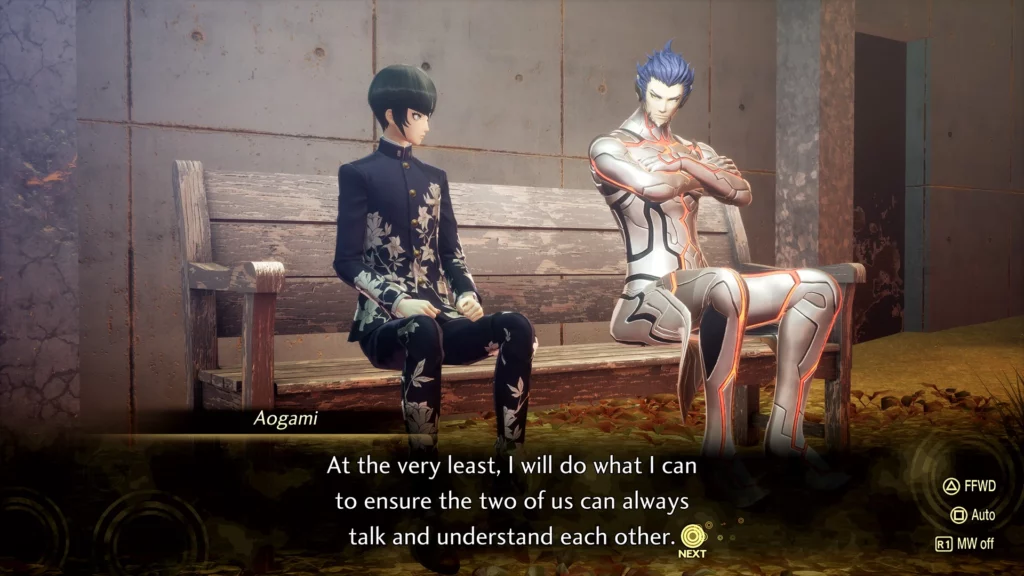
Ultimately, Shin Megami Tensei V: Vengeance may not have the broad appeal of its spin-off series, Persona, with its vibrant visuals, catchy music, and blend of high school life and supernatural battles. However, it compensates with a compelling narrative that now offers two distinct routes, challenging gameplay that requires strategic thinking about your allies, and a perfect balance between the series’ long-standing characteristics and modern game design. The new gameplay elements in this enhanced version are seamlessly integrated, making them feel like a natural part of the experience. Whether you’re exploring this demon-infested Tokyo for the first time or returning for another round, there’s plenty to enjoy for the next generation of demon summoners.
This review of Shin Megami Tensei V: Vengeance was based on a digital PlayStation 5 copy of the game. A code was provided by Australian distributor Five Star Games to facilitate this review.
Shin Megami Tensei V: Vengeance is now available to purchase on the PlayStation 4, PlayStation 5, Xbox One, Xbox Series X and Nintendo Switch.

