
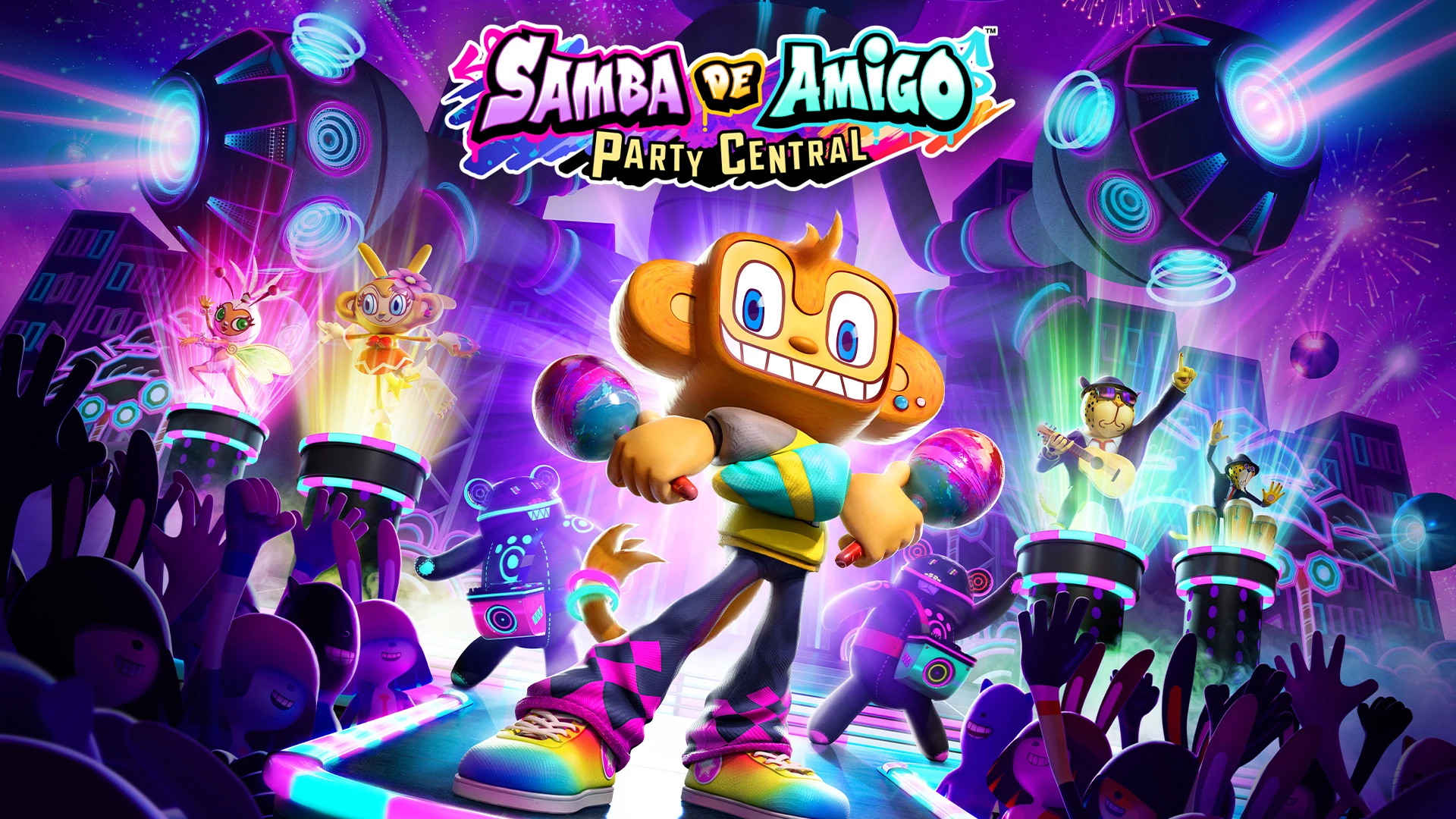
With the mainstream rhythm game market dominated by a few heavy hitters, there is always room for a few more niche offerings that bend the status quo in terms of both gameplay and music offerings. Samba de Amigo was one of the gems of the SEGA Dreamcast era, the first-party developed rhythm game getting players shaking the maracas to the beat of an eclectic mix of tracks from multiple music genres – most notably songs with Latin and Eurodance influencers. This included the game’s iconic theme song Samba De Janeiro by Bellini. After several decades and multiple remakes and re-releases, its sequel Samba de Amigo: Party Central has been released on the Nintendo Switch. This should be a cause for celebration, and in some ways, it is. However, while it does some aspects right, the game instead feels like it has lost much of its soul in trying to appeal to the mainstream – finding little to differentiate it from being more than a fitness-style game with rhythm aspects.
Rhythm gameplay in Samba de Amigo: Party Central at its core is very similar to the original games, where you use body movements, button presses or analog stick movements (whichever is your preference) to hit notes as they move from the centre of the screen to the outside, with each track having multiple difficulty options to determine how overwhelming the number of notes can get. Essentially, DDR but there are six notes and they are arranged in a circle. It is a system that has worked well for the game, and the style has even been adapted into other SEGA-published games, including the trio of Persona dancing spin-off games. It is also presented well in Samba de Amigo: Party Central, although what doesn’t work so well is everything new thrown into the classic experience, which in some parts enhances, but more often than not hinders the experience. Adding an extra layer of fitness gameplay / “motion control”, each song has several pose-matching and specialty challenges. While they may go slightly better when playing with motion controls instead of the controller, I found these to be jarringly implemented, aided by at times poor responses to your body movements.
SEGA has provided a range of gameplay modes to choose from when starting, and while all ultimately lead to relatively similar gameplay experiences, each has its different quirks – from StreamiGo! mode where you complete missions and challenges to become a top-tier streamer, to multiple online multiplayer modes, to the ability to just pick up the game and play your favourite songs.
Difficulty levels were also a mixed bag. Whilst some songs were easily playable straight out of the gate at their highest difficulty settings, others had surprising spikes of difficulty even at lower levels. The star rating system however is a better indicator to go by, although even then difficulty fluctuated more than a little bit. On the note of songs, they were… an okay mix of tracks, although instead of favouring Latin and Eurodance music as the previous game did, surprisingly underrepresented demographics in 2023, they favoured a range of popular music from the 90s and 2000s, with a surprising omission being Bellini’s Samba de Janeiro. Granted, music licensing for games is a beast in itself, but it is nevertheless a shame not to see the original song rejigged for this new instalment. As a child of the 90s, pretty much all the music on offer is easily recognisable from discos or general listening, however, while the classic songs were enjoyable, the remixes of some songs were very hit or miss – unfortunately, more on the miss side when compared against their original versions.
Both built-in and through a range of downloadable content, SEGA has also chosen to include tracks from some of their music-based properties including Space Channel 5, Rhythm Thief and (while not explicitly a rhythm game) Sonic the Hedgehog and Yakuza. Good choices of songs among all crossover games, and I cannot help but wonder whether this would be better served as a game celebrating SEGA’s 65th anniversary in 2025, instead being an amalgamation of the games that defined the publisher and developer over the years.
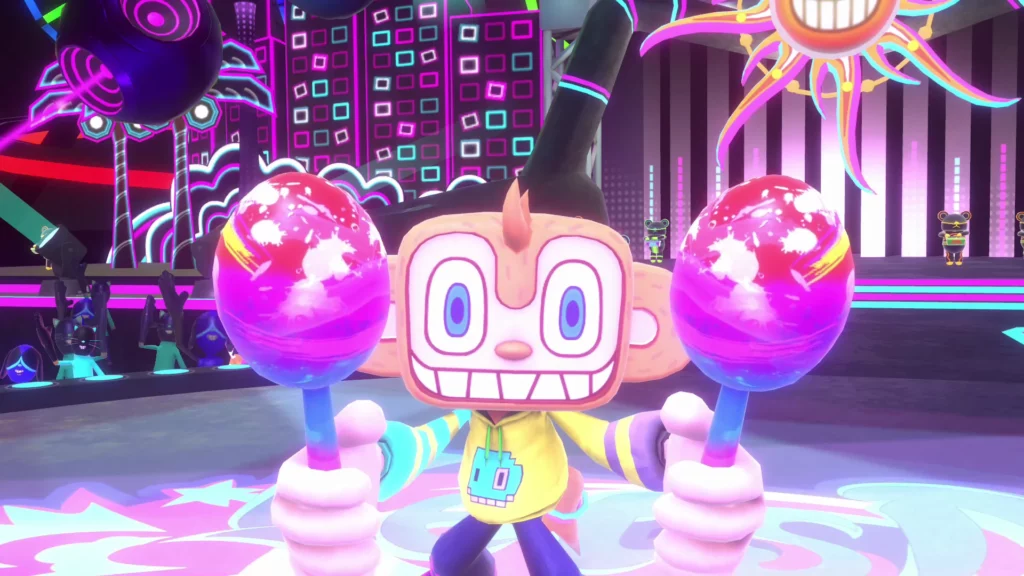
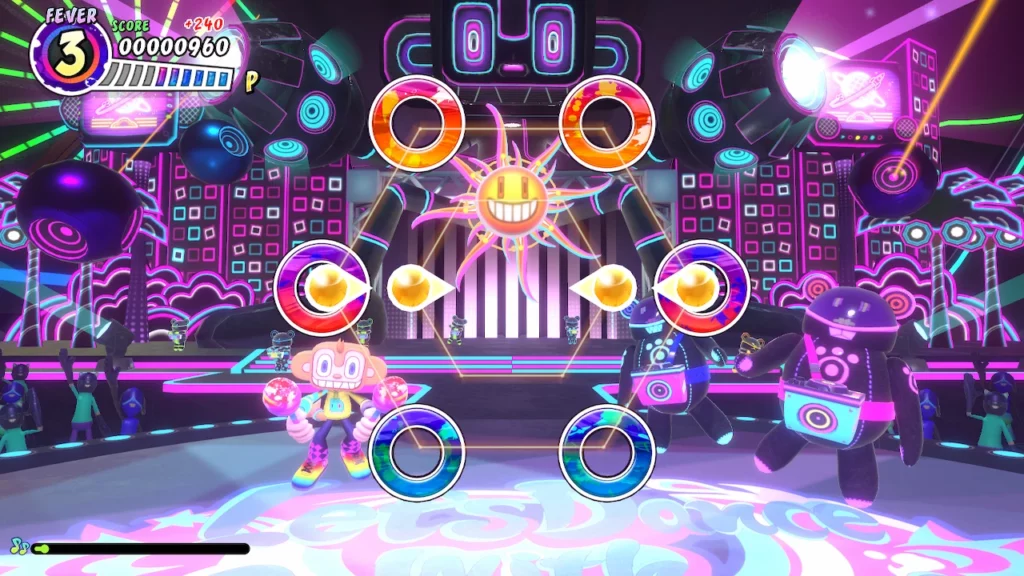
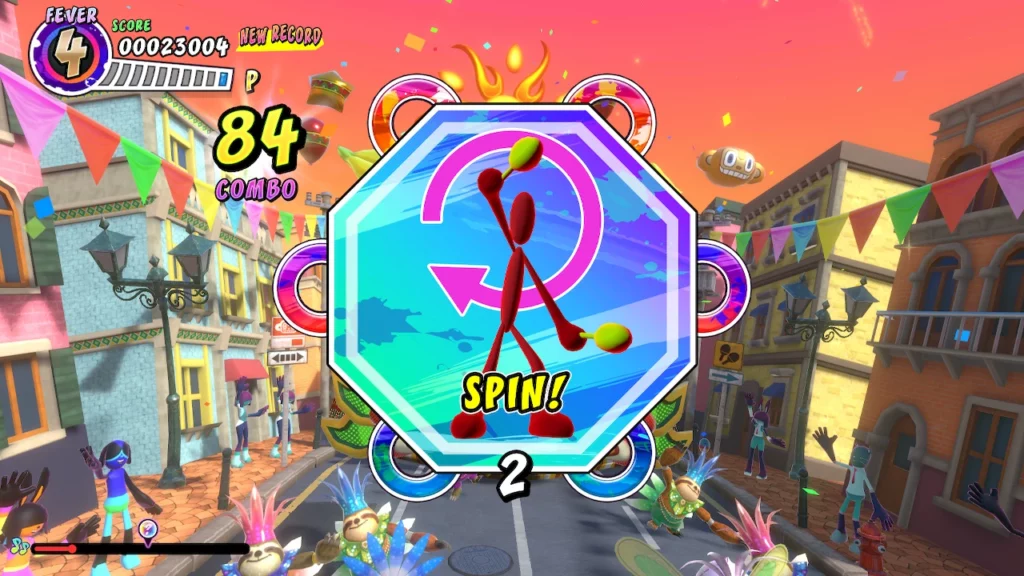
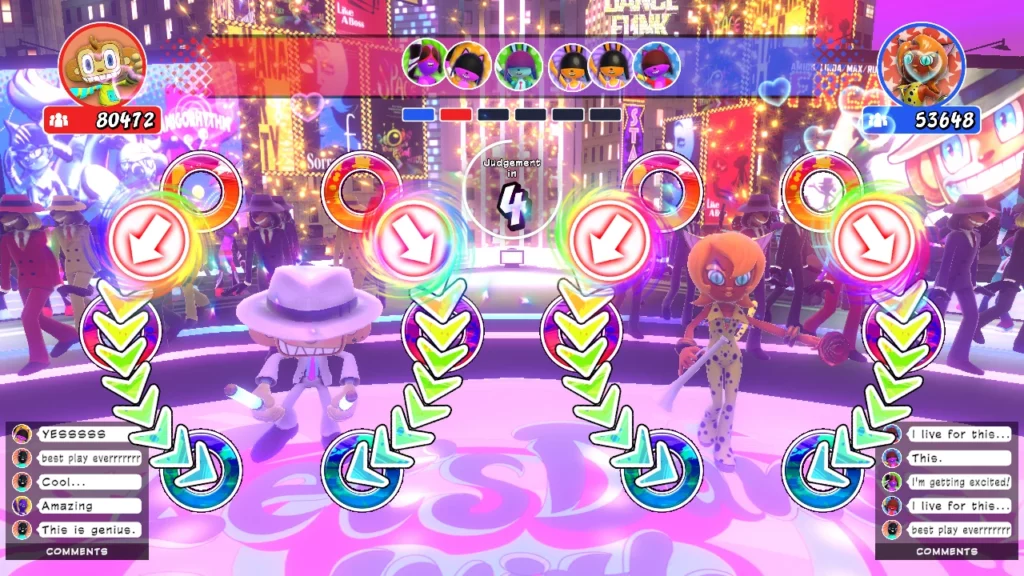
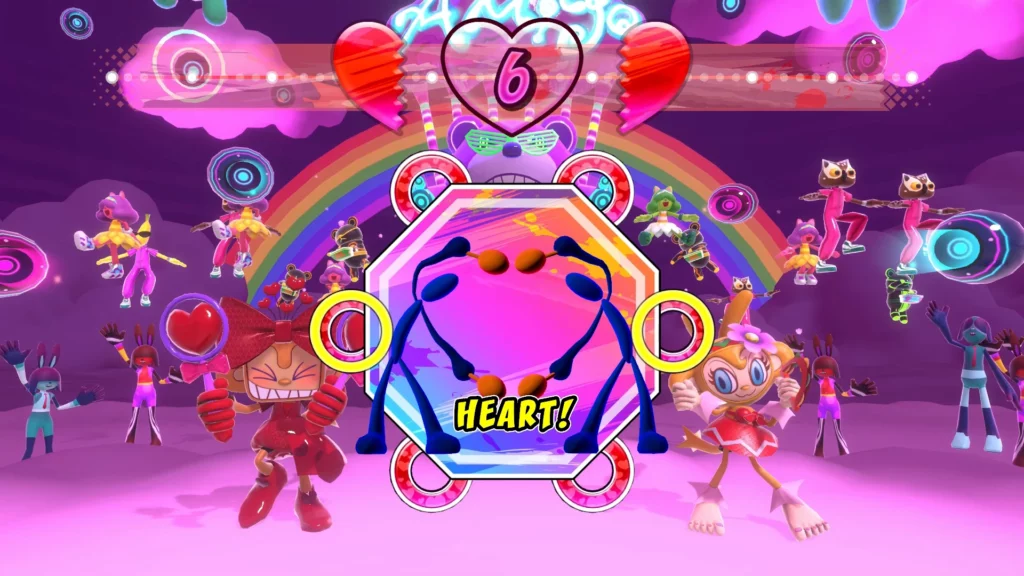
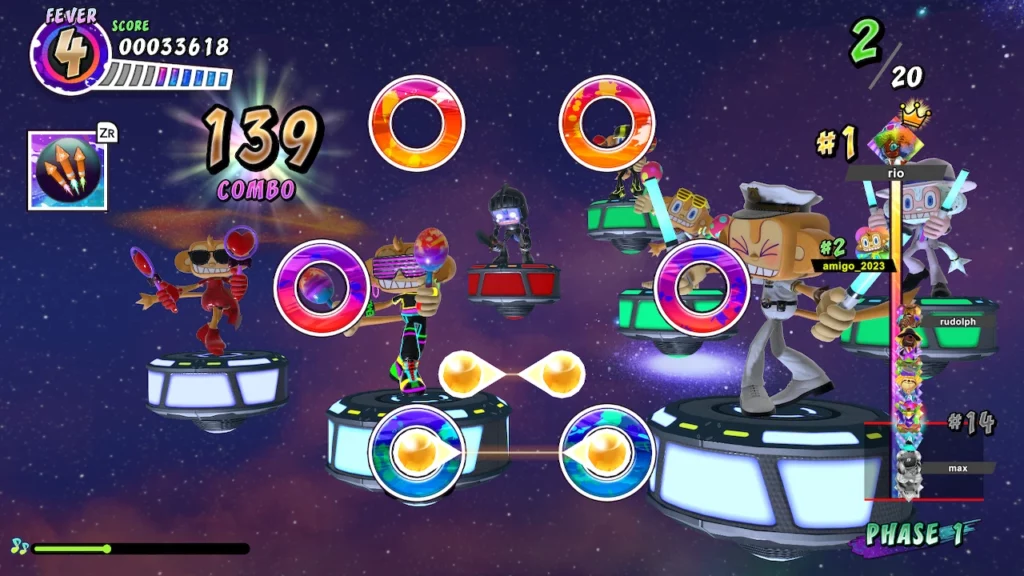
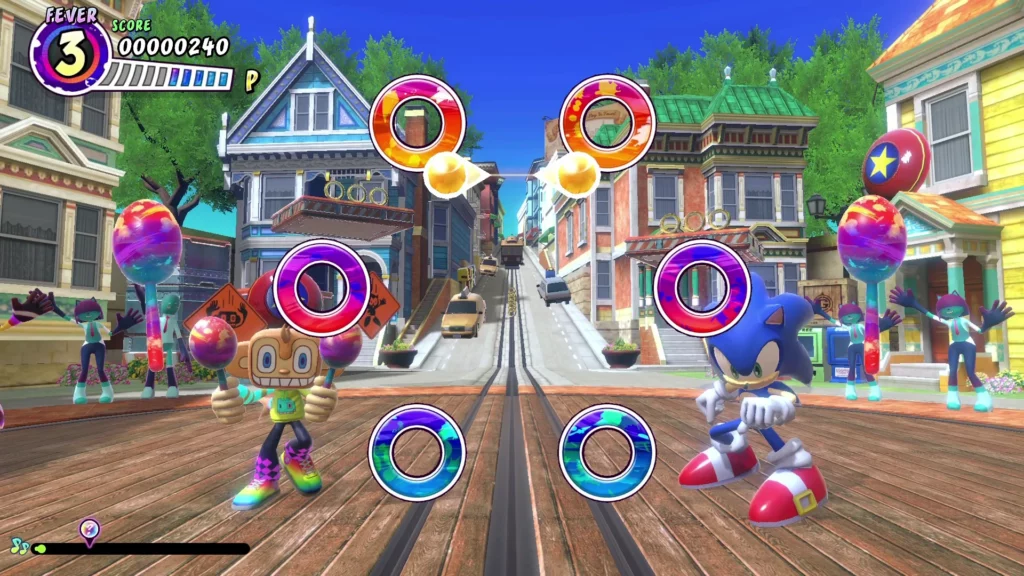
While they have gone for a different theming this time, a more futuristic sci-fi cityscape environment over Carnaval do Rio de Janeiro, they don’t lose any of the intensity the original game offered. Instead, they up the ante with the support of more than 20 years of improvements in consoles. Each rhythm stage takes place on a stage with the titular character Amigo (now customisable) in addition to backup dancers and a medley of background characters. Surprisingly while I would usually find this over-the-top wackiness distracting, they do it in a way where my attention was never drawn away from the note rings at hand.
Samba de Amigo: Party Central is sadly not the genre-defining experience that its predecessor was in the late ’90s and early 2000s. With solid foundations to rhythm gameplay hindered by fluff that doesn’t enrich the experience, an average, cliché song list that could have been better and poor responsiveness to motion controls (or at times, even physical controls entered), it is a very average and forgettable experience overall that could have benefited from a more refined gaming experience, and maybe better drawing from SEGA’s game library for tracks. But all this said, I think there is a place in the market for the Samba de Amigo franchise in the future!
This review was conducted on a Nintendo Switch version of Samba de Amigo: Party Central, with a review code provided by Australian distributor Five Star Games for the purpose of this review.

