

The 90s were a golden era for animated feature films. While Disney was pushing out many iconic works that still hold strong today, other producers such as 20th Century Fox were also thriving with their own distinct offerings – one such being Anastasia in 1997. A musical historical fantasy, its content was arguably heavier than what its competitors were throwing out – although I distinctly remember, as a 90s kid, the focus being heavily on the musical numbers – and they accomplished this with some amazing casting, a solid narrative, and yes, some iconic songs. While taking much longer to get a musical adaptation, Anastasia the Musical finally opened on Broadway in 2017, and, almost a decade later, opened for its inaugural national tour – another collaboration between producers John Frost for Crossroads Live (one of the country’s major musical producers) and Opera Australia – a relationship which has brought us many memorable tours over the years, including Anything Goes and My Fair Lady, among others. After quite a spate of modern, less-traditional musicals gracing QPAC’s theatres as of late – including Beetlejuice the Musical, MJ the Musical, and The Book of Mormon – how does this more traditionally styled modern musical fare? Read on to find out in my full review of Anastasia the Musical.
For anyone coming in cold, the premise sits in the years following the Russian Revolution, with the Romanov family executed and a rumour circulating that the Tsar’s youngest daughter somehow made it out alive. In Leningrad, a street sweeper named Anya, who remembers nothing of her life before, is drawn into a scheme by two chancers: the con man Dmitry and the former courtier Vlad, both of whom have their eye on the reward the exiled Dowager Empress has posted for news of her granddaughter. From there it becomes a journey west to Paris, shadowed by a Bolshevik officer named Gleb Vaganov, who has been handed the job of putting the rumour to rest for good. While based on the 1997 film, it is not a completely direct adaptation. The roles of Grigori Rasputin and his cartoonish sidekick Bartok are completely removed, with a different antagonist added to the mix. Terrence McNally’s book doesn’t try to shoehorn in elements to keep younger audiences entertained, and, to be honest, the narrative didn’t need it as a film. The musical is arguably the richer for it.
That said, if you are attending a performance for the first time, I would offer one piece of advice. While you can pick up the narrative relatively easily, and watching the film is by no means required, a bit of background research on the Romanov family and Grand Duchess Anastasia Nikolaevna of Russia may be worthwhile before you take your seat. The show assumes a working familiarity with who these people were and what happened to them, and it moves through much of that groundwork quickly. It also leaves a few things deliberately unaddressed: how Anya survived at all, and where the amnesia came from, are never really accounted for. For what it is worth, I found the two acts evenly matched rather than one carrying the other, with the sombre Russian material and the brighter Parisian material each playing to their own strengths. My one real gripe with the writing is that some stretches of dialogue land a little flat against the weight of everything else happening on stage.
Where the production sits on its own history is the part I suspect will divide audiences most. This version of events presents the Romanovs as a warm, faultless family cut down by fanatics, with little acknowledgement of the conditions and imperial excess that helped bring the revolution about in the first place. If you want an interrogation of that period, this show isn’t offering it. What Anastasia the Musical is genuinely interested in is identity, memory, and belonging, and it handles those with real sincerity. The thread that stuck with me longest was displacement: the sense of people building lives in a city that isn’t theirs, carrying a home that no longer exists in any recognisable form. That, more than the royal mystery at its centre, gives the show its staying power, and it also benefits most from the decision to strip out the supernatural elements the film leaned on.
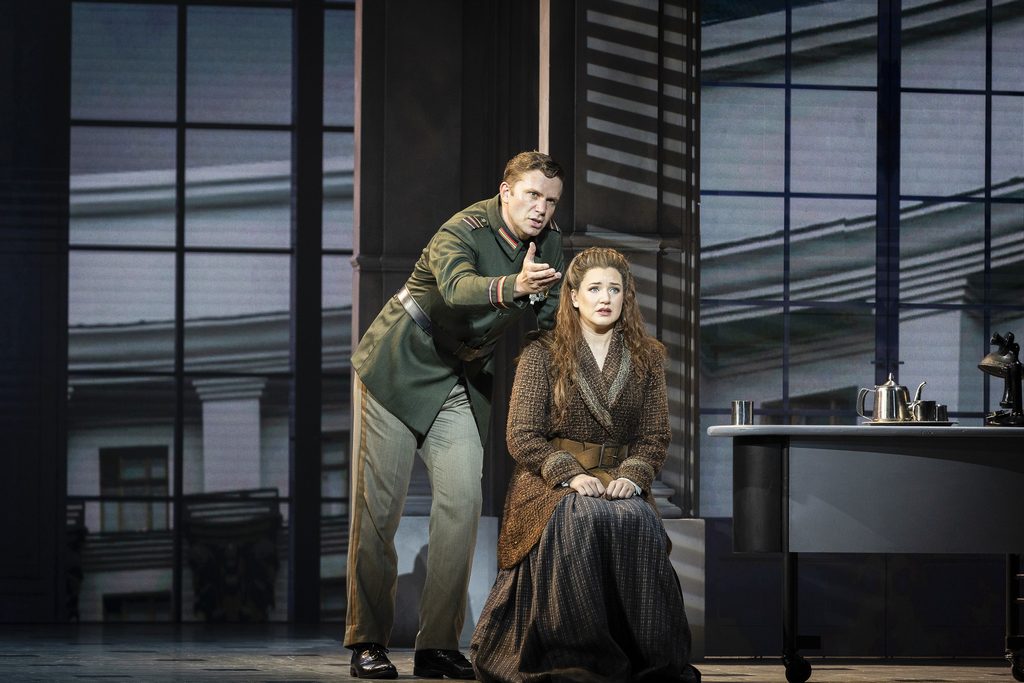
Onto the casting, which is strong across the board. The primary trio of Anya, Dmitry, and Vlad is well explored, and the dynamic between them is strong, with their relationships shifting believably as the stakes change. Robert Tripolino and Joshua Robson both capture the complexity of Dmitry and Gleb, respectively: the former finding the point where a man running a scam starts believing in it, and the latter wringing genuine internal conflict out of a role that could easily have been a straightforward obstacle. My one wish is that more development of Gleb as the new character created for the musical adaptation would have been welcome. It feels like they just ran out of time to craft his character in the adaptation, and he’s the one given the least room to breathe, which is a shame given how much Robson is clearly capable of doing with him.
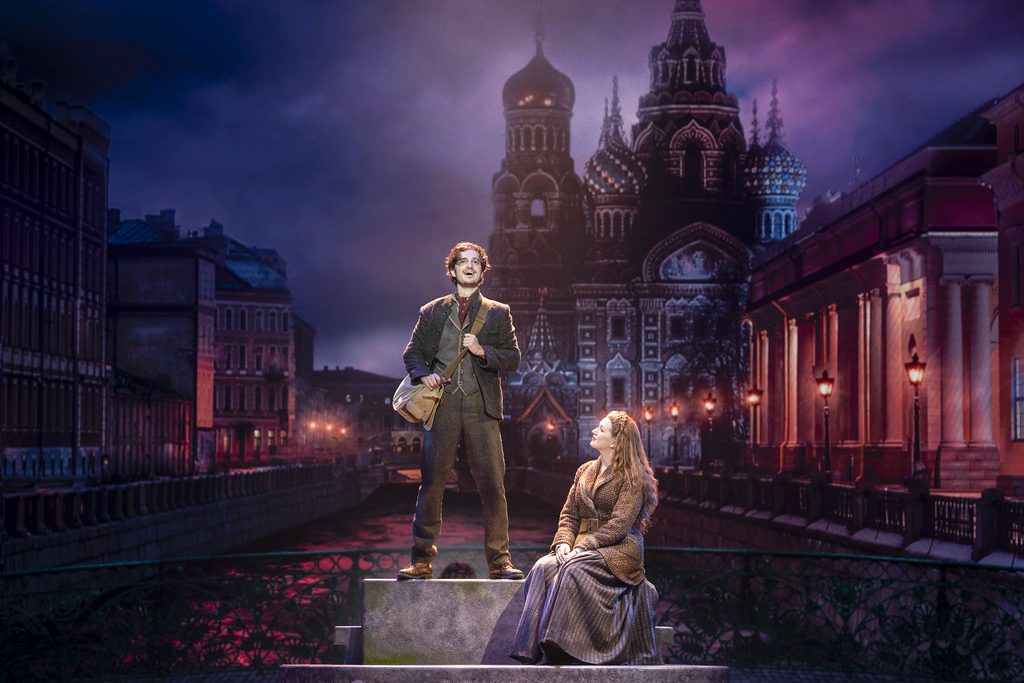
At the centre of Anastasia the Musical is Georgina Hopson as Anya. I had the opportunity to work with Hopson more than a decade ago, when she performed as Mary Poppins in The Arts Centre Gold Coast’s (now HOTA) production of Mary Poppins the Musical, so I have followed her career with some interest since. She has a real way of encapsulating every character she portrays, and Anya is no exception. Her early lightness and goofiness make the character fun to be around before the show asks anything heavy of her, and when it does, she has the clarity to carry it. Once Upon a December, built around the music box and the fragments of memory it unlocks, is the more delicate of her two big moments, while Journey to the Past closes the first act with everything she has.
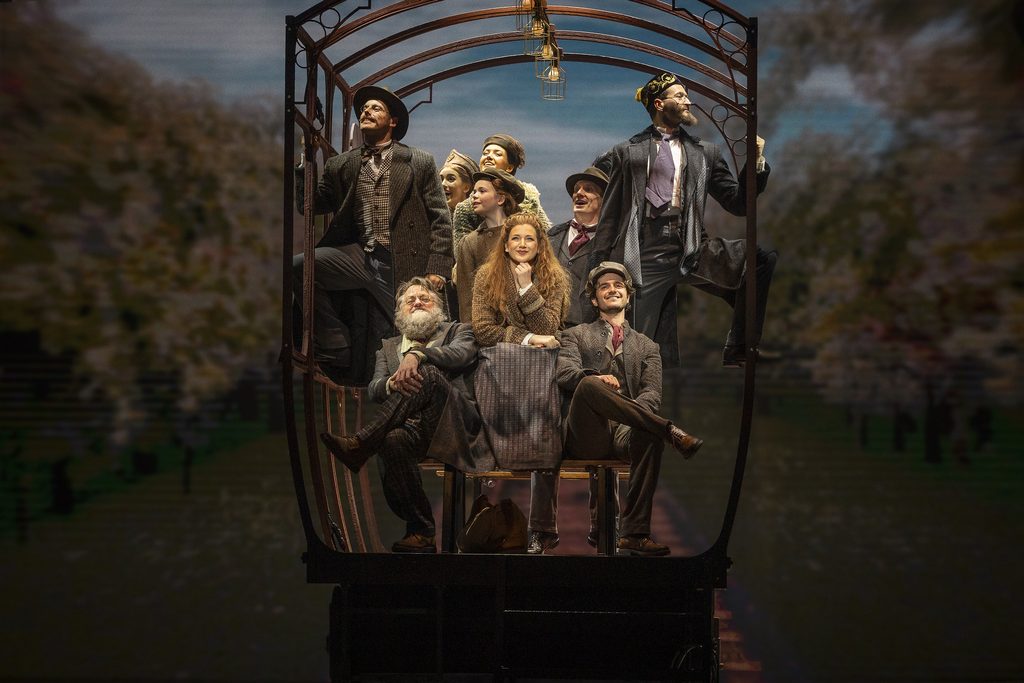
The supporting company around her is where much of the show’s warmth comes from. It was nice to see Rodney Dobson take on a bigger role in a production, having seen him in smaller (but still lead) roles in musicals before. He really has range and versatility on stage, working as both a bad influence and a mentor in the first act before switching into comic mode in the second. That second act is also when Rhonda Burchmore arrives as Countess Lily, and the lift in energy is immediate. Her scenes with Dobson, including their duet The Countess and the Common Man, were more than a delight, and Land of Yesterday is her showcase. Nancye Hayes brings the gravitas as the Dowager Empress, a woman worn down by grief and by a procession of imposters, and her scenes opposite Hopson are where the emotional payoff finally lands. Burchmore and Hayes continued to show why they are stage legends of Australia. Credit is also due to the ensemble, whose vocal blend and character work are excellent throughout, and to Elliot Baker, whose solo in Stay, I Pray You is one of the evening’s emotional highlights.
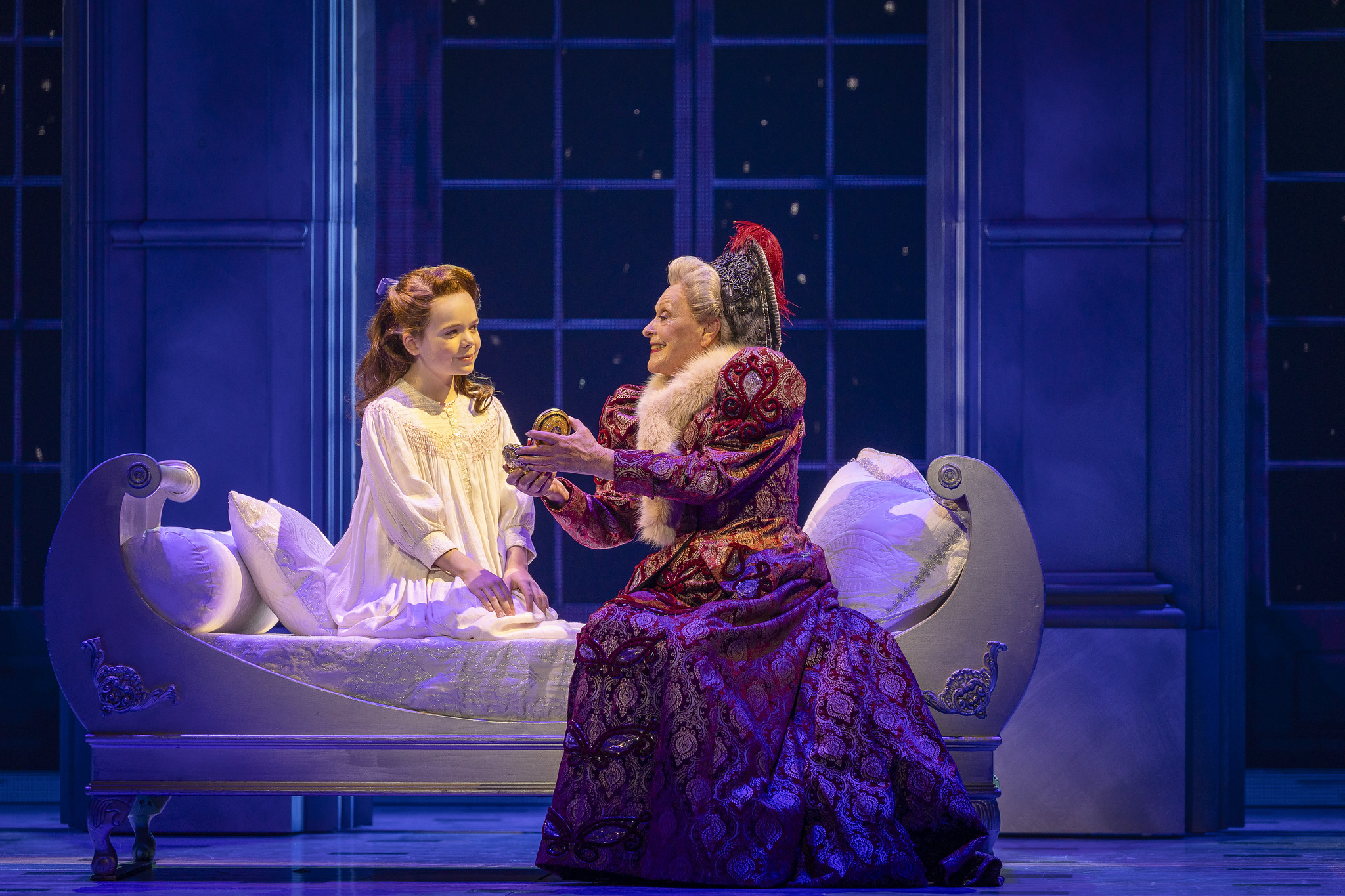
Then, of course, you have the role of Little Anastasia, who, despite not being a major child role in tandem with the likes of Matilda the Musical or Annie, does have a presence throughout the show – even if vocal moments are limited. The role is shared by four girls – Eva Boldery, Kalina Kita, Harvey Rose McCelland and Holly Murray – with Boldery serving in the role on opening night. Nothing else to say but she was perfect in the role.
The show’s music features many of the key songs from the film’s soundtrack, including Once Upon a December, Journey to the Past, and A Rumor in St. Petersburg, among a suite of newly created songs. They were all strong overall and suit the scenes, the characters’ emotions, and the events unfolding, with some noticeable tone shifts as the acts transition from Russia to France. What surprised me most is how well the new material holds up. Adaptations like this often pad out a film’s handful of songs with filler that nobody remembers on the way home, and that isn’t the case here. In My Dreams, In a Crowd of Thousands, Close the Door and Stay, I Pray You all earn their place. This is a choral and dramatic musical well before it is a dance one, and the principals are sung with a uniformity of strength that you don’t always get.
However, and it sounds strange writing this for a musical, it felt at times that the music bogged down narrative progression a little bit. I wouldn’t have minded more time spent on normal narrative delivery. There are points where the show still has genuine information to convey, whether that is who somebody is or what they actually want out of all this, and handing that work to another number rather than letting the characters simply talk to each other can leave the storytelling treading water for a bar or two. It is not a fatal issue by any stretch, and the songs themselves are consistently good enough that you forgive it in the moment, but a little more room for the book to operate on its own terms would have tightened things up considerably.
Staging was relatively simple, all things considered, but effective, with the combination of lighting and amazing costuming encapsulating the environments Anya is thrust into. Linda Cho’s costume work carries a lot of the load, moving from the jewelled opulence of the imperial ball to the drabness of Leningrad and then to the colour and flair of 1920s Paris, with Anya’s own progression doing quiet character work along the way. Now, while I am often critical of the heavy use of digital screens in musical theatre, mainly because in many shows the visual assets tend to wreck immersion by being a bit low-quality or not up to current-day standards, perhaps because Anastasia the Musical is a relatively new production, they do a tremendously good job of immersing audiences in the world. At least from where I was sitting, Aaron Rhyne’s video design framed Alexander Dodge’s set nicely and made the world feel much bigger than what we were seeing on stage. Furthermore, transitions between locations are mostly seamless, which matters enormously in a show that covers this much ground.
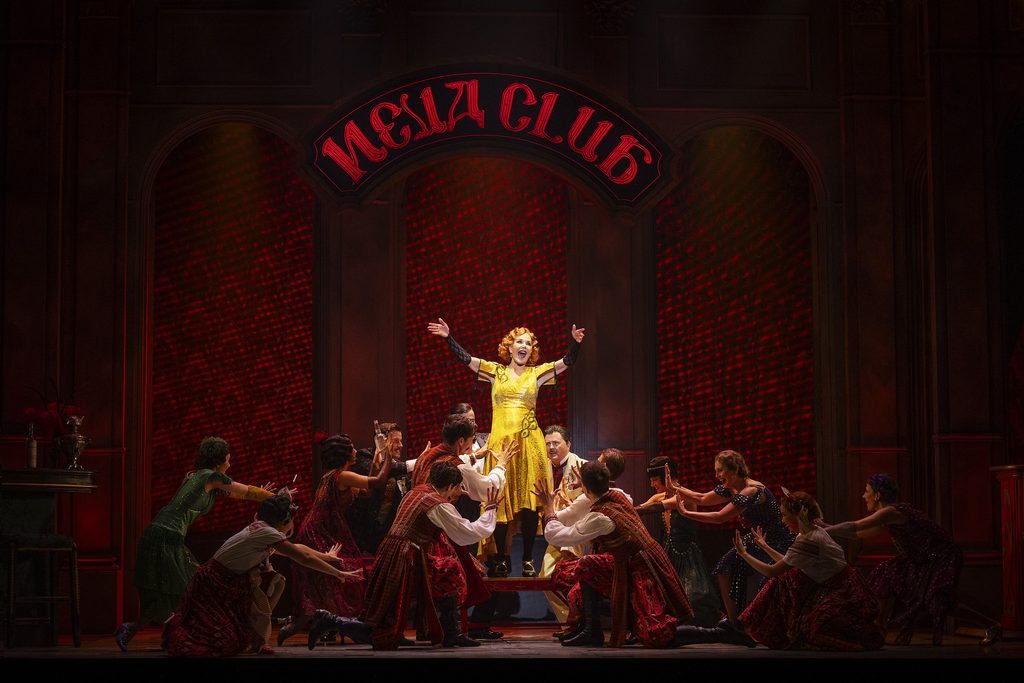
So, to return to the question I posed at the top: how does a more traditionally styled modern musical fare after the run of louder shows QPAC has hosted lately? Very well indeed, and arguably it benefits from the contrast. This is traditional musical theatre done exceptionally well. Anastasia the Musical has very strong foundations as part of the 1997 film, and, in my opinion, manages to surpass its source material by cutting content that hasn’t aged well or that felt like it was tackling insecurities about being an animated feature film that could draw a lot of children. What is left is a genuinely lovely piece of theatre, anchored by Hopson and sung beautifully from top to bottom, dressed in the kind of design work that finally makes a case for digital projection in this space. There are a few flaws that could be nitpicked, from an underdeveloped Gleb to songs that occasionally crowd out the story they are meant to be telling, but none of them undoes what the production gets right. For the kids of the 90s who wore the VHS out, and for anyone walking in with no history with it at all, Anastasia the Musical shines as both a standalone piece and as an adaptation. Brisbane has it last, and it is well worth catching before it closes.
Final Score for Anastasia the Musical
We would like to acknowledge John Frost for Crossroads Live, Opera Australia and Cinnamon Watson Publicity for tickets to attend the Brisbane opening night performance of Anastasia. Ticketing information for the remainder of the Brisbane season can be found on the production’s official website.

