
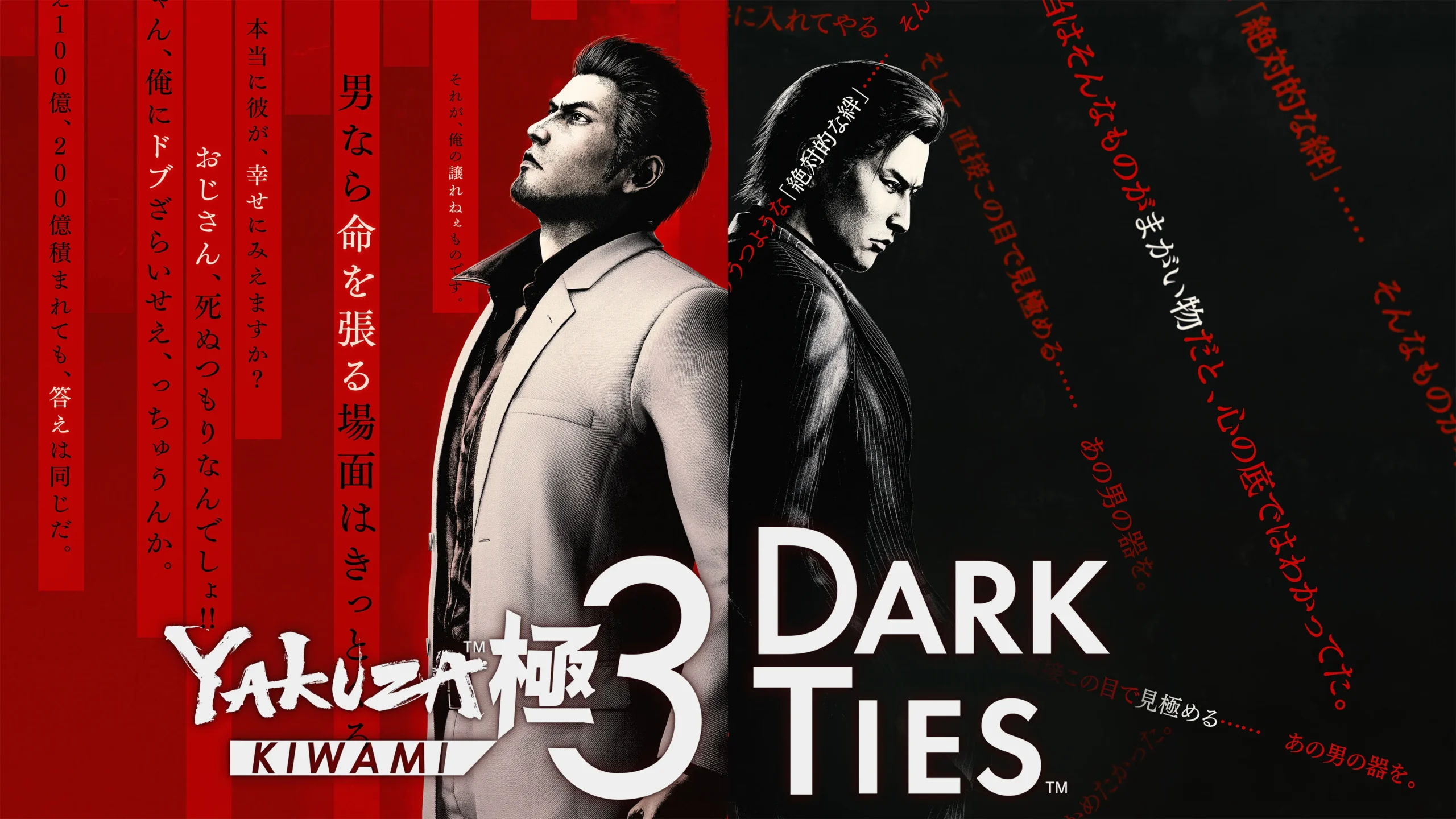
Everyone would have that one “first” Yakuza / Like a Dragon game they started with, and given the storied and expansive history of the action RPG franchise, the starting point may not be the chronological origin. For some, you might have started when the Like a Dragon rebranding kicked in internationally; others may have started with the very first Yakuza, and others may have gone through the narrative with the newer, chronological prequel. For me, my initiation came in the seventh generation when Yakuza 3 first released on the PlayStation 3, and given the poor availability of its predecessors on the PlayStation 2 in Australia, was reliant on extensive bundled vigenettes summarising the events of the first two games – to give me the basis on what led up to the events of Kazuma Kiryu and Haruka Sawamura departing the Japanese city for Okinawa. Having experienced well over a dozen releases in the series since then – both new releases and remasters – including many in just the past year… does Yakuza Kiwami 3 & Dark Ties hold up to both its original release and modern-day releases… or is it a case of a bit much too quickly? Read on to find out in this review!
Yakuza Kiwami 3 opens with Kiryu doing what the series never lets him do for long: live quietly. He is in Okinawa, trying to build something stable at Morning Glory with Haruka and the kids. Instead of neon nights and clan politics, he faces sun, sand, and mundane worries. These include reassuring his young wards that they truly have a family at Morning Glory. That peace doesn’t last. The orphanage land attracts powerful people willing to twist arms for profit. Kiryu is drawn between the relaxed streets of Okinawa and the familiar chaos of Kamurochou. The situation escalates from local friction to a wider conspiracy, showing why Kiryu can never escape the Tojo Clan’s reach. This story foundation aligns with the base game, but also adds a separate storyline: ‘Dark Ties’. This is more than just branding. The remake bundles in a separate prequel campaign starring Yoshitaka Mine, which sits beside the main tale and adds perspective on a lore-important character.
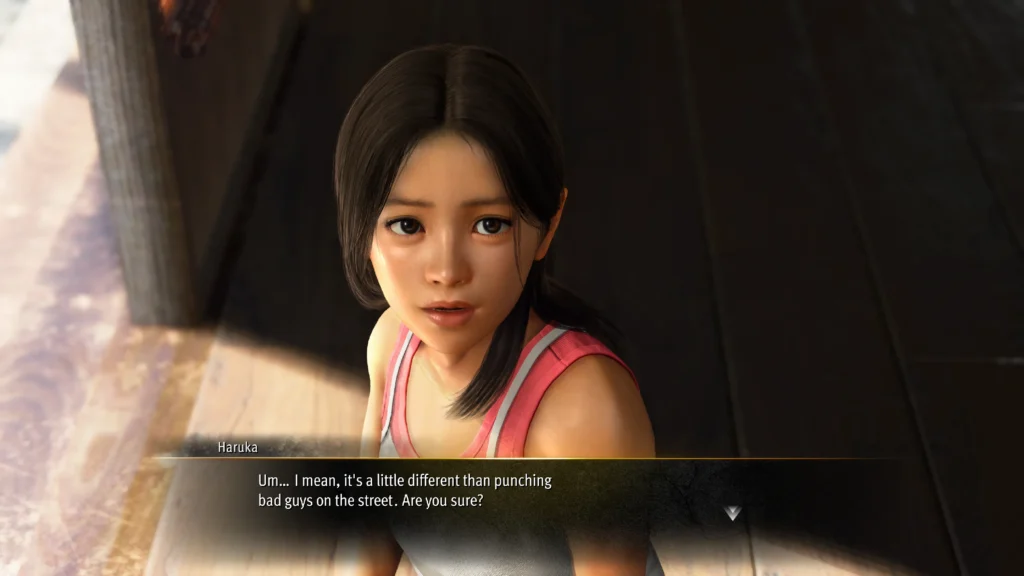
What still shines brightest, even after all these years and all these sequels, is how well this chapter understands Kiryu when he is not throwing punches. The heart of Yakuza 3 has always been found family, and the remake leans into that with more chances to spend time at Morning Glory in ways that feel personal rather than perfunctory – mainly through a few additional gameplay features. Instead of the orphanage simply being a place Kiryu returns to between plot beats, it becomes the emotional anchor, giving the kids more presence and making Kiryu’s protectiveness feel earned rather than assumed. Those smaller moments also make the dramatic swings hit harder, because the stakes stop being abstract power plays and become about keeping a home intact, one that Kiryu clearly treats as his real legacy.
Of course, there have been a few controversies over omissions and inclusions that may rightfully raise eyebrows. This is particularly true around the substories – with a considerable decrease in the number of these questlines available throughout the main campaign, including those focusing on themes such as transgenderism, which caused hot debates online, and a range of other offerings that, frankly, could have been retained for posterity’s sake without presumably requiring too much additional effort. Ultimately, depending on what you loved about the original, these swaps and omissions can feel like smart curation or like the game sanding off some of its rougher or memorable edges, and that tension hangs over the remake long after the opening hours.
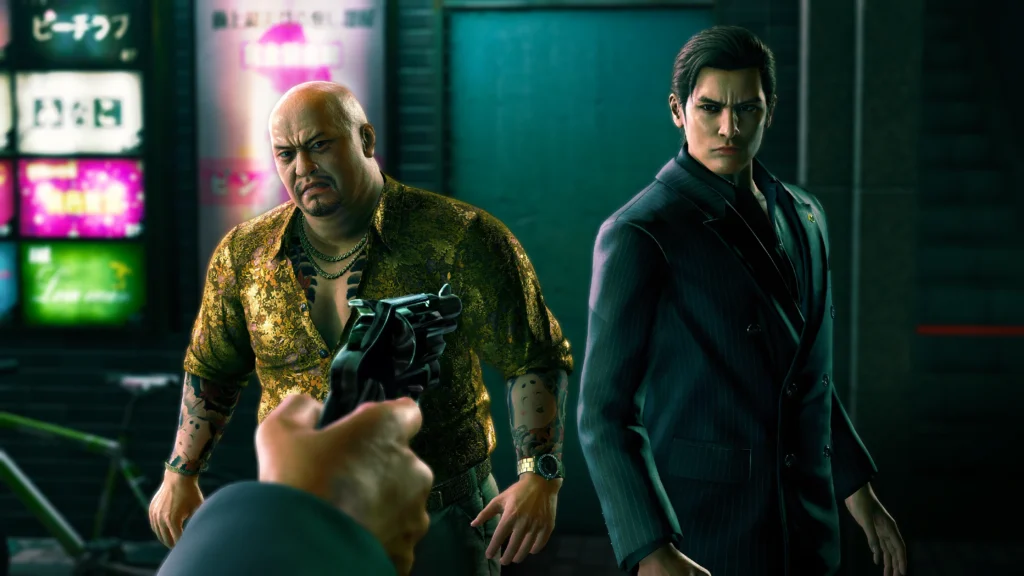
Visually, Yakuza Kiwami 3 is at its best when it leans into contrast. Kamurochou’s familiar glow still pops on modern hardware, and the Okinawan setting often looks gorgeous, if not showing its age, when contrasted against the Hawaii locales in most recent instalments. But ultimately, both offer a cleaner, sharper sense of place than the PS3 era could ever manage. That said, the remake is not consistently flattering. Bright daylight can push the image into an overcooked look, where saturation and exposure sometimes feel a touch too aggressive, and there are moments where textures or lighting sit oddly against the otherwise modern sheen. The bigger sticking point, though, is character expressiveness. In certain scenes, faces can read a little stiff, as if the performance is doing the heavy lifting while the models lag a half-step behind. Also, just a few elements, such as changing Kiryu’s default Okinawa outfit, raised an eyebrow.
On the audio side, the series’s trademark mix of sincerity and swagger remains intact in Yakuza Kiwami 3. The soundtrack does a lot of quiet work, shifting from warm and nostalgic to harder and edgier energy once the city drama and combat kick into gear. Voice acting is where things get more subjective, especially since I played primarily in English. Since the release of Like a Dragon, and at least since the original Yakuza in the 2000s, SEGA has once again offered English audio alongside the traditional Japanese audio. The English audio works fine, especially since some of the actors have had plenty of time to refine their characters. Switching to Japanese, you can tell the tone feels more consistently anchored, with a natural cadence that better suits the atmosphere. If you are going down the English-dubbed route, the karaoke songs are once again localised into English, with the new songs solid and not as heavily auto-tuned, unlike those in Like a Dragon: Infinite Wealth, which were downright cringe.
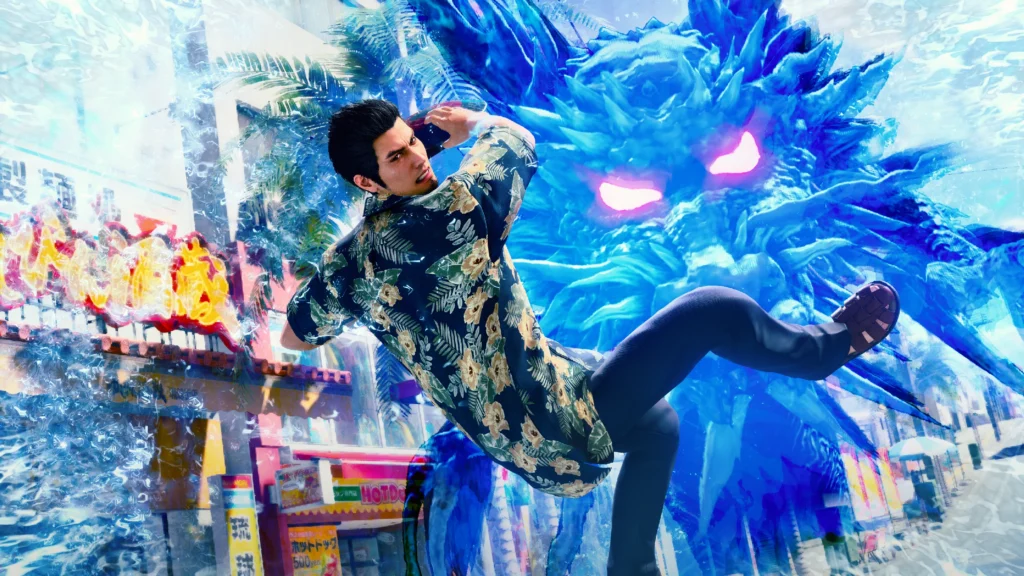
The gameplay of Yakuza 3 Kiwami: Dark Ties is a mixed-hybrid of what the original release had to offer, with some of the modern conveniences that have defined more recent instalments in the series – although I won’t deny, after all the releases this past year, wanting to go back to the RPG approach of the new chapters. Street fights snap along at a quicker pace than the original Yakuza 3 ever managed, and both random encounters and bigger set-pieces are staged with the kind of momentum you would associate with later entries, where positioning and tempo matter as much as raw damage. The core loop is familiar and comfortable, blending light and heavy attacks, grappling, and strategically placed objects to add complexity to the usual button-mashing affair. Some players will find it consistently kinetic, while others will still bump into stretches where enemy behaviour turns fights into a spongy loop of the same few moves – especially given the new accessibility feature means you can choose to just have the game automate combo button presses for you.
That push toward modernity in Yakuza Kiwami 3 also shows up in how Kiryu is framed mechanically: he is not confined to just one move list with a few situational tricks like the original; he is effectively two identities, depending on what the scene demands. Dragon of Dojima is the dependable Kiryu classic, built around clean fundamentals and the sort of reliable toolkit that feels right in tight alleyways or one-on-one clashes, while Ryukyu is the flashier crowd-control stance that leans into spectacle and utility. Ryukyu’s appeal is how playful it is: different button inputs call up different weapons and effects, letting you pivot from crowd management to burst damage in a way that buys well into that quirkiness of the series as a whole. The downside is that the same theatricality can push into silliness, because the weapons can feel like they materialise from thin air, and regardless of what option you choose, it can all feel like button-mashing over time.
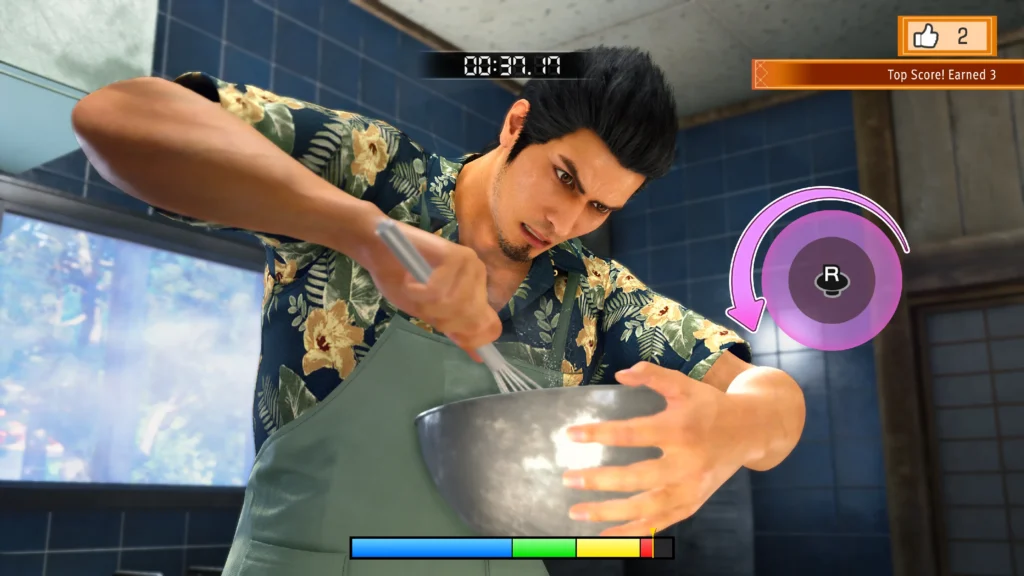
Morning Glory is not just set dressing here; it is a genuine pillar of the experience, and it might be the most important reason the remake’s side content feels like it belongs rather than filling space. The Daddy Rank system, and the routine of taking care of the orphanage through chores and minigames, gives you a steady menu of small activities like homework help, cooking, farming, fishing, spearfishing, bug catching, sewing, and the other little tasks that turn Kiryu’s quiet life into something you can actually engage with. Each child’s bonding arc lands as a story beat, giving specific faces and voices to the stakes that the main plot keeps threatening to bulldoze – and was something that has felt missing in all past releases that revolve even somewhat around Morning Glory. It is mostly optional in the sense that you can push the story forward without living in the orphanage menu, but it also has the power to become the main reason you keep returning between chapters.
Bad Boy Dragon is where the remake lets itself go a bit feral, and it is either exactly the sort of excess you want from RGG Studio or the point where you start checking your watch. The mode is built around recruiting and upgrading a gal gang, splitting them into squads, and throwing them into large-scale brawls and raids that lean hard into spectacle, with bike travel between hotspots adding a light sense of roaming structure. When it hits, it is goofy fun, a big colourful diversion that scratches the itch of watching systems collide in ridiculous ways, and it gives you something with its own cadence that is not just another one-on-one fight in an alley. When it does not, the repetition creeps in, locations can start to feel reused in spirit, if not literally, and it is very much a Yakuza-coded optional mode that RGS has incorporated into each of their titles in some way or form. Around it all, the familiar series staples are still there in force, from karaoke and arcades with retro titles (including a suite of Game Gear titles which was cool to say the least) to bowling, darts, pool, gambling and more – trademark experiences in the Yakuza series, many of which were foundational in Yakuza 3.
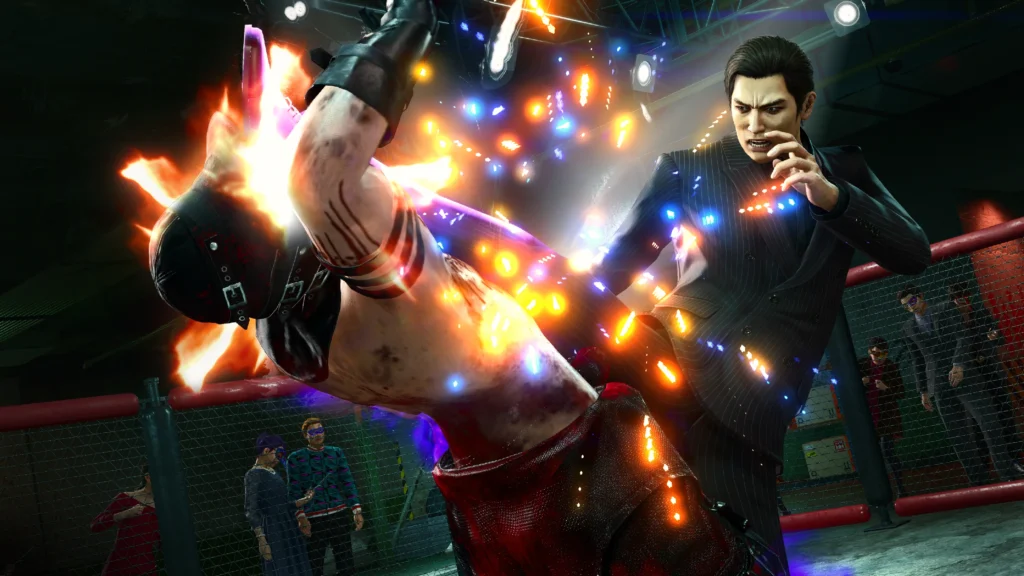
As one of the big draws to this remake, to the point it was included in the title of the game, Yakuza Kiwami 3’s Dark Ties experience feels like the smaller second half experience to your playthrough, not a fully-fledged experience you may find on par with the original, but a companion piece. Putting Yoshitaka Mine in the spotlight gives the story a colder, more cynical edge, positioning him as a foil to Kiryu’s stubborn belief in found family and responsibility, and the tighter runtime helps it stay focused even when it is doing character work. Mine is also simply fun to play – and while not evolving the combat options too much, it has a fast-paced flair and is aesthetically pleasing. The friction point is structural, because chunks of story progression can be gated behind Damage Control busywork that reads as padding rather than pacing, but the package redeems itself hard with Hell’s Arena, a tough dungeon-crawling experience with roguelike elements to it.
Should you go with Yakuza Kiwami 3: Dark Ties or go with Yakuza 3 Remastered, which is also available on PC and certain consoles – at least for now. My answer is… it really depends, and both are valid options. While the original release does have an air of jank to it, which can be a little difficult to embrace once you have played the refined newer releases in the series, it was also the flagship experience that is strong in its own right, and is the foundation of many of the series’s flagship experiences we know today. But if you are after a refined experience, with new plot beats that could be considered chronologically consistent with all future releases, and an English dub as a language option, Yakuza Kiwami 3: Dark Ties is likely the better option. Or do what I did and go with both… both are good.
After starting my journey with Yakuza 3 in that PS3 era, when I had to rely on recap vignettes to fill the gaps and, quite frankly, went from start to finish confused, it was satisfying to return to this chapter in a form that is far more playable and comprehensible, with a few mod-cons to boot. Yakuza Kiwami 3 & Dark Ties still hit hardest when it slows down, letting Morning Glory and Kiryu’s quiet responsibilities give real weight to the violence and politics waiting in the wings, even as the remake’s modernised combat and streamlined systems keep things moving. Not every choice lands, with substory trims, occasional stiffness in presentation, and an English dub that can fluctuate from scene to scene and character to character, but most of the core spirit remains intact. With the extra perspective and replayable bite offered by the Dark Ties arc, this package feels less like a rushed sprint and more like a fuller revisit, one that holds up against both its original release and the series’s newer offerings. But does it hit the same level of memorability as some of the other remakes and offerings? Probably not, and that could very well come down to a bit of over-saturation in releasing these chapters so quickly one after the other… not that I would say no to having the zombie spin-off re-released….
Final Score for Yakuza Kiwami 3 & Dark Ties
This review was conducted on the PlayStation 5 version of Yakuza Kiwami 3 & Dark Ties, with a digital copy being provided by Australian distributor Five Star Games to facilitate this review. Playtesting was conducted on a retail PlayStation 5 Pro launch unit.
Yakuza Kiwami 3 & Dark Ties is now available to purchase on the PlayStation 5, Xbox Series X|S, Nintendo Switch 2 and Windows PC.

