
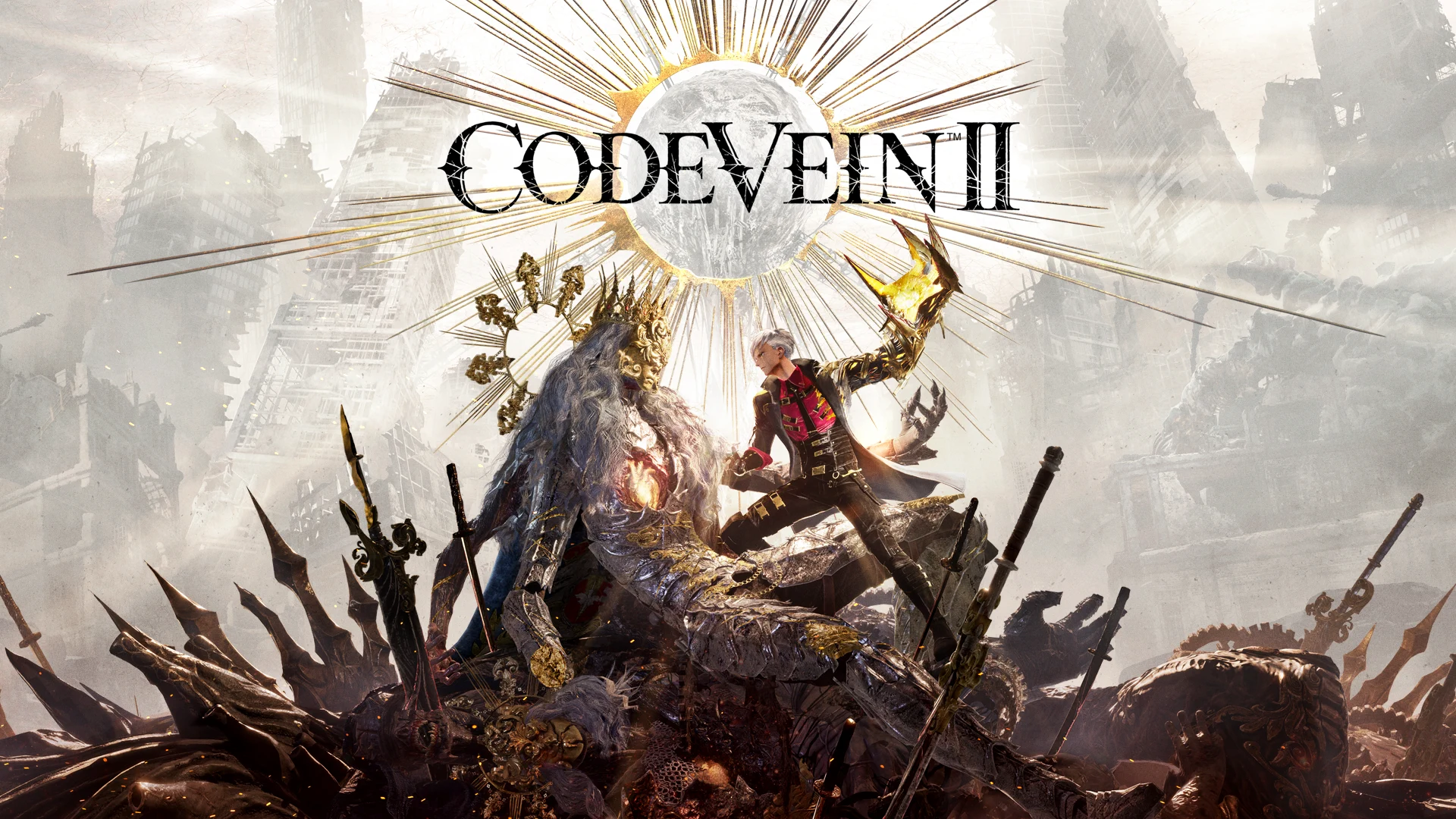
Ever since the release of FROM Software’s Souls series, many more games have been released across the spectrum – from indie to “AAA” – which purport to be the “Soulslike”, essentially making difficulty and, to varying degrees, what some players perceive as unfair mechanics (such as unpredictable enemy behavior or sparse checkpoints), a core part of the game experience. After publishing most of the Souls series themselves, Bandai Namco Entertainment took its own stab at the soulslike action-RPG genre with Code Vein in 2019. I’ll be frank in saying I don’t recall much about the game outside of its general aesthetic, comprehensive character creation tools, and that it very much earned its title of being an ‘anime soulslike’ for those two elements alone. Now, in 2026, in a post-Elden Ring era that arguably set the standards for a “AAA” soulslike experience, Bandai Namco Entertainment and its Bandai Namco Studios development division revived the series with Code Vein II. Does this second attempt shine above its predecessor, or deliver a world that is half-baked? Read on to find out in our review of Code Vein II for the PlayStation 5, Xbox Series X|S and Windows PC!
Code Vein II wastes little time showing that it is reaching for something a little bigger than being a simple follow-up, replacing the original game’s tighter structure for a broader, open-world frontier that you can explore – very much in a similar vein to Elden Ring – albeit arguably more controlled and story-driven. Once you get past a sizable exposition dump in the very first cut-scene which I’d argue could have been more intuitively spread out through the opening hour, the game’s main narrative quirk is quickly unveiled, as you traverse two eras separated by a century, chasing answers as to why the world collapsed, chasing answers as to why the world collapsed, finding important items to accomplish your goals in the present time, and testing the boundaries of paradoxes with your decisions and actions. The whole experience is wrapped in a lavish gothic, post-apocalyptic-themed package, backed by a memorable group of partners and a custom character who is very much your proxy in the game as the silent protagonist.
Code Vein II leans into a more direct, chapter-driven structure built around the people you meet in the past. You fight alongside figures who are treated like legends in the present, for better or worse, learn what they lost and what they are trying to protect, then return to the current timeline to confront what they have become. When that loop works, it gives the game a rare kind of punch, because boss fights stop feeling like random monsters of the week and start feeling like consequences. The themes are earnest and very on-brand for this kind of JRPG-adjacent experience: bonds, regret, sacrifice, and the uncomfortable idea that saving someone might still require hurting them. Alas, as mentioned above, the opening hours can feel like a wall of terminology and scene-setting, and on many occasions, I was either left confounded by what was going on or just wanting to get into the gameplay itself. Stick with it, though, and the strongest moments come when it trusts you to connect the dots and lets its characters carry the emotional weight.
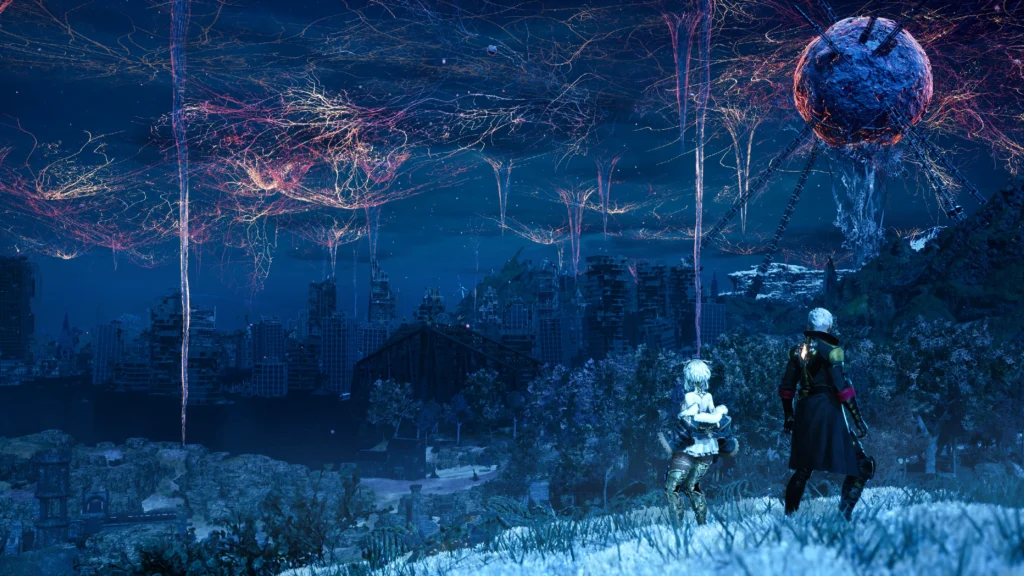
With its gothic, post-apocalyptic, anime style, Code Vein II doesn’t struggle to make a first impression, and while it does have swaths of open areas to run around in and, to some degree, a minimalist architectural style for non-narrative events, it is thematically apt. You face toppled cityscapes, macabre shorelines, and a few vistas that have that Demon’s Souls / Elden Ring level of charm that makes you want to whip out the photo mode and take a shot. With the time-jumping system in place, allowing players to see the game world at two different points in time – the juxtaposition is typically engaging but also underwhelming, with copy-pasted assets sometimes implying that the world hasn’t changed much over time – but at the same time simple changes to water toxicity can lead you to easily misjudge between shallow water and ‘stepping here will insta-kill you’ water. Ultimately, I feel more could have been done on the design front, but it is more than solid aesthetically.
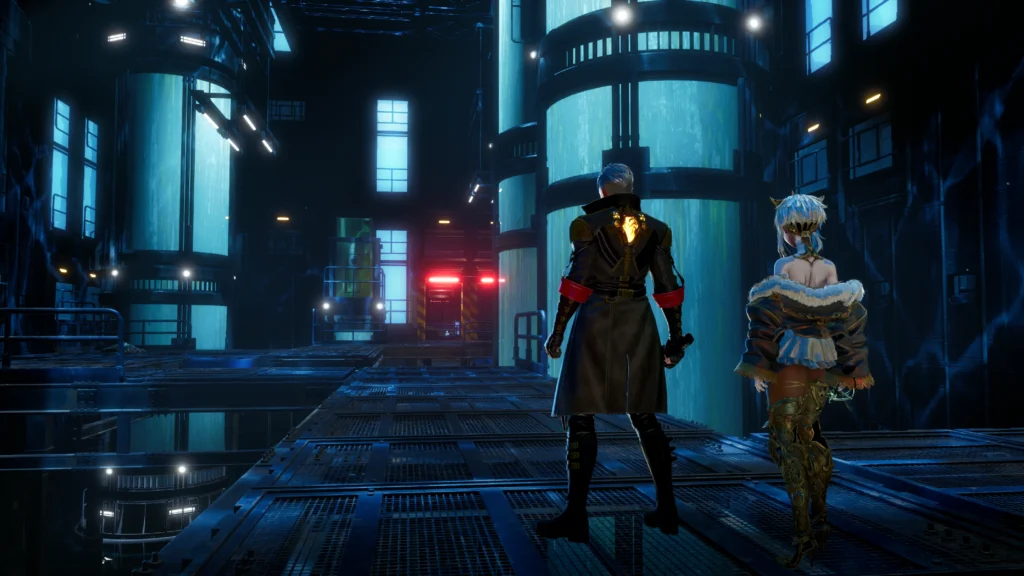
One area where the game’s sense of identity is impossible to miss is its character creation suite. Whereas soulslike games do on occasion feature character creation systems, often minimalistic and just enough to provide an interesting back-of-the-head to look at for a few dozen hours, Code Vein II invites meticulous tinkering with face and body sliders, layered outfit components, multiple character voices for that peak grunt, and even accessories that are both diverse in number and positioning options. It is the kind of editor that makes the fantasy of building your own Revenant Hunter feel like a feature on its own, and it pairs nicely with the game’s moody aesthetic and generous photo tools… provided you don’t use the creation system to form a reality clipping monstrosity (Unless that is your thing).
The presentation and customisation are complemented by an audio package that consistently does the heavy lifting when the story swings for big emotions. The soundtrack knows exactly when to lean into softer motifs during quieter stretches and when to amp things up with more intense, operatic backings for boss encounters, often elevating scenes that might otherwise feel like standard genre melodrama. Voice work generally holds up well, too, with performances that give conviction to the cast’s heightened tone, whether you are playing with English or Japanese audio. Yet if anything undercuts the audiovisual quality of the game, it is not the character creation tools, or the music or acting, so much as the occasional technical roughness that can pull you out of the moment, particularly when visual pop-in or stutters show up at the worst possible time.
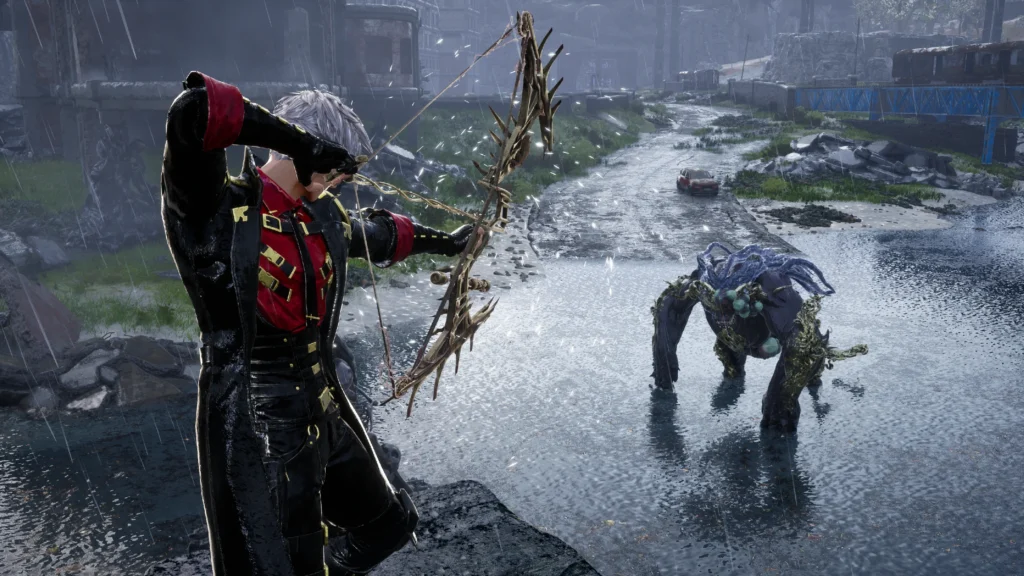
Combat is ultimately the make-or-break for a game like Code Vein II, and it is slightly more of a mixed bag. At a glance, it speaks fluent soulslike gameplay with the usual suspects: stamina management, cautious spacing, and that loop of always weighing up whether to trek back to use your “Haze” towards levelling up or upgrading your weapon, or feeling confident in your ability to trek forward and deal with the great unknown. While I’d argue that some of your success comes down to luck, especially with shields being a bit more trivial than in the Souls series (at least for me, I’m the first to say I am not great at parrying), there is a surprising amount of complexity in some fights that leave a satisfying feeling when you work out the kinks and master the mechanics. All your flashy attacks and defensive abilities are tied not just to your stamina, but ichor – something that you have to earn mid-fight using special equipment known as Jails – mighty summonable weapons that both deal damage and restore ichor at the cost of being slower to wield and leaving you more vulnerable. That means the game is constantly nudging you into a rhythm of strike, drain, spend, reset, rather than letting you turtle behind a safe pattern forever. When it clicks, you are not just reacting to animations; you are planning the next few seconds, deciding whether to cash out on Formae abilities or hold back so you have the resources to survive the next burst of pressure.
There is quite a bit of flexibility around build-crafting, namely that you don’t have to start the game with a build already in mind, and have a lot of flexibility through the Blood Code system – with levelling up just serving as a stat boost. Blood Codes function like flexible classes, setting your core stats and letting you swap roles without the usual commitment and regret that other RPGs thrive on. From there, you are layering weapon types, Formae slots (special abilities), defensive options, Jails, boosters, and the occasional special piece of gear that can radically change how you move or survive. For the most part, a particular weapon type is not exclusively required for a specific boss, so you can choose to stick with what you know (for example, I found the halberd type to be to my liking) or change things up whenever you need. The one downside is that the UI and terminology can make the whole system feel more intimidating than it actually is, and the tiny text left me getting off the couch every time I wanted to learn the quirks of a particular weapon or skill.
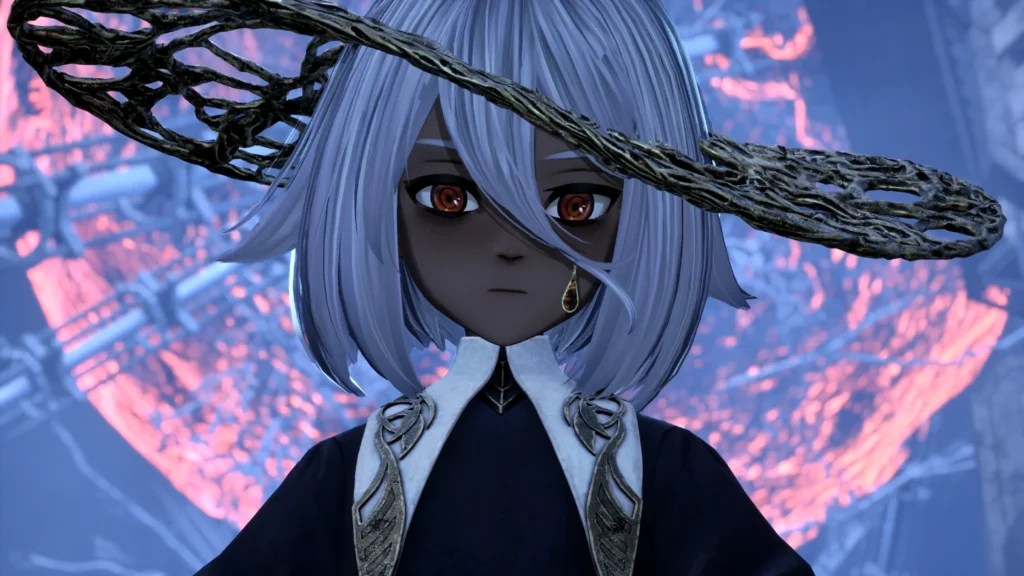
The partner system is the other pillar that shapes how Code Vein II handles, even if, depending on your playstyle, their usefulness may vary from a clutch in the more dangerous moments, to an enemy punching bag, as they serve as a tank. But ultimately, your companion is not just someone tagging along, as they can draw aggro, contribute meaningful damage, and most importantly, they offer a second-wind revive that keeps fights moving even when you make a mistake. You can also assimilate them into you for buffs if you want to go through the game “lone wolf”, but the “always-on” assistance is clearly the default intent, and it changes the tension in a way that will either feel welcoming or a little too forgiving depending on what you want from a soulslike.
While there are many strengths in the foundations of Code Vein II, other elements I felt hindered the overall experience, leaving it only “good” rather than “excellent”. The first is that the open-world environments are pretty bereft of danger at most points, and I found myself dying from a misstep more than facing waves of enemies more often than not – and even with the world exploration, more of the smaller, non-narrative story-driven dungeon experiences would have been welcome. To some extent, it was the bosses that really kept the gameplay feeling rich and complex, even if you overlevelled a little bit, as trekking to them didn’t always feel as rewarding. Add in the recurring technical hiccups and occasional camera chaos in tight arenas, and you get a game whose best moments feel fast, stylish, and confidently system-driven, but whose worst moments remind you that precision combat is only as satisfying as the stability and clarity supporting it.
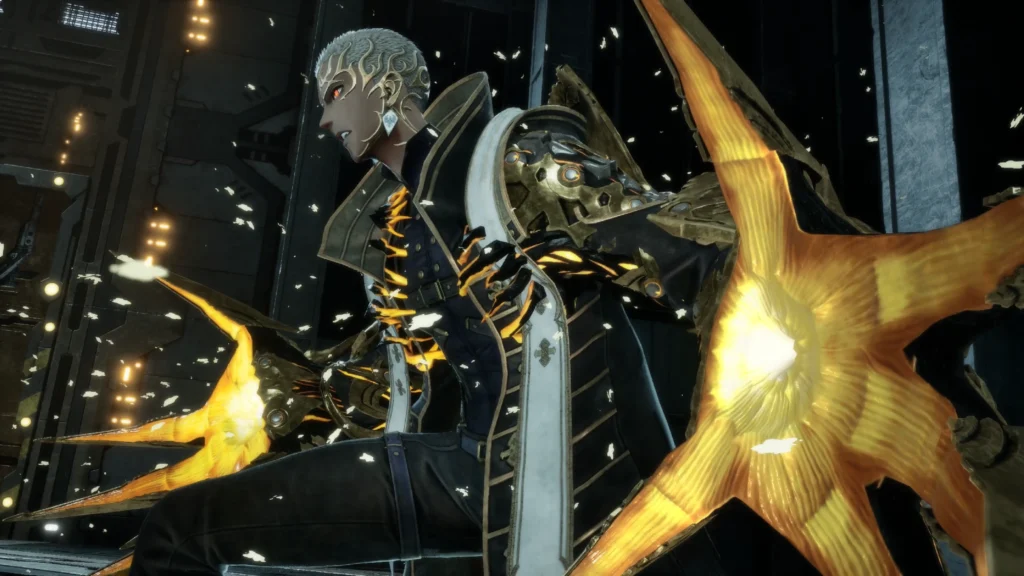
So, in a genre that has continually grown, Code Vein II proves Bandai Namco Entertainment’s second swing at its own franchise has some good personality and mechanical ambition, avoiding being just another “anime soulslike” experience. Its time-split structure and cast do enough to keep the journey moving, while the soundtrack, presentation, and especially the build systems deliver the game’s best highs once you push past the early noise. The trade-off is that the open world can feel more like a wide corridor, and performance and camera hiccups tend to show up right when the game is asking for precision. If you can meet it on its own terms, it is a stylish, systems-driven action RPG with a rough edge that isn’t groundbreaking but offers a solid dose of challenge and fun – even if I was just left wanting more content to discover in its world.
Final Score for Code Vein II
Playtesting of Code Vein II was conducted on a digital PlayStation 5 copy of the game, with all testing on a PlayStation 5 Pro retail model. A review code was provided by Bandai Namco Entertainment to facilitate this review.
Code Vein II is now available on the PlayStation 5, Xbox Series X|S and Windows PC.

