
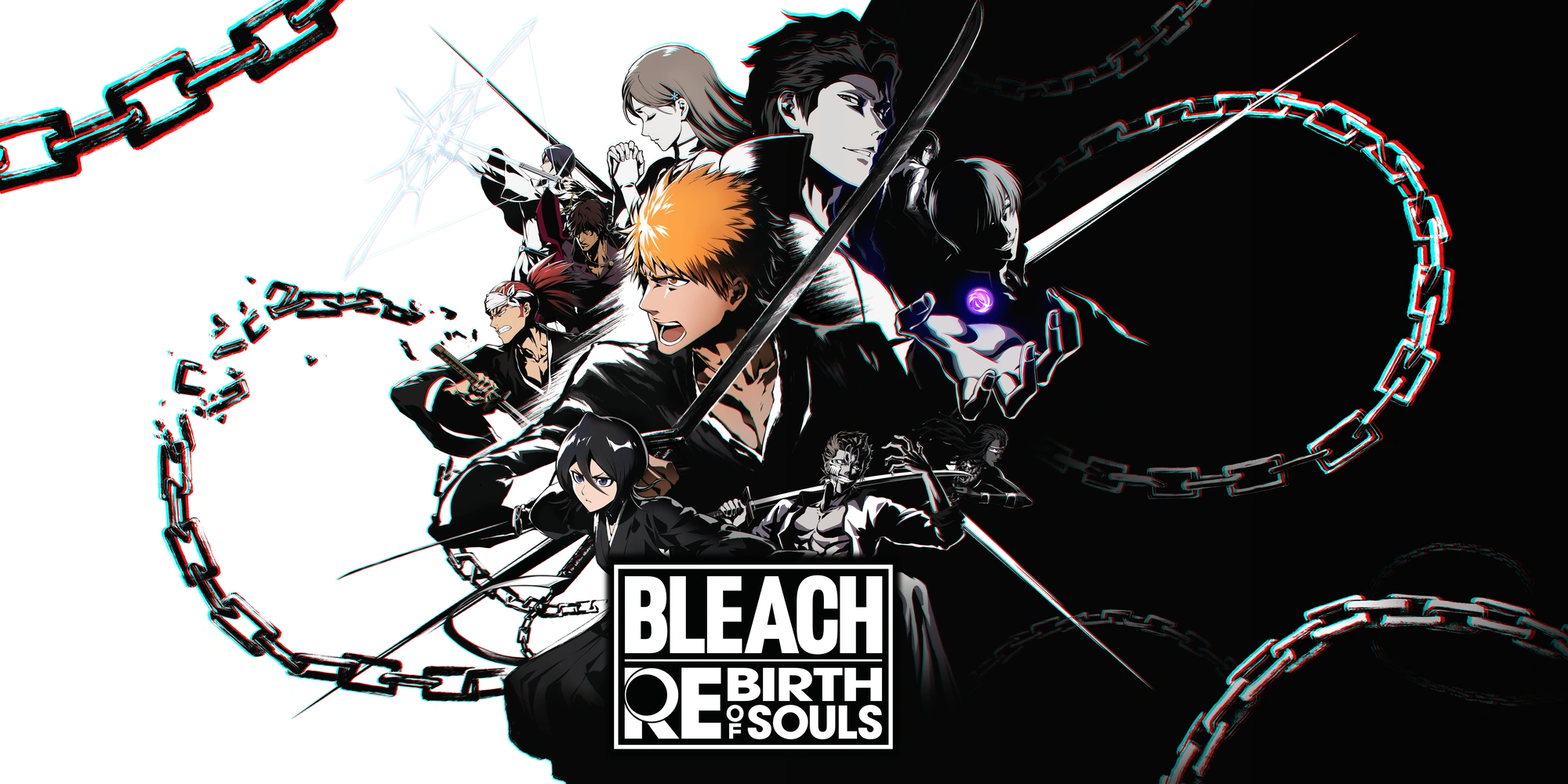
With over 70 manga volumes and over 400 anime episodes to its name, Tite Kubo’s Bleach franchise has all the makings of a massive multimedia franchise – with countless tie-in products released both within Japan and internationally over the years. From its first game release on the PlayStation Portable back in 2005, the series has enjoyed many releases, some decent and some less stellar. In 2025, Bandai Namco Entertainment teamed up with the Japanese development team at TamSoft to release Bleach: Rebirth of Souls, another in a collection of 3D fighting games crafted for the franchise. Following some impressive video game franchises from Bandai Namco around other franchises including One Piece and Akira Toriyama’s SAND LAND in recent years, does their latest offer for Bleach shine or falter? Read on to find out!
Bleach: Rebirth of Souls sets out to cover a lot of ground in its narrative, which comes in at approximately 25-30 hours. The game covers the events from Ichigo Kurosaki’s first encounter with Rukia Kuchiki to the latter stages of the Arrancar Arc. It’s not a brief add-on or side distraction from the main gameplay, but a dedicated campaign supported by fully voiced scenes and some side content to top it all off. The highlight here is the inclusion of “Secret Stories,” original episodes that take a more personal look at characters often sidelined in the main narrative. These stories offer welcome levity, slice-of-life charm, and added depth, and offer something a bit more for those who have seen the arcs and are after something new and meaty.
However, Rebirth of Souls’ commitment to narrative quantity comes at the expense of quality and cohesion. Cutscenes, while lengthy and fully voiced, often struggle under the sheer amount of content it try to cover, in addition to awkward pacing in general. Key events are sometimes summarised in stills or skipped entirely, leaving holes that only dedicated fans will know how to fill. The result is a story that feels more like a highlight reel than a complete retelling – to be expected but deserving of more limited scope. Some veterans may find the gaps are forgivable and sometimes even charming in their roughness. But for newcomers, the narrative risks becoming a disjointed experience that may require you to watch the anime episodes just in case.
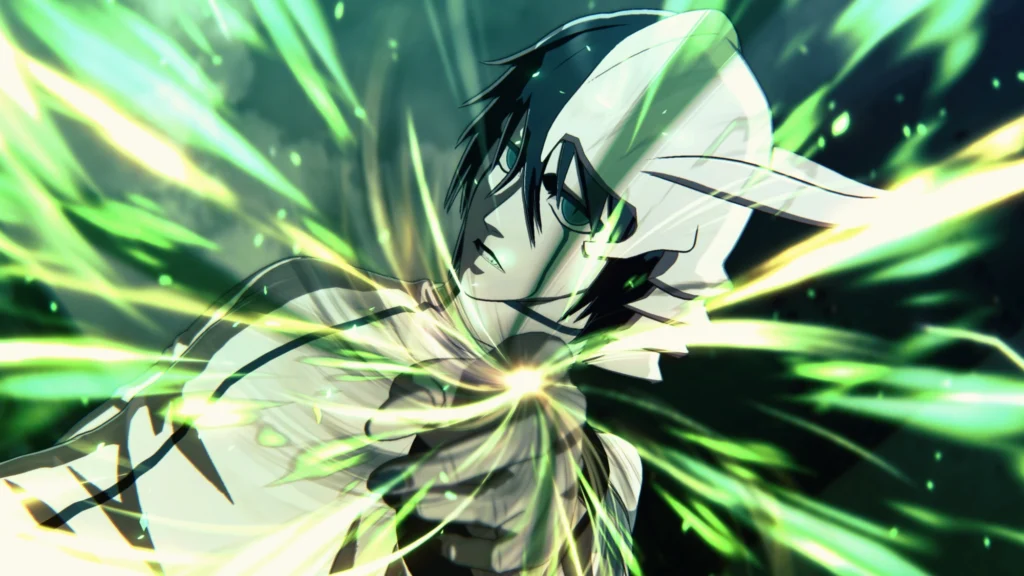
Bleach: Rebirth of Souls is adequately designed for an anime tie-in game. Their strongest point is that it properly replicates the iconic aesthetic of the franchise, remaining faithful to Kubo’s original designs, particularly in combat where fluid animations, exaggerated impact effects, and dynamic camera angles elevate even standard encounters. Menu screens, transitions, and special attacks are layered with bold typography and stylish visual flourishes, blending manga panels and on-screen text in a way that feels like you are playing a manga.
However, there are a few weaker elements to Bleach: Rebirth of Souls that keep it from being an incredible visual experience. One of those is that the environments can feel somewhat empty or generic in contrast to the detailed character work. Moreso, cutscenes are not done proper justice. While they feature fully modelled characters and are often lengthy, they lack the animation quality needed to match the emotional weight of the narrative. Characters move stiffly, and action-heavy scenes are frequently reduced to camera pans, static poses, or abrupt fades to black, making it clear that the visual priority was placed firmly on the gameplay segments. The inconsistency is somewhat understandable with just how much narrative the game has to get through, but ultimately it crafts a disjointed visual experience that might leave players wishing the same care applied across the board.
On the audio front, Bleach: Rebirth of Souls hits all the right notes. The soundtrack is a fusion of energetic rock, jazz, and electronic elements. You do feel like you are playing the events of the anime. Sound effects carry strong weight, particularly in sword clashes and flashy finishing moves, making each hit feel satisfying. What’s even more impressive? The English voice cast returns to reprise their iconic roles, and for the most part, they do an admirable job of breathing life back into these beloved characters. However, some secondary characters are left sounding a bit flat and stiff.
At its core, Bleach: Rebirth of Souls delivers a combat system that is both accessible and layered, offering something for casual players and more seasoned fighting game fans alike – although at its foundations is nothing new. The core gameplay loop centres on a dual-health system: a Reishi bar that acts as a traditional health gauge and a Konpaku count representing a character’s stock of lives. Once a character’s Reishi drops below a certain threshold, they become vulnerable to a Kikon move, an ultimate-style finisher that removes one or more Konpaku from their total.

Fights operate around a rock-paper-scissors foundation, with basic attacks, guard counters, and guard-breaking moves forming a core triangle. What initially feels like a simple guessing game quickly evolves into a more complex mind game, especially when you factor in special moves, flash steps, and Awakening transformations. Every character comes with their own unique mechanics, some relying on speed, others on range, and a few with gimmicks that drastically change how they play. The problem is that while each character has a different visual style, it is hard for the 30-or-so characters to all feel unique when it is based on the triangle strength/weakness system.
Bleach: Rebirth of Souls offers two distinct control schemes: Standard and Manual. Also known as: what many could call the Easy or Hard control schemes in most modern-day fighting games. Standard mode automates many of the combo strings and is clearly geared towards fans of the series who may not be well-versed in fighting games. It’s flashy and satisfying to use but at the sacrifice of much complexity going away. Manual mode, by contrast, gives players more freedom to experiment with cancels, extended combos, and tactical movement, and provides much more depth to the experience.
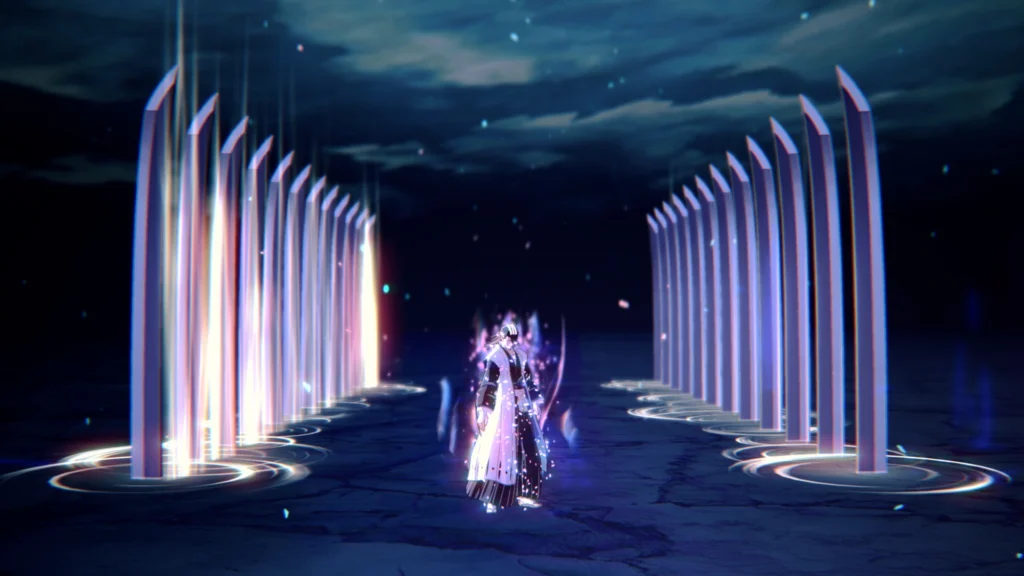
This added freedom in Manual mode also highlights some of the gameplay’s underlying issues. Movement can feel sluggish, which undermines the otherwise fast-paced combat. Certain characters noticeably outshine others, either through a longer range or more favourable combo windows, which can result in balance frustrations. Defensive play is also limited, blocking is easily broken, and tools like reversals or evasions are locked behind slowly charging meters. For a game that thrives on dramatic, back-and-forth exchanges, this occasionally leads to stifling scenarios where momentum is hard to reclaim. And while the Kikon finishers add visual punch, their unskippable nature becomes grating after repeated viewings in extended play sessions.
Outside the main narrative, Bleach: Rebirth of Souls offers some side content to test your battle mettle. Secret Missions and character-specific challenges offer rewards and light progression, while the offline versus mode is perfect for casual play with friends. While I didn’t dabble too much into the online play, my experience left me feeling as if it were very barebones. The game felt like it was heavily oriented towards the single-player experience more than the multiplayer experience, which granted is a pleasing change of pace given how many games favour the live-service online modes while shoe-horning in a single-player campaign.
While Bleach: Rebirth of Souls doesn’t quite reach the heights set by its Shonen Jump peers, it certainly doesn’t falter either. It’s a game clearly developed with a deep love for the source material, bringing with it stylish visuals, a generous helping of content, and a nostalgic return to some of the series’ most iconic arcs. For newcomers or those seeking a more polished or competitive experience, it may not quite reach the heights one would expect. But as a fun enough fighting game that doesn’t push the boundaries and brings the genre into the Bleach universe again – it is perfectly enjoyable.
Final Score for Bleach: Rebirth Of Souls
This review was conducted on a PlayStation 5 digital copy of Bleach: Rebirth of Souls, kindly provided by Bandai Namco Entertainment Australia to facilitate this review. The review was conducted on a PlayStation 5 Pro Retail model.
Bleach: Rebirth of Souls is now available on the PlayStation 4 and PlayStation 5, Xbox Series X|S and Windows PC.

