
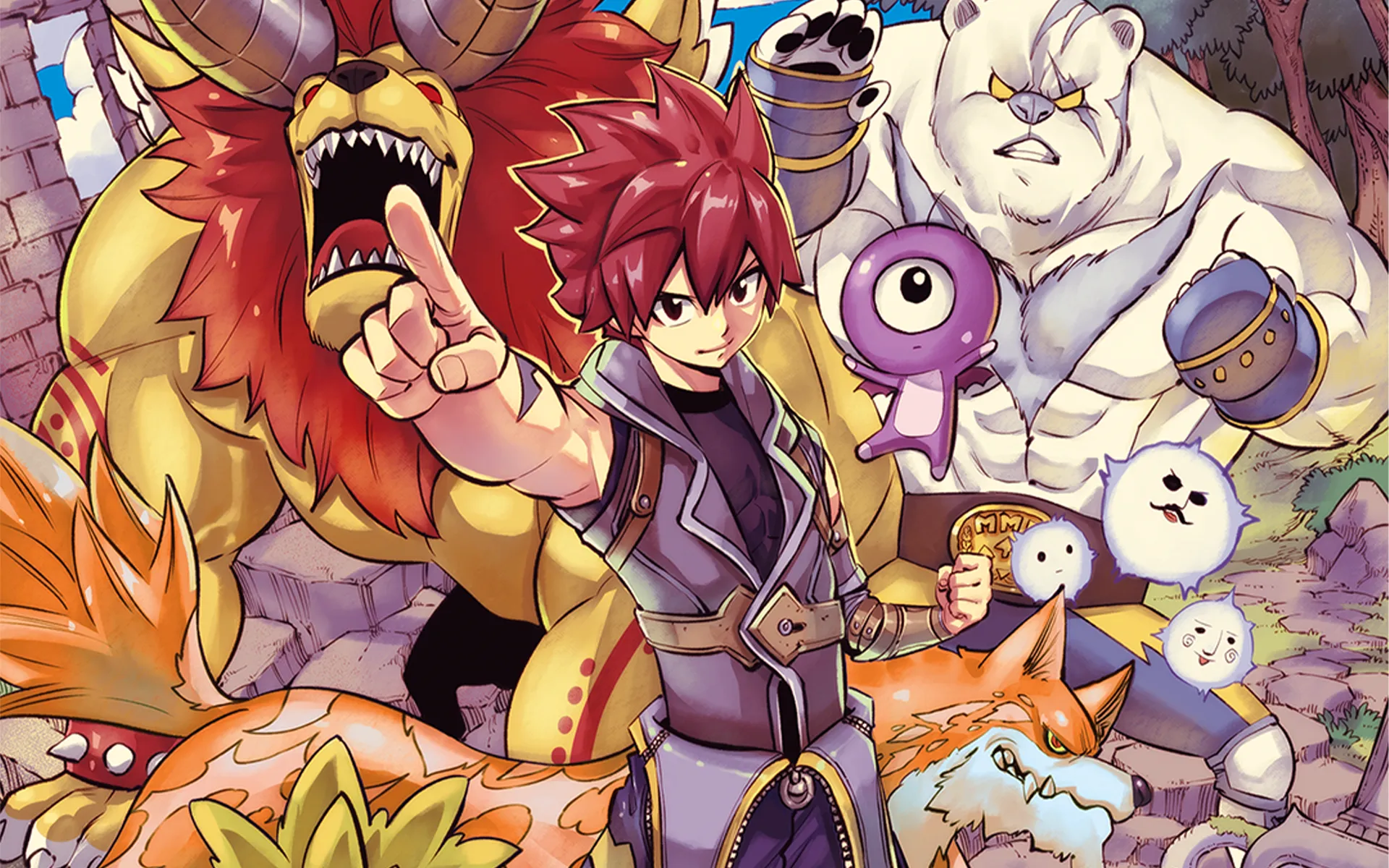
When it comes to RPGs on the market, there are “AAA” titles that deliver expansive open worlds, detailed visuals, and complex systems, and then there are games that pursue more focused experiences, often with mixed results. Farmagia, the latest from Marvelous Europe/XSEED Games, feels like a throwback to the seventh generation of gaming consoles—a time when developers experimented with ideas that were ambitious but often uneven in execution. With its combination of farming, monster-raising, and squad-management RPG elements, Farmagia offers novel ideas interwoven with tried-and-true mechanics. Yet, while it captures the charm of its inspirations, does it succeed in creating a cohesive and rewarding experience? Or does its ambition outpace its execution? Read on to find out.
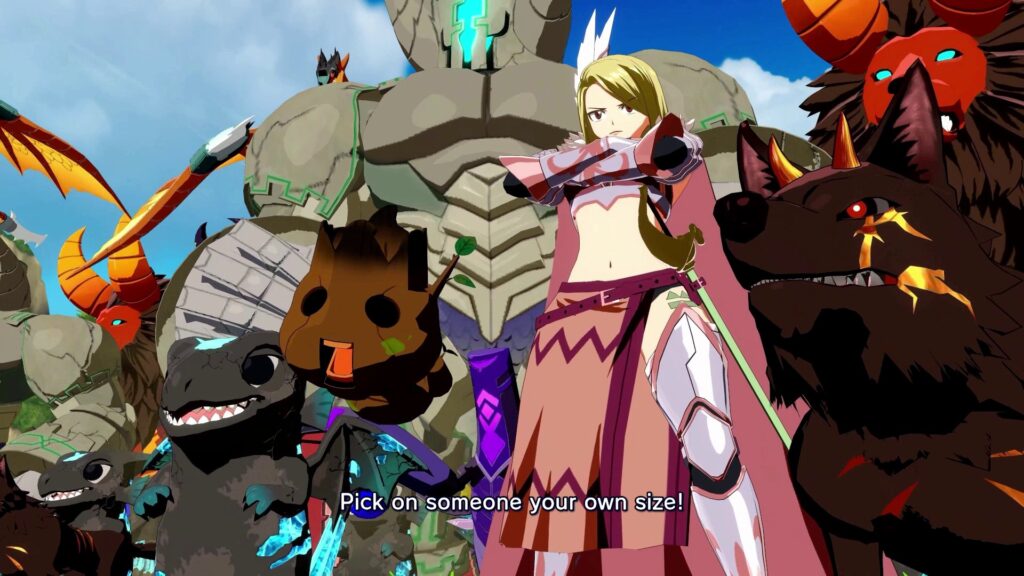
Farmagia’s narrative draws players into a typical fantasy world, which as one might expect to spearhead the story, finds itself on the brink of chaos – this time involving rebellion, power struggles and an oppressive regime. Set in the region of Felicidad, the story begins with a solid foundation: protagonist Ten and his allies must navigate a fractured world ruled by the tyrannical Glaza and his generals, the Oracion Seis, to restore peace. While the plot leans heavily on familiar JRPG tropes, it is buoyed by its character-driven moments and an anime-inspired tone that is fitting given the anime soon to air based on the game. The writing shines most in its exploration of relationships, from the other party members, the antagonistic forces and the Elemental Spirits, the latter whose bonds with Ten offer insights into the world’s lore and its denizens’ struggles. The foundation is there for a solid game, and I especially look forward to seeing how it is expanded in the upcoming anime, but the delivery is a tad haphazard. Uneven pacing is spread throughout the narrative, and ultimately the narrative isn’t something that will linger with you for years going forward. But, it retains a solid charm with likable characters and emotionally engaging arcs, delivering a story that, while predictable, should keep players invested until the end.
Going back to the 7th Generation of video game consoles referenced in my introduction, this is perhaps where the analogy comes most into effect – as if working within more limited system resources. Interestingly the comparison game that keeps coming to mind is Compile Heart’s Trinity Universe. Both games share a striking similarity: exceptional character designs juxtaposed with lackluster world designs. Farmagia delivers functional, anime-style visuals with character portraits that are distinctly shounen-inspired—a natural fit given that the designs come from Hiro Mashima, the creator of Fairy Tail. While these portraits are vibrant and memorable, the in-game character models are less detailed, though they remain appropriate for the game’s overall aesthetic. Unfortunately, the environments, particularly the dungeon mazes, lack visual variety and feel overly repetitive, with enemy designs that are adequate but fail to leave a lasting impression. This is not necessarily a bad thing, and maintains the anime game style, although mileage may vary between gamers.
The soundtrack of Farmagia plays heavily on the tracks you would typically find in a shounen anime depending on the scene or moment of the game currently on-screen. It complements the anime-inspired aesthetic beautifully, adding depth to the game’s world. The fully voiced English dub is something I didn’t expect, expecting the game to feature only its original Japanese audio. But Marvelous managed to get in some strong voice actors such as Paul Castro Jr, Bryson Baugus and Kira Buckland among many other talented VAs to bring the characters to life.
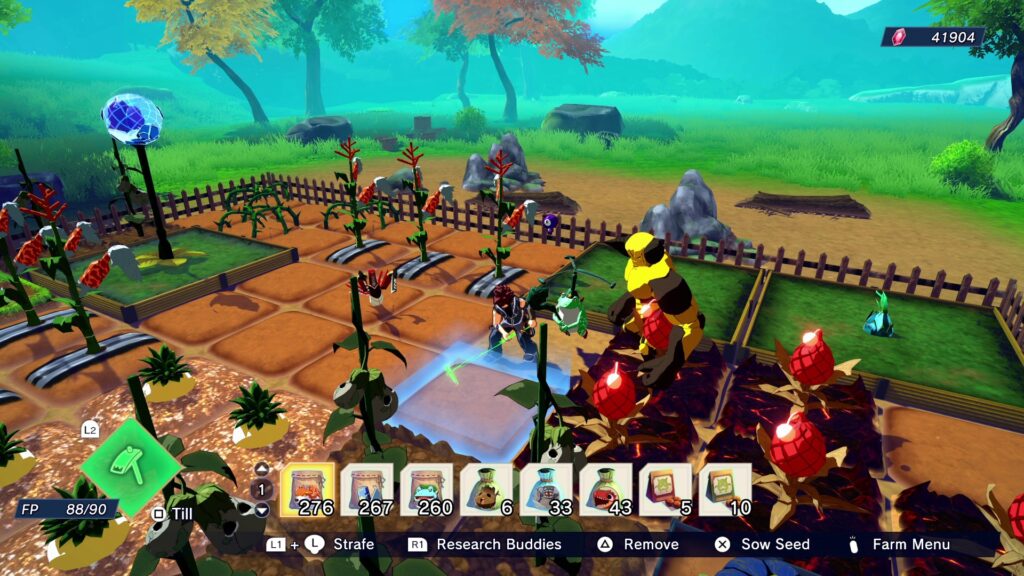
Farmagia’s gameplay is an amalgamation of systems that range from mildly engaging to frustratingly underdeveloped. The core loop combines farming, monster-raising, and combat, with each element feeding into the next. Farming, which you might expect from the game’s name is a key element of the game, was disappointingly shallow. While the concept of growing monsters as crops is novel, the process itself—tilling, planting, watering—is overly simplistic and detached from the larger gameplay experience. Most seeds produce “research buddies”, used for upgrades rather than combat, and the minimal impact of farming on progression makes it feel more like a chore than a meaningful activity.
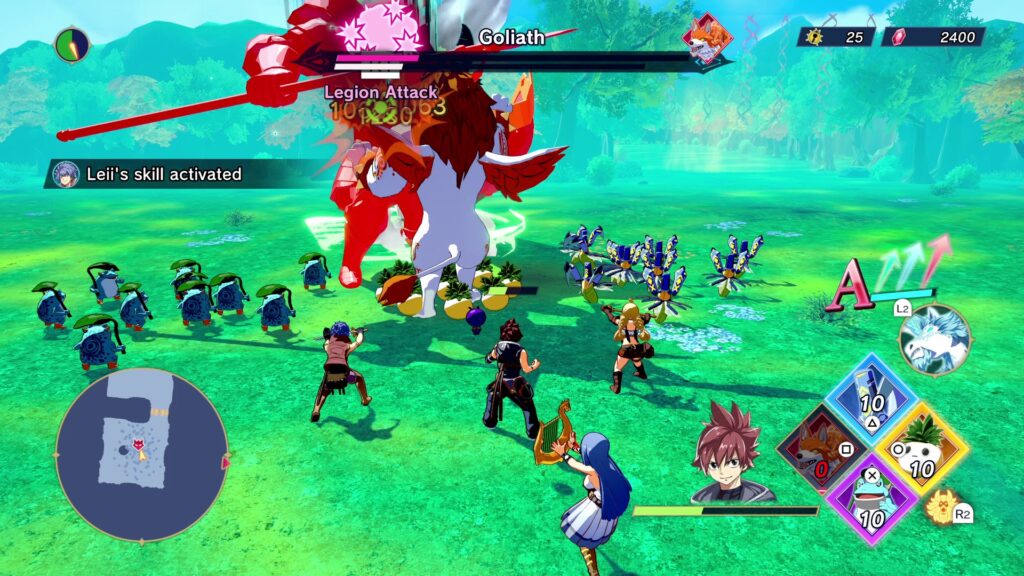
Combat is the most prominent and arguably the most developed aspect of Farmagia. Players command up to four squads of monsters in real-time battles, directing them to engage groups of foes. The system is surprisingly accessible, with mechanics like staggering enemies and executing Unite Blitz attacks adding a layer of strategy that elevates the dungeon-crawling beyond simple button mashing. However, dungeon exploration itself is less engaging, consisting primarily of multi-route mazes that feel repetitive. These mazes are little more than gauntlets of enemy encounters and puzzle-piece-like map sections, offering minimal variation or meaningful rewards beyond basic resources.
Beyond its main systems, Farmagia introduces several side mechanics and gameplay elements that, while functional, fail to leave a lasting impact. The bonding system with Elemental Spirits adds some narrative depth but contributes little to gameplay beyond minor stat boosts or cosmetic changes. Similarly, the roguelike-inspired decision-making within the mazes—choosing between item drops or temporary ability upgrades—feels underdeveloped, offering minimal strategic significance. These peripheral mechanics reflect Farmagia’s broader issue: systems that, while conceptually interesting, are either underutilized or poorly integrated. With more thoughtful execution, they could have become a rewarding expansion of what Marvelous already achieves with Story of Seasons and Rune Factory.
Farmagia is a game brimming with potential but ultimately struggles to fully realise its ambitions. Despite its flaws, I would love to see the development team revisit the series in the future. While it draws inspiration from beloved franchises like Story of Seasons and Rune Factory, it fails to strike the delicate balance between its multitude of systems, leaving each one feeling underdeveloped—particularly the farming system, which I expected to be a standout feature given the game’s title. The narrative and character interactions are charming enough to keep players engaged, bolstered by strong visual design, quality voice acting, and a melodious soundtrack. Overall, I enjoyed my playthrough enough to see it through to the end, and for those who appreciate exploratory RPGs reminiscent of past gaming generations, there is much to love. For fans of anime-inspired RPGs or those intrigued by its unique monster-raising premise, Farmagia may offer fleeting enjoyment. However, for players seeking a polished and cohesive experience, it ultimately falls short of its potential.
Final Score for Farmagia
A PlayStation 5 review code for Farmagia was provided by Marvelous Europe to facilitate this review.
Farmagia is now available to purchase on PlayStation 5, Nintendo Switch and PC (via Steam)

